

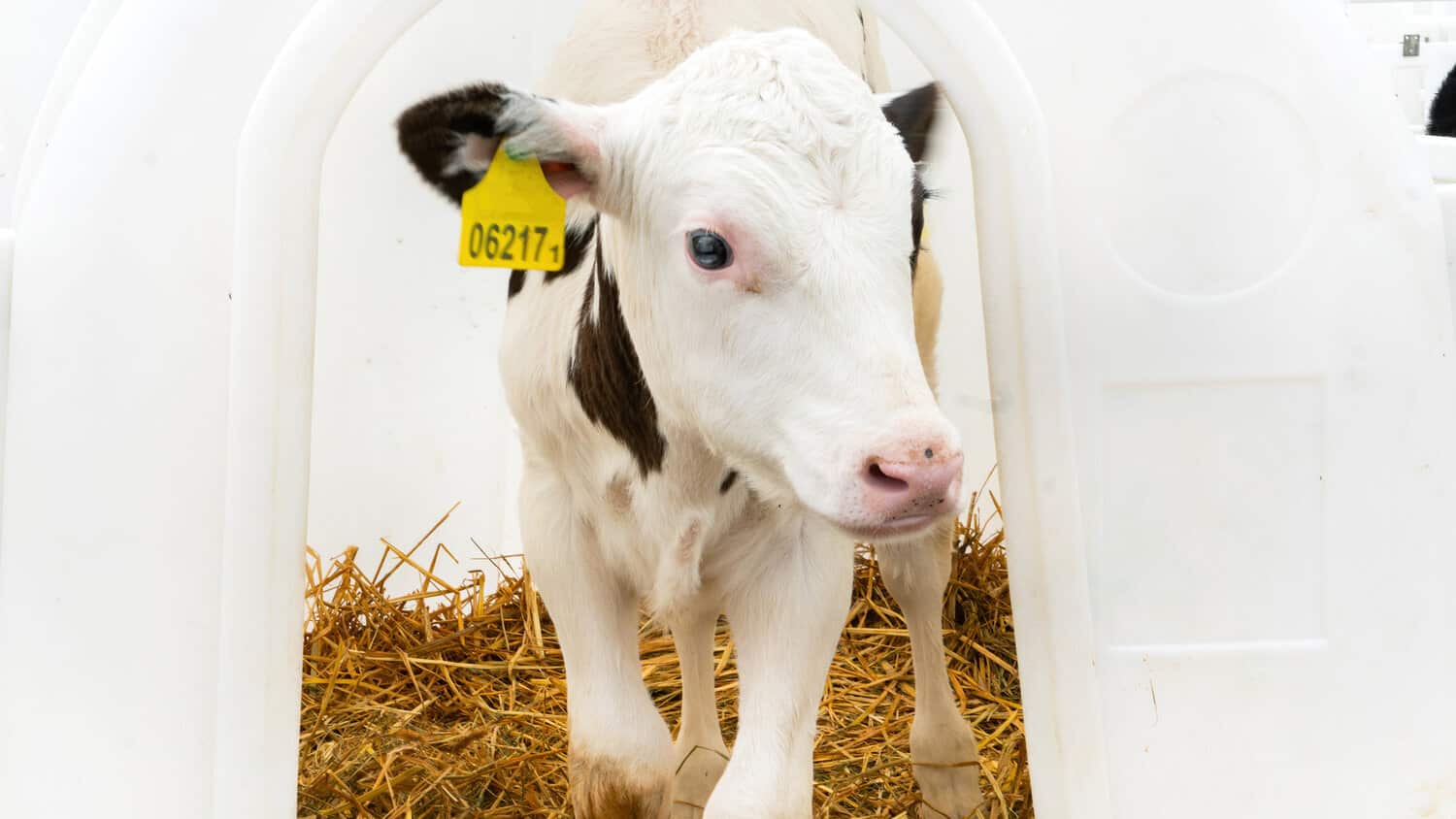
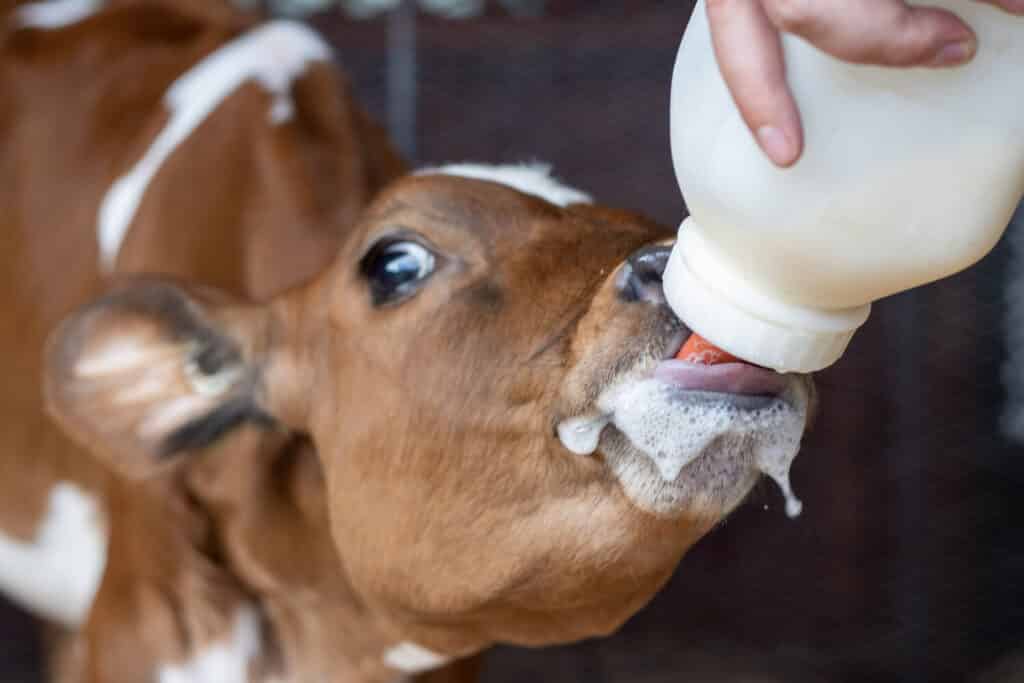
Not just the female calves who may grow up to join the milking herd, but the males — the calves born into a dairy system where their mothers are valuable because they produce milk, and they are valuable only if someone can find another use for them.
That is a brutal way to enter the world.
A male dairy calf is not born less alive, less sensitive, or less deserving of care than a female calf. He is born with the same basic needs: milk, warmth, safety, touch, rest, and a mother. But industrial dairy does not begin with the calf’s needs. It begins with the economic purpose of milk.
And male calves cannot produce milk. That one fact shapes everything that happens next.
To understand industrial dairy, we have to stop separating milk from birth, birth from calves, and calves from the systems that decide their value. Milk is not just a product from cows. It is the result of pregnancies, births, separations, and animals whose lives are sorted according to usefulness.
Female calf: possible future milk producer.
Male calf: problem to solve.
That is the part of the dairy story most people never see.


Hosting this year?
Which Thanksgiving Are You Hosting?
I wrote four complete menus so you can plan only the dinner you can actually pull off. Each one has its own shopping list, oven schedule and hour-by-hour plan.
✓
Cooking for 2–4
Menu 1 · Turkey breast, one oven, planned leftovers
✓
A classic dinner for 8–12
Menu 2 · Brined turkey, half the work done Wednesday
✓
A big crowd, 12–16
Menu 3 · Ham and slow cooker turkey; guests bring the rest
✓
Vegetarian guests
Menu 4 · Stuffed acorn squash with mushroom gravy
Free 40-page printable, with a thawing chart, a “What can I bring?” sheet and my fixes for when things go sideways.
Male Dairy Calves at a Glance
Born every year
because a cow must give birth to keep producing milk
0
male calves will ever join the milking herd
Beef · veal · market
where most male dairy calves go
“Surplus”
the industry’s word for calves the herd does not need
01
Male Calves Are Not a Mistake
Male calves are sometimes described with sterile industry language: surplus calves, bob calves, nonreplacement calves, dairy bull calves. The words are useful because they make the problem sound administrative instead of moral.
But a male calf is not surplus to himself. He is not a spreadsheet error with legs. He is not an unfortunate byproduct of your cappuccino.
He is a baby animal born because the dairy system needed his mother to give birth so she could produce milk.
That is the truth at the center of this issue. Dairy cows must give birth to produce milk. Some of the calves born will be female and may be raised as replacement heifers for the milking herd. Some will be male, and because they cannot become dairy cows, they often have much less economic value to the dairy operation.
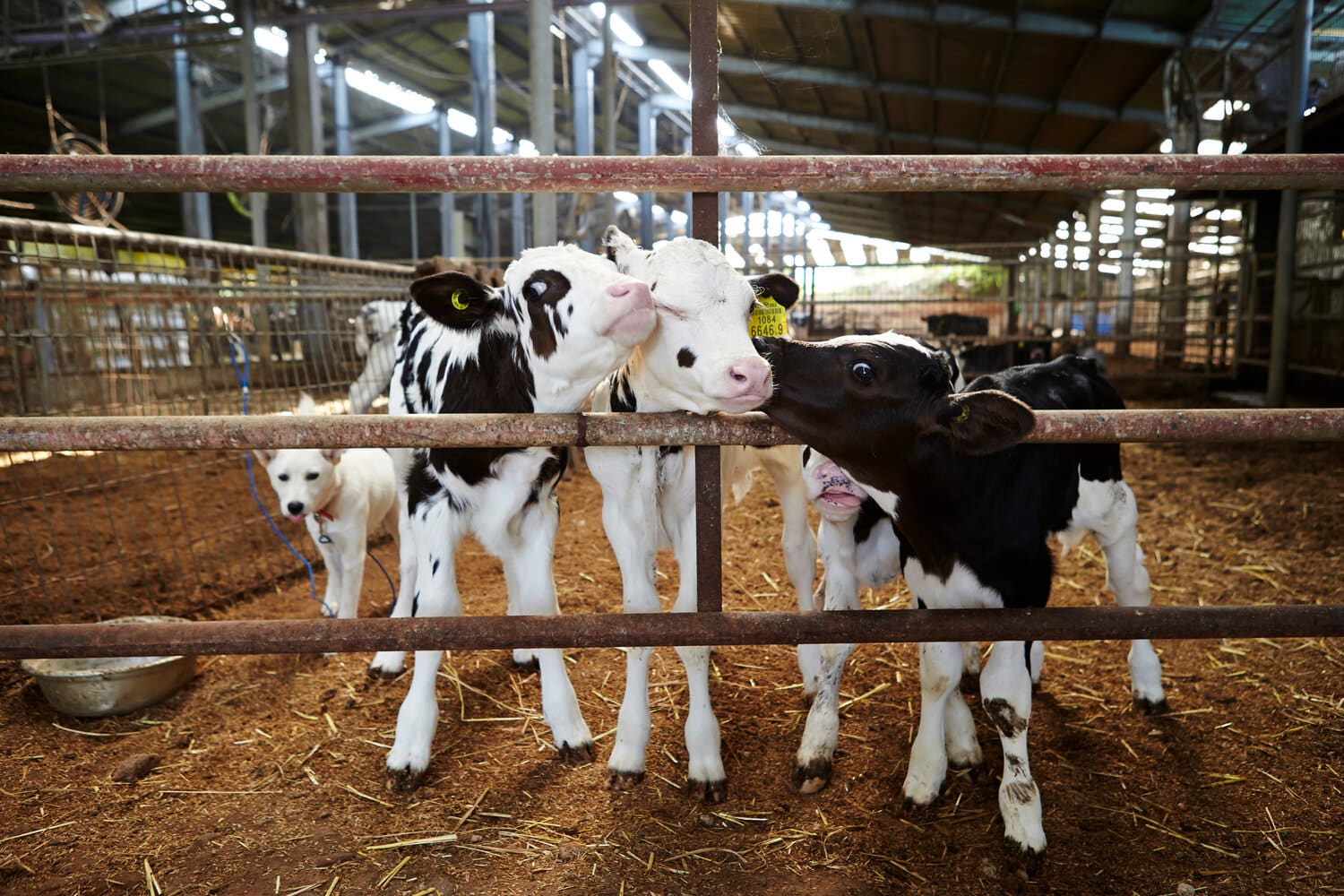
Calves become the byproduct of milk
The industry did not accidentally end up with male calves. Male calves are built into the biology of milk production. Every dairy system has to answer the same question: what do we do with the babies who cannot produce milk?
02
The Dairy Industry Has Several Answers
The answer depends on the farm, the breed, the market, the region, and the price of beef or veal at the time. Some male calves are raised for veal. Some are raised for dairy beef. Some are sold through livestock markets or moved to calf-rearing facilities. Some are transported long distances. Some are slaughtered very young.
The USDA Food Safety and Inspection Service explains that male dairy calves are used in the veal industry because they are of little or no value to the dairy farmer for milk production. The same source describes veal as meat from a calf or young beef animal. In other words, veal is not separate from dairy. It is one of the ways the dairy system deals with calves who cannot produce milk.
This is where many consumers feel shocked, because dairy and veal are often treated like separate moral categories. People may avoid veal because they associate it with cruelty, while continuing to buy milk, butter, yogurt, cream, or cheese without realizing that male calves are part of the same biological system.
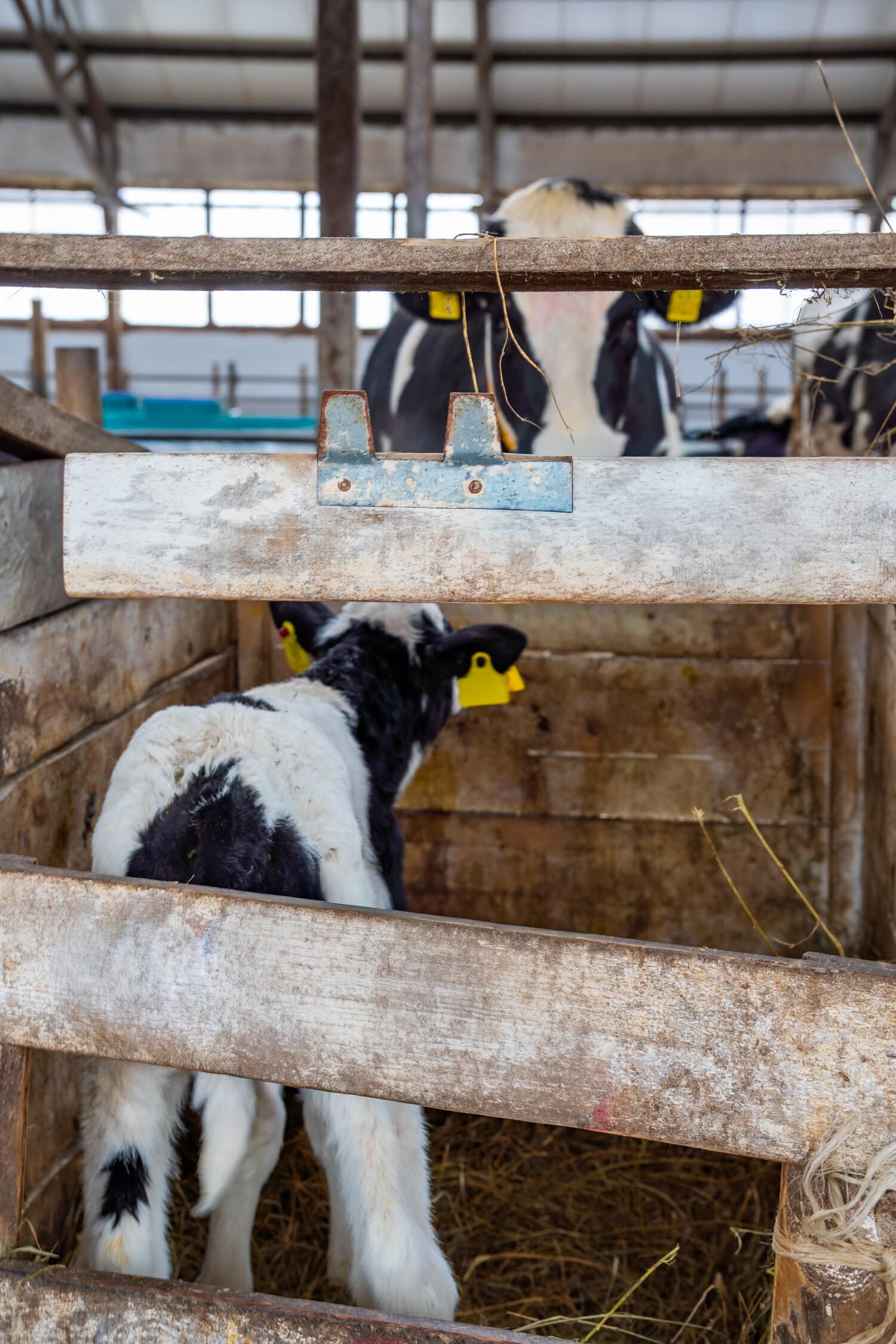
Born into dairy
Milk creates calves.
Some of those calves become veal.
Some become beef.
Some disappear into supply chains most consumers never think about.
03
The Word “Surplus” Should Bother Us
The term “surplus calf” is common in discussions about dairy. It usually refers to calves who will not be kept as replacements for the milking herd. That can include male calves and sometimes female calves not needed by the farm.
But “surplus” is one of those words that deserves interrogation. Surplus to whom? Surplus to what? Surplus because the animal does not fit the production model?
A calf is not surplus because he has no value as a living being. He is surplus because the system has defined value narrowly: milk production first, meat production second, life somewhere far below the profit line.
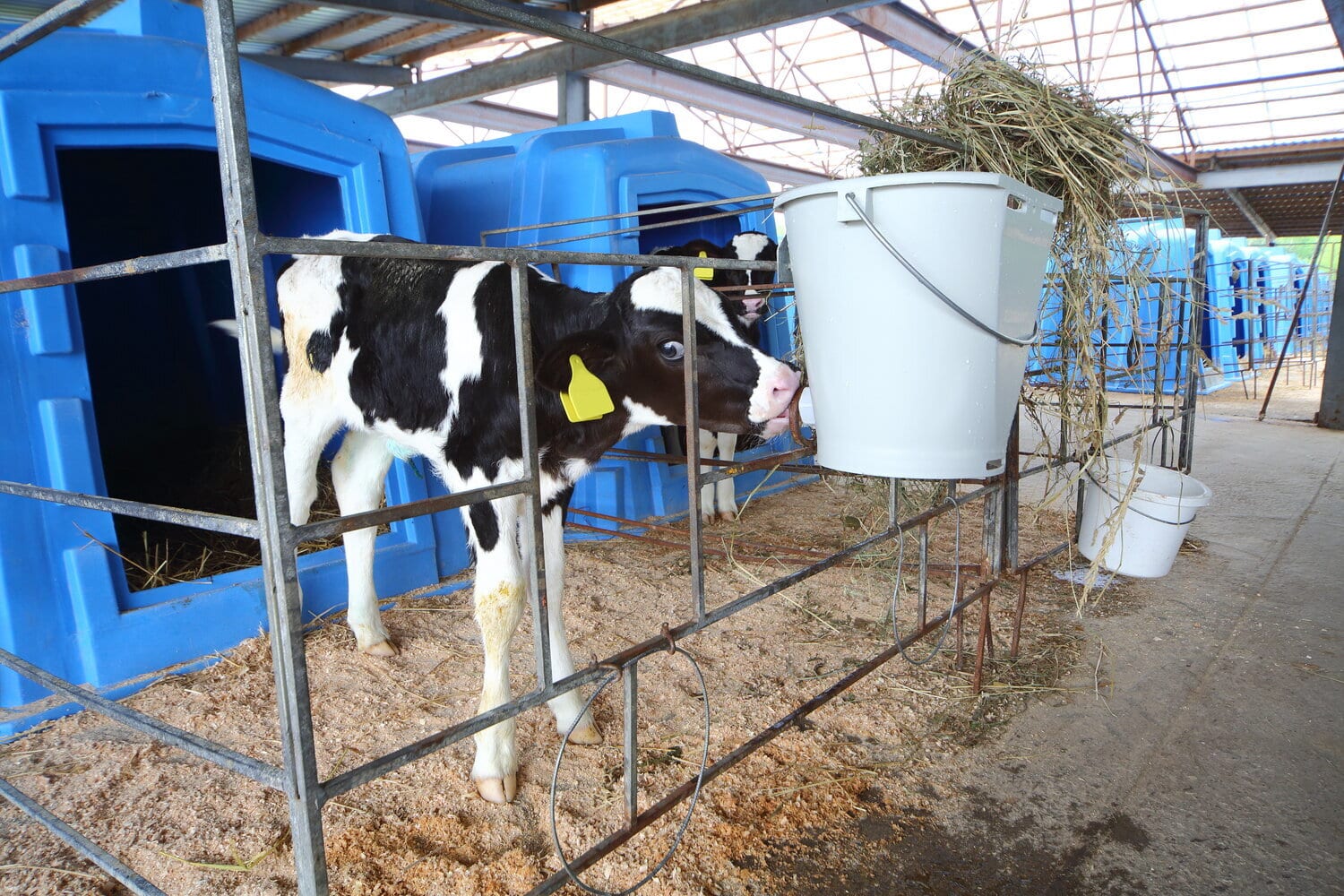
Possible “nonreplacement calf”
Industrial food systems are very good at this kind of language. They do not say, “This baby animal was born into a system that cannot use him for its main product.” They say “nonreplacement calf.” They do not say, “His mother’s milk is being sold, and now the industry must find a market for him.” They say “dairy-beef pathway.”
The language is clean. The reality is not.
Industry words, translated
Each term describes his use, not his life.
Surplus calf
Not needed by the herd
Nonreplacement calf
Will never join the milking herd
Bob calf
Sold for veal very young
generally up to about three weeks
Dairy bull calf
Male, so no milk
Dairy-beef pathway
A market for him once his mother’s milk is sold
04
What Veal Has to Do With Dairy
For many people, veal feels like an old-fashioned issue — something from another era, something animal advocates talked about decades ago. But veal has not existed in isolation. Historically, the veal industry has been closely connected to dairy because male dairy calves are born into a system that does not need them for milk.
That connection matters.
When a consumer buys dairy, they are not only participating in the life of the milking cow. They are participating in the system that produces calves, separates calves, raises some calves for future milk production, and sends others into meat supply chains.
That does not mean every dairy product equals one specific outcome. Food systems are complex, and individual farms operate differently. But it does mean milk is not morally separate from what happens to calves.
We cannot pretend the calf is unrelated to the carton.
The calf is how the carton happened.
05
Transport Is Part of the Story
For many male dairy calves, the first days of life may involve movement through a system that is stressful even to read about. Calves may be transported from the dairy farm to a calf-raising facility, veal operation, auction, livestock market, or slaughter facility.
Research on dairy calf transportation in the United States identifies the transport of preweaning calves as an important animal welfare concern. These are very young animals, often still physically vulnerable, and they may experience hunger, dehydration, temperature stress, fatigue, exposure to disease, rough handling, and the stress of unfamiliar environments.
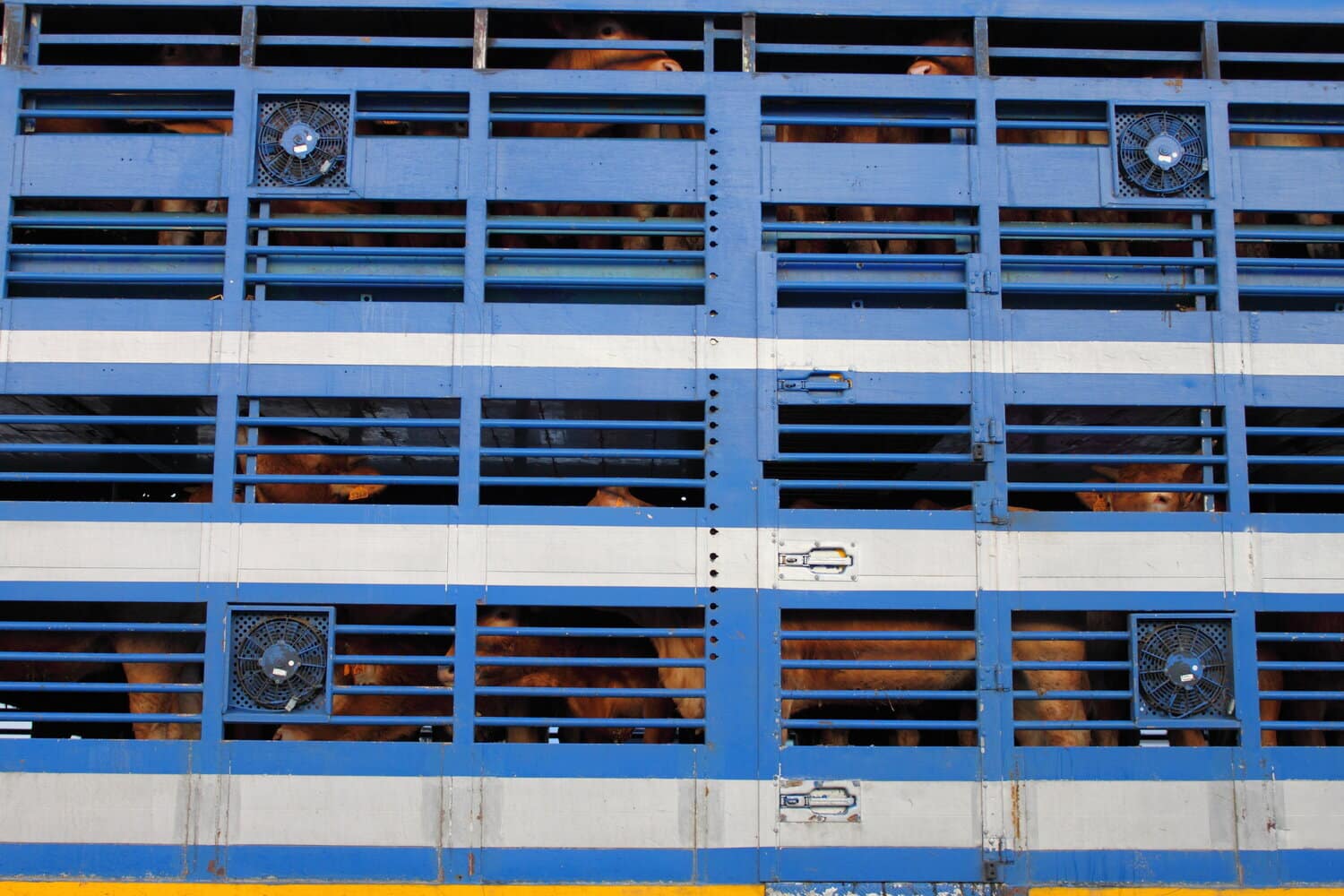
Mass Transport of calves
Think about that for a moment: an animal who has only just entered the world may already be separated from his mother, loaded, moved, sorted, sold, and placed into another system before most of us have even finished arguing with the coffee machine.
It would be almost funny if it were not so devastating.
06
The Calf’s Body Becomes a Calculation
What decides his future
Seven questions decide his future. Each one is about what he is worth.
A male dairy calf’s future is often determined by economics.
01
What breed is he?
02
How much does he weigh?
03
Is there demand for veal?
04
Is there demand for dairy beef?
05
Is the cost of raising him worth the potential return?
06
Is he healthy enough to transport?
07
Is the market up or down?
Every answer is a price.
This is what happens when a living being enters a system that evaluates him mainly by output. His body becomes a calculation.
That does not mean every person handling him is cruel. Many people who work with animals care deeply about them. Some farmers and calf raisers work hard to improve welfare. Some farms use beef semen strategically to produce calves better suited for beef markets, which may give some male calves a more viable path. Some systems are better than others.
Beef-on-dairy
Some farms now breed for a calf the beef market wants.
Beef-cross calf
Bred with beef semen to suit beef markets. May have a more viable path.
Dairy-breed bull calf
Of little value for milk or beef. More likely to be sold very young.
A better price can mean a better path. It is still a price.
But better management does not erase the central problem: the male calf exists because milk requires birth, and the dairy industry has limited use for males.
The question is not whether the industry has found ways to make male calves economically useful. The question is whether usefulness should be the measure of a life.
07
What About Female Calves?
Female calves are not “lucky” in any simple sense. Some may be raised as replacement heifers, but that means they may eventually enter the same cycle as their mothers: breeding, birth, milk production, separation, a brief dry period, and breeding again.
Her calendar, one generation later
If she joins the herd, she inherits her mother’s schedule.
Day 0
she gives birth
Day 1
usually by now, the calf has been removed
Months
she is milked
Next
she is bred again, while still being milked
6–8 wks
a short rest: the dry period
Again
she gives birth, and it starts over
Same calendar. The next calf starts it over.
A female calf may be more valuable to the dairy system because she can grow into a milk-producing cow. But that value comes with its own future. Her body is valuable because of what it can produce. Her motherhood is valuable because it restarts lactation. Her calf is valuable only if the system can use the calf too.
That is why talking about male calves does not take us away from the mother cow. It brings us back to her.
Every calf’s fate is connected to the same system.
08
This Is Not About Hating Farmers
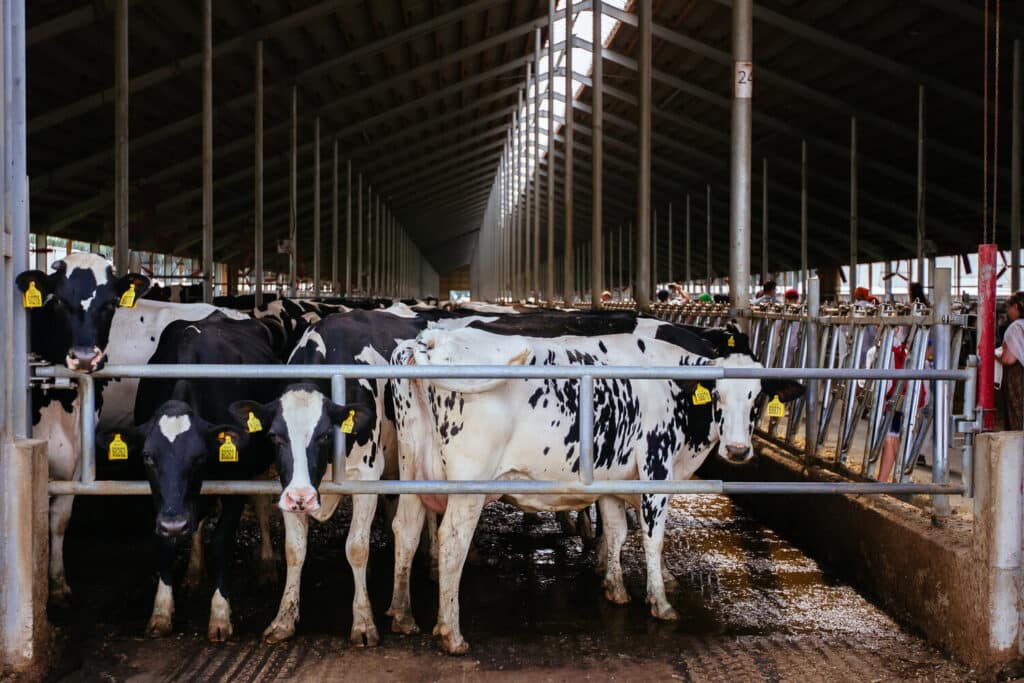
As with every article in this series, this is not about turning farmers into villains. Many dairy farmers are under intense financial pressure. Small farms have been squeezed by consolidation, debt, volatile milk prices, rising feed costs, and a marketplace that often rewards scale more than care.
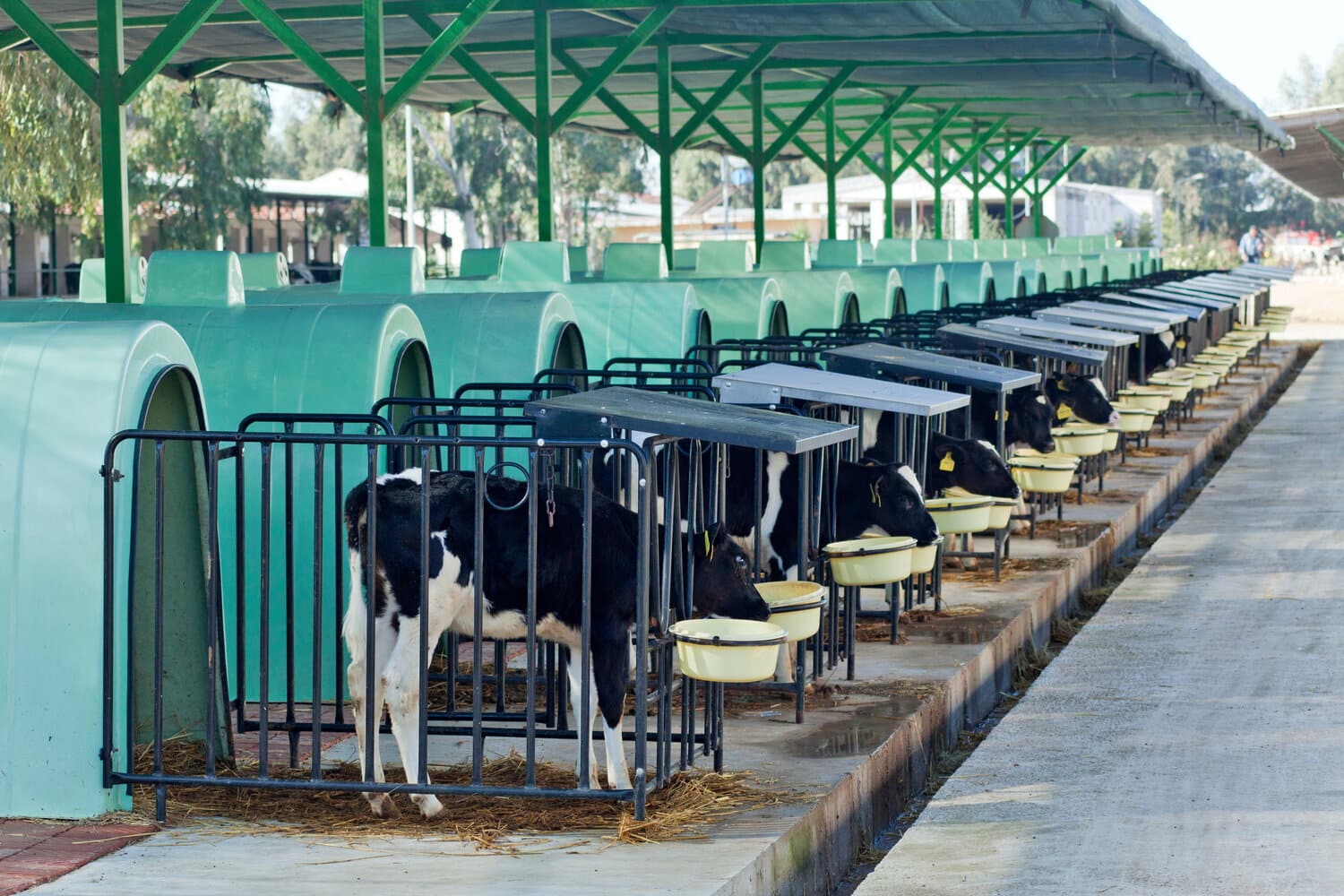
Farmer feel the pressure of scale
The system asks farmers to produce milk cheaply and consistently. Consumers expect dairy to be available everywhere. Processors and retailers depend on predictable supply. The result is a structure where animals, farmers, workers, and land all carry costs that the price tag rarely shows.
So no, the solution is not to point at one farmer and declare them the problem. That is too easy, and honestly, not very useful.
The problem is the system that makes a baby animal economically inconvenient on the day he is born.
09
Why This Matters in the Kitchen
It may feel strange to connect a calf’s life to a recipe. But that is exactly where the connection belongs.
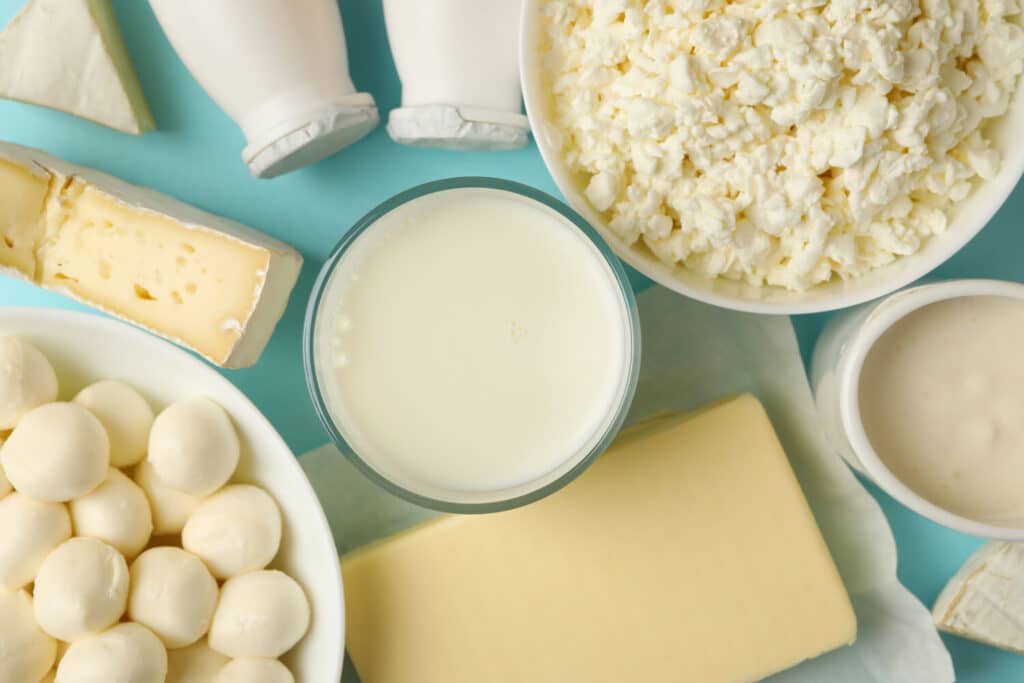
Every dairy ingredient starts the same way
Food is not abstract. Ingredients come from somewhere.
Butter
from milk
Cream
from milk
Cheese
from milk
Yogurt
from milk
Milk
came from a cow who had a calf
Every one of them began with a birth.
When we cook, we participate in that chain whether we think about it or not. Intentional Cooking simply asks us to think about it.
This does not mean every reader must become vegan overnight. It does not mean every family can afford the same choices or access the same products. It does not mean culture, tradition, health, or budget disappear because we learned something painful.
It means we stop pretending dairy is simple.
It means we stop pretending male calves are unrelated to milk.
It means we let the truth enter the kitchen, even when the truth is inconvenient.
Especially then.
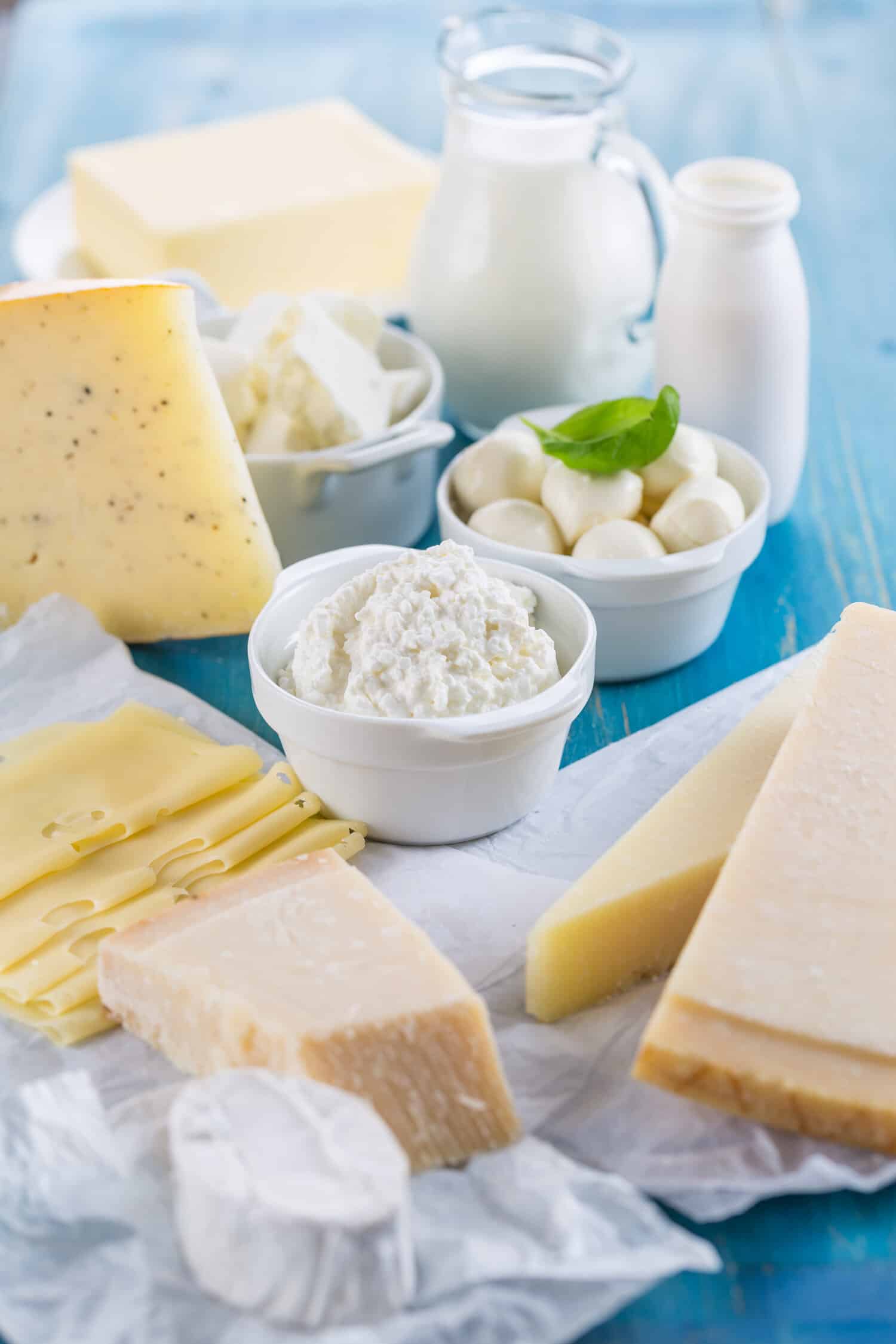
Dairy in multiple forms
10
What Can We Do?
The first step is awareness. The second is action, however imperfect.
We can reduce dairy where it is easy to reduce. We can use dairy more intentionally instead of automatically. We can support farms that are transparent about how calves are raised. We can ask whether male calves are raised for beef, sold through markets, transported long distances, or slaughtered young. We can look for higher-welfare dairy when dairy is part of our cooking. We can try plant-based alternatives when they work well. We can support policies and certifications that require better treatment and more transparency.
One system
Milk, veal, beef and cull cows are not separate worlds.
We can stop separating dairy from meat in our minds.
Milk
from the mother
Beef
from many male dairy calves
Veal
from some male dairy calves
Cull cows
the mothers, sold for beef when they leave the herd
They are connected parts of the same animal agriculture system.
That does not make the choices easy. It makes them honest.
This Is Intentional Cooking
Intentional Cooking is not about purity. Intentional Cooking is about seeing.
Intentional Cooking is not about purity. Purity is exhausting, and frankly, nobody needs one more impossible standard in the kitchen.
Intentional Cooking is about seeing.
When we understand what happens to male dairy calves, we understand dairy differently. We see that milk is not just a carton, cheese is not just a topping, and cream is not just something lovely we pour into soup because it makes everything taste like we have our life together.
Dairy comes from a system. That system creates calves. Some of those calves are female and may become future milk producers. Some are male and must be moved into another use because they cannot produce milk.
That is not a detail. That is the story.
And once we know the story, we get to decide how to live with it. We can cook with more care, buy with more awareness, ask harder questions, and stop letting marketing do our thinking for us.
Ask your dairy brand this, in these words
“Are your male calves raised for beef, sold through markets, transported long distances, or slaughtered young?”
A male dairy calf should not have to be invisible for milk to feel wholesome.
So let us stop looking away. Let us ask where the calves go. Then let us cook like it matters.
Let’s talk about cooking with purpose.
Intentional Cooking is not fancy. It is honest. Every ingredient matters. Make it yours.
Frequently Asked Questions
Why are male calves born on dairy farms?
A cow must give birth to produce milk, and some of those calves are male. Because male calves cannot become dairy cows, they usually have much less value to a dairy operation.
What does “surplus calf” mean?
It usually refers to calves who will not be kept as replacements for the milking herd. That includes male calves and sometimes female calves the farm does not need.
Is veal connected to the dairy industry?
Yes. Veal has historically been closely tied to dairy, and some male dairy calves are still raised for veal. Today many more are raised for beef.
Are male dairy calves raised for beef?
Many are, as dairy beef or as beef-cross calves. Others are raised for veal, sold young through markets or slaughtered very young.
What is a bob calf?
An industry term for a very young calf sold for veal, generally up to about three weeks old or 150 pounds.
How can I find out what a dairy brand does with its male calves?
Ask directly. If a company is proud of how its animals are raised, it should be able to explain where its male calves go.
The dairy loop
Only the replacement heifers come back. This article follows the calves who leave.
Pregnancy
bred again
→
Birth & separation
usually within the first day
→
Lactation
milked for months
→
Dry period
6–8 weeks, then again
↺
Calves & cows
female calves rejoin · males & cull cows leave
→
Processing
tank · truck · plant
→
Carton & label
the claim is set here
→
Kitchen
your recipe
■ The part this article covers
▢ Covered by the companion pieces below
↺ The cycle starts again with the next calf
The Intentional Cooking Series: Dairy
5 Articles

Part 1 · The System
Part 2 · Separation
Part 3 · You Are Here
What Happens to Male Dairy Calves?
Part 4 · Labels
Part 5 · Alternatives
Leave a Reply