

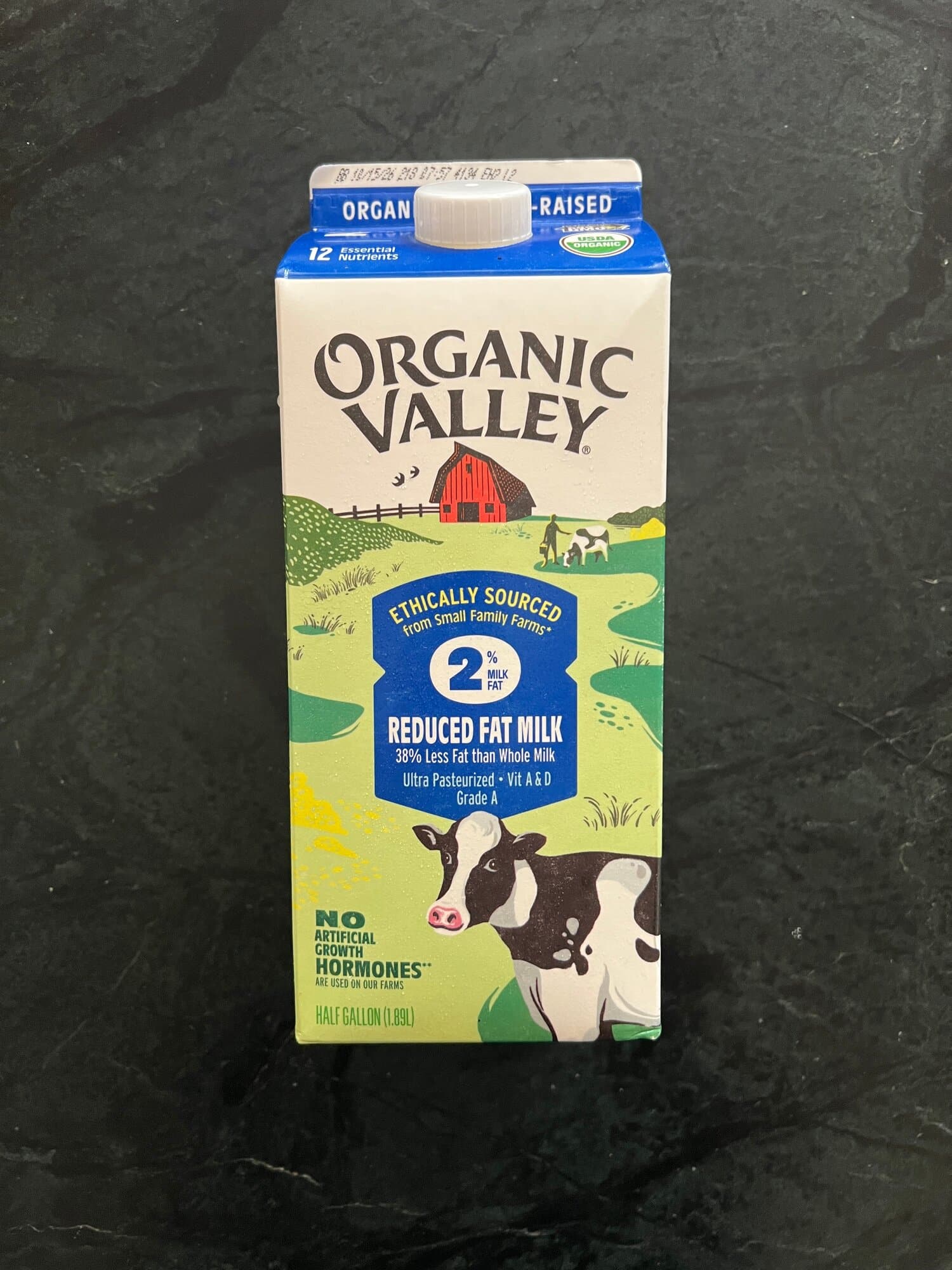
A carton of milk can be “natural,” “fresh,” “local,” “family farmed,” “grass-fed,” “organic,” “humane,” “regenerative,” and possibly blessed by a cow wearing a flower crown, depending on how ambitious the label designer was feeling that day.
The problem is not that every label is meaningless. Some labels do matter. Some represent real standards, inspections, or production practices. Others are vague, limited, or carefully worded to make us feel better without telling us very much.
And that is the issue.
When you are standing in the grocery aisle trying to make a better choice, the label is supposed to help. Instead, it often gives you a pretty picture, a few comforting words, and the faint sense that you need a law degree, a farming background, and a lie detector to buy yogurt.
This article is here to make dairy labels easier to understand. Not perfect. Not magical. Just clearer.
Because Intentional Cooking is not about being fooled by the pasture on the carton. It is about asking what the label actually means — and what it conveniently leaves out.


Hosting this year?
Which Thanksgiving Are You Hosting?
I wrote four complete menus so you can plan only the dinner you can actually pull off. Each one has its own shopping list, oven schedule and hour-by-hour plan.
✓
Cooking for 2–4
Menu 1 · Turkey breast, one oven, planned leftovers
✓
A classic dinner for 8–12
Menu 2 · Brined turkey, half the work done Wednesday
✓
A big crowd, 12–16
Menu 3 · Ham and slow cooker turkey; guests bring the rest
✓
Vegetarian guests
Menu 4 · Stuffed acorn squash with mushroom gravy
Free 40-page printable, with a thawing chart, a “What can I bring?” sheet and my fixes for when things go sideways.
Dairy Labels at a Glance: what each one actually tells you
Organic
feed and pasture rules
Grass-Fed
what cows ate, depending on the certifier
Local
geography, not ethics
Non-GMO
feed and ingredients
Raw
processing, not welfare
A2
a protein type
01
The Most Important Thing to Know About Dairy Labels
The most important thing to understand is this: a dairy label may tell you something useful, but it rarely tells you the whole story.
A label may tell you what the cow was fed. It may tell you whether antibiotics or synthetic pesticides were restricted under a specific program. It may tell you whether the farm was audited under a welfare certification. It may tell you whether the dairy was produced locally or under organic standards.
But many labels do not tell you whether calves stayed with their mothers. They may not tell you what happened to male calves. They may not tell you whether cows spent meaningful time on pasture, whether they were confined indoors, how long they lived, or how they were handled when they stopped producing enough milk.
Read the whole carton
The label matrix
Eleven claims, five questions. On calves, only a few labels say anything at all.
Read across a row for one label. The first two columns are the ones the carton almost never answers.
Calf contact
Male calves
Feed
Pasture
Audited
Organic
○
○
●
●
●
Grass-Fed
◐
◐
◐
◐
◐
Pasture-Raised
○
○
○
◐
◐
Certified Humane
○
○
◐
◐
●
Animal Welfare Approved
◐
●
●
●
●
Regenerative
○
○
◐
◐
◐
Local
○
○
○
○
○
Natural / Farm-Fresh
○
○
○
○
○
Non-GMO
○
○
◐
○
◐
Raw
○
○
○
○
○
A2
○
○
○
○
○
● Required by the label’s standard
◐ Partly, or depends on the certifier
○ The label doesn’t tell you
That is why dairy labels should be treated as clues, not guarantees.
A label can be a starting point. It should not be the end of the conversation.
02
Organic Dairy
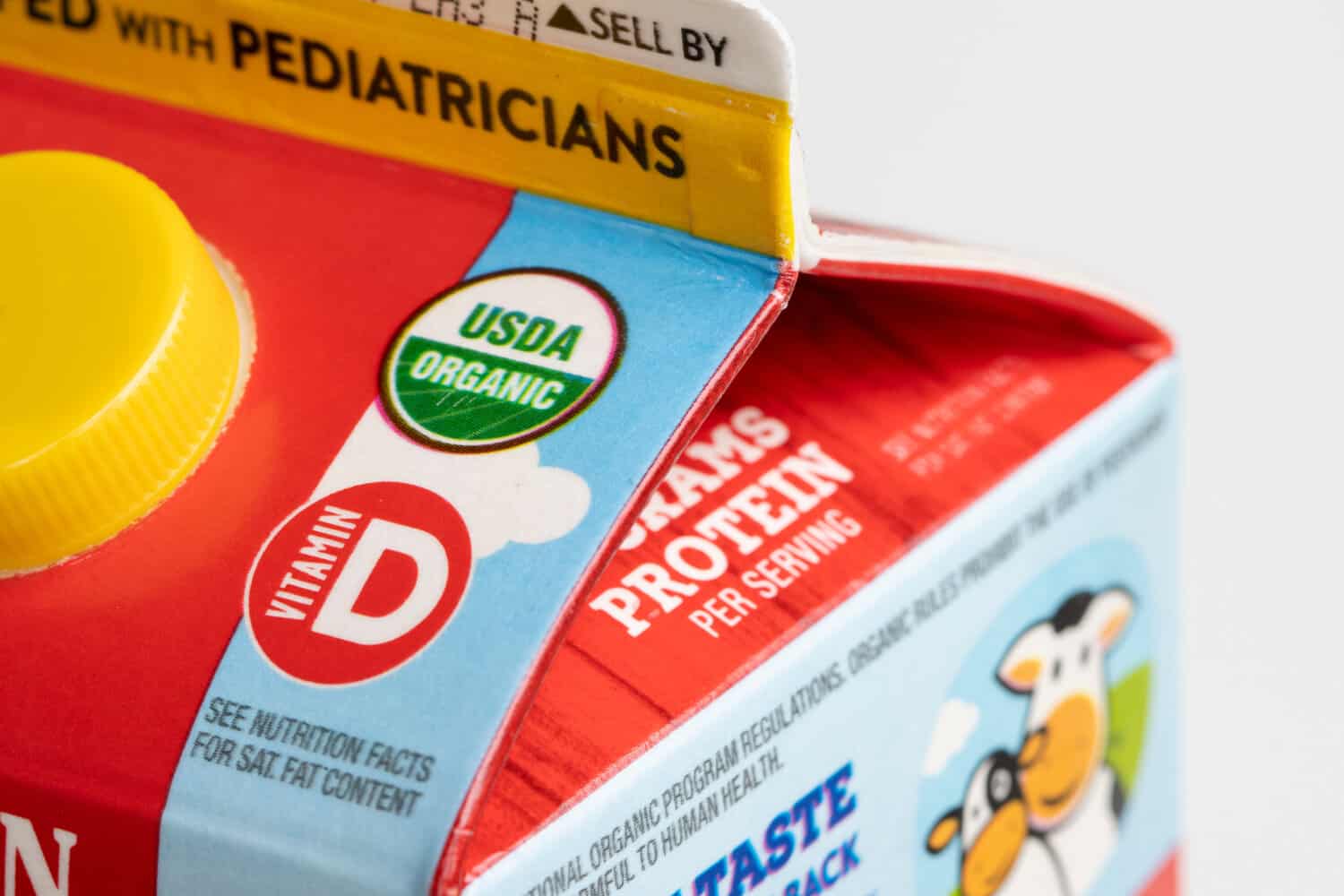
The USDA Organic label is one of the more regulated labels in the dairy aisle. Organic dairy standards include requirements around organic feed, restrictions on certain synthetic substances, and pasture access for ruminant animals. Organic dairy cows must graze during the grazing season, and that grazing season must be at least 120 days. They must also receive at least 30 percent of their dry matter intake from pasture during that grazing period.
That matters. It is not nothing.
But organic does not automatically mean the cow had a storybook life. It does not necessarily mean calves stayed with their mothers. It does not automatically mean the farm is small. It does not mean every animal welfare concern disappears. Organic is a production standard, not a complete moral guarantee.
USDA Organic
So when you see “organic,” read it as: this product met organic rules, including specific feed and pasture requirements.
Do not read it as: every cow and calf lived exactly the way I imagine cows and calves should live.
Because labels are not fairy godmothers. If they were, the dairy aisle would be a very different place.
03
Grass-Fed Dairy
“Grass-fed” sounds beautiful, and sometimes it can point to a better system. Cows are grazing animals. Their bodies are designed to eat forage, and real pasture access can support more natural behavior.
But “grass-fed” can vary depending on the label, certifier, and brand. Some grass-fed claims are tied to a specific certification or standard. Others are less clear. A product may say grass-fed, but that does not always tell you how much time the cows spent outside, what else they were fed, whether the claim was independently verified, or how calves were treated.
This does not mean grass-fed is meaningless. It means you have to look for details.
Better questions include: Is the grass-fed claim certified by a third party? Are the cows pasture-based? What percentage of the diet comes from grass or forage? Are calves raised on the same farm? What happens to male calves?
A good label should answer questions. If it only creates a warm feeling and a picture of a cow in sunset lighting, keep asking.
04
Pasture-Raised Dairy
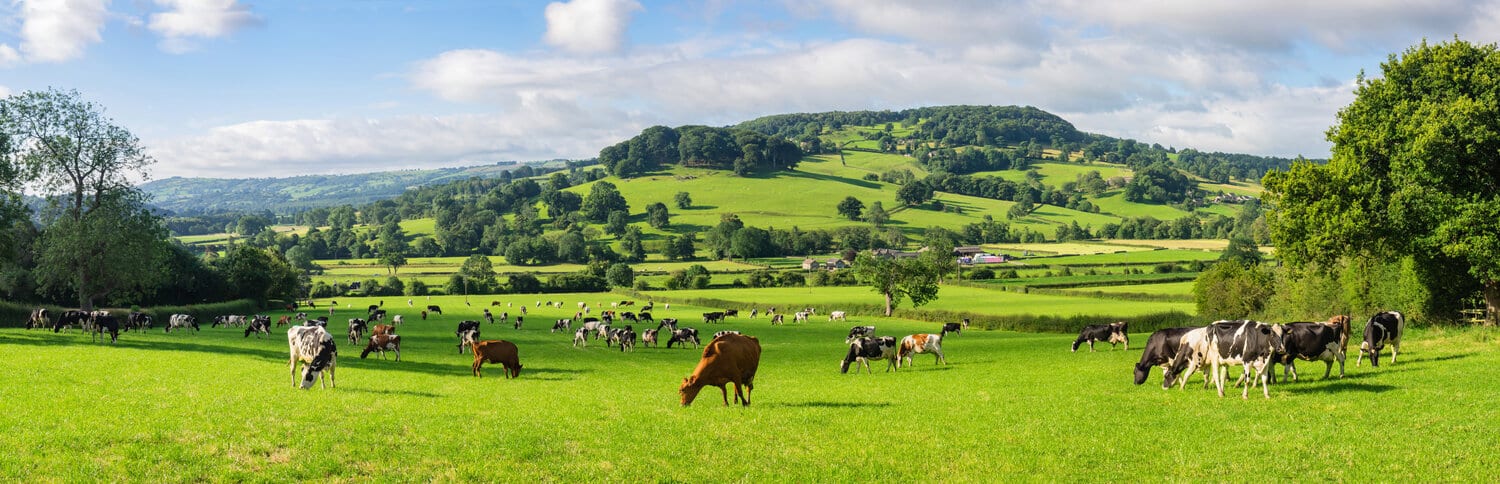
“Pasture-raised” may be one of the most emotionally powerful labels because it gives us the image we want: cows outside, moving, grazing, breathing fresh air, and not living their entire lives on concrete.
That image matters. Pasture access can be meaningful for welfare, movement, grazing, and natural behavior. But “pasture-raised” can also be confusing unless it is connected to a clear standard.
How much pasture? How many days? How many hours? Is it seasonal? Is it verified? Is the animal actually grazing or just technically allowed access to an outdoor area?
Those details matter.
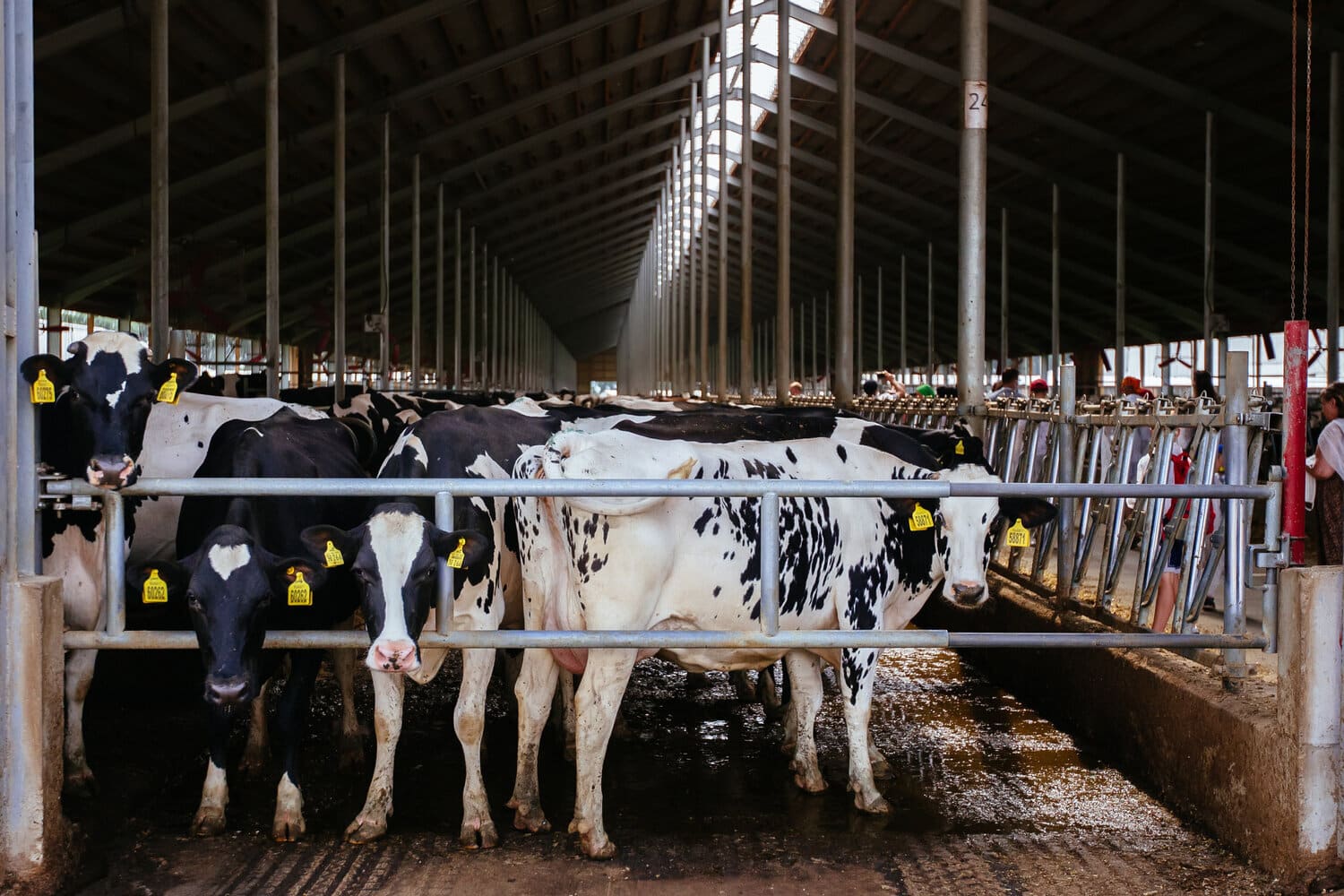
Pasture is not the whole story
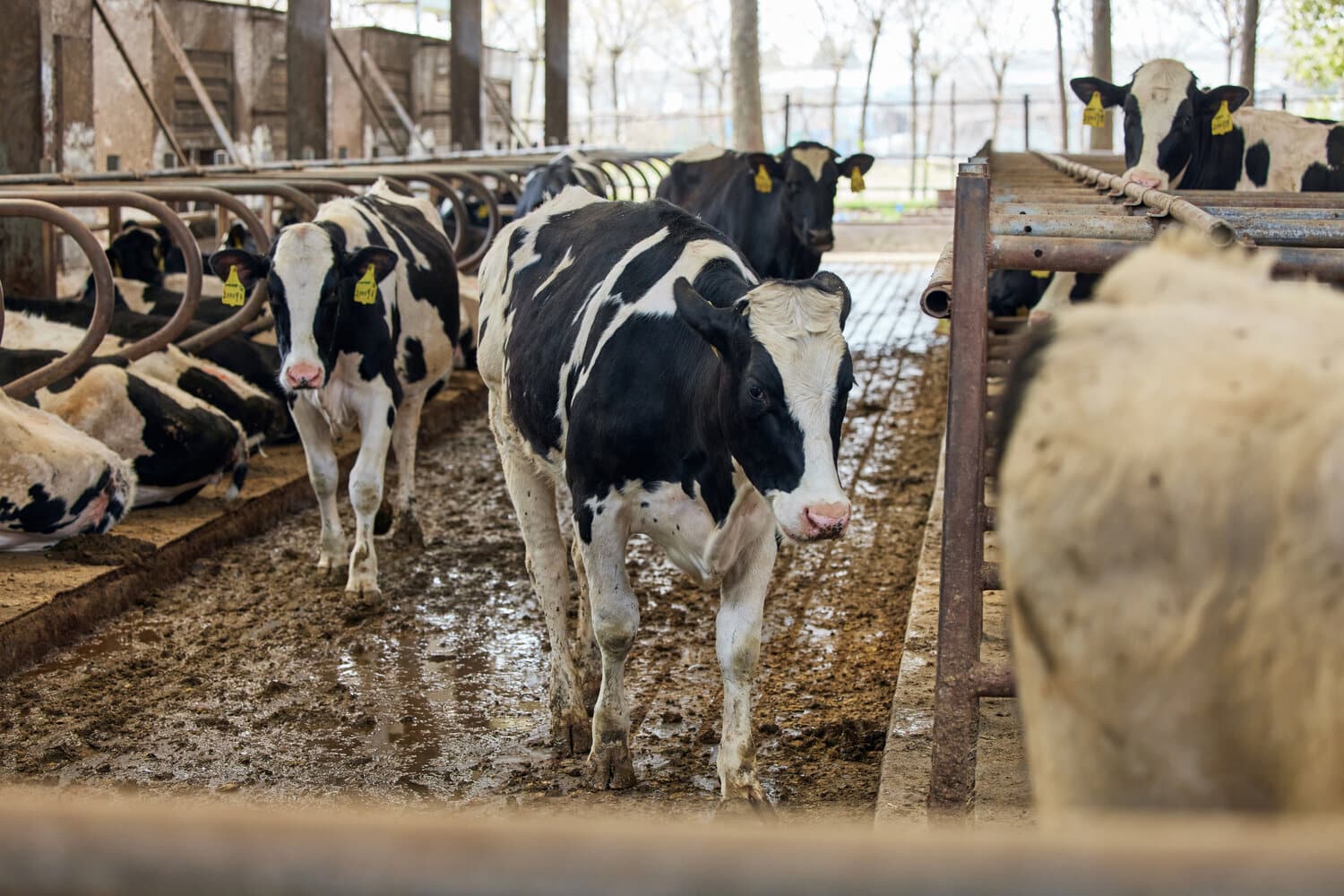
Behind the label
A cow who can step outside briefly is not the same as a cow whose life is built around pasture. A small outdoor lot is not the same as grazing in a field. And pasture access, while important, still does not automatically answer the calf question.
What “pasture” can mean
“Pasture” can mean anything from a door to a field.
Pasture-raised has no single standard. Ask which one the label means.
01
Indoors year-round
02
A small outdoor lot
stepping outside briefly
03
Seasonal grazing
Organic: at least 120 days, an average of 30% of feed from pasture
04
A life built around pasture
grazing in a field
Pasture matters. But pasture alone does not tell the whole dairy story.
05
Certified Humane Dairy
Certified Humane is a third-party animal welfare certification. That means farms must follow program standards and are audited for compliance. In general, a legitimate third-party welfare certification is more meaningful than a vague claim like “humanely raised” with no explanation.
That said, “humane” is a big word.
Different welfare certifications have different requirements. Some allow practices that consumers may still find troubling. Some do not require cows to live on pasture. Some may allow individual calf housing for a period of time. Some focus more on housing, handling, feed, water, and health than on extended mother-calf contact.
So when you see a certified humane label, it is worth taking seriously — but also worth looking up the actual standard.
The word “humane” should make us curious, not sleepy. Ask: humane compared to what? Humane according to whom? Humane for the cow? For the calf? For how long?
A certification can be helpful. It is not a permission slip to stop thinking.
06
Animal Welfare Approved
Animal Welfare Approved, from A Greener World, is generally considered one of the stronger welfare certifications. Its standards tend to emphasize pasture-based systems, more natural behavior, and independent auditing.
For dairy, this kind of certification can be more meaningful than vague marketing language because it is connected to detailed standards. Still, as with any certification, the details matter. What does the standard require for calves? How are cows housed? How much pasture access is required? What happens when animals leave the farm?
This is where Intentional Cooking becomes very practical: if you are going to buy dairy, look for labels that are specific, audited, and transparent.
“Animal Welfare Approved” gives you more to work with than a carton that simply says “happy cows.”
Although, to be fair, “happy cows” is doing a lot of emotional labor for two words.
07
Regenerative Dairy
“Regenerative” is one of the most popular words in food right now. At its best, regenerative agriculture can refer to farming practices that improve soil health, support biodiversity, restore ecosystems, and reduce environmental harm.
That sounds wonderful. I want that world. I would also like laundry that folds itself, but let us stay focused.
The challenge is that “regenerative” can be used in different ways, and not every regenerative claim tells you what is happening to the animals. A dairy farm may use soil-building practices and still separate calves early. A regenerative label may speak to land management but not fully answer animal welfare questions.
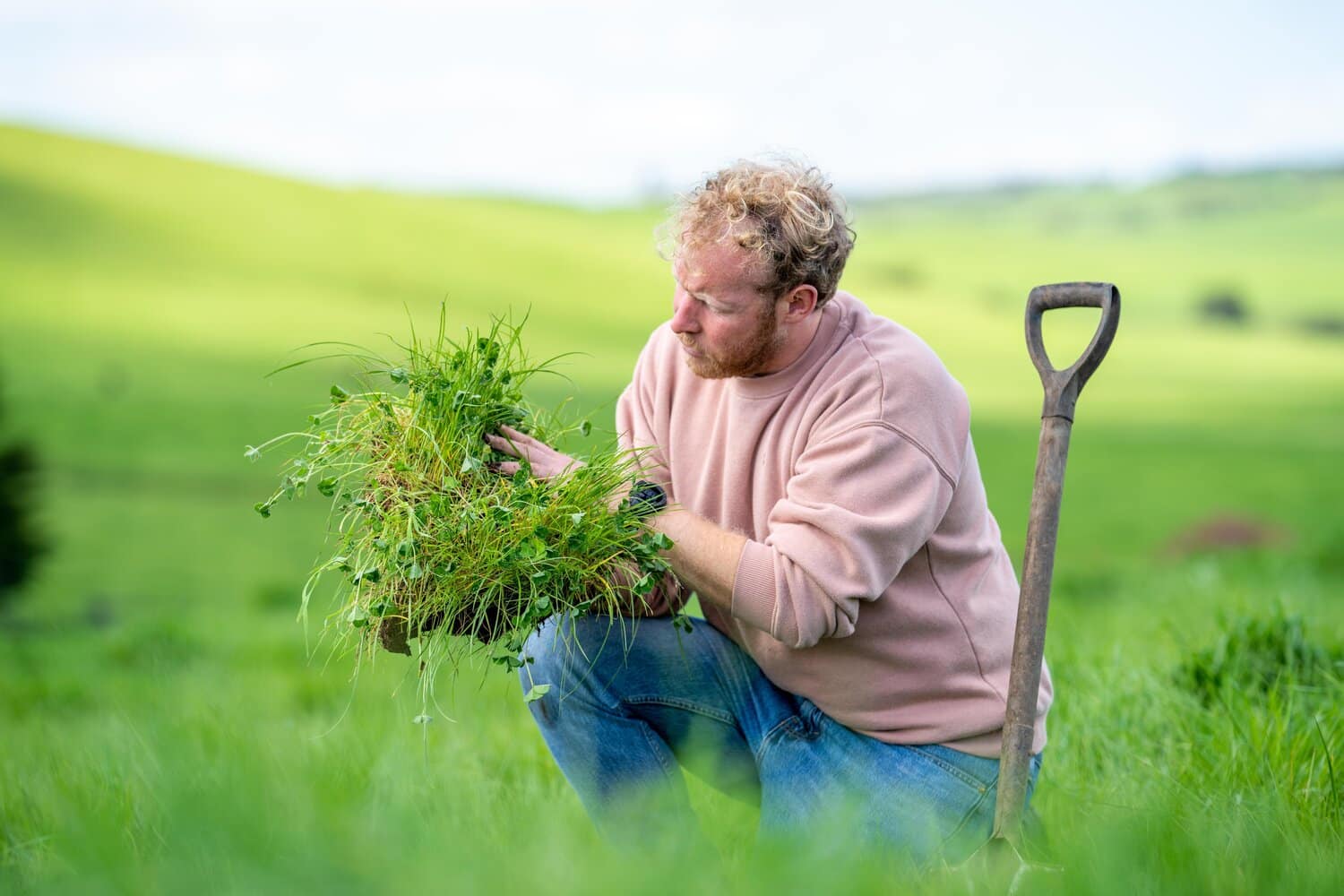
“Regenerative” is about the land, not the animals
So “regenerative” should make you ask two sets of questions:
What is this farm doing for the land?
And what is this farm doing for the animals?
Both matter.
A food system cannot be truly regenerative if it restores soil while ignoring suffering. The land matters. The cow matters. The calf matters. The people doing the labor matter too.
08
Local Dairy
“Local” can be meaningful, but it is not automatically better.
A local dairy may be wonderful. It may allow more transparency, fewer transportation miles, fresher products, and a closer relationship between the consumer and producer. Local farms may be easier to visit, call, or ask direct questions.
But local does not automatically mean humane. A nearby farm can still separate calves immediately. A local farm can still confine animals. A local farm can still send male calves into the same larger systems.
Local tells you geography. It does not tell you ethics.
That said, local can be useful because it gives you a chance to ask questions. If you have access to a local dairy, ask how calves are raised, whether calves stay with their mothers, how cows are housed, what happens to male calves, and whether the farm uses any third-party certification.
A good farmer should not be offended by respectful questions. A good food system should be able to withstand daylight.
09
Natural, Fresh, Pure, and Farm-Fresh
These are some of the most comforting words in the grocery store, and some of the least helpful.
“Natural” sounds lovely. “Fresh” sounds clean. “Pure” sounds like something from a mountain stream. “Farm-fresh” sounds like a person in boots handed you the milk personally while birds sang in the background.
But these words often tell you very little about animal welfare.
They may not tell you what cows ate, whether they grazed, whether calves were separated, whether male calves were sold, whether cows were confined, or whether anyone independently verified the claim.
These words are not always lies. They are just often incomplete.
And incomplete information is exactly how marketing keeps us comfortable.
10
Non-GMO Dairy
A non-GMO label usually relates to feed and ingredients, not directly to animal welfare. It may mean the cows were fed non-GMO feed, depending on the certification or claim. For some consumers, that matters.
But non-GMO does not mean pasture-raised. It does not mean organic. It does not mean humane. It does not mean calves stayed with their mothers. It does not mean male calves had better outcomes.
This is a classic example of a label that may answer one question while leaving the most important animal welfare questions untouched.
So if non-GMO matters to you, that is fine. Just do not let it do work it was never designed to do.
11
Raw Milk
Raw milk is milk that has not been pasteurized. People who seek it out often do so because they prefer less processed foods, believe it tastes better, or believe it has health benefits.
But raw milk is complicated, and this article is not here to tell anyone to drink it. Public health agencies warn that raw milk can carry dangerous bacteria, and raw milk laws vary by state. Federal law prohibits interstate sale of raw milk for human consumption, while state rules differ.
From an animal welfare perspective, raw milk does not automatically tell you how cows or calves were treated. A raw milk dairy may be small, local, pasture-based, and transparent — or it may not answer the welfare questions you care about.
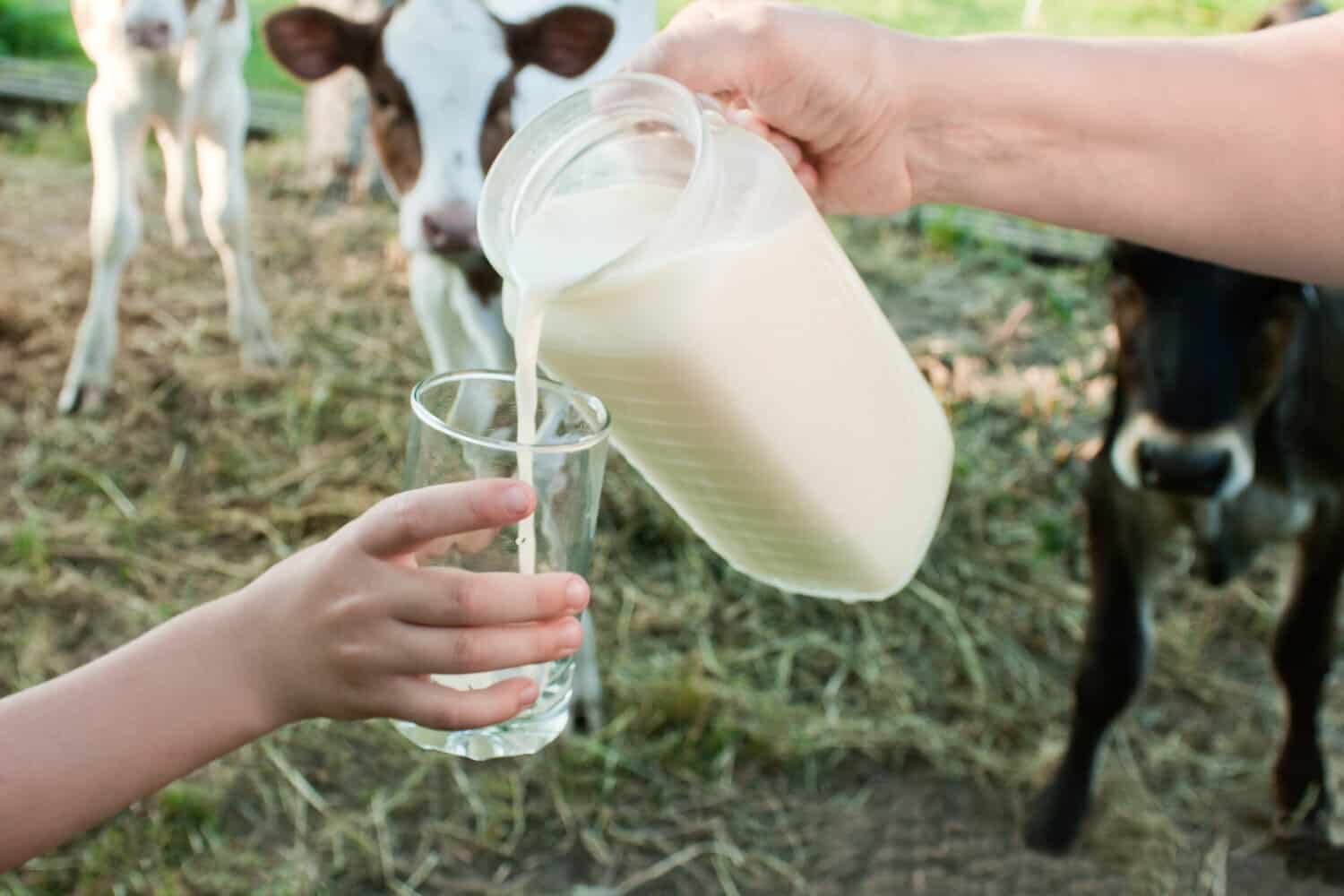
Raw = not pasteurized

Processed milk storage
The question is not only: is the milk raw or pasteurized?
The question is also: how were the cows raised? What happened to the calves? How transparent is the farm? What standards are in place?
Raw does not automatically mean humane. Pasteurized does not automatically mean cruel. The label tells you about processing, not the whole life of the animal.
12
A2 Milk
A2 milk refers to milk that contains a specific form of beta-casein protein. Some people buy A2 milk because they feel it is easier to digest than conventional milk.
That may be personally useful for some consumers, but A2 is not an animal welfare label.
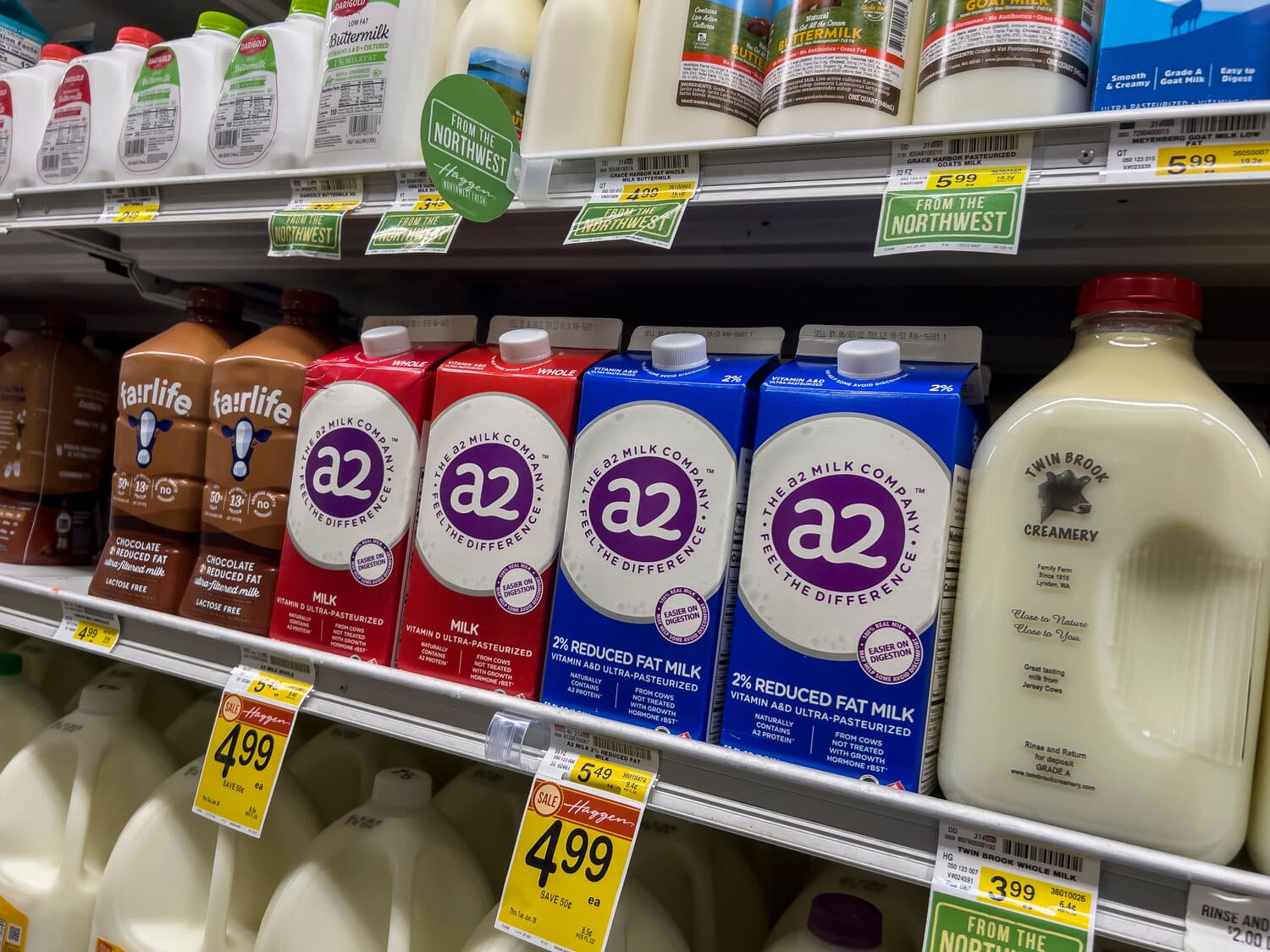
In the dairy aisle
A2 milk does not automatically mean cows are pasture-raised. It does not mean calves stayed with their mothers. It does not mean the dairy is small, local, organic, or humane. It tells you something about the type of protein in the milk, not the ethics of the production system.
This does not make A2 bad. It just means A2 is answering a different question.
And when we are talking about Intentional Cooking, we need to ask all the questions, not just the one printed largest on the carton.
13
What Labels Should You Look For?
If animal welfare is your priority, look for labels that are specific, verified, and connected to actual standards. Third-party certifications are generally more useful than vague claims written by the brand itself.
What to look for
Specific, verified and connected to a real standard.
✓
Better signs
Independent animal welfare certification
Clear pasture standards
Transparent information about calf raising
Publicly available standards
Farm-level traceability
Willingness to answer questions
Details about what happens to male calves
Meaningful pasture access, not just romantic packaging
−
Less helpful signs
“Natural”
“Farm-fresh”
“Happy cows”
“Pure”
“Premium”
Pasture imagery with no standard behind it
Welfare language with no certification or explanation
Specific and verified beats warm and vague.
A good label should help you understand the system. A weak label asks you to trust the feeling.
Feelings are lovely. But they are not standards.
14
Questions to Ask Before Buying Dairy
If you are buying dairy and want to make a more intentional choice, start with better questions.
Screenshot this
Pocket card
Questions to ask before buying dairy
01
How are calves raised?
02
Are calves separated from their mothers shortly after birth?
03
Are calves allowed any extended cow-calf contact?
04
What happens to male calves?
05
Do cows have meaningful pasture access?
06
Is the farm third-party certified?
07
Are the standards public?
08
Can consumers visit or contact the farm?
09
Is the brand transparent about animal welfare?
You may not get perfect answers. You may not get answers at all. That tells you something too.
Transparency is not everything, but it is a beginning. If a company is proud of how animals are raised, it should be able to explain it clearly.
15
So What Should We Do?
This is where the conversation becomes practical.
If you want to reduce harm, one option is to use less dairy overall. Another is to choose better dairy when you do buy it. Another is to use plant-based alternatives where they work well. Another is to reserve dairy for recipes where it truly matters instead of using it automatically.
No one needs to perform purity in the grocery aisle. That is exhausting, and the dairy aisle is already cold enough.
But we can become harder to fool.
We can stop letting vague words do the work of real standards. We can stop assuming a pretty label means a humane system. We can ask what happened before the carton, before the cream, before the cheese, before the yogurt.
Because every dairy product has a backstory. The label is just the part the company chose to show us.
This Is Intentional Cooking
Labels can help, but they can also distract.
Intentional Cooking is not about memorizing every certification or becoming suspicious of every carton like it is a tiny refrigerated criminal.
It is about awareness. It is about understanding that labels can help, but they can also distract. A label can point us toward better choices, but it can also soothe us into not asking deeper questions.
When it comes to dairy, the deeper questions are not complicated.
Five questions to ask in the dairy aisle
How did the cow live?
What happened to her calf?
What happened to the male calves?
Did the animal have access to pasture, care, comfort, and a life beyond production?
Is anyone verifying the claim, or is the brand just hoping we enjoy the font?
That is the work. Not perfection. Not guilt. Not panic-shopping while reading seventeen labels and questioning your entire existence near the yogurt.
Just awareness.
The next time you pick up a dairy product, pause for a moment. Look past the pasture on the carton. Look past the words designed to comfort you. Ask what the label really means, what it does not say, and whether the product still aligns with your values.
Then choose with your eyes open.
And cook like it matters.
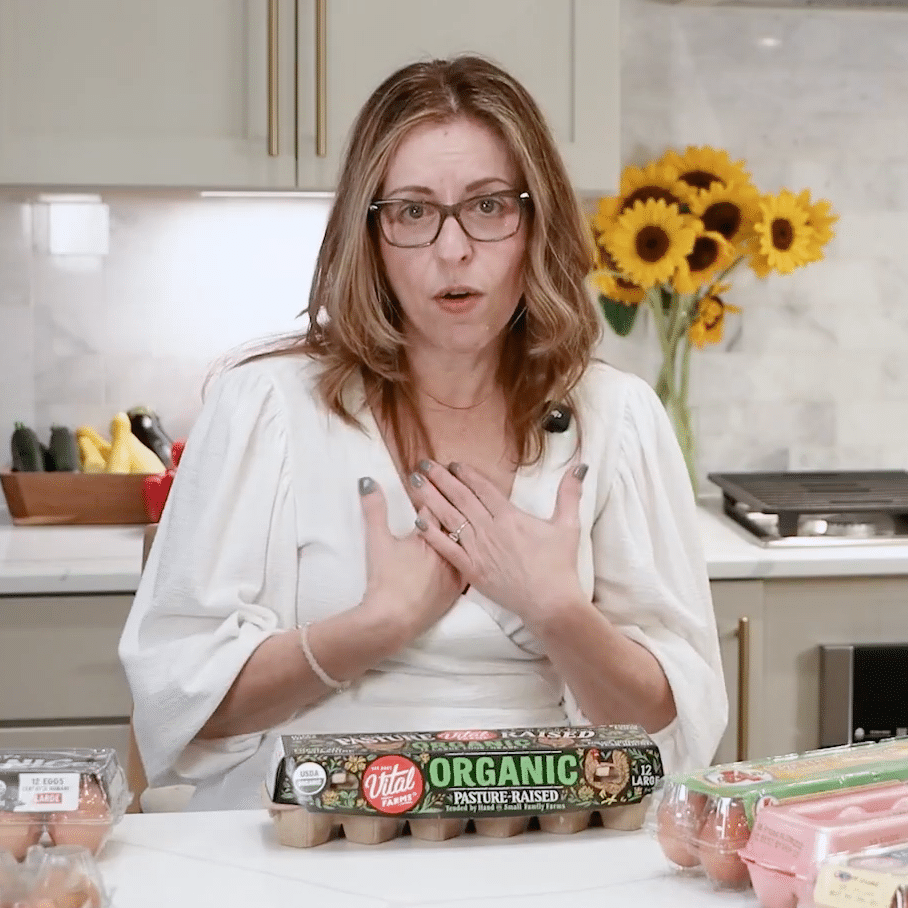
Let’s talk about cooking with purpose.
Intentional Cooking is not fancy. It is honest. Every ingredient matters. Make it yours.
Frequently Asked Questions
Does organic dairy mean calves stay with their mothers?
No. USDA Organic covers feed, synthetic inputs and pasture access, including a grazing season of at least 120 days, but it does not require extended cow-calf contact.
Is “grass-fed” milk regulated?
There is no federal grass-fed standard for dairy. Look for a third-party certification, such as American Grassfed, PCO 100% Grassfed or Certified Grassfed by AGW, and check what it requires.
What does “pasture-raised” mean on dairy?
There is no single standard behind the phrase. Ask how much pasture, how many days, how many hours and whether it is verified.
Which dairy label is best for animal welfare?
Independent welfare certifications with public standards are more meaningful than vague claims. Animal Welfare Approved is generally considered one of the stronger ones, but it is still worth reading the standard.
Is local dairy more humane?
Not automatically. Local tells you geography. It does not tell you how cows and calves were treated.
Is raw milk more humane than pasteurized milk?
Raw does not automatically mean humane, and pasteurized does not automatically mean cruel. How the cows were raised is a separate question. Public health agencies also warn that raw milk can carry dangerous bacteria.
The dairy loop
The label is printed here, downstream of the calves it almost never describes.
Pregnancy
bred again
→
Birth & separation
usually within the first day
→
Lactation
milked for months
→
Dry period
6–8 weeks, then again
↺
Calves & cows
female calves rejoin · males & cull cows leave
→
Processing
tank · truck · plant
→
Carton & label
the claim is set here
→
Kitchen
your recipe
■ The part this article covers
▢ Covered by the companion pieces below
↺ The cycle starts again with the next calf
The Intentional Cooking Series: Dairy
5 Articles
Part 1 · The System
Part 2 · Separation
Part 3 · Male Calves
Part 4 · You Are Here
Dairy Labels Explained
Part 5 · Alternatives
Leave a Reply