
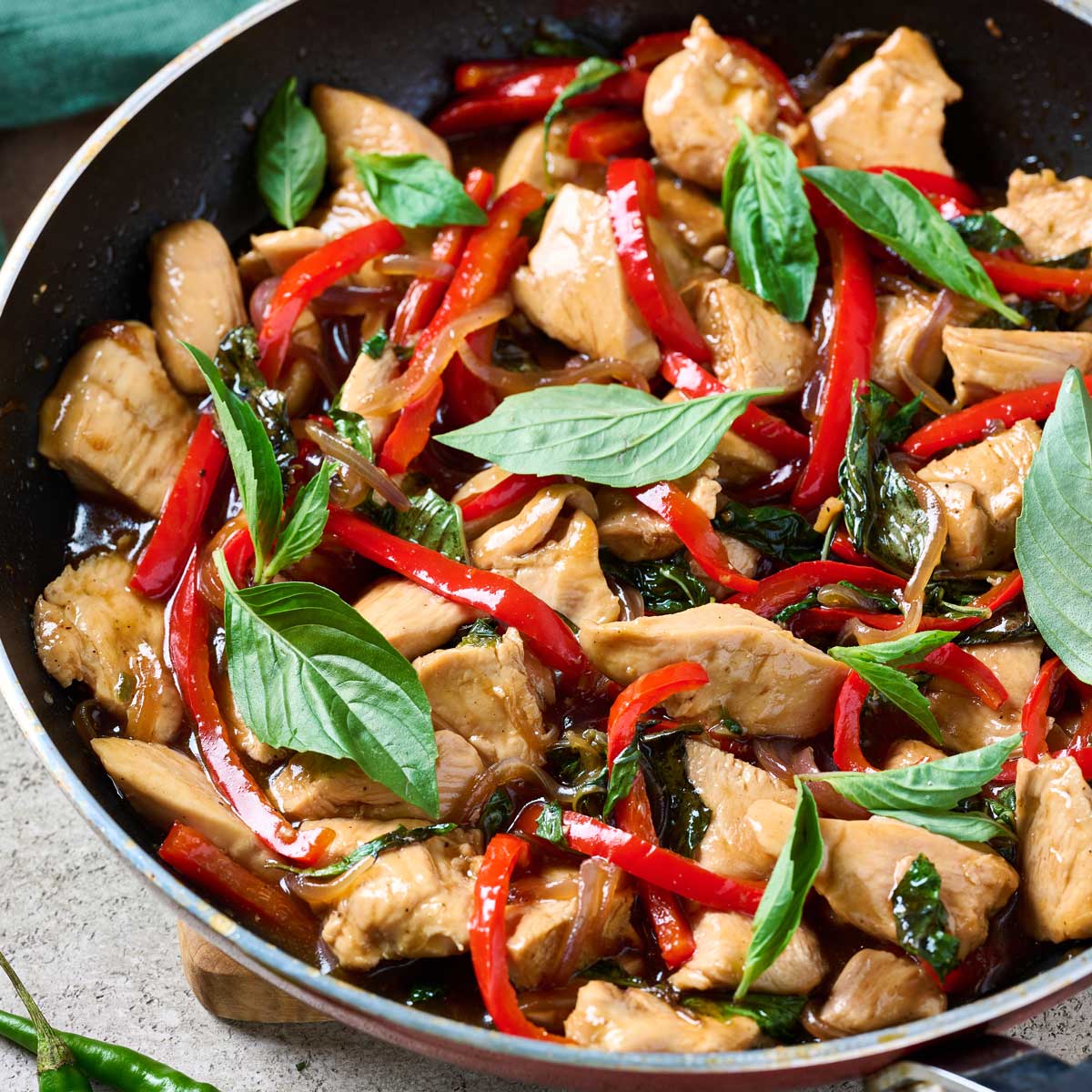
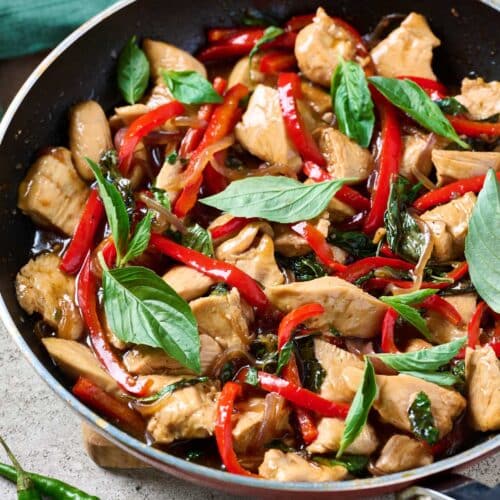
This is my approachable version of traditional Thai chicken with basil, made with ingredients you can find in most American supermarkets. It cooks in about 20 minutes, and you can easily adjust the chiles to make it mild or wonderfully spicy.
I have made this dish many times with both ground chicken and pieces of chicken, but I prefer the texture of small pieces of chicken breast or thigh. They stay tender, soak up the sauce and make this simple stir-fry feel like a complete dinner.
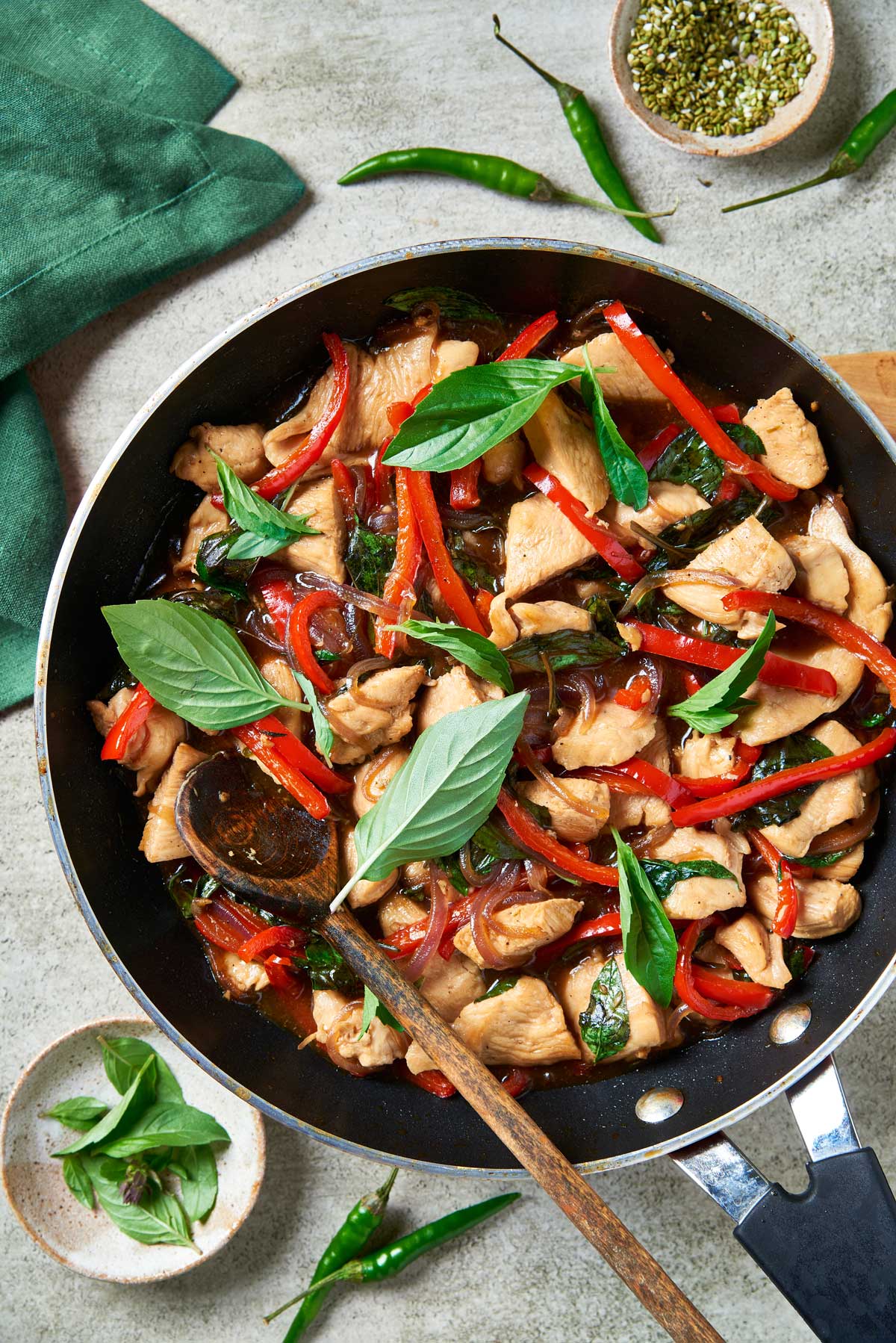
⭐️ Thai Basil Chicken: recipe at a glance
- Quick & Easy: Once the ingredients are prepped, the entire stir-fry cooks in about 8 minutes.
- Flavor: Sweet soy sauce, oyster sauce and fish sauce create a savory, slightly sweet and deeply flavorful sauce.
- Customizable: Use chicken breasts or thighs, adjust the number of chiles and choose the variety of basil available to you. You can also use firm tofu instead.
- One-Pan Meal: The chicken, vegetables and sauce cook in the same wok or skillet.
- Weeknight-Friendly: Serve it with rice or noodles for a satisfying 20-minute dinner.
- Dietary: Dairy-free, egg-free as written and nut-free when prepared with a nut-free cooking oil. This recipe contains soy, fish and shellfish.
🔎 What is Thai Basil Chicken?
Thai basil chicken is a quick Thai stir-fry made with chicken, garlic, chiles, a savory sauce and plenty of fresh basil.
Traditional Pad Krapow Gai is prepared with holy basil and commonly served over jasmine rice with a Thai-style fried egg. Depending on the cook, the chicken may be minced, finely chopped or cut into small pieces.
This version keeps the traditional high-heat cooking method and bold Thai flavors while adding red onion and bell pepper, similar to the Thai basil chicken served in many Thai restaurants throughout the United States.
✔️ Ingredients You’ll Need

For the complete list of ingredients and exact quantities, check the printable recipe card below.
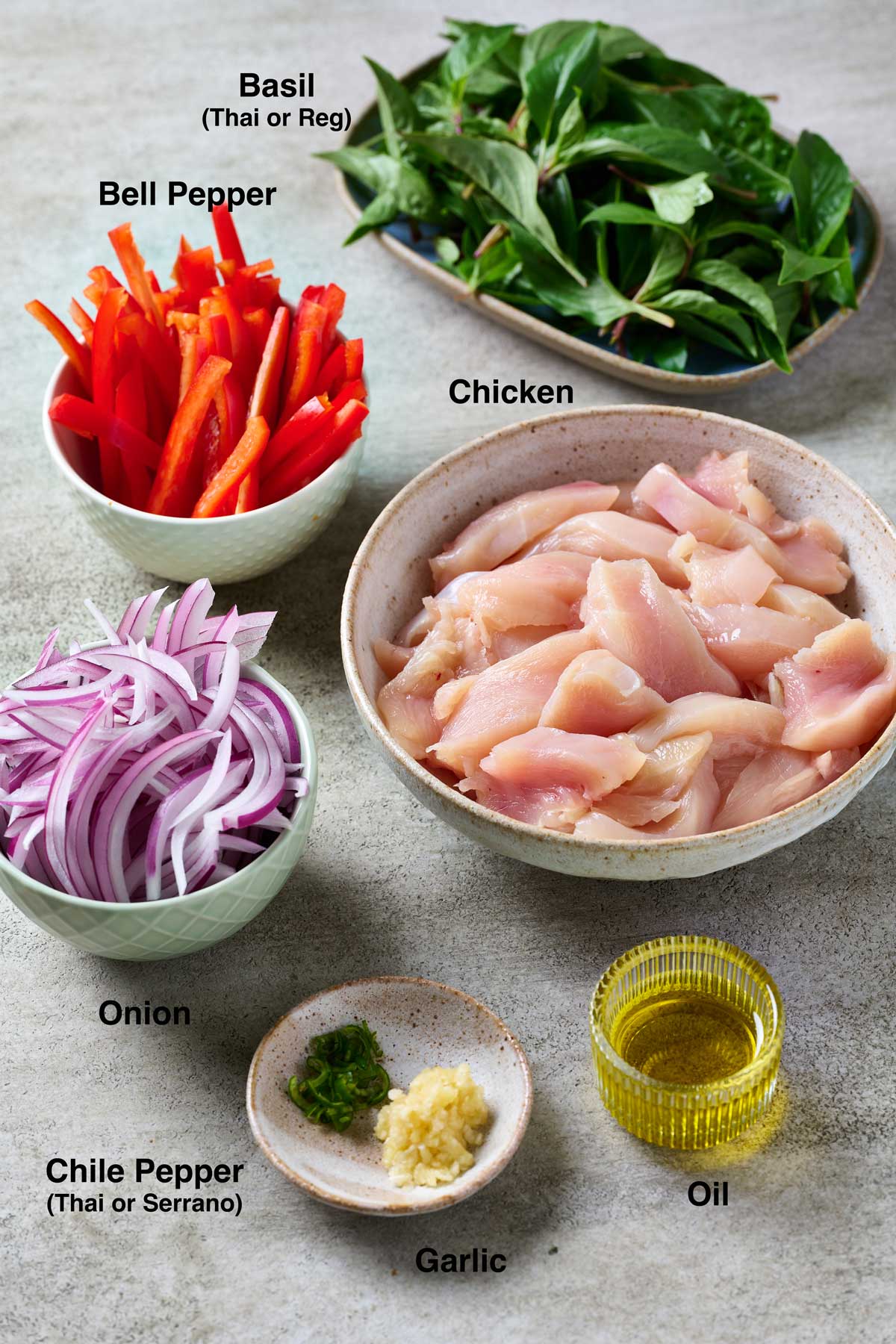
🔎 For the Basil Chicken Stir Fry
- Chicken: Use boneless, skinless chicken breasts or thighs cut into small, evenly sized pieces. Chicken thighs are slightly juicier and more forgiving, while chicken breasts are leaner and cook very quickly. Ground chicken can also be used.
- Oil: Use vegetable, canola, avocado, peanut or another neutral cooking oil suitable for stir-frying.
- Garlic: Fresh garlic provides the best flavor. Finely chop or mince it so it cooks quickly. In a pinch, use garlic paste.
- Thai or Serrano Chiles: Thai chiles provide the most traditional heat, but serrano chiles are much easier to find. Seed the chiles for a milder dish or leave some of the seeds and membranes intact for more heat.
- Red Onion: Thinly sliced red onion adds sweetness and a little texture. Yellow, white or sweet onion can be substituted.
- Red Bell Pepper: Bell pepper adds color, sweetness and a crisp-tender texture. Any color bell pepper will work.
- Basil: Holy basil is the traditional choice. Thai sweet basil, usually labeled simply “Thai basil,” is the best widely available substitute. Italian basil can be used when neither is available.
🔎 For the Thai Stir Fry Sauce
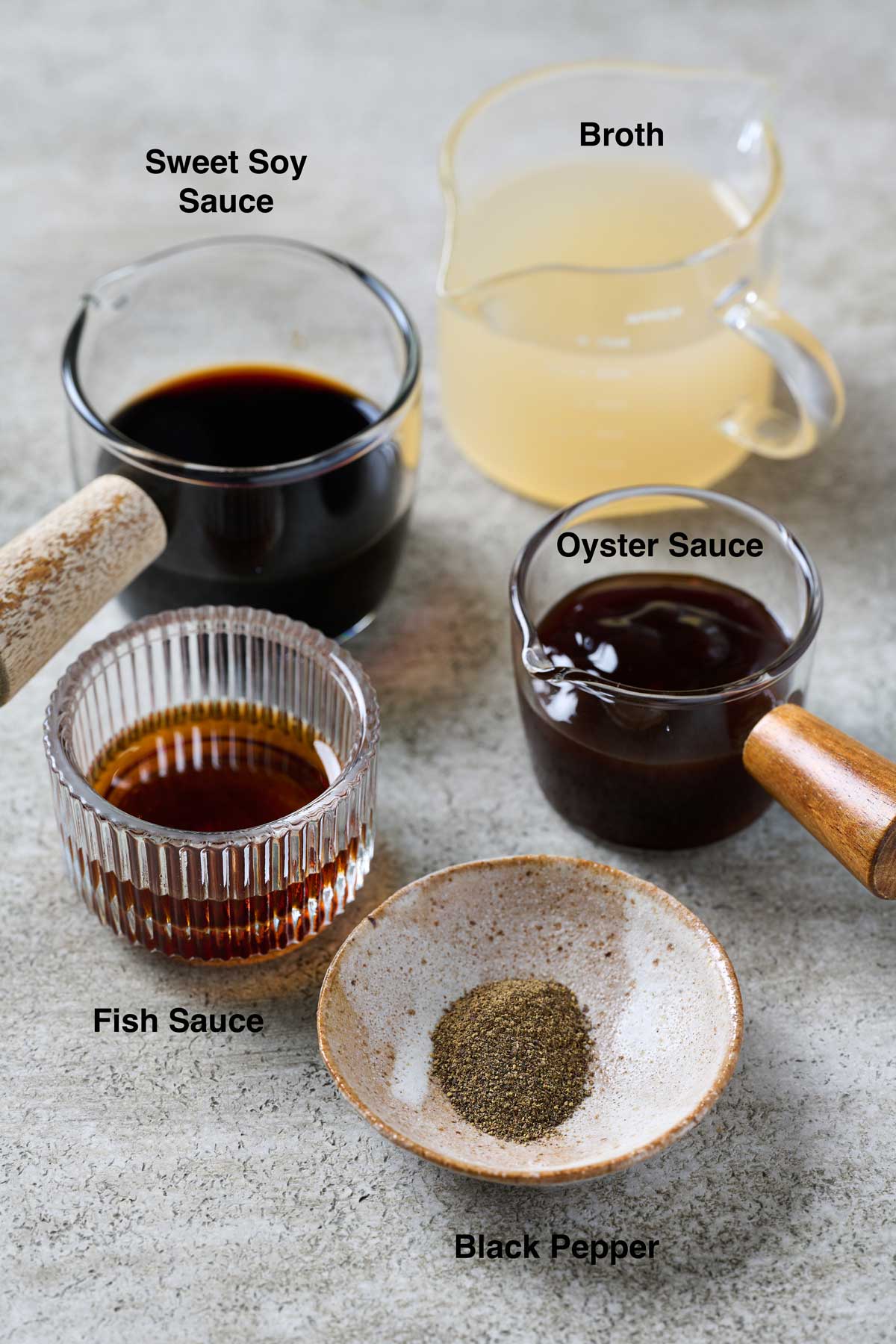
- Sweet Soy Sauce: This provides sweetness, seasoning and color. If you don’t have it, combine regular or low-sodium soy sauce with a small amount of granulated or brown sugar.
- Oyster Sauce: Oyster sauce gives the stir-fry its glossy consistency and rich, savory flavor. Use a gluten-free oyster sauce if needed or if making this recipe with tofu, you can use vegetarian oyster sauce.
- Fish Sauce: A small amount adds the salty, fermented depth associated with Thai cooking. It does not make the finished dish taste fishy. For a vegetarian dish, use vegan fish sauce or liquid aminos.
- Chicken Broth: The broth helps distribute the sauce and gives you enough to spoon over rice or noodles. Water can be substituted.
- Black Pepper: Adds a gentle background heat that complements the fresh chiles.
✔️ Make It Gluten-Free
To make gluten-free Thai basil chicken, use gluten-free tamari in place of the soy sauce and check the labels on the oyster sauce, fish sauce and broth. Not every brand is gluten-free.
🌿 Holy Basil vs Thai Basil
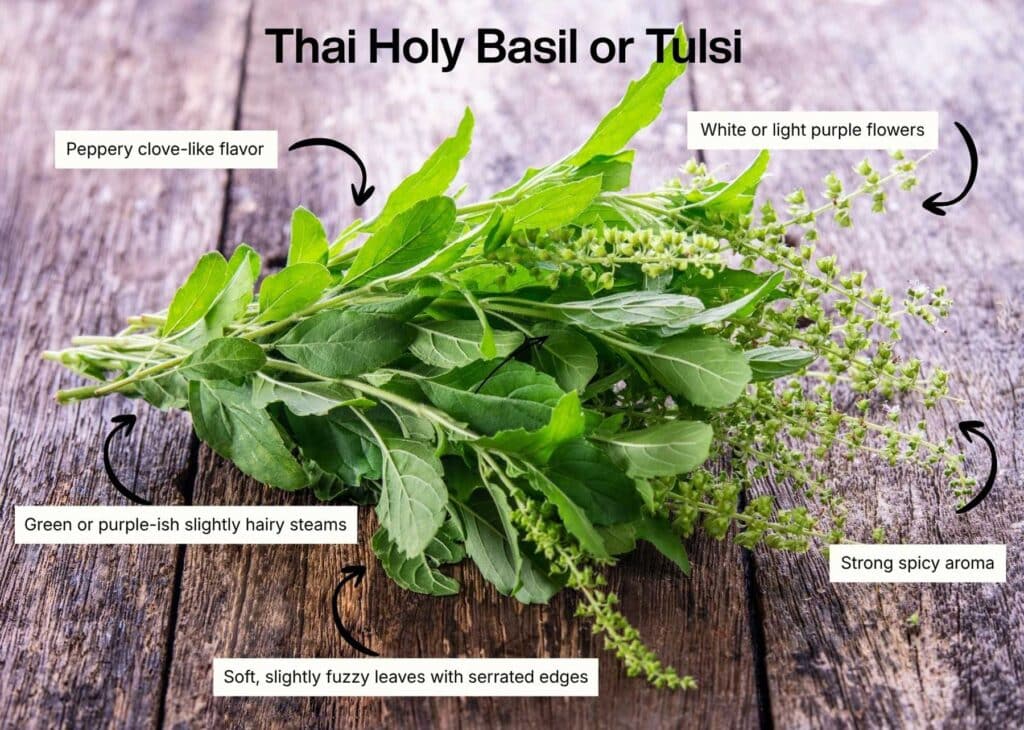
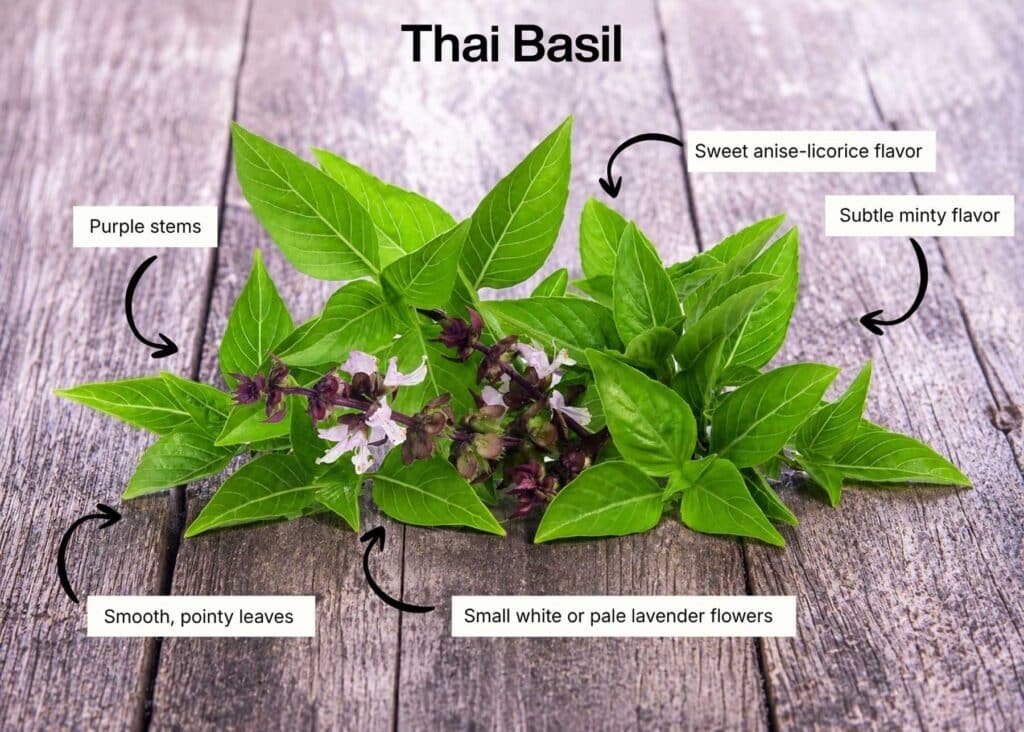
Although the names are sometimes used interchangeably in American supermarkets and restaurants, holy basil and Thai basil are not the same herb.
Holy basil has a peppery, slightly clove-like flavor. This is the basil traditionally used in Pad Krapow.
Thai sweet basil has a sweeter flavor with notes of anise or licorice. It is easier to find in Asian markets and some large supermarkets.
Italian basil is milder and sweeter but still makes a delicious chicken basil stir-fry.
Use holy basil when you can find it, but don’t let an herb hunt keep you from making dinner. Thai basil is an excellent and practical choice for this recipe.
🔎 How to Make Thai Basil Chicken
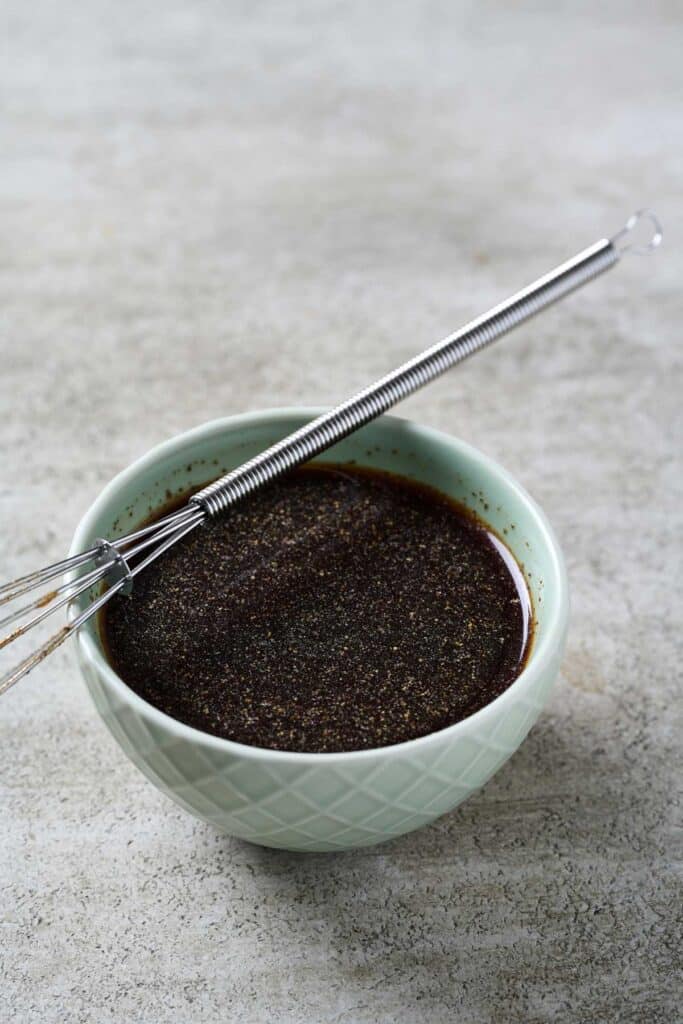
- Mix the sauce: Whisk the sweet soy sauce, oyster sauce, fish sauce, chicken broth and black pepper in a small bowl.
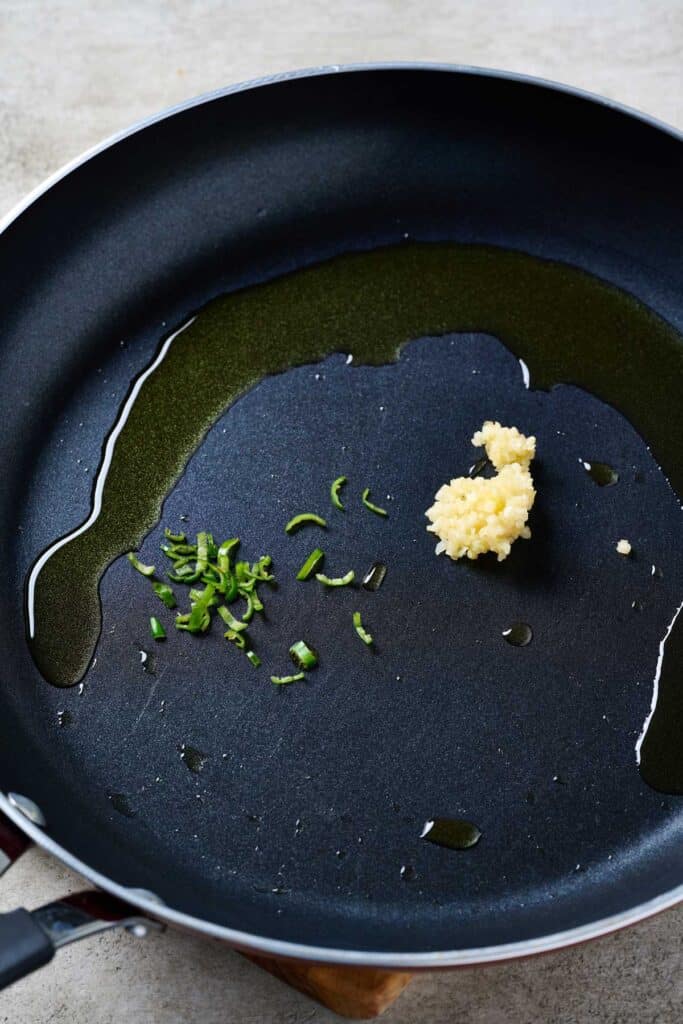
- Cook the aromatics: Heat the oil in a wok or large skillet. Add the garlic and chiles and stir-fry briefly, just until fragrant.
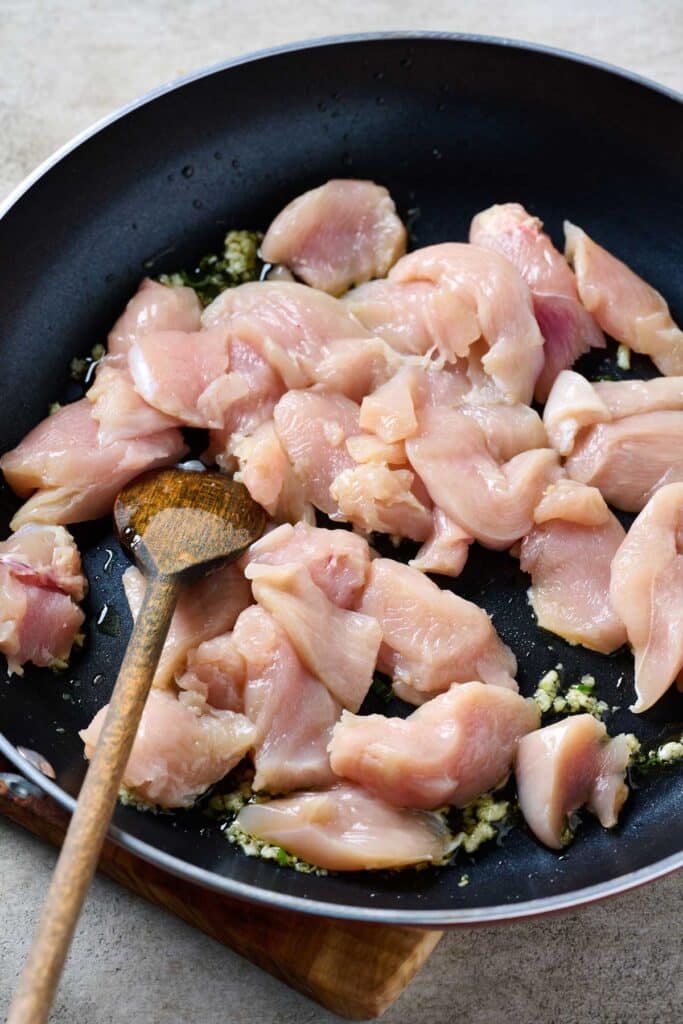
- Cook the chicken: Add the chicken and stir-fry until it is almost cooked through.
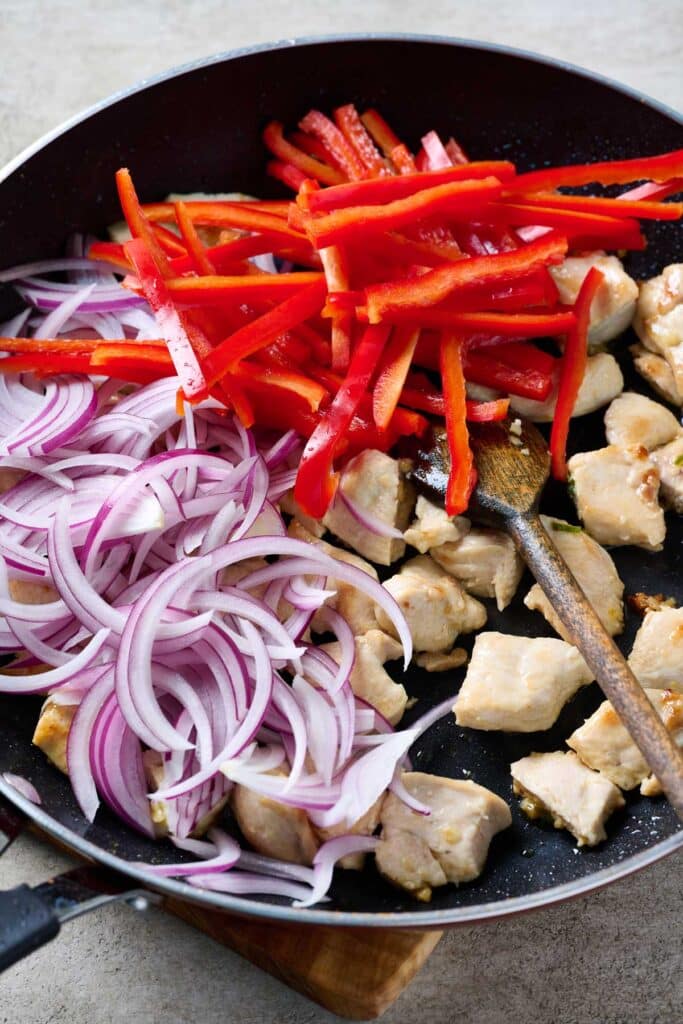
- Add the vegetables: Add the sliced onion and bell pepper. Stir-fry for about 1 minute so the vegetables remain crisp-tender.
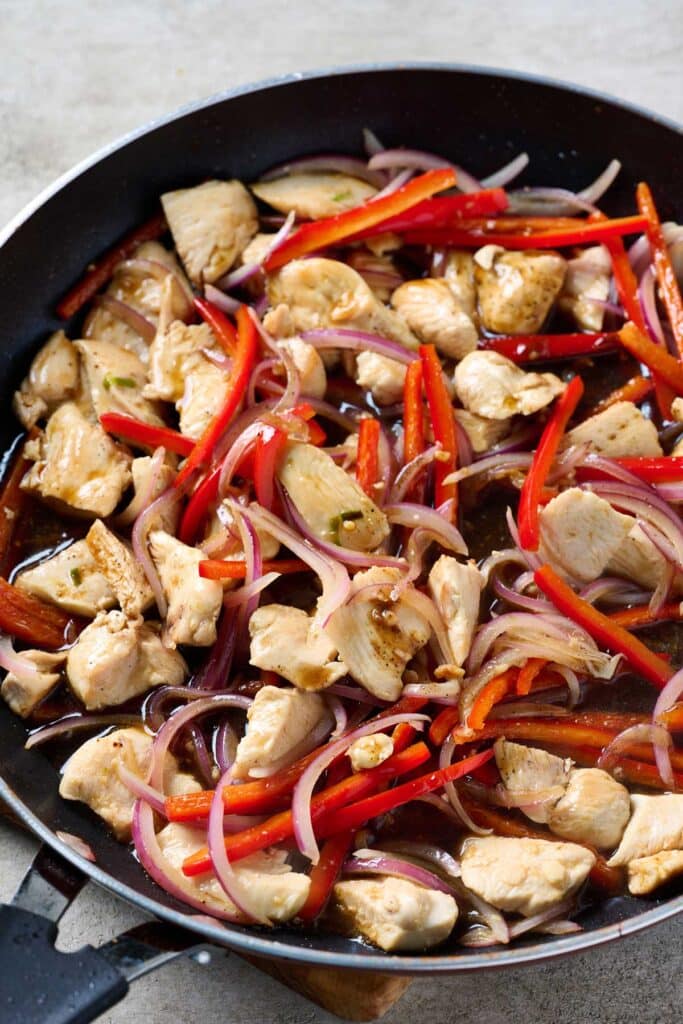
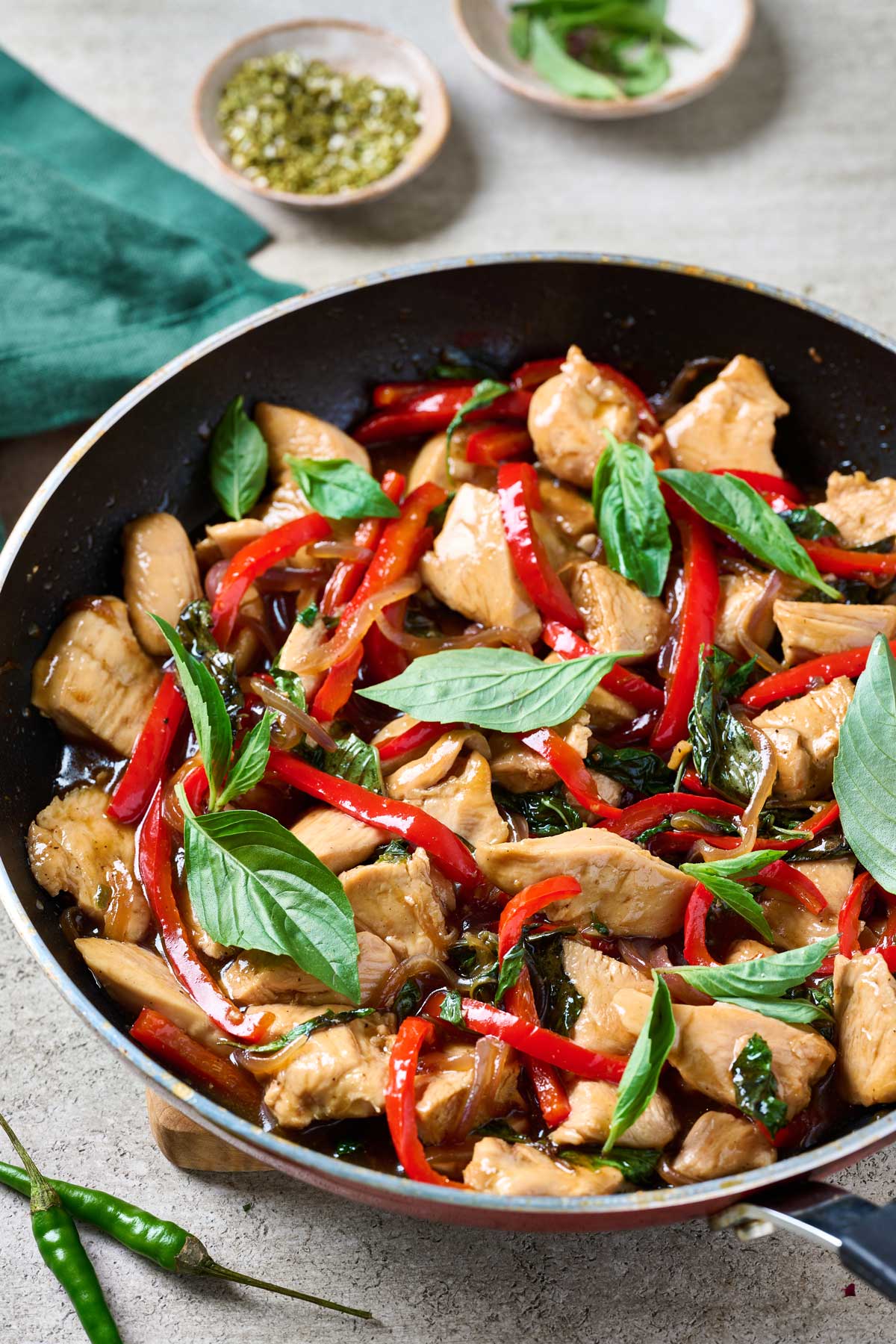
- Add the sauce: Pour in the prepared sauce and cook until it begins to thicken and the chicken is completely cooked.
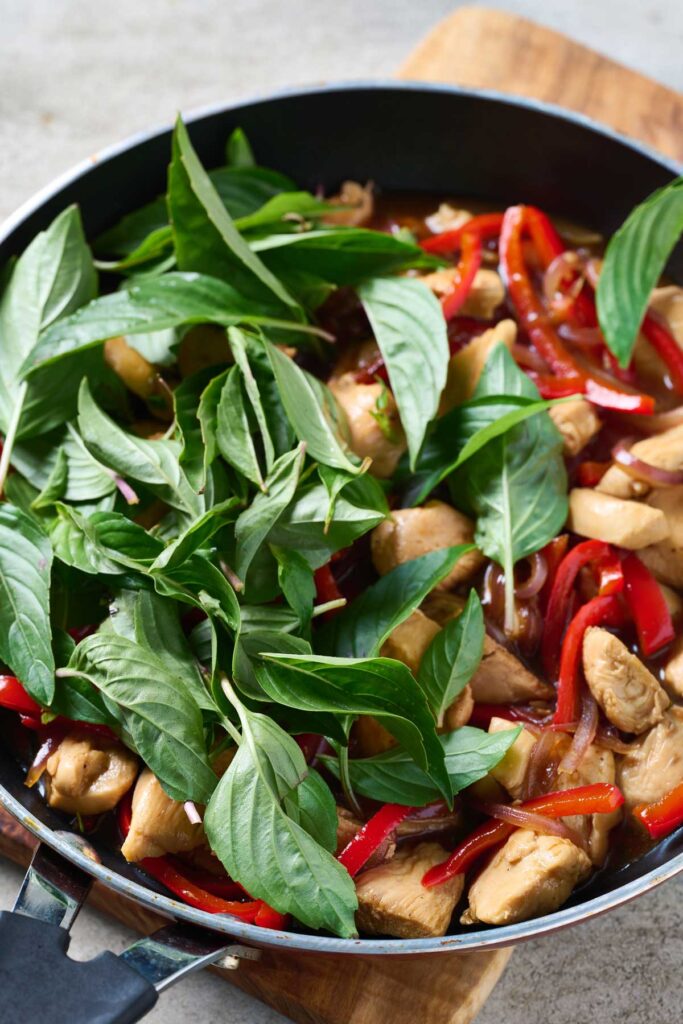
- Finish with basil: Remove the pan from the heat, add the basil and toss until the leaves are wilted. Serve immediately.
🔪 Recipe Tips: Prep & Adjustments
- Prep everything before you begin: Stir-frying moves quickly, and there won’t be time to slice an onion or measure sauce once the garlic hits the pan.
- Cut the chicken evenly: Small, similarly sized pieces cook at the same rate and are less likely to become dry.
- Use enough heat: A hot wok or skillet cooks the chicken and vegetables quickly instead of slowly steaming them.
- Don’t burn the garlic: Garlic needs only about 20 seconds before the chicken is added. Burned garlic will make the entire dish bitter.
- Avoid overcrowding the pan: Use a large skillet or wok so the chicken has enough room to cook properly.
- Keep the vegetables crisp-tender:The onion and bell pepper need only a short time in the pan.
- Add the basil last: The residual heat is enough to wilt it while preserving more of its fresh aroma.
- Wok vs skillet: A carbon-steel wok, cast-iron skillet or stainless-steel skillet can be heated over high heat. If using a nonstick skillet, cook over medium-high heat.
🔎 How Spicy Is Thai Basil Chicken?
With one seeded serrano chile, the dish is relatively mild. Two chiles will give it more noticeable heat, while Thai bird’s eye chiles can make it considerably spicier.
For a mild version, remove the seeds and white membranes from the chiles. For spicy Thai basil chicken, leave some of them intact or add extra sliced chile when serving.
Keep in mind that chile heat varies-even two chiles from the same package can have very different ideas about how much excitement dinner needs.
🔎 What to Serve with Thai Basil Chicken
Thai basil chicken is traditionally served over steamed jasmine rice, often with a crispy-edged fried egg. The rice absorbs the flavorful sauce, while the egg adds richness and helps balance the heat.
You can also serve it with white rice, brown rice, rice noodles, a simple cucumber salad, quinoa or lettuce leaves.
If you are making rice, start it before preparing the stir-fry. The chicken cooks much faster than most types of rice.
🔎 Make Ahead, Storage, Freezing and Reheating
- Make Ahead: Mix the sauce up to 3 days ahead and refrigerate it in an airtight container. The chicken and vegetables can be cut the night before, but keep them in separate containers in the fridge. Remove the basil leaves from the stems shortly before cooking.
- Refrigerate: Store leftovers in an airtight container in the refrigerator for up to 3 days.
- Reheat: Reheat the chicken in a skillet over medium heat with a small splash of broth or water. You can also microwave individual portions in short intervals until heated through.
- Freeze: The cooked chicken can be frozen for up to 2 months, although the bell pepper and basil will become softer. Thaw overnight in the frigeAdd a few fresh basil leaves after reheating to brighten the flavor.
💛 Conscious Bites
Your priorities, your recipe. Learn about Intentional Cooking.

Community, Culture & Tradition: This Thai basil chicken recipe is rooted in Thailand’s street-food tradition. We keep the dish as traditional as possible while making it approachable for home cooks while honoring the culture behind it.

Animal Welfare: Consider choosing independently certified chicken when it’s available and fits your budget. Buying from small local farms that raise chickens more humanely is another meaningful way to support better farming practices and your community.

Time and Convenience: A fast stir-fry makes cooking at home possible even on a busy night. Prepping the sauce and vegetables ahead of time can get a fresh, flavorful dinner on the table faster than ordering takeout.
👀 Take a look at these other Asian recipes:


🛒 Essentials you’ll adore for this recipe
-
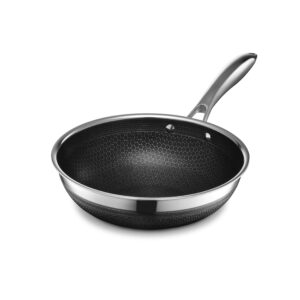
HexClad Hybrid Nonstick 12-Inch Wok
Scratch resistant stay-cool handle, dishwasher and oven safe, compatible with all cooktops, induction ready. This is a must-have investment piece that will pay itself many times over. I use it for more than just Asian cuisine!
-

Yosukata Pre-Seasoned Carbon Steel Wok
This roomy carbon steel wok heats quickly, handles high heat beautifully and has a flat bottom that works on most home stovetops. Perfect for stir-fries and fried rice, its naturally seasoned surface gets even better with use.
-
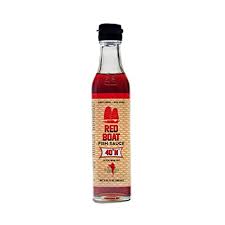
Red Boat Fish Sauce
Made in Vietnam with just anchovies and sea salt, Red Boat Fish Sauce adds rich, clean umami flavor to stir-fries, marinades, soups and dipping sauces.
Thai Basil Chicken

Ingredients
For the Sauce
- 3 tablespoons sweet soy sauce, OR 3 tablespoons regular or low-sodium soy sauce mixed with ½ teaspoon granulated or brown sugar
- 2 tablespoons oyster sauce
- 1 tablespoon fish sauce
- ¼ cup chicken broth
- ¼ teaspoon ground black pepper
For the Stir-Fry
- 2 tablespoons vegetable oil or another neutral, high-heat cooking oil
- 4 garlic cloves, finely chopped or minced
- 1 to 2 Thai or serrano chiles, seeded and thinly sliced
- 1 pound boneless, skinless chicken breasts or thighs, cut into small bite-size pieces
- 1 small red onion, thinly sliced
- 1 red bell pepper, thinly sliced
- 1 cup loosely packed Thai basil leaves or holy basil leaves, stems removed
For Serving, Optional
- Steamed jasmine rice or cooked rice noodles
- Fried eggs
- Additional sliced chiles
- Fresh basil leaves
Instructions
- In a small bowl, whisk together the sweet soy sauce, oyster sauce, fish sauce, chicken broth and black pepper. Set aside.
- Heat the oil in a wok or large skillet over high heat. If using a nonstick skillet, use medium-high heat. Add the garlic and chiles and cook for about 20 seconds, stirring constantly. Do not allow the garlic to brown.
- Add the chicken and stir-fry for 3 to 4 minutes or until almost cooked through.
- Add the onion and red bell pepper. Stir-fry for about 1 minute, keeping the vegetables crisp-tender.
- Pour in the sauce and cook, stirring frequently, until the sauce begins to thicken and the chicken is completely cooked, about 2 minutes. The chicken should reach an internal temperature of 165°F.
- Remove the pan from the heat. Add the basil and toss until the leaves are wilted. Serve immediately over jasmine rice or rice noodles.
Notes
- Sweet Soy Sauce: If you cannot find sweet soy sauce, combine 3 tablespoons of regular or low-sodium soy sauce with ½ teaspoon of granulated or brown sugar.
- Basil: Holy basil is traditional. Thai sweet basil is the best widely available substitute, while Italian basil works in a pinch.
- Chicken: Cut the chicken into similarly sized pieces so it cooks evenly. Chicken thighs are juicier; chicken breasts are leaner.
- Ground Chicken: One pound of ground chicken can be substituted. Cook it for 3 to 4 minutes, breaking it into small pieces before adding the vegetables.
- Spice Level: Remove the chile seeds and membranes for a milder dish. Leave some intact or add additional chiles for more heat.
- Gluten-Free: Use gluten-free tamari, oyster sauce, fish sauce.
- Make it Vegetarian: Use tofu for protein, vegetarian oyster sauce, vegan fish sauce or liquid aminos
- Serving: Jasmine rice and a fried egg are the traditional accompaniments. Rice noodles are also delicious.
- Fish Sauce: A small amount adds the salty, fermented depth associated with Thai cooking. It does not make the finished dish taste fishy.
Nutrition
🤔 Frequently Asked Questions
Is Thai basil chicken the same as Pad Krapow Gai?
The names are often used interchangeably in the United States. Technically, Pad Krapow Gai refers to chicken stir-fried with holy basil. Many Thai restaurants outside Thailand use Thai basil instead because holy basil can be difficult to find.
Can I make Thai basil chicken with ground chicken?
Yes. Substitute 1 pound of ground chicken and cook it for 3 to 4 minutes, breaking it into small pieces. If the chicken releases a large amount of liquid, allow the liquid to cook off before adding the vegetables and sauce.
Can I use regular basil?
Yes. Italian basil doesn’t have the peppery flavor of holy basil or the anise flavor of Thai basil, but it still works well in this recipe. Add it at the very end and remove the pan from the heat as soon as it wilts.
Should I use chicken breasts or thighs?
Either works. Chicken breasts are lean and cook quickly. Chicken thighs are slightly richer, stay juicier and are more forgiving if cooked for an extra minute.
Can I add other vegetables?
Yes, but avoid adding so many vegetables that the skillet becomes overcrowded. Thinly sliced mushrooms, green beans, broccoli, asparagus, baby corn or snow peas are good options.
Can I make it without fish sauce?
Yes. Substitute vegan fish sauce or liquid aminos for the fish sauce. Vegan fish sauce will provide the closest flavor, while liquid aminos will add savory depth without the fermented flavor of traditional fish sauce or liquid aminos.
This post was originally published in 2019 and has been completely updated with an improved recipe, new photography and additional cooking tips.





Leave a Reply