


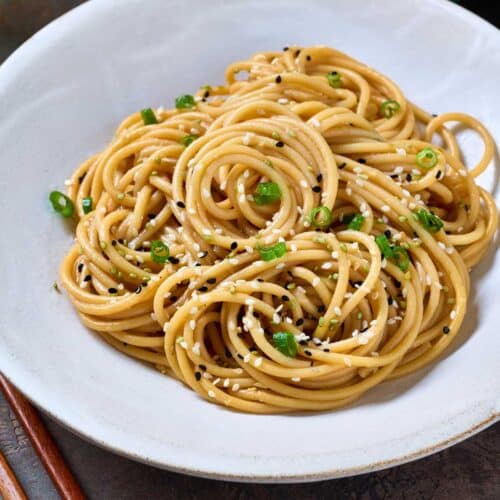
This Sesame Noodles Recipe comes together in about 20 minutes and uses simple pantry ingredients. It can be served warm, at room temperature, or chilled – making it perfect for busy weeknights, meal prep, or a quick lunch.
Inspired by Chinese cold sesame noodles, this version balances savory, nutty, slightly sweet, and tangy flavors while keeping the ingredients accessible for the home cook.

⭐️ Sesame Noodles: recipe at a glance
- Fast and easy: Ready in about 20 minutes
- Pantry friendly: Uses common ingredients like soy sauce, sesame oil, garlic, and noodles
- Budget friendly: Simple ingredients stretch far
- Great hot or cold: Perfect for meal prep, lunch anddinner
- Flexible and versatile: Add chicken, tofu, shrimp, steak or vegetables
- Dietary adaptable: Easily made vegan, gluten-free adaptable, vegetarian, dairy-free adaptable, egg-free, nut-free
🔎 What are Sesame Noodles?
Sesame noodles are a simple noodle dish tossed with a savory sesame-based sauce. Traditional Chinese versions often use sesame paste, soy sauce, chili oil, and scallions and are commonly served chilled during hot weather.
In many Chinese-American kitchens, the sauce is often adapted with ingredients like peanut butter, garlic, soy sauce, rice vinegar, and toasted sesame oil to create a creamy, nutty dressing that coats the noodles beautifully.
✔️ Ingredients, Substitutions and Swaps

For the complete list of ingredients and exact quantities, check the printable recipe card below.
- Noodles: Spaghetti, ramen noodles, lo mein noodles, or rice noodles all work well.
- Soy Sauce: Provides the savory umami backbone of the sauce. Tamari can be used for a gluten-free alternative.
- Rice Vinegar or Mirin: Adds acidity and balance. You can swap this ingredient with white wine vinegar or fresh lemon juice.
- Sesame Oil: Toasted sesame oil gives the dish its signature nutty aroma and rich flavor.
- Butter: This is not traditionally used in this recipe, or even necessary, but it gives the noodles a creamy, rich coating that my kids love while also adding flavor. If you want to skip it, just toss the pasta with a bit more sesame oil. That said, it’s a game changer for those with Americanized palates or small kids that love pasta.
- Sweetener: A little honey, brown sugar, or maple syrup balances the salty flavors.
- Garlic and Ginger: Freshly grated garlic and ginger give the sauce a warm, aromatic base. This recipe can be ade with garlic and ginger paste.
- Optional Add-Ins: Although the options are many, I will focus on just a few add-ins. Peanut butter (for peanut sesame noodles), chili oil or sriracha (for added spice), chili crisp (heat and crunch), tahini, toasted sesame seeds, or edamame for protein. You can add veggies such as broccoli to the pasta pot during last 2-minutes of cooking.


How to Make Sesame Noodles
For detailed instructions and exact cooking times, check the printable recipe card below.
This dish is all about timing and layering. While the pasta boils, you can mix up the sauce, and then everything comes together in minutes once the noodles are drained.
- Cook the noodles: Bring a large pot of salted water to a boil and cook the noodles until al dente. Save some of the starchy pasta water; you’ll be needing it later.
- Mix the sauce: In a small bowl, whisk together soy sauce, rice vinegar, sesame oil, honey, garlic, and ginger. This takes less than a minute but adds tons of flavor.


- Toss with butter and sauce: Drain the noodles, then put them back in the pot – adding a pat of butter (optional) and a splash of the reserved pasta water from before. This creates a glossy coating that helps the sesame-soy mixture stick to every strand of the noodles.
- Finish and serve: Pour in the sauce, toss well with sliced green onions, and season with black pepper. If the noodles look dry, add another spoonful of pasta water until they’re silky. Serve hot, or chill them for a refreshing cold noodle dish.


💡 Recipe Tips: Prep & Adjustments
- Don’t skip the pasta water: That starchy liquid is key for getting the sauce to cling to the noodles better (which helps prevent dry noodles).
- Why sesame oil is added at the end? Toasted sesame oil is made from roasted sesame seeds and has a very low smoke tolerance compared with neutral oils. It’s best used as a finishing oil so its nutty aroma stays vibrant instead of cooking off.
- Add a creamy twist: Stir in a spoonful of peanut butter or tahini for nutty, creamy peanut sesame noodles. This makes the dish heartier.
- Make it spicy: A drizzle of chili oil, sambal oelek, chili crisp or sriracha can give these noodles some kick. One of my kids like it mild, so we often spice up our own own bowl at the table.
- Serve them hot or cold: These noodles taste great when served warm for dinner, but they’re also fantastic when taken cold from the fridge – perfect for school lunches, meal prep or as a base for an incredible noodle salad.
- Mix and match: Add edamame, shredded carrots, or sautéed vegetables to make this dish into a more filling bowl. For extra protein, serve these noodles with my absolute favorite crispy tofu recipe
🤔 Frequently Asked Question
Can sesame noodles be served cold?
Yes. Sesame noodles are often served chilled or at room temperature. These noodles are great for meal prep. If you enjoy quick noodle dishes, you may also like my creamy Miso Pasta.
What are the best noodles for sesame noodles?
Spaghetti, ramen, lo mein noodles, or rice noodles all work well because the sauce clings easily to their surface.
Are sesame noodles healthy?
They can be part of a balanced meal. Adding vegetables like cucumbers, carrots, cabbage, or edamame boosts fiber and nutrients.
Can I make sesame noodles ahead?
Yes. They keep well in the refrigerator for 3-4 days and are great for meal prep.
What exactly does the butter do in this recipe?
Butter isn’t traditional in Asian noodle dishes, but it melts into the hot pasta with a bit of cooking water to create a silky base that helps the sauce cling to the noodles. It also softens the sharper flavors of soy sauce and vinegar, making the noodles taste smoother and more kid-friendly. You can leave it out if you want a lighter, more classic version.
How to turn sesame noodles into a complete meal?
These sesame noodles are delicious on their own, but they’re also easy to customize. To turn them into a complete meal, add protein like shrimp, shredded chicken, crispy tofu, or edamame. This makes great variations like sesame noodles with shrimp, sesame noodles with chicken, or sesame noodles with tofu. You can also add quick-cooking vegetables such as bell peppers, broccoli, or snap peas for extra texture and freshness.


Make-Ahead, Storage, and Reheating
- Make Ahead: You can prepare the sesame sauce a day in advance and store it in the fridge. Cook the noodles fresh before serving for the best texture.
- Storage: Leftover noodles keep well in the refrigerator for up to 3 days. Store them in an airtight container.
- Reheating: Reheat gently in the microwave with a splash of water to loosen the noodle strands, or enjoy them cold as a noodle side dish.
- Freezing: Not recommended – noodles lose their texture once thawed.
💛 Conscious Bites
Your priorities, your recipe. Learn about Intentional Cooking.

Finances: Simple pantry dishes like sesame noodles are a reminder that delicious meals don’t have to be expensive. With affordable ingredients like noodles, soy sauce, garlic, and sesame oil, you can create a flavorful meal that feeds several people without stretching your grocery budget. Adding inexpensive proteins like tofu or edamame and seasonal vegetables is an easy way to make the dish more filling while keeping costs low.

Time and Convenience: Simple recipes like sesame noodles show how a handful of pantry staples can come together in minutes to create something flavorful and satisfying. As an added bonus, you can add veggies and protein that cook quickly for a complete meal.

Community, Culture and Tradition: Sesame noodles are inspired by Chinese cold sesame noodles, a beloved street and noodle-shop dish often enjoyed during warm weather. Exploring dishes like this reminds us how ingredients and culinary traditions travel, evolve, and connect cultures through food.
Take a look at these other easy recipes:




Things you may need
-

Pasta Pot, 3 piece set
-

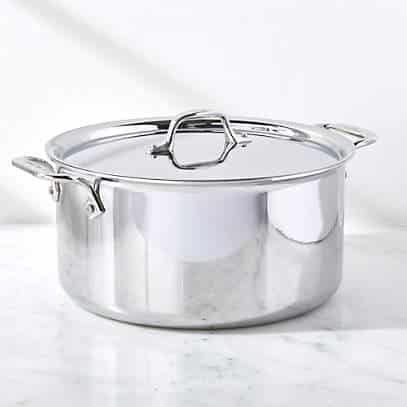
8 Quart Stockpot
-

Kitchen Tongs


Sesame Noodles

Equipment
Ingredients
- 12 ounces dry pasta, spaghetti or linguine
- ¼ cup soy sauce, low-sodium if preferred
- 1 tablespoon rice vinegar, or mirin
- 1 tablespoon toasted sesame oil
- 1 tablespoon honey, or maple syrup/brown sugar
- 1 teaspoon ginger paste or fresh ginger, grated
- 1 teaspoon garlic paste or fresh garlic, minced
- 2 tablespoons butter
- 1 green onion, thinly sliced
- ground black pepper, to taste
Optional Add-Ins:
- 1 tablespoon peanut butter, for peanut sesame noodles
- 1 teaspoon sriracha, sambal, or chili oil
- 1 tablespoon tahini
- ½ cup cooked edamame
- 2 teaspoons toasted sesame seeds
- red pepper flakes, to taste
Instructions
- Bring a large pot of salted water to a boil. Cook the pasta according to package directions until al dente. Reserve ½ cup pasta water, then drain the pasta.
- While the pasta cooks, whisk together soy sauce, rice vinegar, sesame oil, honey, ginger, and garlic in a small bowl.
- Return the drained pasta to the pot. Add butter and ¼ cup reserved pasta water, tossing it all together until the butter melts and coats the noodles.
- Pour in the sesame-soy mixture and toss with sliced green onions until well combined. Add more pasta water if needed to loosen the noodles so they don’t stick.
- Season with black pepper, add any optional toppings, and serve hot or chilled.
Notes
- Butter: The butter is definitely an unconventional ingredient when it comes to Asian-inspired noodles however, it helps form a coating that makes it easier for the noodles to absorb the flavour of the sauce. You can choose to leave it out or simply toss the noodles with a bit of sesame oil to prevent them from sticking together.
- Optional Ingredients: Whisk in peanut butter, sriracha or chili oil together with the sesame-soy mixture. Add toasted sesame seeds at the same time you add the green onions.
- Noodle Options: You can use rice noodles or ramen noodles if preferred. Simply follow the package cooking directions.
- Pasta Cooking Water: aka as gold from the Gods….Tossing hot pasta with butter and some of the cooking water creates a light, silky sauce that coats the noodles. It also adds flavor.
- Serving: This dish can be served hot or cold.





Leave a Reply