


For years, I only ever ordered Khao Soi at Thai restaurants; the dish felt too complicated to attempt at home. But the truth is, this recipe is surprisingly easy to make in your own kitchen. The best part (besides the flavor) you can whip it up in just about 30 minutes!

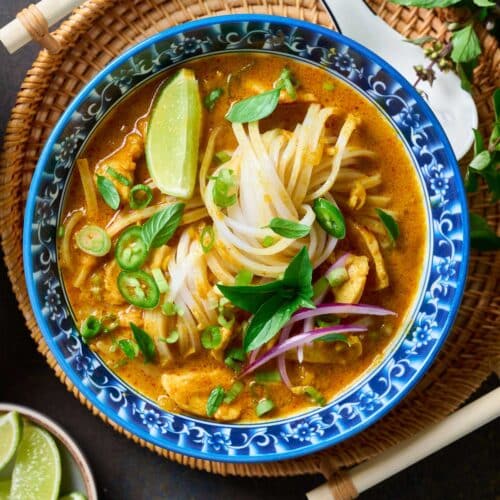
Khao Soi – Thai Coconut Curry Noodle Soup
This Khao Soi soup recipe is super versatile. You can make it the classic way by using chicken or beef, make it vegetarian by using tofu, or give it a slightly modern touch with fish or shrimp! Which makes it the best recipe to turn to when you want something customizable, super easy to put together, and deeply flavorful.


Thai Khao Soi Soup: recipe at a glance
- Why you’ll love it: Khao Soi is super quick to make – and deeply satisfying. You can easily customize this dish using different protein options, and a variety of toppings. It’s a restaurant quality meal you can recreate at home.
- How long it takes: Despite needing a variety of different ingredients, this recipe takes just about 30 minutes from start to finish. And that’s what makes this dish a perfect choice for those weeknights when you want something comforting without spending hours in the kitchen.
- Best for: This easy Khao Soi recipe is best suited for cozy family dinners, or when you’re craving Thai takeout flavors at home. You can also meal prep it for a few days of delicious lunches!

Ingredient Highlights

Be sure to check the printable recipe card below for the complete ingredient list and their exact quantities.
- Red Curry Paste: A good red curry paste gives the soup the foundation of its flavor. Go for Thai brands like Mae Ploy (this is their vegetarian option) or Maesri which are more authentic and bolder in their flavor.
- Coconut Milk: Full-fat coconut milk is what gives the broth its creamy and velvety texture. It helps balance the hint of spice from the red curry paste, and creates that luscious golden base for the soup. People always ask me if they can use lite coconut milk (or other plant-based milk) – the answer is yes! However, the broth won’t be as rich and creamy.
- Aromatics: Ingredients like shallot, lemongrass, ginger, and garlic are used right at the start, sautéed gently to release a layer of flavors that infuses the whole dish, and help build its fragrant savory foundation.
- Spices: The soup’s golden hue comes from a pinch of turmeric, but it is the combination of curry powder, coriander, and cardamom that adds warmth and depth to its flavor profile. These spices are present in the background as subtle but incredibly important ingredients.
- Protein of Choice: The most traditional option in authentic Khao Soi is chicken, but this recipe is extremely versatile – you can use tofu (which expertly soaks up the flavor from the broth), shrimp (which cooks in just minutes), or firm white fish like halibut, tilapia or cod, (that flakes into tender bites).
- Noodles: Rice noodles are a simple choice (that’s also gluten-free), but you can use egg noodles (or ramen noodles) to make the recipe extra hearty. No matter what you choose, it’s the noodles that turn this soup into a complete and satisfying meal.
- Garnishes: For that final burst of flavor, garnish ingredients such as fresh lime, cilantro, Thai basil, crispy noodles, or pickled mustard greens should never be missed! They bring texture and added flavor to the dish, and help turn this Khao Soi recipe into an easy-to-customize experience your taste buds will crave for!


How to Make Khao Soi Step-by-Step
For specific instructions and cooking times, check the recipe card below.
Preparing Khao Soi at home is actually much easier than it seems. The cooking process is fairly simple and straightforward – and the dish comes together in 30 minutes.
- Start with the aromatics: In a large pot, heat some oil over medium heat, and add the shallots, lemongrass, ginger, and garlic – sauté and stir for about 3 minutes, until you get that amazing aromatic smell. Then, stir in the red curry paste and spices and cook 1-2 minutes to let the fragrance bloom.


- Add liquid and simmer: Pour in the coconut milk and broth into the pot, and if you have them, some kaffir lime leaves. Let everything simmer together gently into a rich, golden soup base.


- Soak the noodles: Prepare the noodles while the broth is simmering. Soak the noodles in hot boiling water until al dente (make sure to check the packaging for specific instructions). You can see on the photos below, how the noodles look when cooked.


- Add protein and seasonings: Stir in your protein of choice – chicken, tofu, shrimp, or fish – and let it cook through. Taste and if needed season with fish sauce, soy sauce, and a pinch of sugar to balance the flavors to your taste.


- Assemble and garnish: Divide the noodles into different soup bowls, and pour the creamy soup over. Then, add in the toppings you like best – lime juice, fresh herbs, sliced onions, crispy noodles, chili slices. They all work together to enhance the flavor of the dish.


Recipe Tips
- Balance the flavors: Khao Soi is all about striking that perfect harmony of flavors. For saltiness, add fish sauce; for sweetness, add sugar; for tang, add lime; for heat, add extra curry paste.
- Select your protein carefully: Chicken thighs are succulent and easy to work with, tofu keeps its shape beautifully, and shrimp can be prepared in almost no time at all.
- Keep noodles separate for storage: If you are going to have leftovers, store the noodles and broth separately so they don’t get soggy.
- Make it mild or spicy: Adjust the curry paste to your taste preferences. For a family-friendly version, you can keep it mild and serve sliced chilies, like jalapeño or serranos on the side.

Make-Ahead, Storing, Freezing & Reheating
- Make-Ahead: You can prepare the broth a day ahead and store it in the fridge. However, the noodles must be soaked/cooked fresh just before serving for the best texture.
- Storing: Leftovers can be stored in airtight containers in the refrigerator for up to 3 days. It’s best to store the soup and the noodles in separate containers to prevent the noodles from bloating up and soaking up the broth.
- Reheating: You can reheat the soup by warming it up gently on the stovetop. If the soup thickens too much, add a splash of broth, coconut milk or water to loosen it.


Frequently Asked Questions
What is Khao Soi?
Khao Soi is a flavorful coconut noodle soup from Northern Thailand. Traditionally, the soup is made with a rich and creamy broth made with coconut milk, red curry paste, and chicken or beef. The soup is poured over noodles and served with many toppings such as crispy fried noodles. Recipes vary by regions with some using egg noodles.
Is Khao Soi a spicy dish?
Thai Khao Soi soup is generally in the mild-to-medium heat category, but the wonderful thing about this recipe is that you can easily adjust it to your taste. The heat comes mainly from the red curry paste, so if you want a milder broth, you can use a little less of it. For extra kick, simply stir in more curry paste or serve it with chili oil or sliced chile peppers on the side.
Can I make Khao Soi vegetarian or vegan?
This recipe for Thai Khao Soi can be made vegetarian or vegan very easily. First, make sure your red curry paste is vegetarian/vegan. Instead of chicken broth, use vegetable broth; and instead of chicken, use tofu or even mushrooms. For seasoning, use vegan fish sauce, liquid aminos or soy sauce.
Is Khao Soi gluten-free?
This particular Khao Soi recipe is made with rice noodles which are gluten-free. You can substitute the soy sauce with tamari for a gluten-free dish!
Can I use beef or other proteins instead of chicken in Khao Soi?
Certainly! While chicken is the most commonly used protein, Khao Soi is a versatile dish. In Thailand, it’s frequently made with beef, pork, or seafood. Shrimp cooks very quickly and contributes a beautiful sweetness to the dish, while beef provides the kind of deep flavor that only comes from simmering an ingredient a bit longer. Make sure to match your cooking time to the protein you choose, so it stays tender and doesn’t overcook.
How long does Khao Soi last in the fridge?
You can keep leftover Khao Soi in the fridge for 3 to 5 days, but for best results, store the broth and the noodles in two separate containers. If you don’t, the noodles are going to soak up every last bit of the broth and become very mushy. Never ever freeze Khao Soi – it makes the broth separate when it thaws, and the noodles cannot retain the same texture when reheated after freezing. In other words, it becomes a mess.
Take a look at these other Thai recipes:

Khao Soi (Thai Coconut Noodle Soup)

Ingredients
For the Soup
- 1 tablespoon coconut oil, or vegetable, grapeseed, avocado, or peanut oil, plus more for noodles if needed
- 1 large shallot, finely diced (or ½ onion)
- 1 lemongrass stalk, bottom 4 inches only, chopped
- ½- inch piece fresh ginger, peeled and minced
- 5 garlic cloves, minced
- 2 tablespoons Thai red curry paste, add more for extra spiciness
- 1 teaspoon ground turmeric, or 1 small piece fresh turmeric, grated
- ½ teaspoon curry powder
- ½ teaspoon ground coriander
- ½ teaspoon ground cardamom
- 1 (14-ounce) full-fat coconut milk
- 1 cup vegetable or chicken broth
- 4-5 kaffir lime leaves or zest of ½ lime , (optional)
- 1 red bell pepper, thinly sliced (optional)
- 2 tablespoons fish sauce, or vegan fish sauce, more to taste
- 1-2 tablespoons soy sauce or tamari, to taste
- 2 tablespoons brown sugar, or palm sugar or other sweetener
Protein Options (choose one)
- 8–12 ounces boneless, skinless chicken breast or thighs, thinly sliced
- 8–12 ounces firm tofu, cubed
- 8–12 ounces shrimp or prawns, peeled and deveined
- 8–12 ounces firm white fish
For the Noodles
- 6–8 ounces rice noodles, or swap with Chinese-style egg noodles or ramen
Garnishes (choose your favorites)
- Lime wedges, thinly sliced shallots or red onions, chopped fresh cilantro, chopped fresh Thai basil, sliced green onions, Thai red chiles or serrano peppers, sliced
Instructions
- In a large pot, heat some oil over medium heat. Add the shallots, lemongrass, ginger, and garlic. Sauté gently and keep stirring until fragrant (about 3 minutes).
- Stir in the curry paste, turmeric, curry powder, coriander, and cardamom. Cook gently for 1-2 minutes to release all the flavors.
- Pour in the coconut milk, stock, and lime leaves (if using). Bring it all together to a gentle boil, and then reduce the heat and simmer for 3-4 minutes.
- As the broth simmers, soak the rice noodles in boiling hot water until al dente (or make egg noodles according to the directions on the packaging). Then, drain the noodles, and toss them with a little amount of oil – an optional step to prevent the noodles from sticking together.
- Add in the following to the broth: bell pepper, fish sauce, soy sauce, and sugar. And your selected protein, then stir to combine, and simmer until thoroughly cooked. Tofu or shrimp will be ready in about 2 to 3 minutes, while chicken or fish will take longer.
- Sample the broth and make adjustments as necessary – add more fish sauce or soy if you require saltiness, more curry paste if you need more spice, a squeeze of lime if you want brightness, or sugar for some sweetness.
- Separate the noodles into bowls. Pour the steaming hot coconut curry broth over the noodles until they are nearly submerged. Top with your choice of garnish and serve!
Notes
- Noodles: Rice noodles are classic (and gluten-free), but Chinese, egg-style noodles or ramen noodles can also be used. Angel hair pasta noodles can also be used.
- Curry Paste: For best results, use good quality curry paste. They also have vegetarian varieties of this ingredient if you want to make the dish vegetarian/vegan.
- Making Shrimp Khao Soi: Add peeled and deveined shrimp into the soup and simmer for about 3 minutes. Remember that shrimp cooks very fast and overcooks easily.
- Make-Ahead: You can make the soup without the noodles a day ahead and store it in the fridge. However, for the best texture, the noodles must be soaked and added just before serving.
- Storage: Leftovers can be stored in airtight containers in the refrigerator for up to 3 days. For best results, store the broth and noodles in separate containers to prevent the noodles from absorbing the broth.






Leave a Reply