
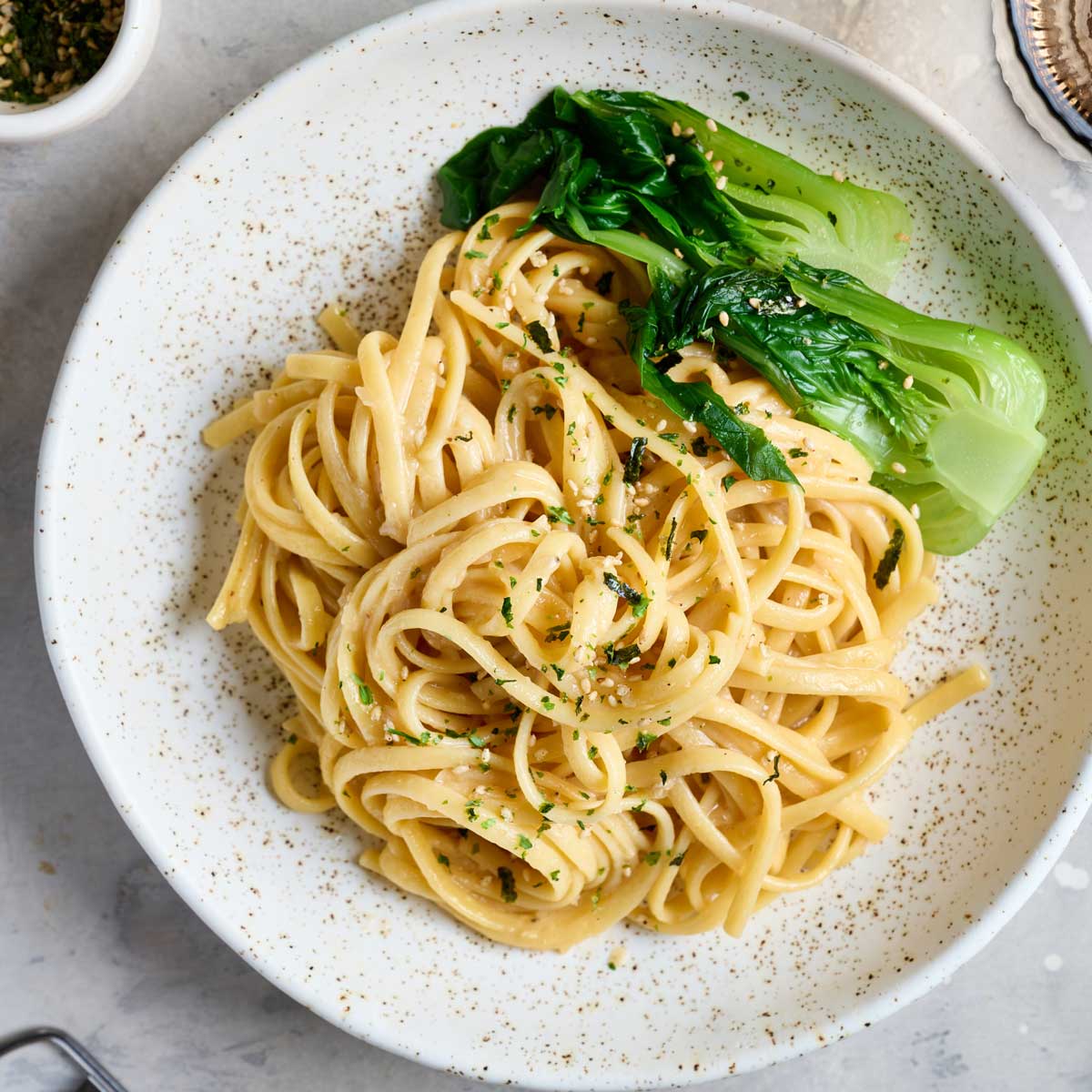
This easy, 20-minute pasta dish is the kind of quick vegetarian dinner that feels elevated without being complicated. No cream. No complicated steps. Just smart technique and bold flavor – perfect for busy families, college students, or anyone cooking on a budget.
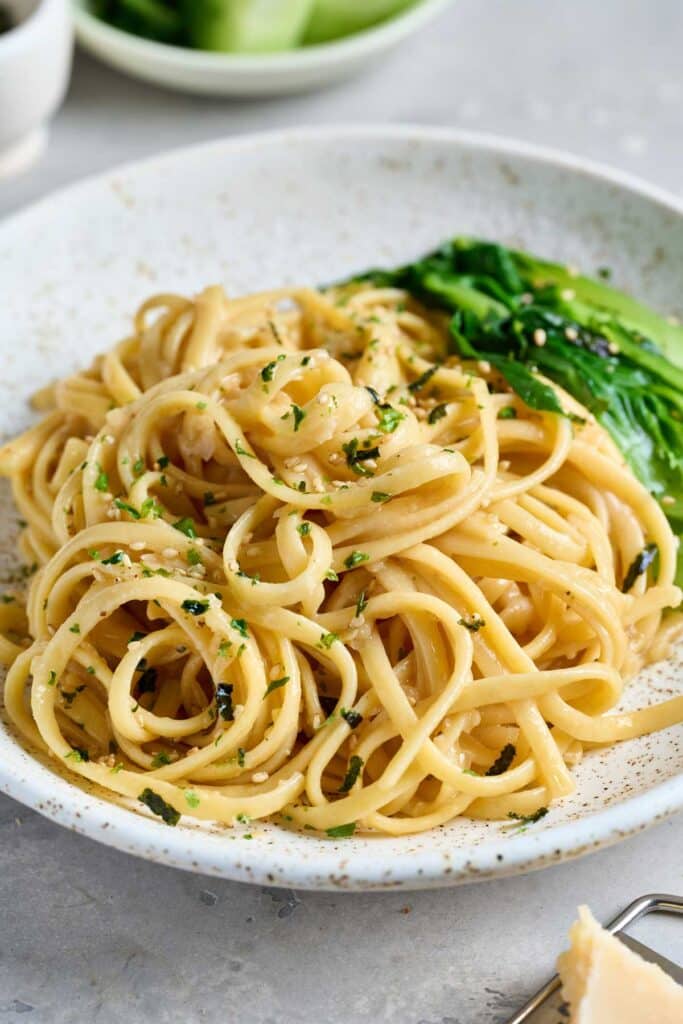
⭐️ Miso Pasta: Why You Should Make This Recipe?
- Creamy without cream: The starch from the pasta water emulsifies with butter and cheese to create a glossy sauce.
- Deep umami flavor: Miso and Parmesan both contain natural glutamates, giving this dish incredible savory depth.
- Budget-friendly: A small amount of cheese and miso stretches into a full, satisfying meal.
- Quick & practical: Ready in about 20 minutes using mostly pantry staples.
- Minimal cleanup: Made in the same pot you cook the pasta in.
- Easily adaptable: Add different proteins (tofu, chicken, shrimp, etc), vegetables (mushrooms, peppers, zucchini, broccoli, etc).
- Dietary: Vegetarian, gluten-free adaptable. Egg-free, nut-free.
🔎 What Is Miso Pasta?
Miso pasta is a simple pasta dish where miso paste-a fermented soybean paste commonly used in Japanese cooking-is whisked into butter and starchy pasta water to create a silky, umami-rich sauce.
Miso contains natural glutamates (the same compounds responsible for savory depth in Parmesan and tomatoes), which means when paired with cheese and pasta, you get a powerful synergy of flavor. It tastes complex-but takes almost no effort.
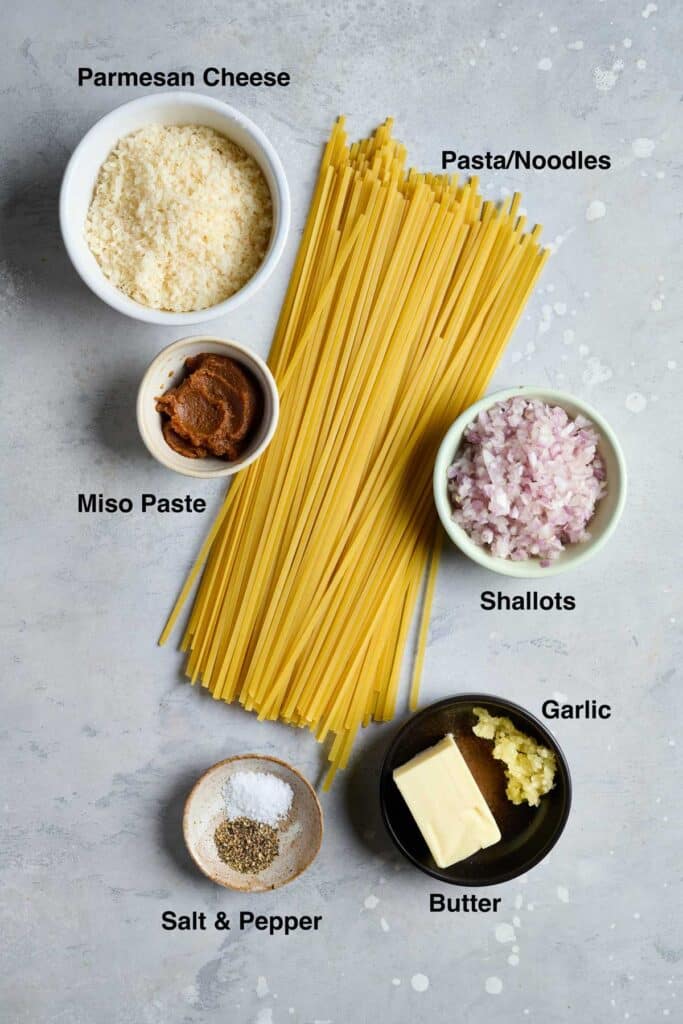
✔️Ingredients, Substitutions and Swaps

For the complete list of ingredients and exact quantities, check the printable recipe card below.
- Pasta: Spaghetti or linguini work beautifully because their long strands hold onto the silky sauce. That said, short pasta also works great. Soba noodles add a subtle nutty note and rice noodles keeps this recipe gluten-free.
- Butter: Creates richness and helps form the base of the emulsion/sauce. It carries flavor and gives the sauce body without the need for heavy cream.
- Shallot: Sweeter and more delicate than onion, shallots add subtle aromatic depth without overpowering the miso. You can replace shallots with onion.
- Garlic: Fresh garlic provides brightness and savory backbone. Cook it gently – you want it fragrant, not browned. You can also use garlic paste.
- Miso Paste (White or Red):The star ingredient. Miso is fermented, which adds complexity and natural umami. It dissolves into the hot pasta water, forming the flavor base of the sauce. White miso is mild and slightly sweet. Red miso is deeper and saltier.
- Reserved Pasta Water: This is essential. The starch in the water binds fat and cheese together into a silky sauce – a classic Italian pasta technique frequently emphasized by Serious Eats and other culinary authorities.
- Parmesan Cheese: Adds saltiness, nuttiness, and more umami. Finely grated cheese melts more smoothly and helps thicken the sauce naturally.
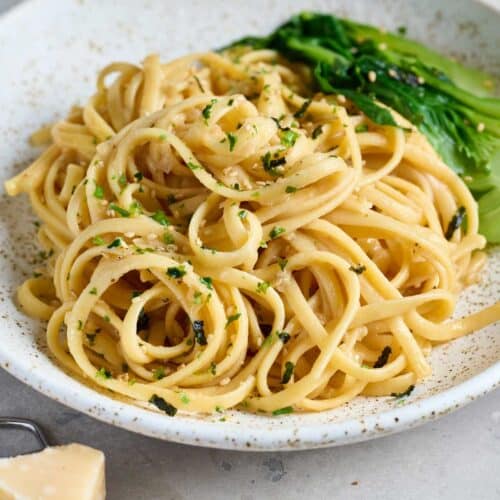
- Optional Garnishes: Furikake, scallions, sesame seeds, toasted nori, or red pepper flakes add texture, freshness, and contrast.
🔎 How to Make Miso Pasta?
Scroll to the printable recipe card below for exact directions and cooking times.
- Boil the pasta: Bring a large pot of salted water to a boil. Cook pasta until al dente. Reserve about 1¼ cups pasta water before draining.
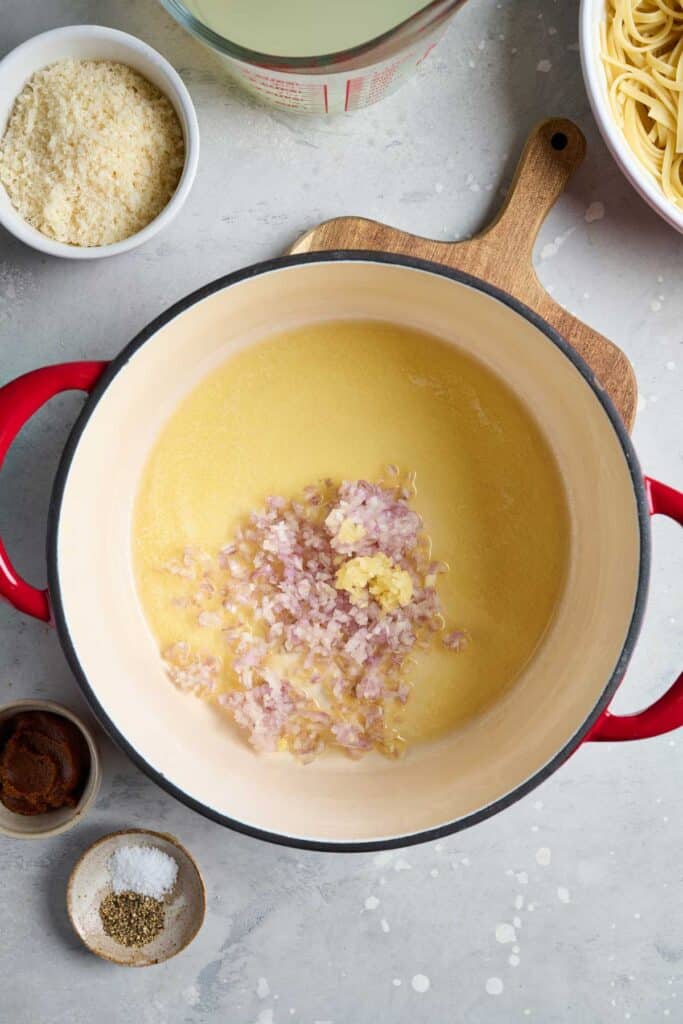
- Sauté aromatics: In the same pot, melt butter over medium-low heat. Add shallots and garlic. Cook 2-3 minutes until softened but not browned.
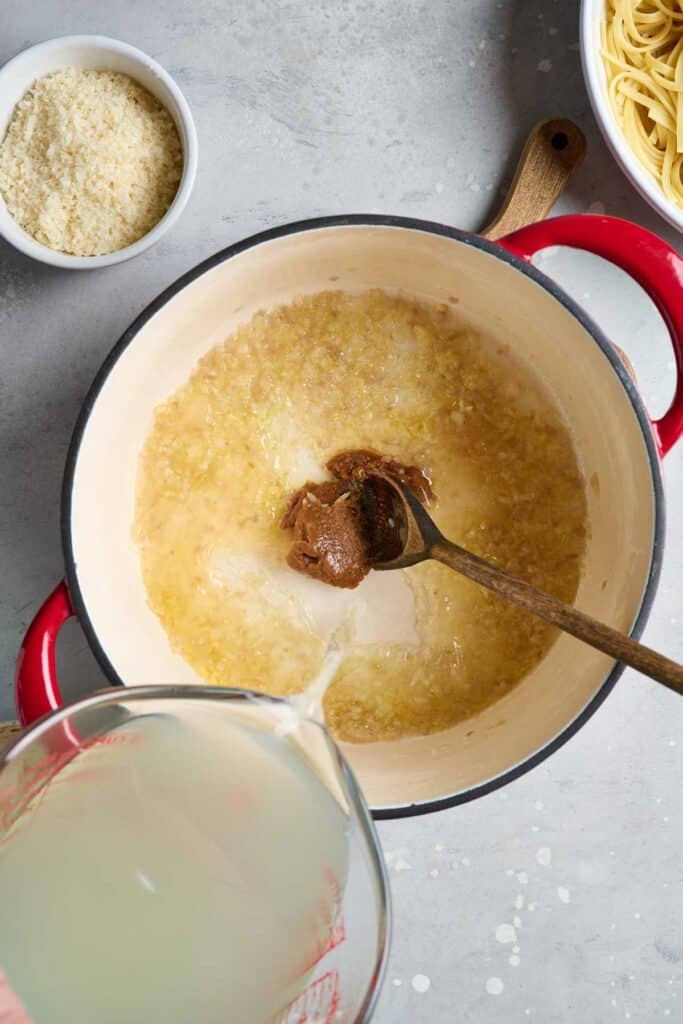
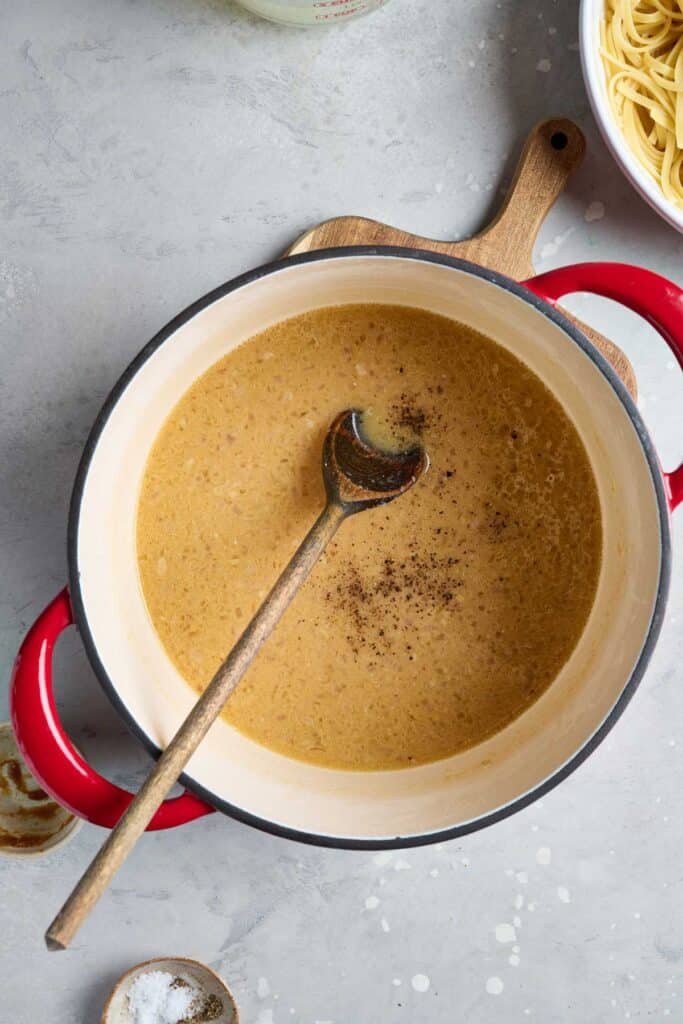
- Dissolve the miso:Add miso paste and about 1 cup hot pasta water, whisking constantly to dissolve. The mixture should look smooth and lightly creamy.
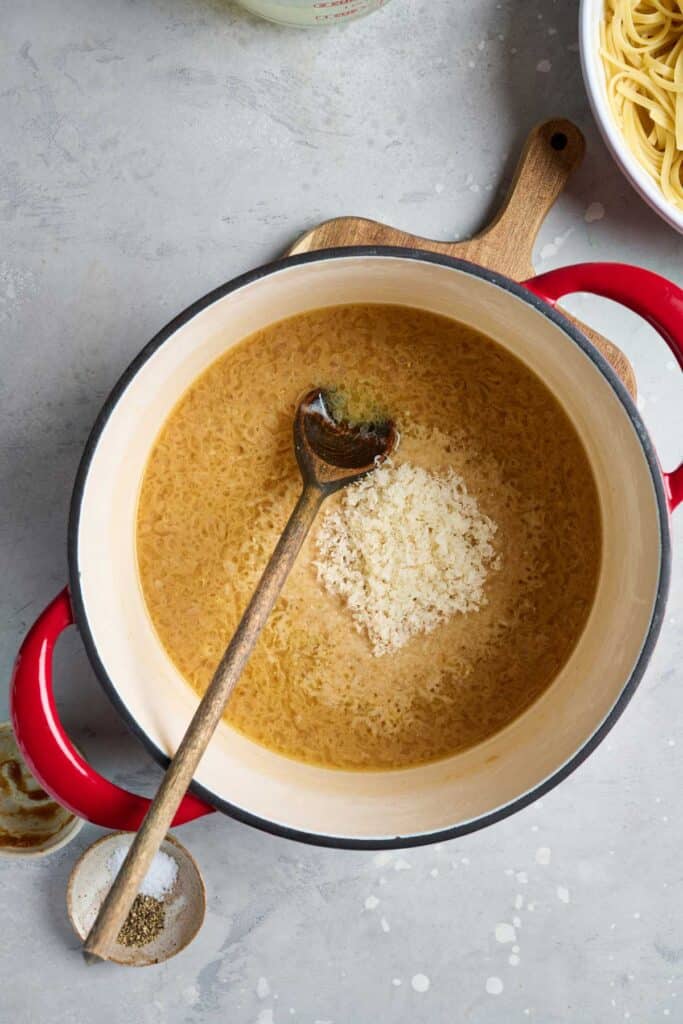
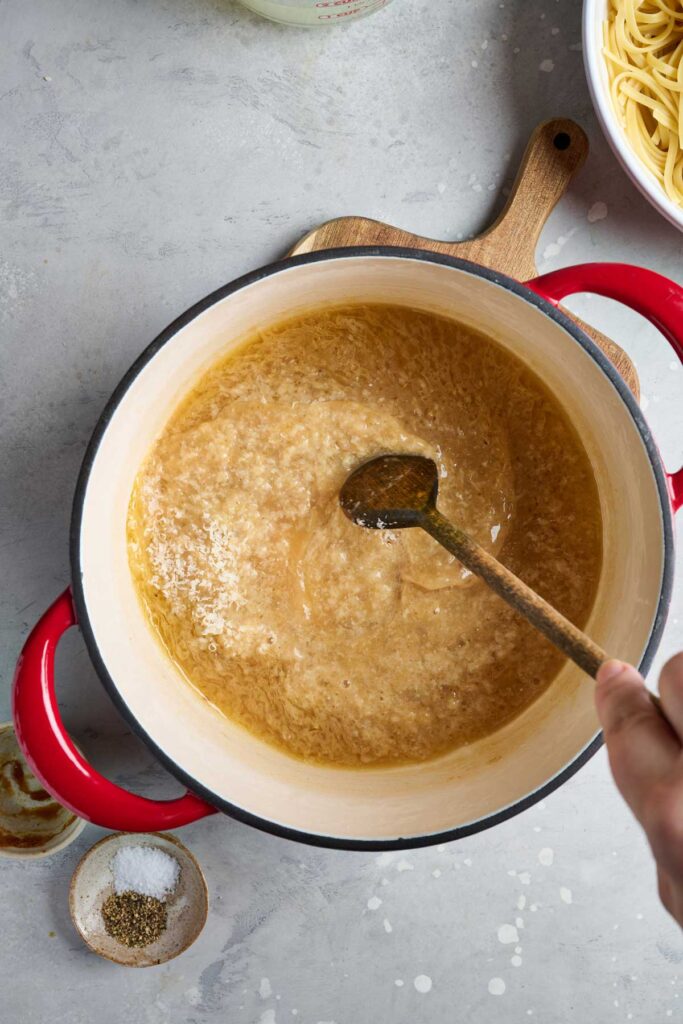
- Build the sauce: Stir in the Parmesan cheese, whisking vigorously until melted. Keep the sauce warm, but not boiling – to prevent separation.
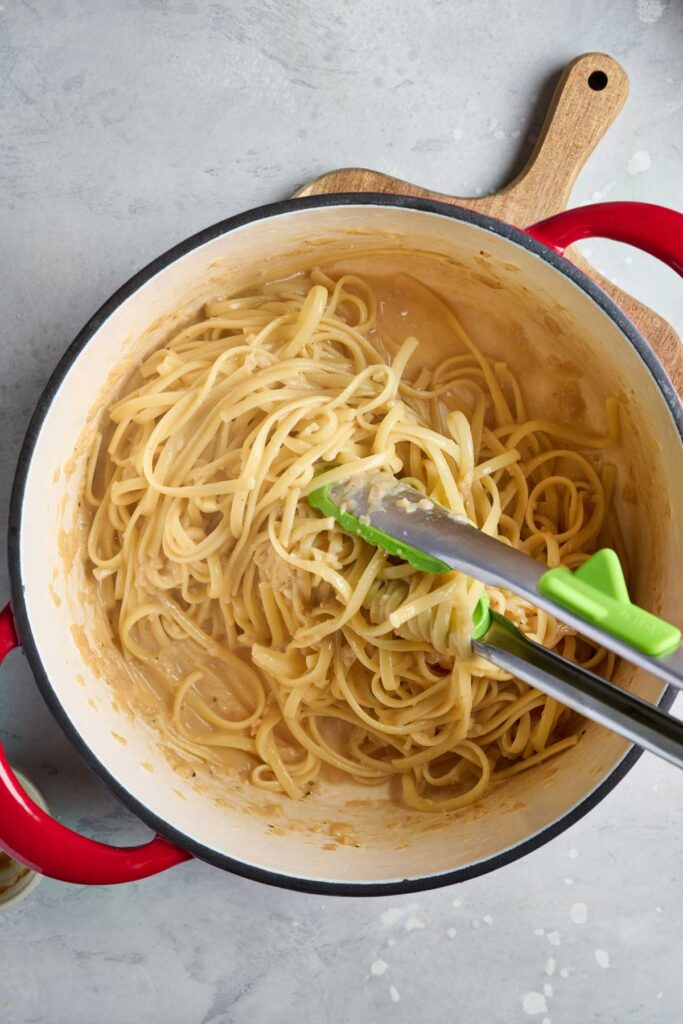
- Finish the pasta: Season with salt and pepper. Add drained pasta and toss to coat. Add remaining reserved pasta water as needed to loosen the sauce.
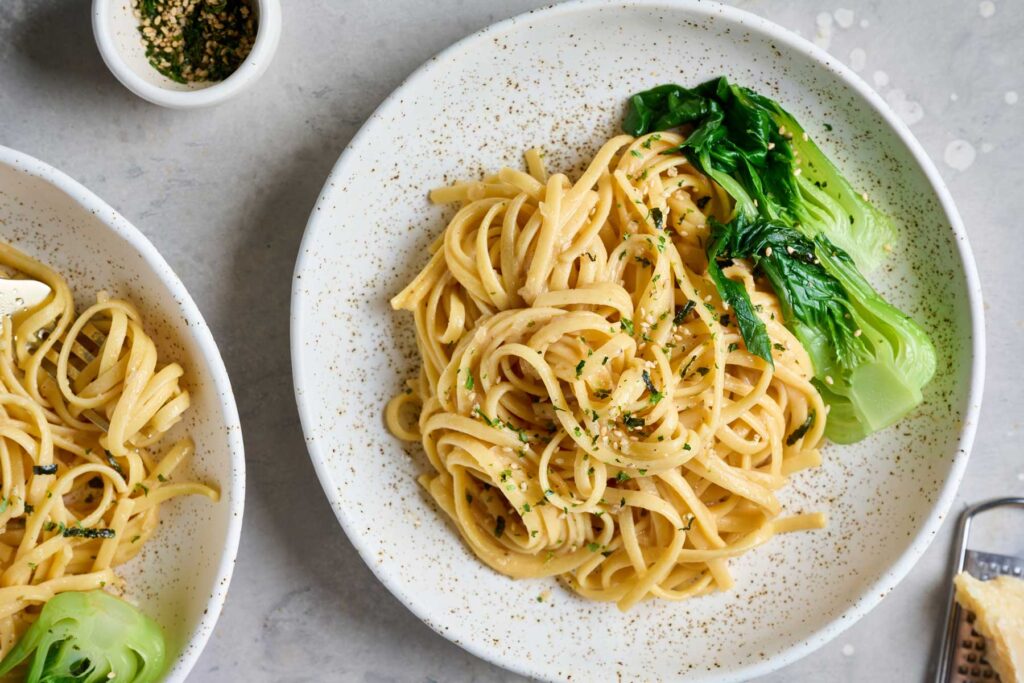
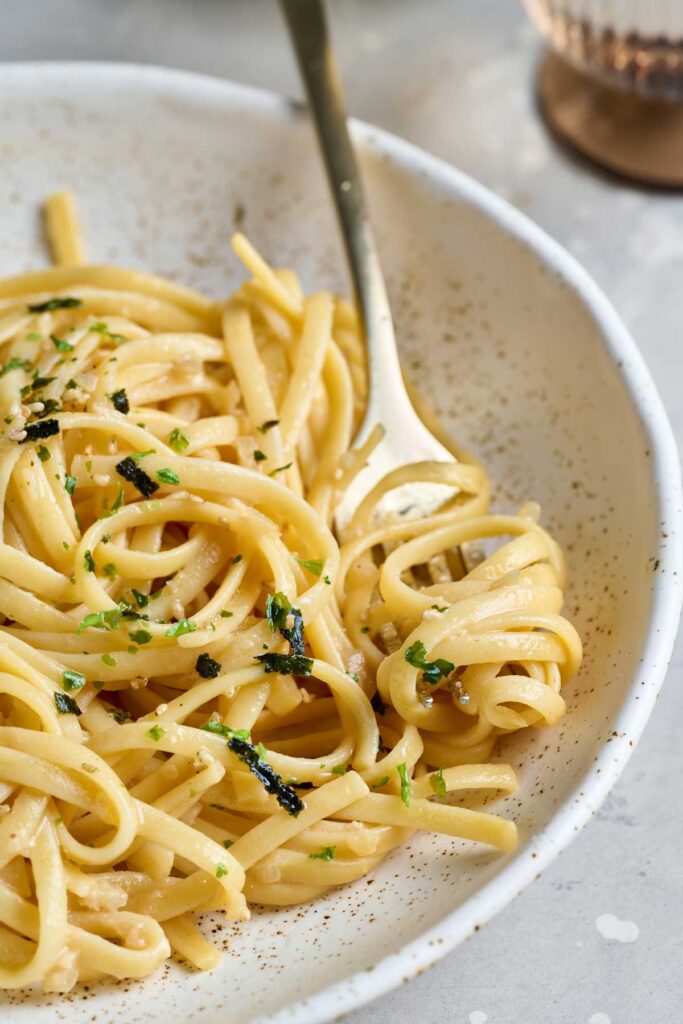
- Garnish & serve: Finish with scallions, sesame seeds, furikake, or mushrooms for extra texture and flavor.
🔪 Recipe Tips: Prep & Adjustments
- Check your miso: Some miso is fermented with barley or wheat, so it isn’t always gluten-free. If needed, choose a certified gluten-free miso to ensure the dish is safe for your dietary needs.
- Emulsification: The starch in pasta water binds fat (butter) and cheese into a silky sauce-no cream required.
- Umami stacking: Miso + Parmesan = layered glutamates, amplifying savory depth.
- Gentle heat: Keeping the sauce below a boil prevents cheese from clumping and butter from breaking.
✔️ Serving Suggestions
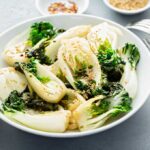
You can serve this miso pasta as is or you can add tofu, edamame, chickpeas, chicken breast or thighs, veggies such as broccoli florets, bell peppers, mushrooms, spinach or stir fried bok choy. Sprinkle Japanese furikake on top for extra umami flavor.
🤔 Frequently Asked Questions
Can I make this vegan?
Yes. Replace butter with plant-based butter and use nutritional yeast or a vegan Parmesan alternative.
Can I add protein?
Absolutely, you can add additional Parmesan or pecorino Romano, tofu cubes, chicken, edamame, beans, shrimp, etc.
Is miso salty?
It can be. Start small and taste before adding extra salt.
✔️ Make Ahead, Storing and Reheating
- Make-Ahead: This recipe is best when serve right after is made.
- Storing: Leftovers can be stored in a resealable container in the fridge for 3-4 days.
- Reheating: You can reheat in the microwave or on the stove top. You may need to add a splash of water and/or milk to loosen up the sauce.
💛 Conscious Bites
Your priorities, your recipe. Learn about Intentional Cooking.

Environment: Plant-forward meals like this reduce reliance on resource-intensive proteins while still delivering satisfaction.

Finances: This recipe uses pantry staples and stretches a small amount of cheese into a full, comforting meal.

Health and Healing: Miso is a fermented food, traditionally valued for supporting digestion and gut health. While heat reduces live probiotics, it still offers minerals, plant-based nutrients, and deep flavor. In this pasta, miso creates richness without heavy cream – a simple way to build satisfaction with balance.
👀 Take a look at these other easy recipes:





🛒 Essentials you’ll adore for this recipe
-

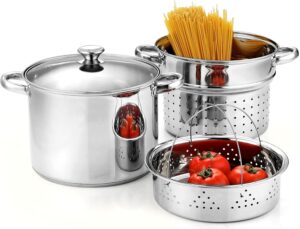
Pasta Pot with Steamer
Eight quarts, three jobs: boil pasta and drain straight through the lid, steam a big batch of vegetables in the basket, or run it as a plain stockpot. The strainer lid is what I’d sell you on — no colander in the sink, no scalding handoff between two pots.
-

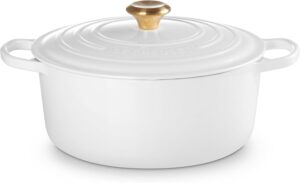
Le Creuset Enameled Cast Iron Dutch Oven
This is the Rolls-Royce of Dutch ovens. An investment piece that lasts a lifetime. High quality, easy to clean, durable with perfect heat distribution. Definitely an investment piece. 7.5 Qt capacity. Available in many colors.
-

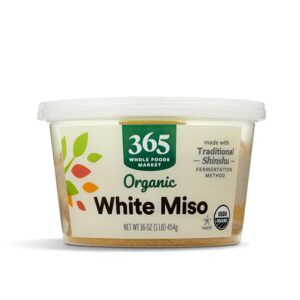
Organic White Miso
This is a versatile, pantry-friendly miso paste made from simple organic ingredients – soybeans, rice koji, sea salt, water, and yeast – with no artificial additives. Its smooth, mildly savory umami flavor dissolves easily into sauces, soups, dressings, and pasta. This organic miso base is ideal for home cooks seeking clean, natural flavor boosters for…
Easy Miso Pasta (One-Pot)

Ingredients
- 8 ounces dried pasta noodles such as spaghetti, linguini or soba noodles
- 3 tablespoons butter
- 1 shallot, minced
- 2 garlic cloves, minced
- 1 ½ tablespoons miso paste, white or red
- 1 ¼ cup reserved pasta cooking water, divided
- 1-2 ounces ¼ to ½ cup Parmesan cheese, finely grated
- Sea salt and ground black pepper to taste
Optional Garnishes:
- Furikake, thinly sliced scallions, sesame seeds, sliced toasted nori, red pepper flakes.
Serving suggestions:
- Sautéed shiitake mushrooms, stir fry bok choy
Instructions
- Bring a large pot of salted water to a boil. Add pasta to the boiling water and cook according to package directions until al dente. Reserve 1 ¼ cup of the pasta cooking water, then drain the pasta.
- In the same pot, melt the butter over medium-low heat. Add the shallots and garlic and sauté, stirring frequently for about 2-3 minutes or until the shallots softened.
- Add the miso paste and pour in about 1 cup of the hot pasta cooking water (it doesn’t have to be exact, you just want to reserve a bit of the water to add after the pasta is added), whisking constantly to dissolve the miso.
- Stir in the Parmesan cheese, whisking vigorously, so the cheese melts and creates a sauce. The sauce should be warm but not boiling. Lower the heat to low if needed
- Season with salt and pepper to taste and then add the cooked pasta. Toss pasta with the sauce to coat. Serve with preferred garnishes.
Notes
- Check your miso: Some miso is fermented with barley or wheat, so it isn’t always gluten-free. If needed, choose a certified gluten-free miso to ensure the dish is safe for your dietary needs.
- Emulsification: The starch in pasta water binds fat (butter) and cheese into a silky sauce-no cream required.
- Gentle heat: Keeping the sauce below a boil prevents cheese from clumping and butter from breaking.
-
Make-Ahead: This recipe is best when serve right after is made.
-
Storing: Leftovers can be stored in a resealable container in the fridge for 3-4 days.
-
Reheating: You can reheat in the microwave or on the stove top. You may need to add a splash of water and/or milk to loosen up the sauce.







Leave a Reply