
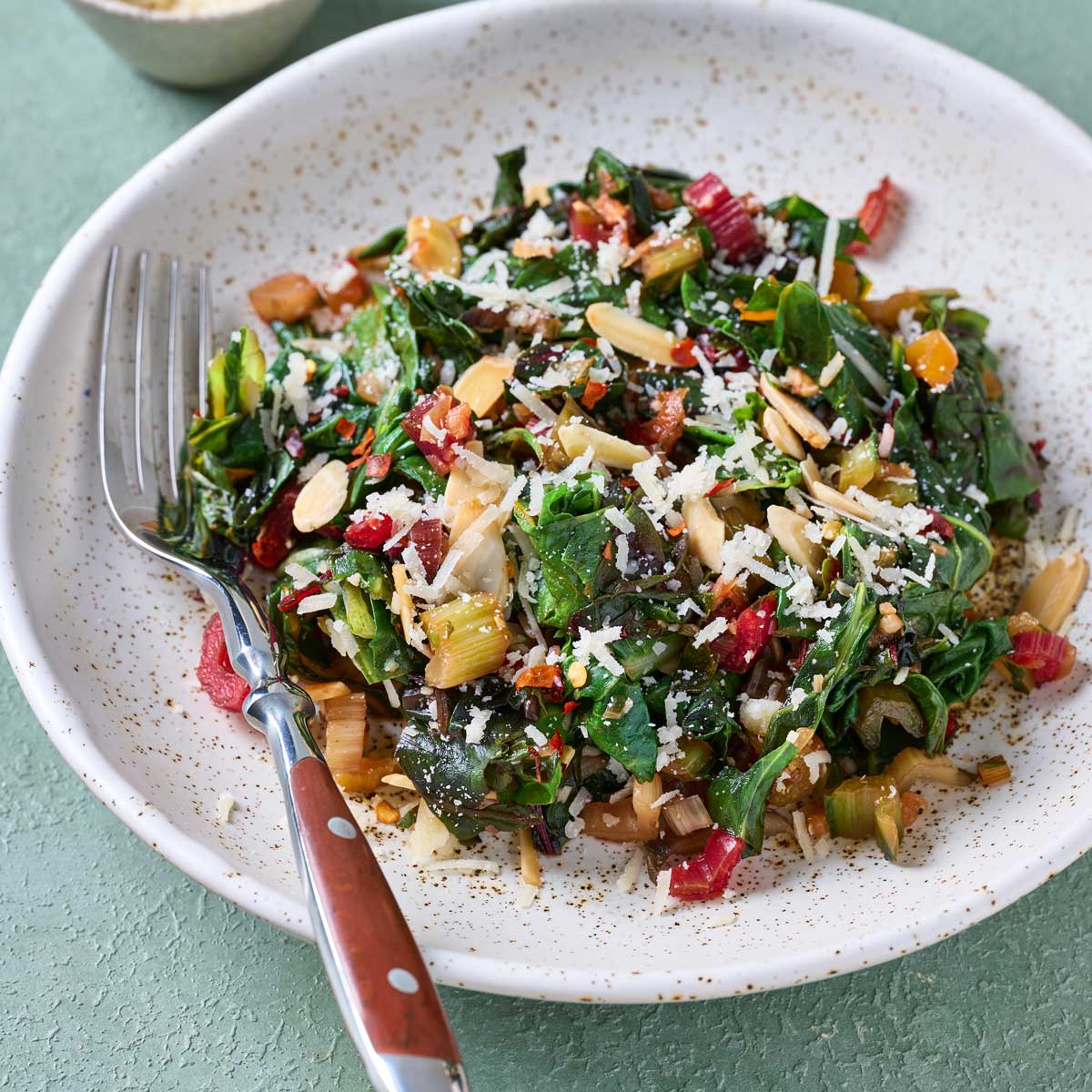

Swiss chard is one of those vegetables that looks beautiful at the market but can feel intimidating if you haven’t cooked with it before. The good news? It cooks quickly, the stems are completely edible, and with just a few simple ingredients, you can turn it into a healthy side dish that pairs beautifully with chicken, fish, pasta, grains, or roasted meats.
This sautéed Swiss chard recipe is simple enough for weeknight dinners but flavorful enough to deserve a spot on your holiday table too.
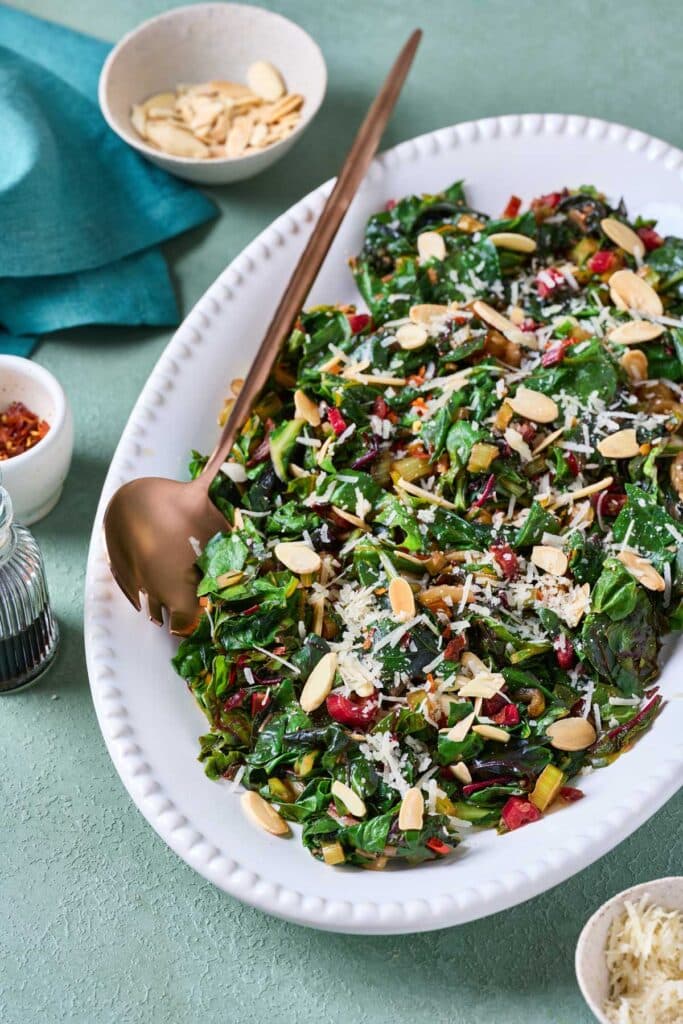
⭐️ Easy Sautéed Swiss Chard: recipe at a glance
- Quick and Easy: This one-pan vegetable side dish is ready in about 20 minutes.
- Reduce Waste: This recipe uses both the Swiss chard stems and leaves, making it a delicious way to reduce food waste.
- Flavor: Garlicky, savory, and perfectly balanced with a touch of brightness.
- Customizable: This simple 5-ingredient recipe can be finished with Parmesan cheese, toasted nuts, red pepper flakes, lemon juice, or balsamic vinegar.
- Budget-Friendly: Whether you use green Swiss chard or rainbow chard, this affordable side dish is perfect for both weeknight dinners and holiday meals.
- Dietary: Naturally plant-based and gluten-free. Vegetarian, vegan, grain-free, and egg-free. Without toppings, the recipe is also dairy-free and nut-free.
🔎 What Is Swiss Chard?
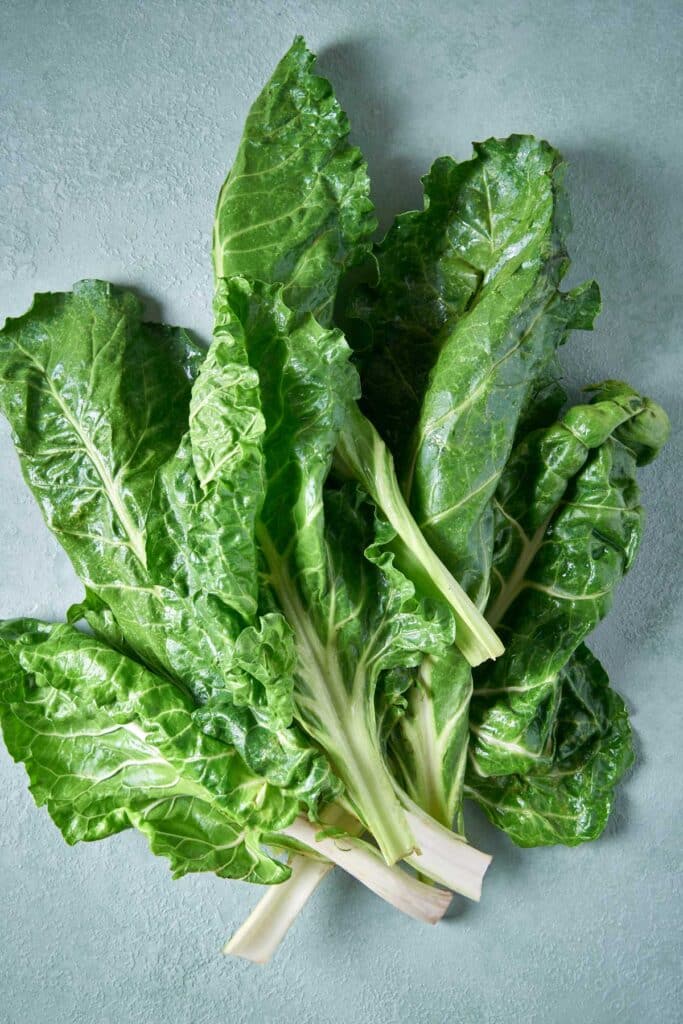
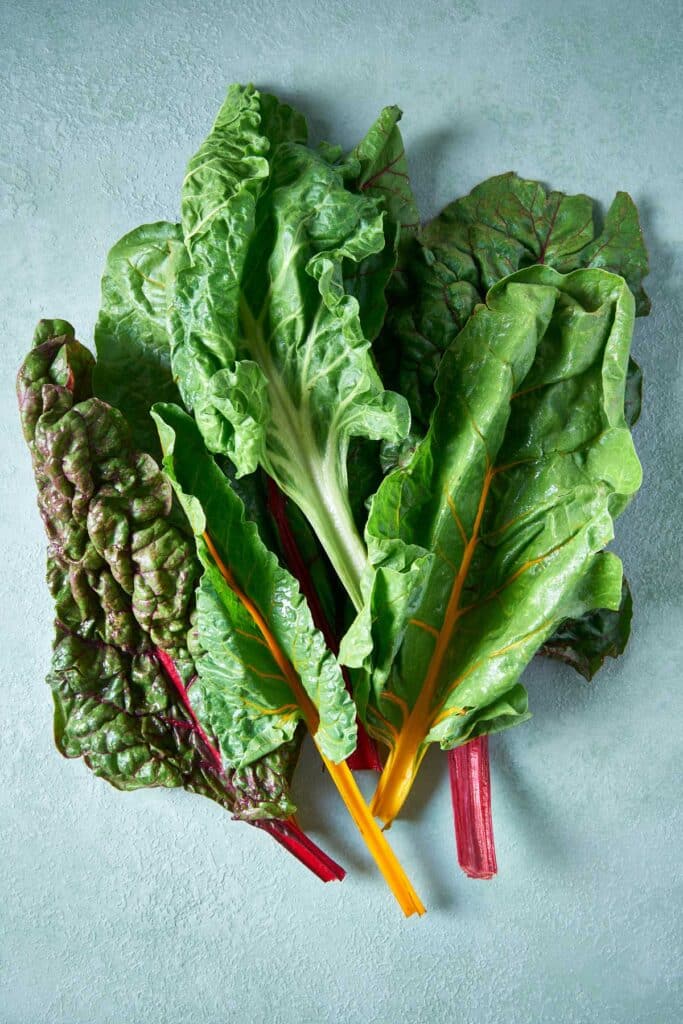
Swiss chard is a leafy green vegetable known for its tender leaves and colorful stems. Rainbow chard is simply a variety of Swiss chard with vibrant stems in shades of yellow, pink, orange, and red.
Unlike kale or collard greens, Swiss chard cooks quickly and becomes silky and tender when sautéed. The stems have a mild sweetness while the leaves develop a savory, earthy flavor similar to spinach.
One of the best things about cooking Swiss chard is that the entire plant is edible, including the stems. Below, you can see two of the most popular varieties of chard.
✔️ Ingredients, Substitutions & Swaps

For the complete list of ingredients and exact quantities, check the printable recipe card below.
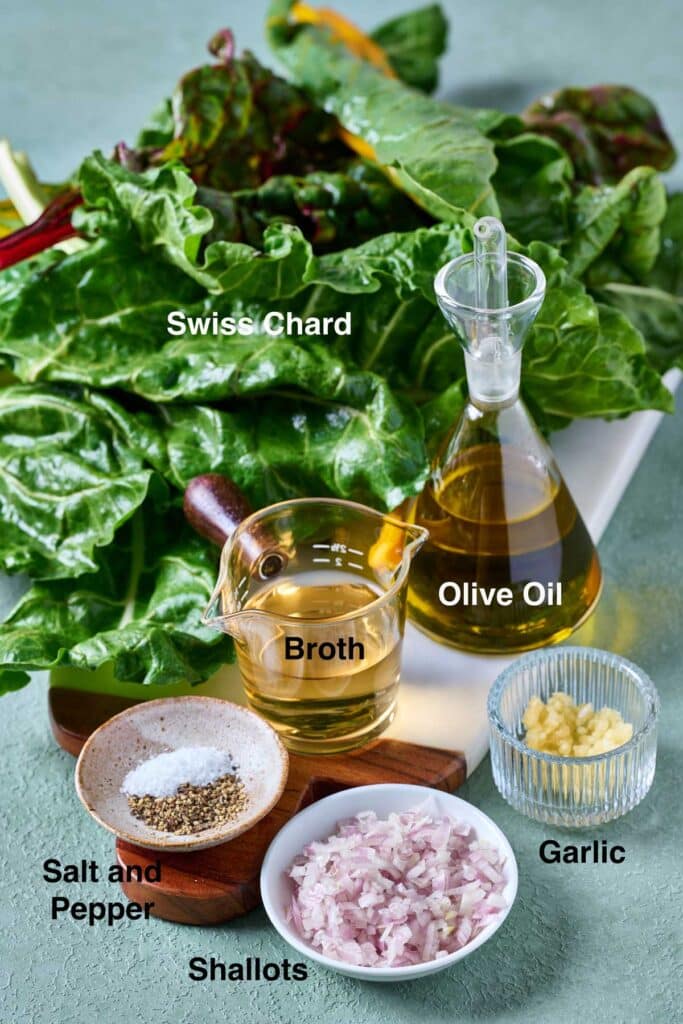
- Swiss Chard or Rainbow Chard: You’ll need one bunch of Swiss chard, about 10 to 12 stems. Both green Swiss chard and rainbow chard work perfectly in this recipe.
- Olive Oil: For sautéing. Adds richness and helps soften the shallots and stems. You can use avocado oil or any mild tasting oil of your choice.
- Shallot: Shallots bring a delicate sweetness that balances the slight bitterness of the greens. You can swap this ingredients with red onion or any yellow/brown onions.
- Garlic: Fresh garlic adds bold savory flavor that pairs beautifully with chard.
- Broth or Water: A splash of broth creates steam to help the greens wilt while adding extra flavor. Vegetable broth keeps the dish vegetarian and vegan, while chicken broth adds deeper savory flavor. To be honest, I hardly ever use water because I like to build favors layer by layer and water – well is tasteless!
✔️ Optional Additions
- Red pepper flakes for heat
- Lemon juice for brightness
- Balsamic vinegar for sweetness and acidity
- Parmesan cheese for savory richness
- Toasted almonds or pine nuts for crunch
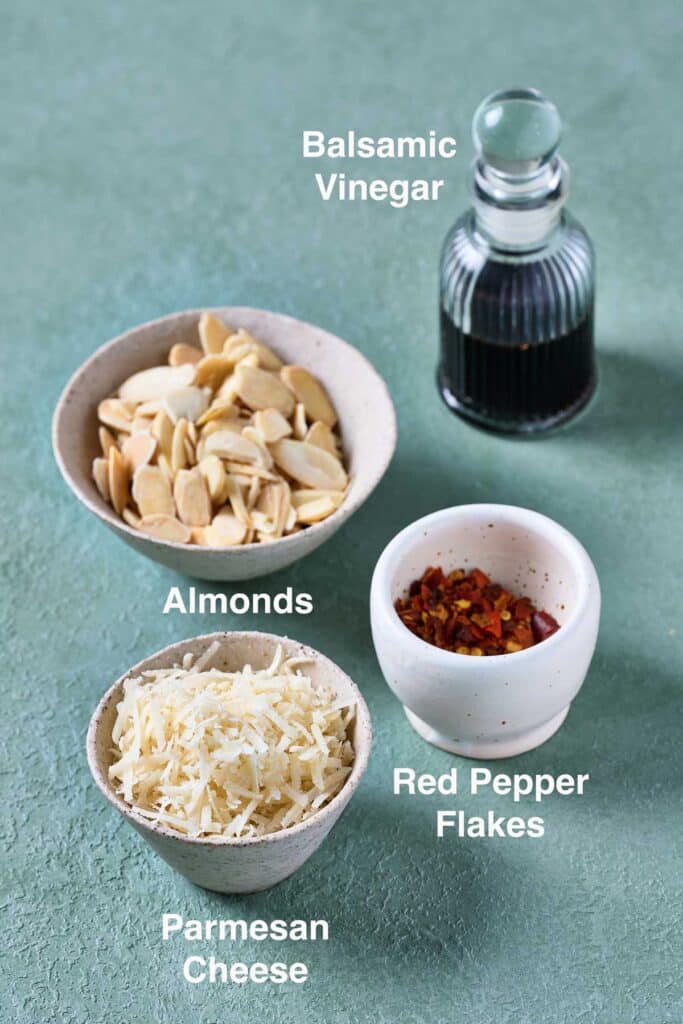
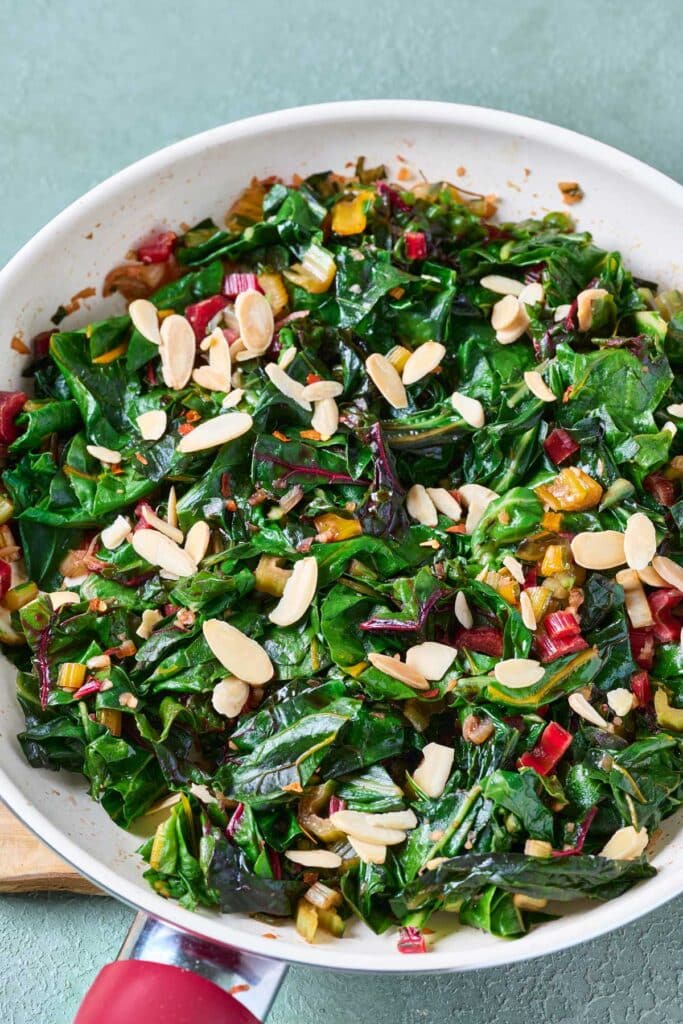
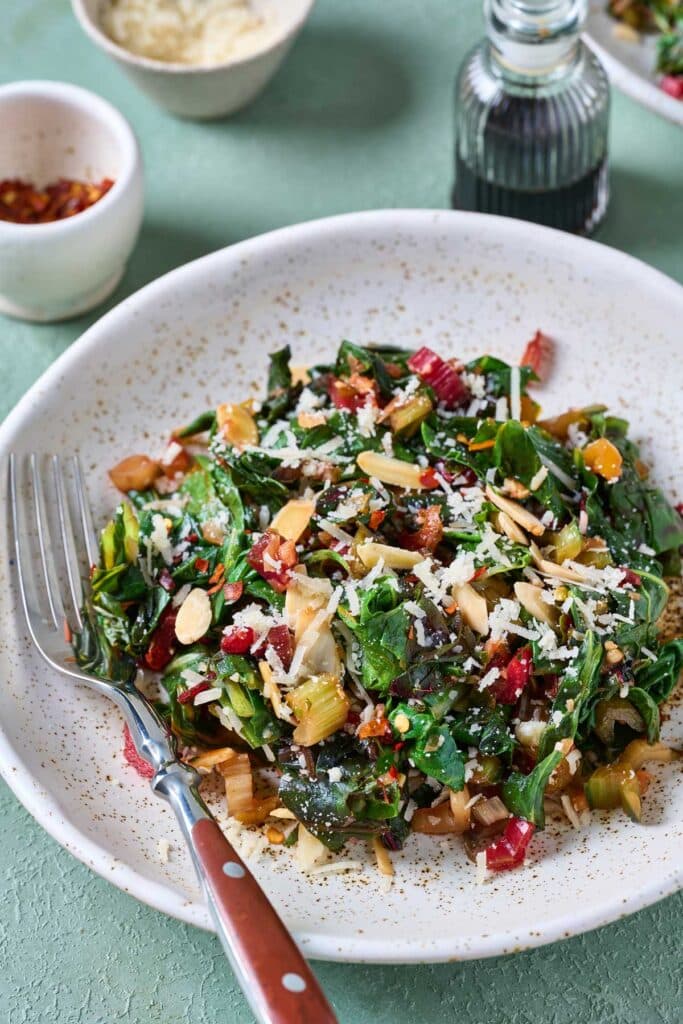
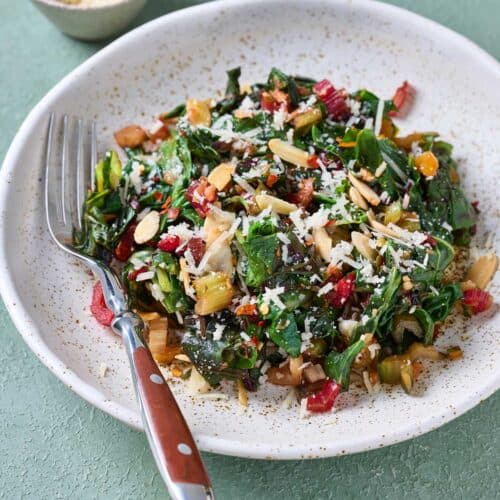
Serving Suggestion: For the photos shown here, the sautéed Swiss chard was finished with Parmesan cheese, toasted almonds, and a pinch of red pepper flakes.
🔎 How to Make Sautéed Swiss Chard?
Scroll to the printable recipe card below for exact directions and cooking times.
- Wash the chard thoroughly: Swiss chard tends to trap dirt and grit near the stems, so wash it well under running water and dry thoroughly.
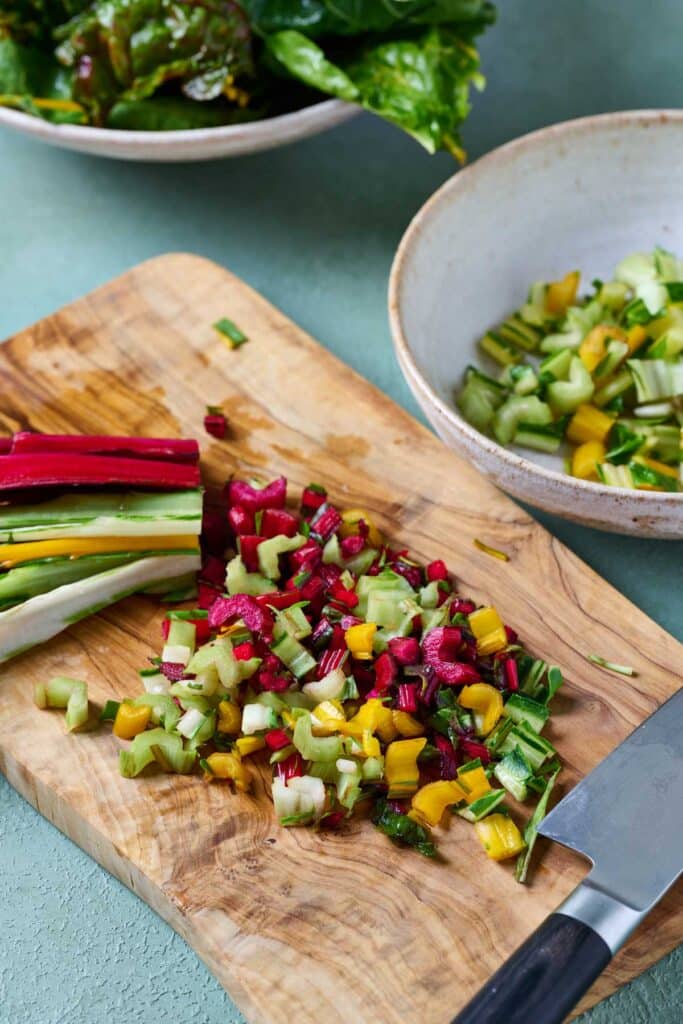
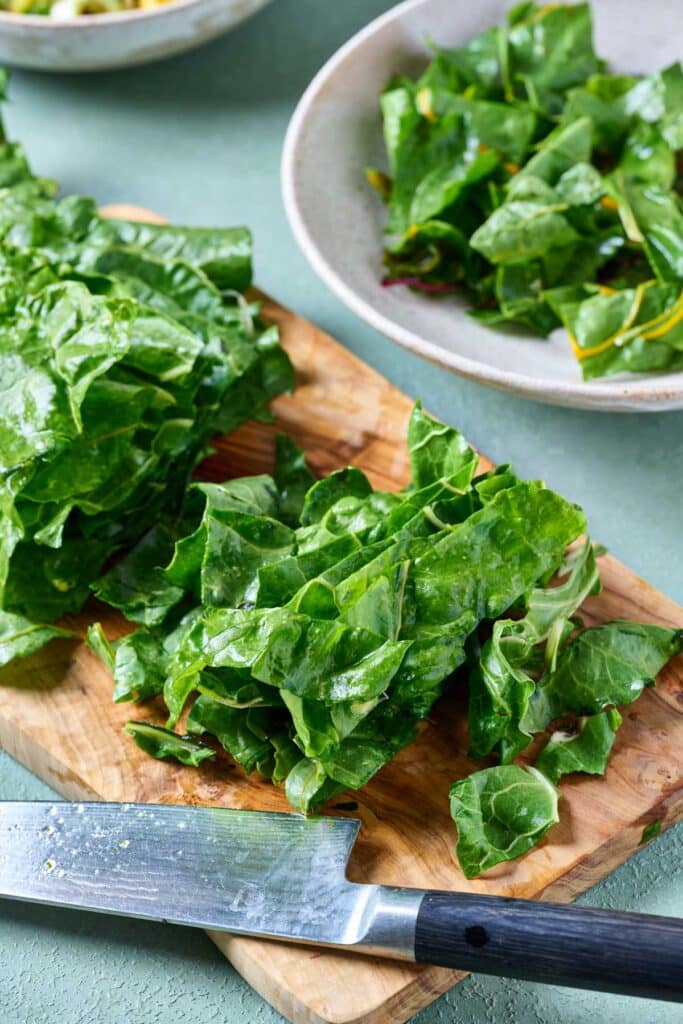
- Separate the stems and leaves: Trim the tough bottom ends from the stems. Separate the stems from the leaves and chop the stems into small pieces. Slice the leaves into strips.
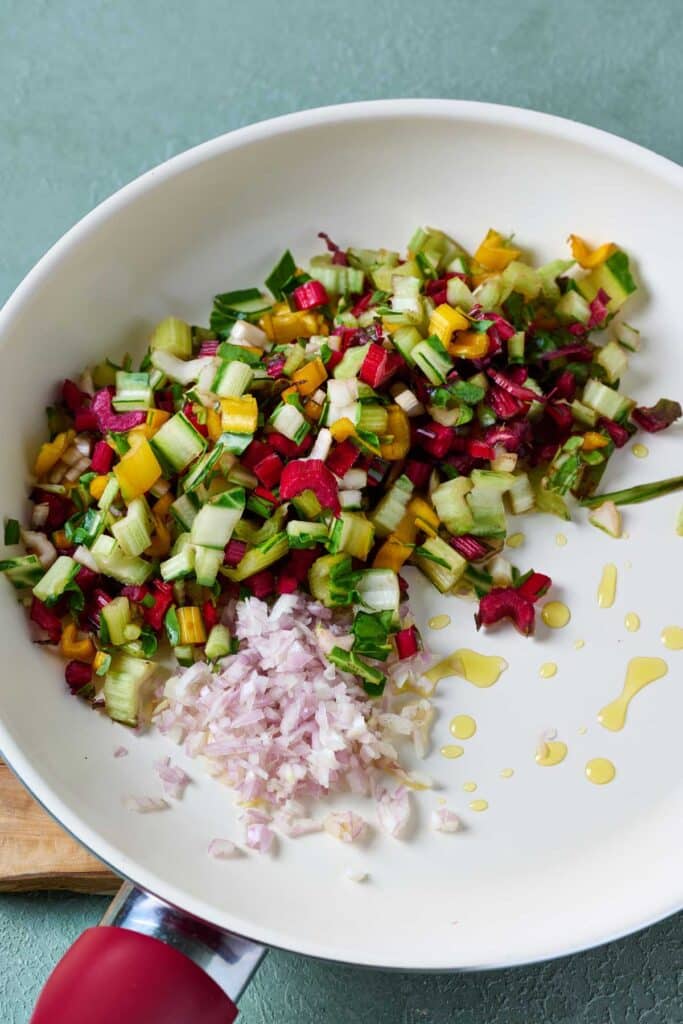
- Sauté the stems and shallots: Heat the olive oil in a large skillet over medium heat. Add the shallots and chopped stems and cook until they begin to soften.
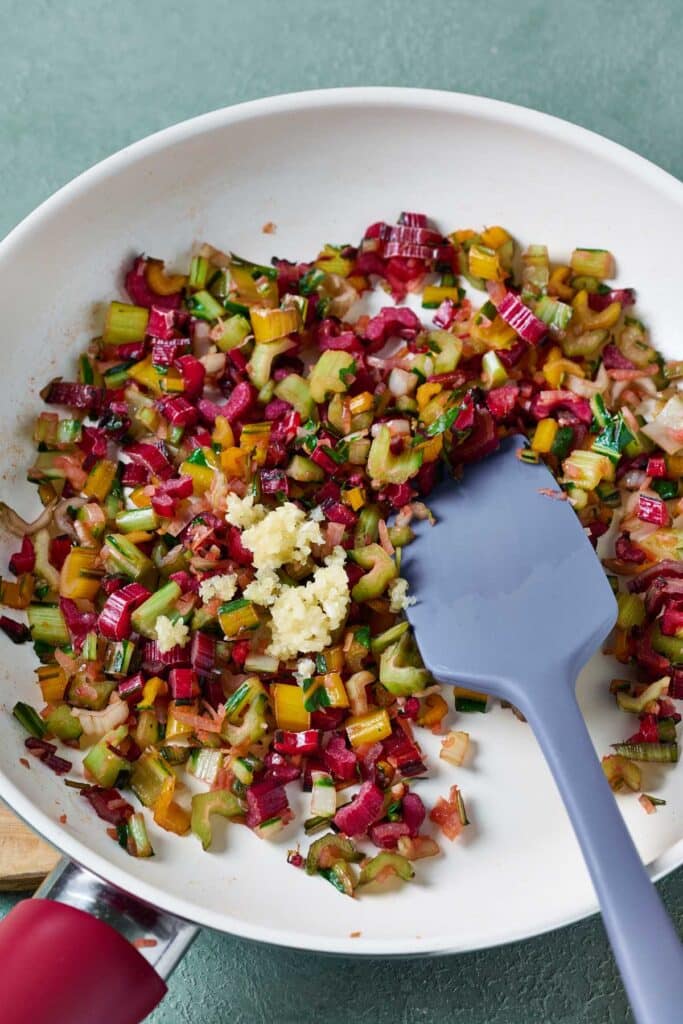
- Add the garlic: Stir in the garlic and cook until fragrant.
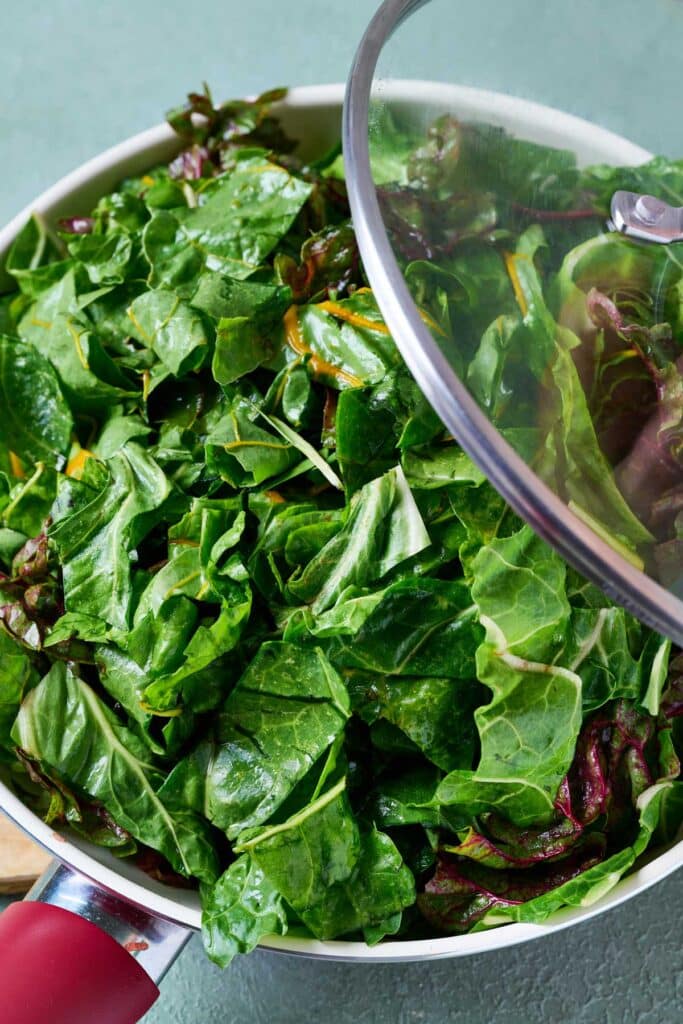
- Wilt the leaves: Add the broth and the chard leaves. Cover the skillet and cook until the leaves wilt down.
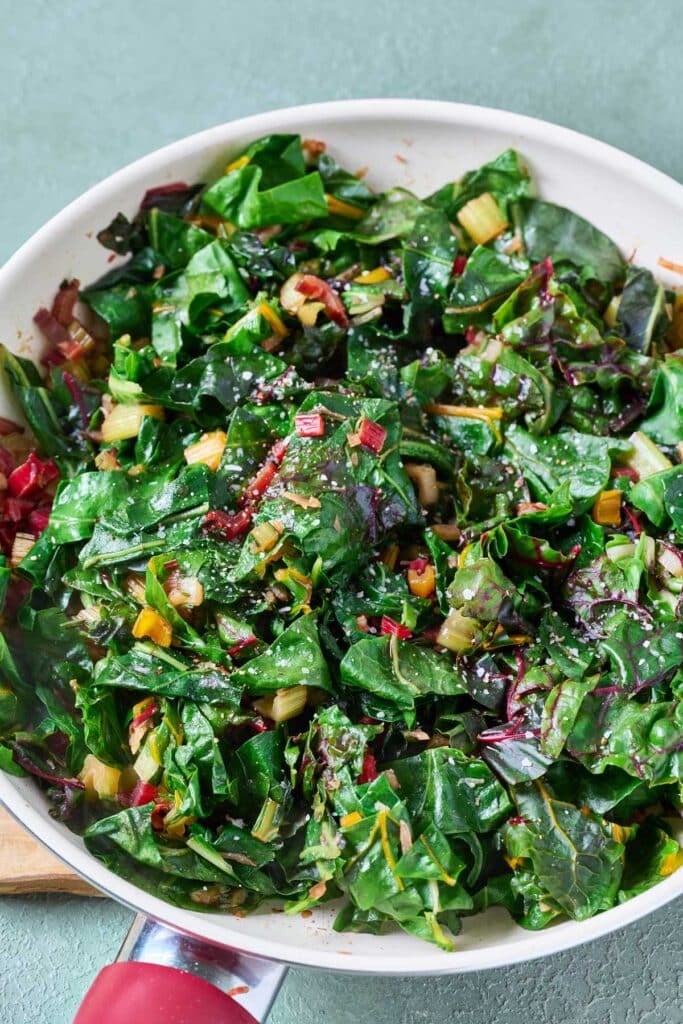
- Finish and season: Remove the lid, season with salt and pepper, and continue cooking until tender. Optional: Finish with lemon juice, balsamic vinegar, Parmesan cheese, or toasted nuts if desired.
💡 Recipe Tips: Prep & Adjustments
- Key for success: Cooking the stems separately from the leaves is the secret to perfectly cooked Swiss chard. The stems take longer to soften while the leaves cook very quickly. Starting the stems first ensures everything becomes tender at the same time.
- Perfect texture: Adding a small amount of broth helps steam the greens gently which keeps them silky and prevents scorching. This technique is commonly used when cooking hearty leafy greens because it softens the fibers while preserving flavor and texture.
- Prep: Wash the chard thoroughly since grit often hides near the stems.
- Flavor: The garlic, shallots, and optional acid from lemon juice or balsamic vinegar help balance Swiss chard’s earthy flavor and mild bitterness.
🔎 Can Swiss Chard Stems Be Eaten?
Yes! Swiss chard stems are completely edible and delicious when cooked properly. They simply need a few extra minutes of cooking time compared to the leaves. The stems have a slightly sweet flavor and tender-crisp texture once sautéed.
🔎 Is Swiss Chard Healthier Cooked or Raw?
Swiss chard is nutritious both raw and cooked, but cooking softens the fibers and makes it easier to eat in larger amounts.
🔎 What to Serve with Swiss Chard?
This easy side dish pairs beautifully with:
- Rice bowls, beans and lentils
- Fried or poached eggs
🤔 Frequently Asked Questions
What does Swiss chard taste like?
Swiss chard has an earthy flavor similar to spinach but slightly more robust. The stems are mildly sweet while the leaves can have a gentle bitterness.
Can I use rainbow chard instead of Swiss chard?
Absolutely. Rainbow chard is simply a colorful variety of Swiss chard and can be cooked exactly the same way.
Can I make sautéed Swiss chard ahead of time?
Yes. You can cook the chard ahead and refrigerate it for up to 2 to 3 days. Reheat gently in a skillet or microwave before serving.
Can I freeze cooked Swiss chard?
You can, although the texture becomes softer after thawing. Frozen cooked chard works best in soups, pasta dishes, grain bowls, or casseroles.
How do I reduce bitterness in Swiss chard?
Garlic, shallots, lemon juice, Parmesan cheese, and a touch of salt help balance bitterness beautifully. Cooking the greens until tender also mellows their flavor.
✔️ Storing and Reheating
- Storage: Store leftover sautéed Swiss chard in an airtight container in the refrigerator for up to 3 days.
- Reheating: Reheat gently in a skillet over low heat or in the microwave until warmed through.
💛 Conscious Bites
Your priorities, your recipe. Learn about Intentional Cooking.

Environment: Using the entire bunch of Swiss chard, including the stems, helps reduce food waste while stretching your grocery budget a little further. Leafy greens are also one of the easiest vegetables to incorporate into more plant-forward meals.

Health & Healing: Swiss chard is packed with vitamins, minerals, and antioxidants. Adding leafy greens to everyday meals is a simple way to bring more fiber and nutrient-rich ingredients into your diet without sacrificing flavor.

Finances: Swiss chard is often inexpensive, especially during peak growing seasons. Simple ingredients like garlic, onions, broth, and leafy greens can create flavorful side dishes without relying on costly ingredients.
👀 Take a look at these other side dish recipes:
🛒 Helpful essentials for this recipe
-

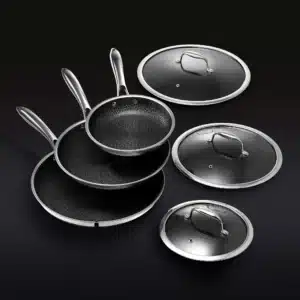
HexClad Non-Stick Skillet set with Lids
The absolute best “indestructible” scratch-resistant non-stick skillet set on planet earth. My most used pans by far! The Hybrid 8-inch, 10-inch and 12-inch pans offer the ultimate in versatility when it comes to frying, sautéing, and simmering. 100% worth the investment. Whether you are an expert cook or someone who hardly sets foot in a…
-

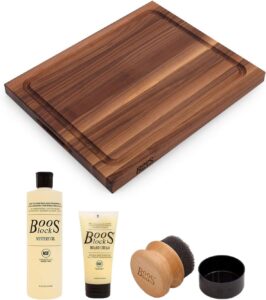
John Boos Rectangular Cutting Board
This 17×21 Walnut 1.5 inch thick cutting board beauty is definitely an investment worth making. With proper care this board will last a lifetime!
-

Shun Classic Chef’s Knife 10-inch
Investing in a good chef’s knife is one of the smartest upgrades you can make in the kitchen. It makes prep quicker, safer, and a whole lot less frustrating. Once you cook with a sharp, well-balanced knife, you’ll wonder how you ever managed without it.

Easy Sautéed Swiss Chard

Ingredients
- 1 bunch Swiss chard or rainbow chard, about 10-12 stems or 12-13 ounces
- 1 tablespoon olive oil
- 1 small shallot, finely diced
- 2 garlic cloves, minced
- ¼ cup vegetable broth or water
- Sea salt or Kosher salt
- Freshly ground black pepper
Optional:
- large pinch of red pepper flakes
- 1-2 teaspoons lemon juice or balsamic vinegar
- 2 tablespoons toasted almond slivers or pine nuts
- 2 tablespoons Parmesan cheese, shredded
Instructions
- Wash the chard thoroughly under running water to remove any dirt or grit. Use a salad spinner or kitchen towel to pat them dry.
- Trim the tough / dried bottom ends of the stems (about 1/2-inch) and discard. Remove the stems from the leaves and cut the stems into small pieces (about 1/2-inch).
- Stack a few chard leaves on top of one another and slice them horizontally into 1-inch wide strips.
- In a large pan or skillet, heat the oil over medium heat, add the shallots and the chopped stems and cook, stirring frequently for about 3-4 minutes or until they start to become tender.
- Stir in the garlic, and cook until aromatic, about a minute. Add the broth or water and stir to combine.
- Add the chard leaves and cover the pan. Cook, covered for about 2-3 minutes or until the leaves wilt down. Remove the lid, season with salt and pepper (and red pepper flakes if using). Continue to cook, tossing as needed for 2-3 minutes or until the stems and leaves are tender.
Optional:
- Remove from the heat and drizzle lemon juice or balsamic vinegar. Toss, adjust seasoning and serve.
Notes
- Make sure you wash the Swiss chard thoroughly.
- Swiss chard and rainbow chard stems are edible but need additional cooking time to become tender. If you prefer to use only the leaves, saute the shallots until they become translucent and continue following the recipe as written.
- I prefer using broth which has flavor instead of water. You can use vegetable broth to keep the dish vegetarian/vegan or chicken broth.
- Finish the dish with a generous sprinkle of Parmesan cheese for added flavor.
- Stir in toasted slivered almonds or pine nuts before serving for added crunch. Sprinkle with parmesan cheese before serving
- Store in an airtight container in the refrigerator for 2-3 days.







Leave a Reply