

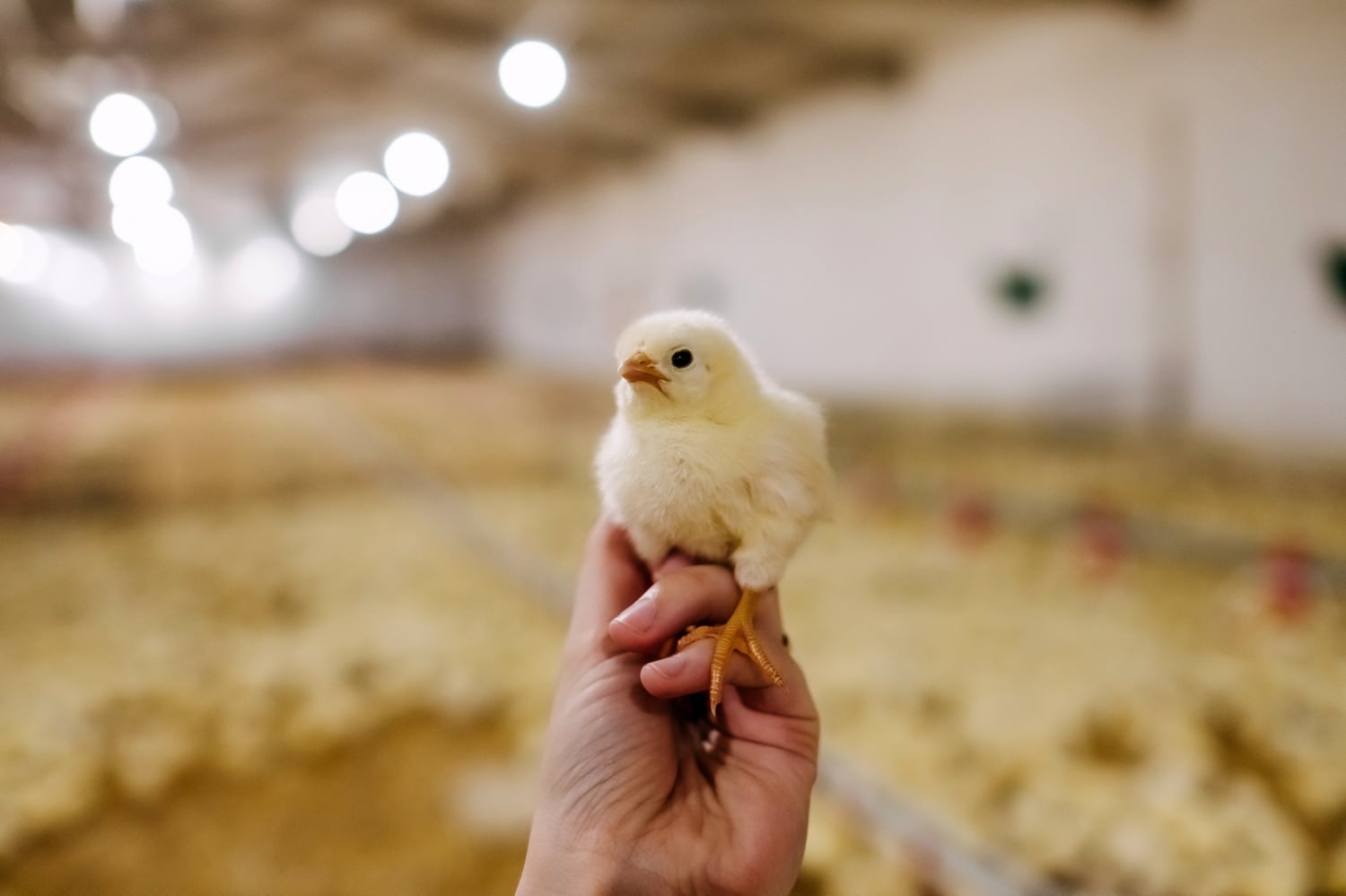
This culling is one of the least visible parts of egg production. The carton may tell us that the laying hens were cage-free, organic or pasture-raised, but it usually says nothing about their brothers.
The egg industry wants female chicks. Biology continues to send both sexes because biology did not read the business plan.

Every hatch, drawn to scale
Roughly half and half. One half continues into the laying system. The other half does not leave the hatchery.
• • • • • • • • • • • • • • • • • • • • • • • • • • • • • • • • • • • • • • • • • • • • • • • • • • • • • • • • • • • • • • • • • • • • • • • • • • • • • • • • • • • • • • • • • • • • • • • • • • • • • • • • • • • • • • • • • • • • • • • • • • • • • • • • • • • • • • • • • • • • • • • • • • • • • • • • • • • • • • • • • • • • • • • • • • • • • • • • • • • • • • • • • • • • • • • • • • • • • • • • • • • • • • • • • • • • • • • • • • • • • • • • • • • • • • • • • • • • • • • • • • • • • • • • • • • • • • • • • • • • • • • • • • • • • • • • • • • • • • • • • • • • • • • • • • • • • • • • • • •
~300 million female · 300 dots
Vaccinated, beak-treated, moved to a farm. They become the hens every carton describes.
• • • • • • • • • • • • • • • • • • • • • • • • • • • • • • • • • • • • • • • • • • • • • • • • • • • • • • • • • • • • • • • • • • • • • • • • • • • • • • • • • • • • • • • • • • • • • • • • • • • • • • • • • • • • • • • • • • • • • • • • • • • • • • • • • • • • • • • • • • • • • • • • • • • • • • • • • • • • • • • • • • • • • • • • • • • • • • • • • • • • • • • • • • • • • • • • • • • • • • • • • • • • • • • • • • • • • • • • • • • • • • • • • • • • • • • • • • • • • • • • • • • • • • • • • • • • • • • • • • • • • • • • • • • • • • • • • • • • • • • • • • • • • • • • • • • • • • • • • • •
~300 million male · killed, usually within a day
Healthy animals born into a system that has no economically useful place for them.
Figure: ASPCA — more than 600 million chicks hatched annually by the U.S. egg industry, approximately half male. The ASPCA is an animal-advocacy organization; estimates vary by year and by which hatchery populations are counted.
01
Why Can’t Male Chicks Be Raised?
Only female chickens produce eggs. Male chickens – roosters – do not have the reproductive system required to form or lay them.
That part is straightforward.
What is less obvious is why the male chicks are not simply raised for meat.
Modern chicken farming uses different breeds for different purposes. Laying hens have been selectively bred to produce large numbers of eggs while maintaining a relatively light body. Chickens raised for meat, called broilers, have been bred to grow much larger and gain weight very quickly.
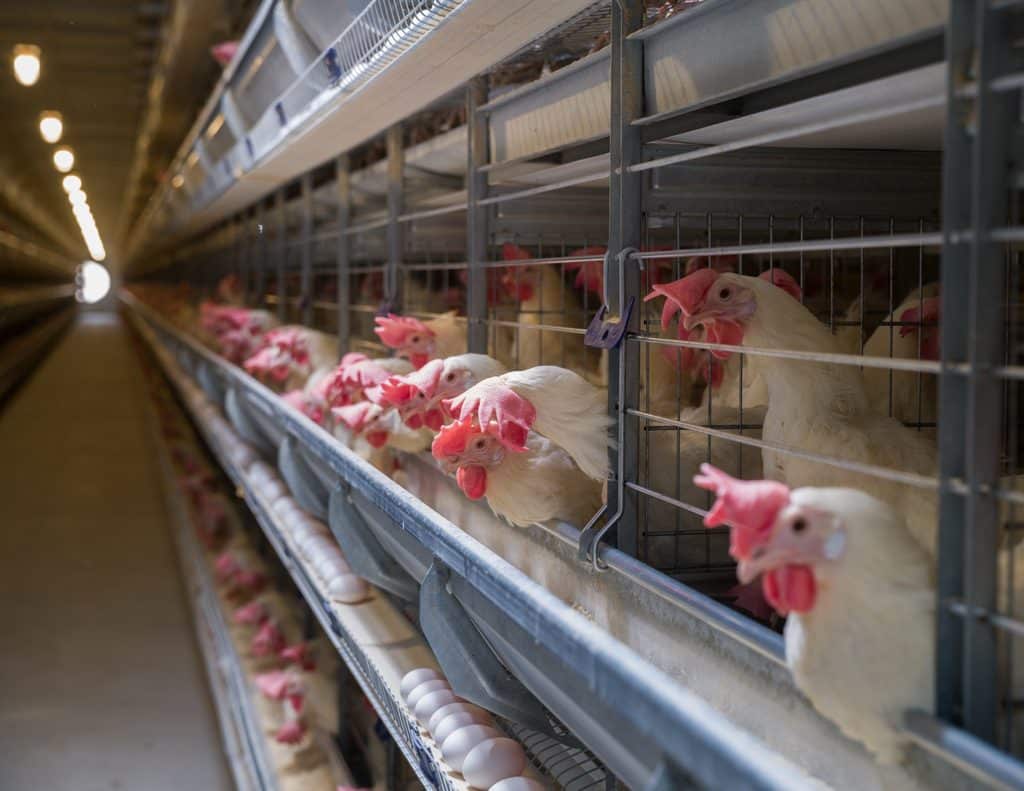
Laying Hens stay small
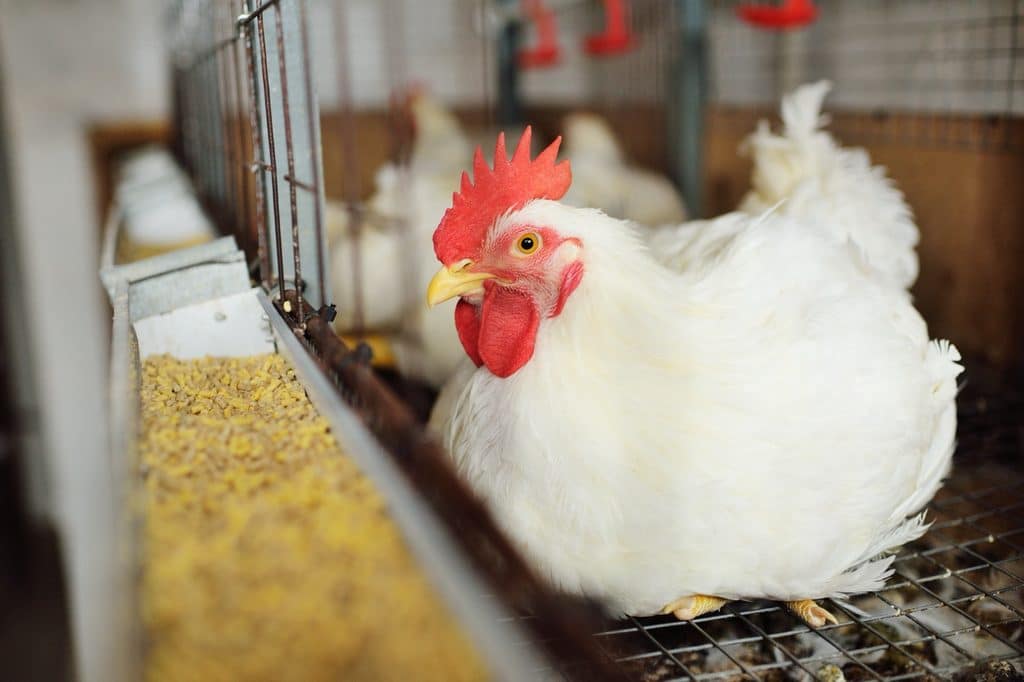
Broiler Hens grow faster
Male chicks from egg-laying breeds are lean, grow slowly and require more feed and time to produce substantially less meat than a commercial broiler.
They are not inedible. They are unprofitable.
That distinction matters because the chicks are not killed because something is wrong with them. They are healthy animals born into a system that has no economically useful place for them.
02
What Happens at the Hatchery?
The eggs in a grocery store are generally unfertilized and cannot develop into chicks. Hatcheries work with a separate supply of fertilized eggs used to produce future laying hens.
After the chicks hatch, workers or automated systems determine which are female and which are male. Depending on the breed, chicks may be identified by feather color, feather development or physical examination.
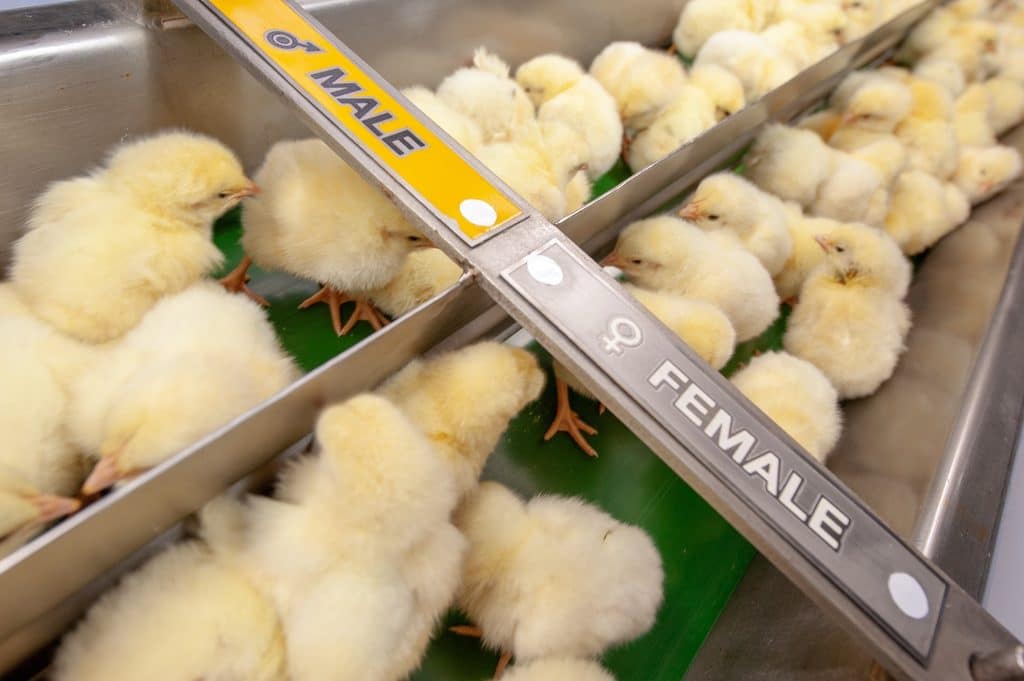
Female chicks enter the laying system
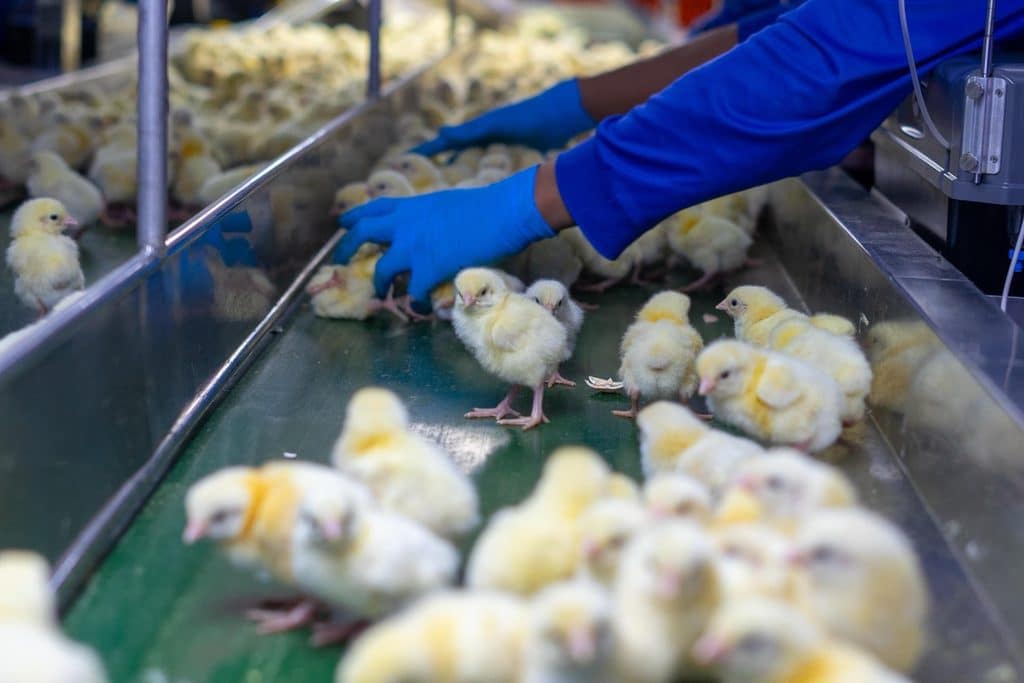
Male chicks are culled
The female chicks continue through the production system. They may be vaccinated, undergo beak treatment and then be transported to farms where they will eventually produce eggs.
The male chicks are separated and killed.
This routine practice is called male chick culling.
The two commonly used methods are:
- Maceration, in which chicks pass through specialized high-speed equipment designed to cause immediate death
- Gassing, in which chicks are exposed to carbon dioxide or another gas mixture
Veterinary guidelines consider certain forms of maceration and gassing acceptable when the equipment is properly designed, maintained and operated to produce rapid death.
That addresses how the chicks are killed. It does not answer the larger ethical question of whether millions of healthy chicks should be hatched and killed simply because the industry cannot profit from them.
A method can meet a technical euthanasia standard and still leave us questioning the system that made it necessary.
03
Do Cage-Free or Pasture-Raised Eggs Prevent Chick Culling?
Usually, no.
Cage-free, free-range, pasture-raised and organic labels primarily describe how the female laying hens are housed and fed. They do not automatically tell us what happened to the male chicks at the hatchery.
Which labels reach the hatchery
Nine claims. Five of them stop at the barn door.
Housing claims and hatchery claims are two separate animal-welfare issues. Only the right-hand column addresses what happened to the male chicks.
−
Does not usually prevent culling
Free-Range
No
Pasture-Raised
No
USDA Organic
No
Certified Humane
Not automatically
✓
Addresses the hatchery
Humanely Hatched
Yes, when verified
Better-Hatched
Yes, when verified
UEP Certified Hatch Check
Yes
Certified Humane, verified Approved Hatchery
Yes
The question to ask a brand
“Does your hatchery use in-ovo sexing, or are male chicks killed after hatching?”
Do not ask only whether the eggs are humane. “Humane” is broad enough to accommodate an impressive amount of creative writing.
A pasture-raised hen may live in a significantly better environment than a caged hen while still coming from a hatchery that culled her male siblings.
These are two separate animal-welfare issues. One label does not necessarily solve both.
Apparently, one egg carton can hold twelve eggs but not the entire truth about how they were produced.
04
What Is In-Ovo Sexing?
In-ovo sexing identifies whether a developing chick embryo is male or female while it is still inside the egg.
The technology is used on fertilized eggs at hatcheries – not on the unfertilized eggs we buy for breakfast.
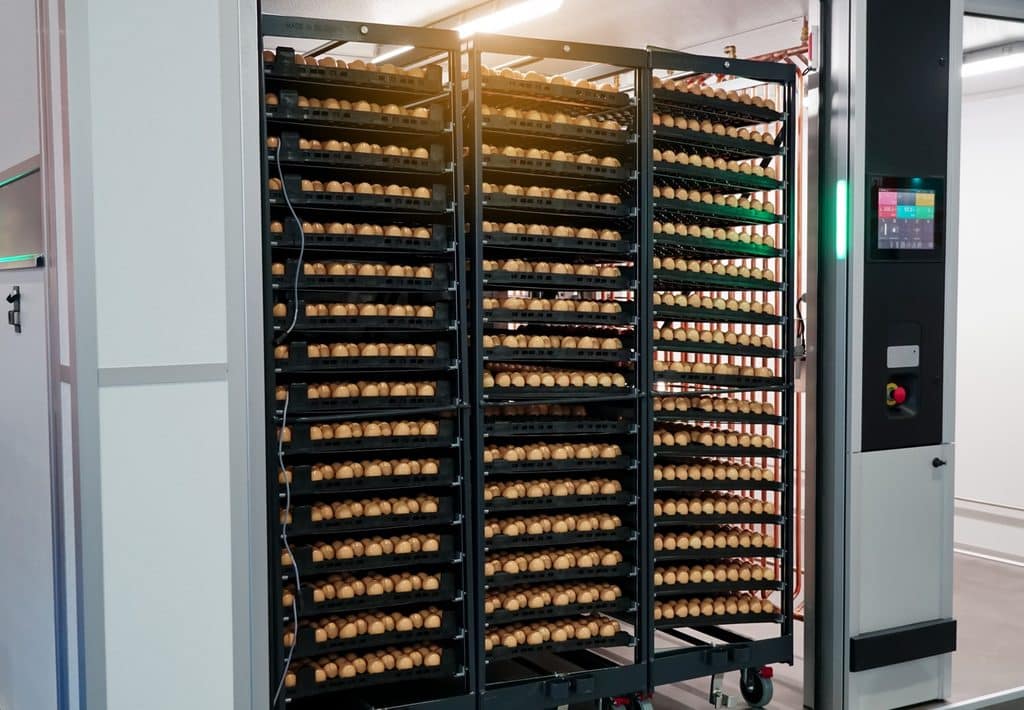
fertilized eggs are incubated
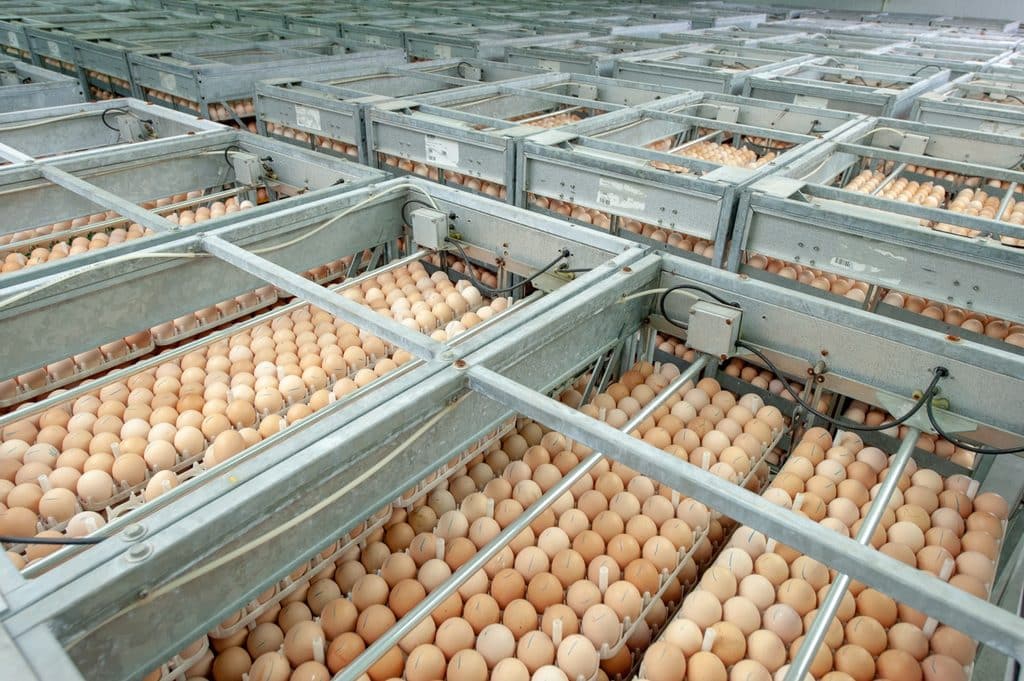
eggs will be 50/50 Male/Female
Depending on the system, in-ovo sexing may analyze feather color, hormones, genetic material, blood vessels or other characteristics of the developing embryo. Eggs identified as female continue through incubation. Eggs identified as male are removed before the chicks hatch and may be redirected for uses such as animal feed.
This prevents male chicks from being hatched, handled, sorted and then killed.
The incubation clock
Twenty-one days from set to hatch. Both certification programs cut the window off before day 16.
Timing matters. Scientists continue to study when chicken embryos may develop the neurological capacity required for pain perception, so welfare programs limit how late in incubation sexing may occur. Earlier is better, and earlier becomes possible as the technology improves.
Days 0–14
15
16-20
Hatch
Through day 14
Certified Humane permits embryo sexing
The stricter of the two limits currently in use.
On or before day 15
UEP Certified Hatch Check requires it
Or that the male chicks were hatched and raised rather than culled.
Day 21
The chicks hatch
Under conventional practice, sorting and culling happen within a day of this point.
Sources: Certified Humane hatchery standards; UEP Certified Hatch Check program. Incubation is approximately 21 days.
In-ovo sexing does not solve every welfare problem in egg production. The female chicks still enter the commercial laying system, where their quality of life depends on housing, management and what happens when their production declines.
But it can prevent hundreds of millions of male chicks from hatching into a system that plans to kill them immediately.
That is not a small improvement.
05
Is In-Ovo Sexing Available in the United States?
Yes, but it is not yet used throughout the industry.
In-ovo sexing technology entered commercial U.S. hatcheries in December 2024. The first American eggs produced through verified in-ovo sexing reached grocery stores in 2025.
Adoption continued expanding during 2026, but the technology remains a small part of the total U.S. egg supply. Current systems require substantial investment, may work better with certain breeds or shell colors and must process an enormous number of eggs quickly enough to keep hatcheries operating efficiently.
The United Egg Producers has said that in-ovo sexing is not yet fast or affordable enough to serve the entire American egg industry. That is a practical barrier, but not an argument for abandoning the goal.

Eggs can be sexed using light & optical differences
Technologies usually become faster and less expensive when companies invest in them and customers create demand for them. We have managed to develop refrigerators that tell us when we are out of milk. Surely identifying a chick before it hatches is not beyond our collective abilities.
06
How Can Shoppers Find Better-Hatched Eggs?
Look for a claim that specifically addresses hatchery practices. The words cage-free, pasture-raised or organic are not enough.
Current labels and programs include:
- UEP Certified Hatch Check
- Humanely Hatched
- Better-Hatched
- A verified Approved Hatchery claim through Certified Humane

The UEP Hatch Check program verifies that male embryos were identified through in-ovo sexing or that the male chicks were hatched and raised rather than routinely culled. It also requires supply-chain controls to keep qualifying chicks, hens and eggs separate from conventional production.
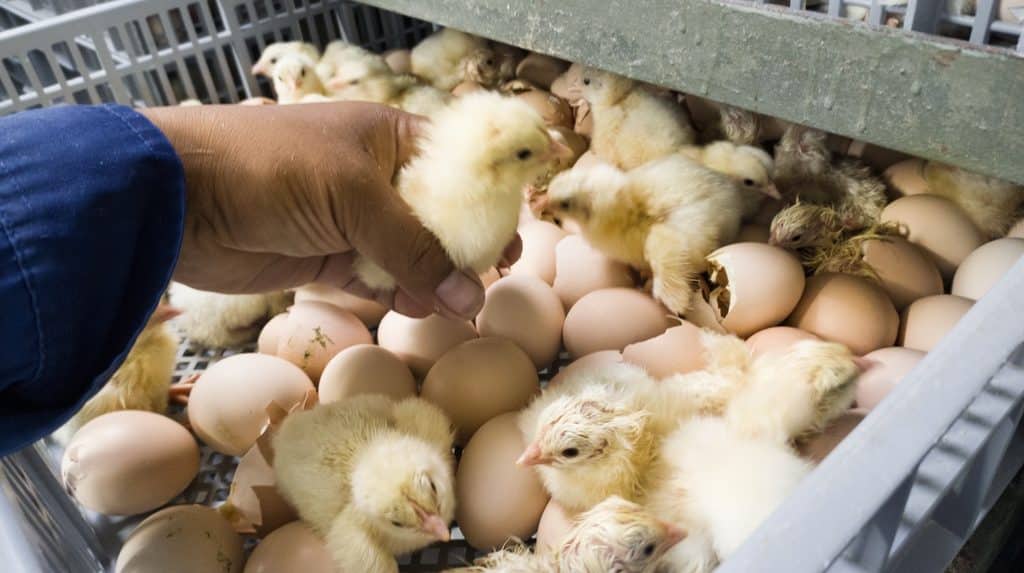
Freshly hatched chicks
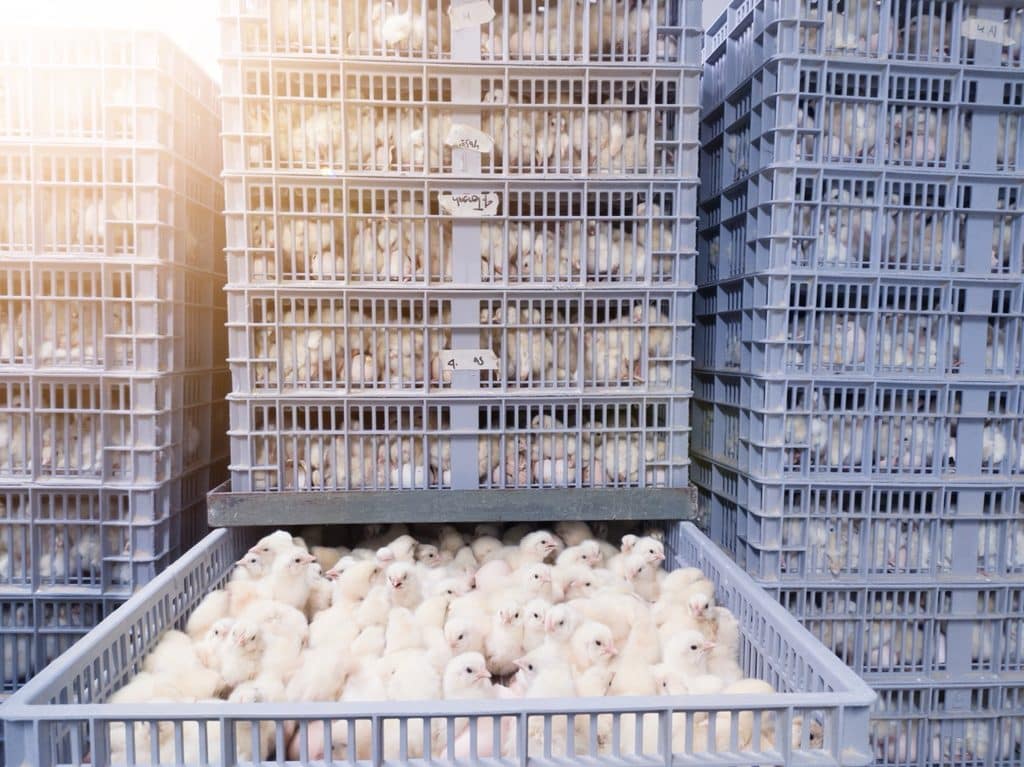
Palettes of chicks
Availability remains limited and varies by region. If you cannot find a clear label, check the egg company’s website or contact the company directly.
07
Could the Male Chicks Simply Be Raised?
They could, and some farms or programs do raise them.
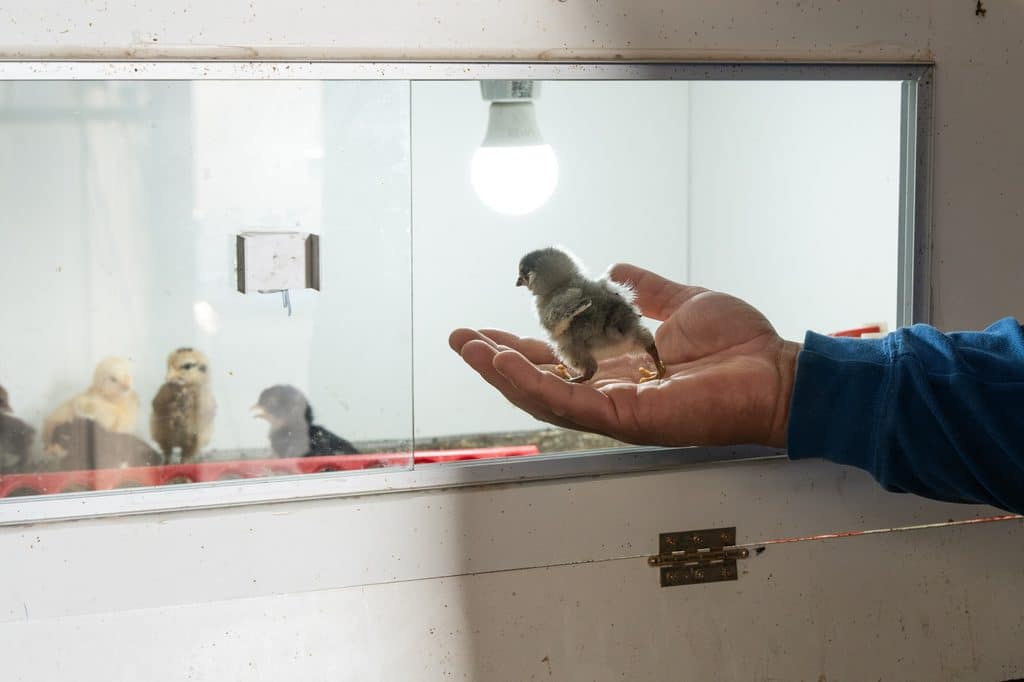
Some programs do raise male chicks
Dual-purpose chicken breeds offer another possibility. Females from these breeds produce eggs while males can be raised for meat. However, dual-purpose hens generally lay fewer eggs than specialized laying breeds, and the males grow more slowly than commercial broilers.
That means more feed, time, land and expense for every egg and pound of meat produced.
Those costs are not imaginary. Neither is the life of the chick.
A more humane food system may not always be the system that produces the greatest amount of food at the lowest immediate price. Part of this conversation is deciding which costs should be accepted as unavoidable and which have merely been pushed out of sight.
For large-scale egg production, early in-ovo sexing currently appears to be the most practical way to end routine male chick culling without requiring millions of additional roosters to be raised.
08
Other Countries Have Already Made Changes
The United States is not the first country to confront this issue.
Already done elsewhere
Four dates, one conclusion
2022
Germany prohibited the routine killing of day-old male chicks.
2023
France ended most male chick culling in its shell-egg industry, with limited exceptions for certain white-egg breeds and chicks used as animal feed.
2024
United States — in-ovo sexing technology entered commercial hatcheries in December.
2025
United States — the first American eggs produced through verified in-ovo sexing reached grocery stores.
Routine male chick culling is not an unavoidable law of nature. It is an industry practice, and industry practices can change.
These transitions required investment in hatchery equipment, new technology and cooperation across the egg supply chain.
09
What Can We Do?
Most people cannot inspect a hatchery or persuade an egg company to install new equipment before breakfast.
We can still create demand for change.
When verified better-hatched eggs are available and fit your budget, buying them signals that hatchery welfare matters. You can ask grocery stores to carry them, contact brands about their hatchery practices and support policies that encourage earlier, more widely available in-ovo sexing.
You can also use eggs more intentionally. Save them for dishes where they provide flavor, structure or nutrition that matters. Experiment with using fewer eggs in recipes where another ingredient works well. Most importantly, use the eggs you buy instead of allowing them to become a forgotten carton slowly approaching archaeology in the back of the refrigerator.
The answer is not personal perfection. It is making this hidden practice visible enough that companies can no longer assume customers do not care.
This Is Intentional Cooking
The point is not to cook with guilt. The point is to stop treating invisible harm as inevitable.
Learning what happens to male chicks can feel like discovering a secret you were never supposed to ask about.
Most of us did not knowingly support this practice. We bought eggs. The carton told us about protein, omega-3s, outdoor access and perhaps the deeply personal accomplishments of the farmer’s great-grandmother. It did not mention the hatchery.
Awareness changes the question.
Now we can ask not only how the laying hen lived, but how she entered the system. We can look for better-hatched eggs when they become available. We can use fewer eggs when that makes sense. We can support the companies investing in alternatives and pressure the rest to follow.
Ask your egg brand this, in these words
“Does your hatchery use in-ovo sexing, or are male chicks killed after hatching?”
You are not responsible for creating this system, and you cannot repair it alone.
But once we know that a more humane alternative exists, we can help move it from novelty to normal.
Cook like it matters.

Let’s talk about cooking with purpose.
Intentional Cooking is not fancy. It is honest. Every ingredient matters. Make it yours.
Frequently Asked Questions
Why does the egg industry kill male chicks?
Male chicks cannot lay eggs, and males from specialized egg-laying breeds do not grow as quickly or produce as much meat as commercial broiler chickens. The industry therefore considers raising them economically inefficient.
How many male chicks are killed each year?
Animal-welfare organizations estimate that approximately 300 million male chicks are killed annually by the U.S. egg industry. Some estimates are higher depending on the year and which hatchery populations are counted.
Are male chicks ground alive?
Maceration is one method used to kill day-old male chicks. Properly designed equipment is intended to cause instantaneous death. Gassing is another common method. In-ovo sexing can prevent chicks from hatching and undergoing either process.
Do pasture-raised egg farms kill male chicks?
They may. Pasture-raised describes the living conditions of the female hens and does not automatically address what happens to male chicks. Look for a separate verified humanely hatched, better-hatched or Hatch Check claim.
Does in-ovo sexing affect the eggs we eat?
No. In-ovo sexing is performed on fertilized eggs at hatcheries to identify the sex of future chicks. Grocery-store shell eggs are generally unfertilized.
Are humanely hatched eggs widely available?
Not yet. The first verified humanely hatched eggs entered U.S. stores in 2025, and availability has been expanding. Look for an explicit hatchery claim and check individual brand websites for current retail locations.
Hatchery to carton
This article sits at the first node — before housing, before any label on the carton applies.
Hatchery
sexing, culling
→
Pullet rearing
beak treatment
→
Housing system
cage · cage-free · range · pasture
→
Laying period
lighting, molt
→
End of lay
removal
→
Grading & labeling
the claim is set here
→
Carton
the shelf
→
Kitchen
your recipe
■ The node this article follows
▢ Covered by the four companion pieces below
The Intentional Cooking Series: Eggs
5 Articles
Part 1 · The System
Part 2 · Labels
Part 3 · You Are Here
What Happens to Chickens That Don’t Lay Eggs
Part 4 · Buying Guide

Part 5 · Alternatives
Leave a Reply