

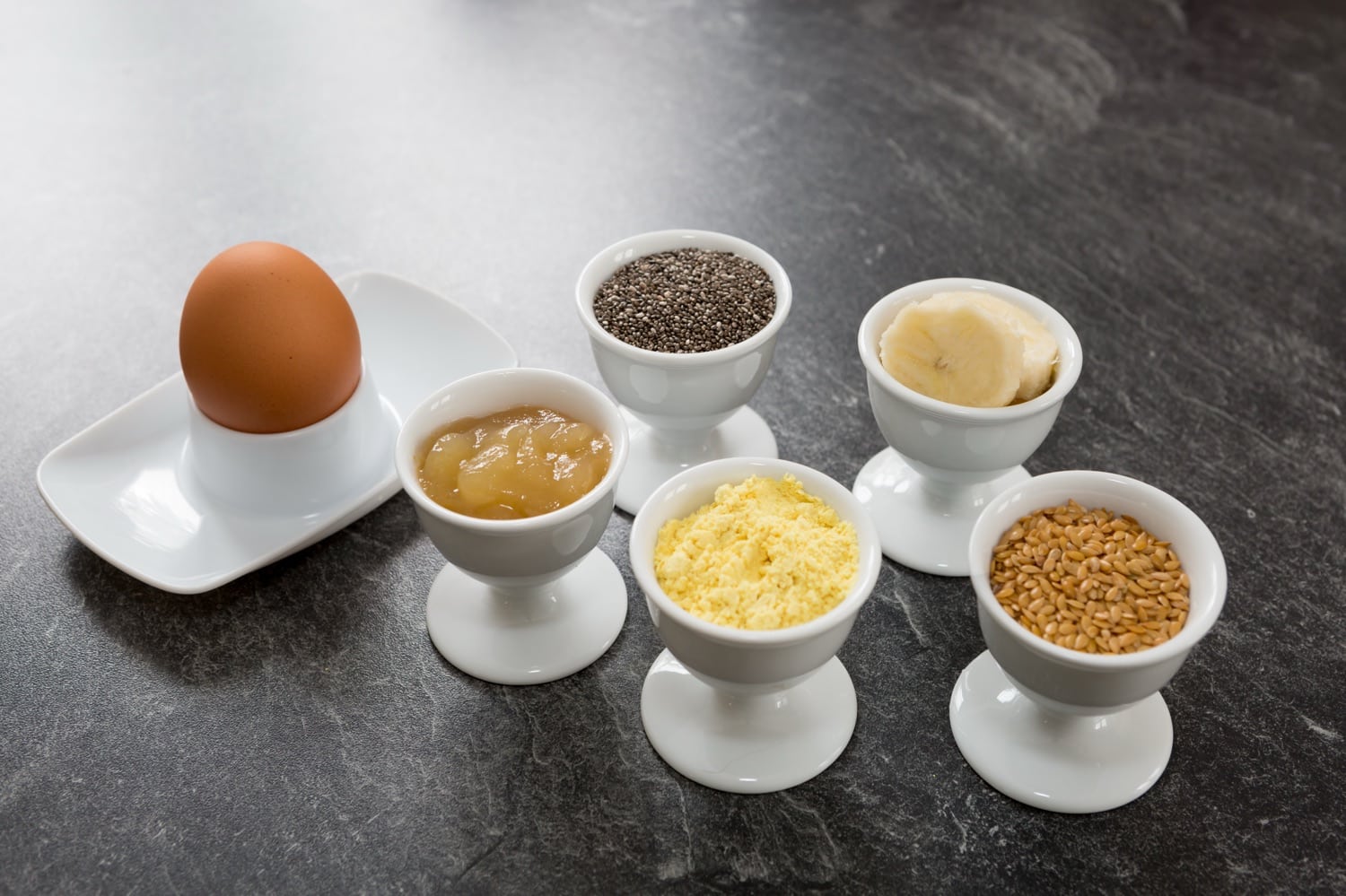
Eggs are useful little overachievers. They bind meatballs, thicken custards, help cakes rise, hold cookies together, create glossy crusts, enrich pasta, emulsify sauces, and occasionally become breakfast all by themselves. Replacing them successfully begins with understanding what they are doing in the recipe.
The goal is not to force a flax egg into every corner of your kitchen and insist nobody can tell the difference.
Sometimes they can tell. Sometimes the cake can tell.
After learning about industrial egg farming, confusing carton labels, and what happens to male chicks in the egg industry, it is reasonable to wonder what comes next.
The goal is to use eggs intentionally: keep them where they earn their place, replace them where they do not, and make it easier to spend your egg budget on higher-welfare options when you choose to buy them.

What is the egg actually doing? Seven jobs, two difficulty levels
Easy to replace
Bind
Flax, chia, a panade, mashed beans or starch can hold a mixture together.
Easy to replace
Add moisture & richness
Applesauce, banana, pumpkin purée and silken tofu all add moisture.
Easy to replace
Create color & shine
Milk or plant-based milk encourages browning — with less gloss than egg wash.
Hard to replace
Thicken
Custards and sauces are built on what the egg does as it sets.
Hard to replace
Provide structure
Ground flaxseed can hold a muffin together. It cannot build a sponge cake.
Hard to replace
Help baked goods rise
Aquafaba can be whipped, but it behaves differently in whole-egg recipes.
Hard to replace
Emulsify
Holding together ingredients that would otherwise separate.
One egg may do several of these at once
Which is why there is no single perfect egg substitute — and why the question comes before the swap.
01
Before Replacing an Egg, Ask What It Is Doing
An egg may perform one job in a recipe or several at once.
This is why there is no single perfect egg substitute. Applesauce can add moisture, but it cannot build a souffle. Ground flaxseed can hold a muffin together, but it will not create the delicate structure of an angel food cake. Aquafaba can be whipped like egg whites, but it behaves differently in recipes designed around whole eggs.
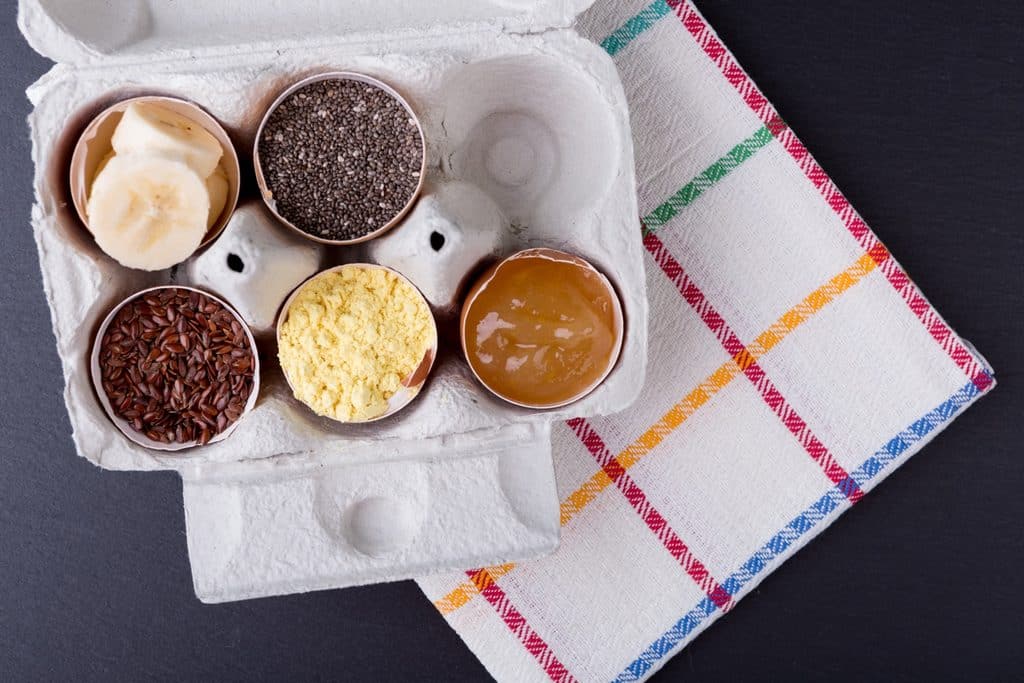
Egg Substitutes
Before making a substitution, ask:
Is the egg mainly providing moisture, binding, lift, richness, or structure?
The answer will tell you whether a simple substitution is likely to work – or whether you should find a recipe developed to be egg-free from the beginning.
02
Start With the Eggs You Will Not Miss
The easiest way to use fewer eggs is not necessarily to reformulate your grandmother’s custard pie. Start with the eggs you are eating out of habit rather than genuine affection.
Breakfast does not have to revolve around eggs every morning. Oatmeal, beans, tofu scrambles, yogurt, chia pudding, nut butter toast, leftovers, breakfast potatoes, and smoothies can all take a turn.
You can also look for eggs hiding in recipes where they play a small supporting role. Muffins, pancakes, quick breads, brownies, soft cookies, veggie burgers, meatballs, and breading mixtures can often be made with fewer eggs or an appropriate substitute.
Do not begin with a cheese souffle. That is how resentment enters the kitchen.
03
Use Eggs Where They Truly Matter
Some recipes are built around eggs. They are not merely present; they are holding the entire operation together.
Keep or swap
Nine recipes that are built on eggs. Eight that are not.
Start on the right. Choosing a left-hand recipe for your first substitution is the single failure that makes people abandon the whole project.
−
Eggs are structural — keep them
Use a recipe specifically developed and tested without eggs, or use the eggs.
Omelets & traditional frittatas
Custards & curds
Soufflés
Meringues
Chiffon, sponge & angel food cakes
Choux pastry
Brioche & egg-rich breads
Fresh egg pasta
Anything starting “separate six eggs”
✓
Eggs are forgiving – start here
Most structure comes from flour; most lift from baking powder or soda. One or two eggs are all that is at stake.
Muffins
Pancakes
Quick breads
Brownies
Soft cookies & bars
Veggie burgers
Meatballs
Breading
If a recipe begins with “separate six eggs,” it is not asking for a casual substitution.
You may be able to make egg-free versions of these foods, but your best chance of success is to use a recipe specifically developed and tested without eggs. Removing several eggs from a conventional recipe and replacing them cup for cup with banana is less baking and more an uncontrolled fruit experiment.
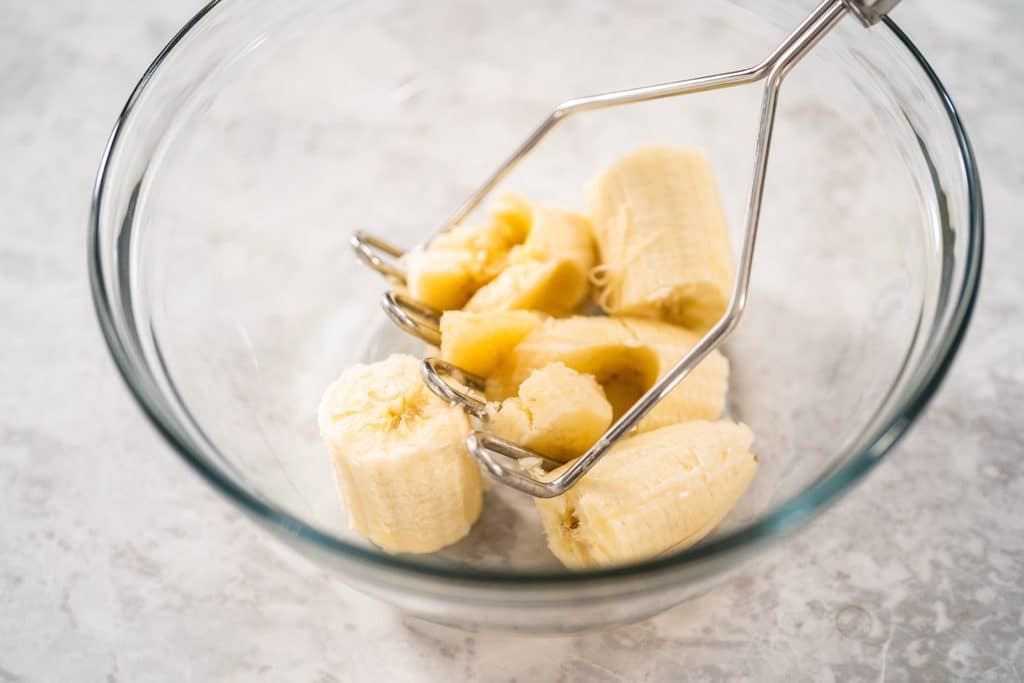
Mashed Banana
04
The Best Egg Substitutes for Baking
Egg substitutes work best in forgiving baked goods, especially recipes containing only one or two eggs. Muffins, pancakes, quick breads, brownies, snack cakes, bars, and soft cookies are usually better candidates than tall, airy cakes.
The substitute matcher
Eight substitutes, one egg each
Reference material — built to be saved and returned to. Amounts are per one large egg.
Substitute
Amount for one egg
Best for
What to expect
Flax egg
1 tablespoon ground flaxseed plus 3 tablespoons water
Muffins, pancakes, quick breads, soft cookies and bars
Good binding and moisture; slightly denser texture with visible flecks
Chia egg
1 tablespoon ground chia plus 3 tablespoons water
Muffins, hearty quick breads, pancakes and veggie patties
Strong binding; noticeable seeds unless finely ground
Aquafaba
About 3 tablespoons
Cakes, cookies and some recipes using whipped egg whites
Light texture and little added flavor; results depend on consistency
Unsweetened applesauce
1/4 cup
Muffins, brownies, snack cakes and quick breads
Adds moisture but less structure; may make baking softer and denser
Mashed banana
1/4 cup
Pancakes, muffins and banana-friendly quick breads
Moist and tender, but definitely tastes like banana
Pumpkin puree
1/4 cup
Muffins, spice cakes and seasonal quick breads
Adds moisture, color and a mild earthy flavor
Blended silken tofu
1/4 cup
Brownies, dense cakes and creamy fillings
Adds moisture and body but very little lift
Commercial egg replacer
Follow package directions
Cakes, cookies, muffins and general baking
Often dependable, although performance varies by brand
Flax-egg ratio and its best uses: King Arthur Baking — 1 tbsp flax meal with 3 tbsp cold water per large egg, best in softer, lower-rising baked goods rather than recipes that depend heavily on egg structure.
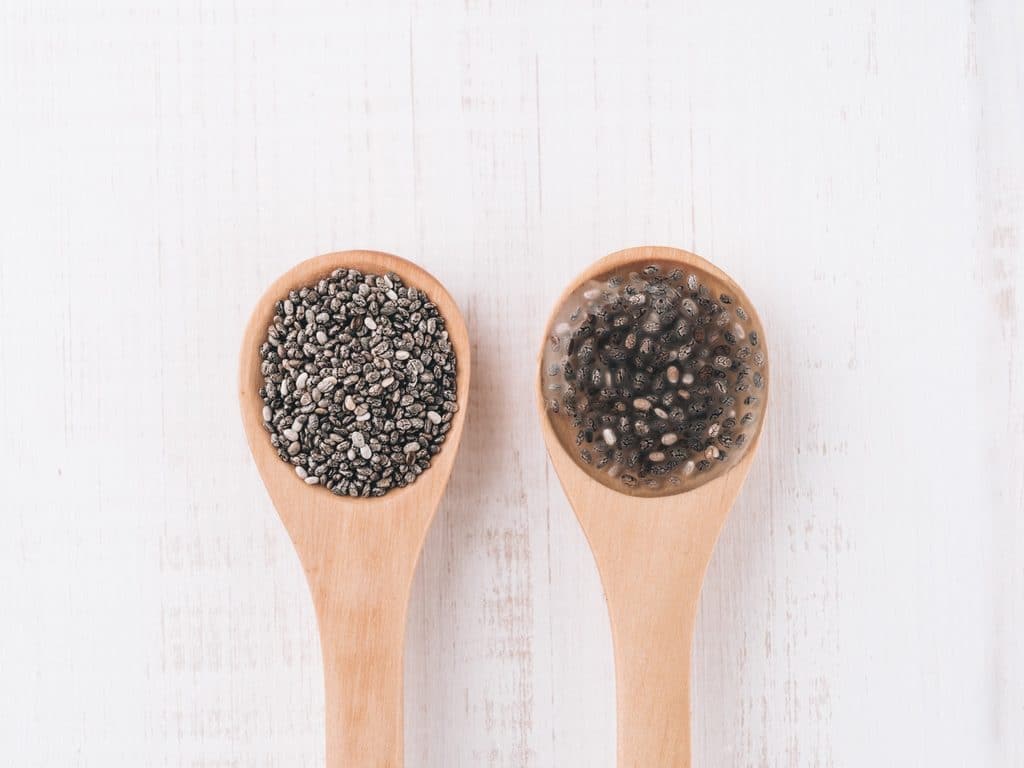
chia seeds
For a flax egg, stir the flaxseed and water together and let the mixture sit until thickened. King Arthur Baking recommends 1 tablespoon of flax meal with 3 tablespoons of cold water per large egg and notes that it works best in softer, lower-rising baked goods rather than recipes that depend heavily on egg structure.
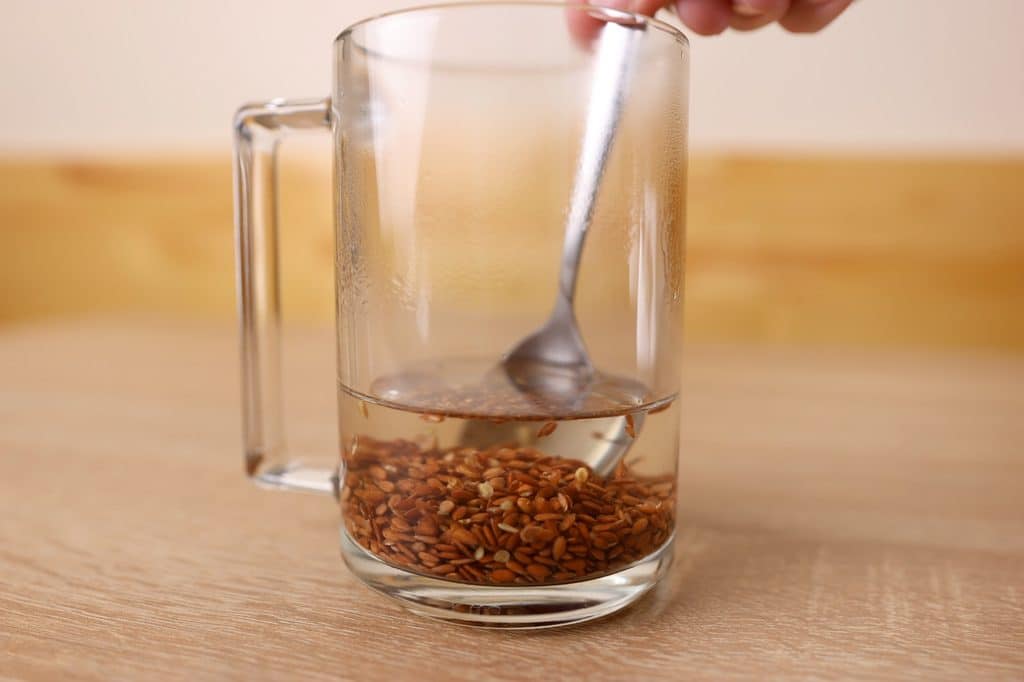
Flexseeds

Flex gel
Aquafaba is the liquid from cooked chickpeas, including the liquid inside a can. It can replace whole eggs in some baked goods and can also be whipped for certain egg-white applications. However, its thickness varies between cans, so delicate recipes are best made from a tested aquafaba recipe rather than kitchen optimism alone.
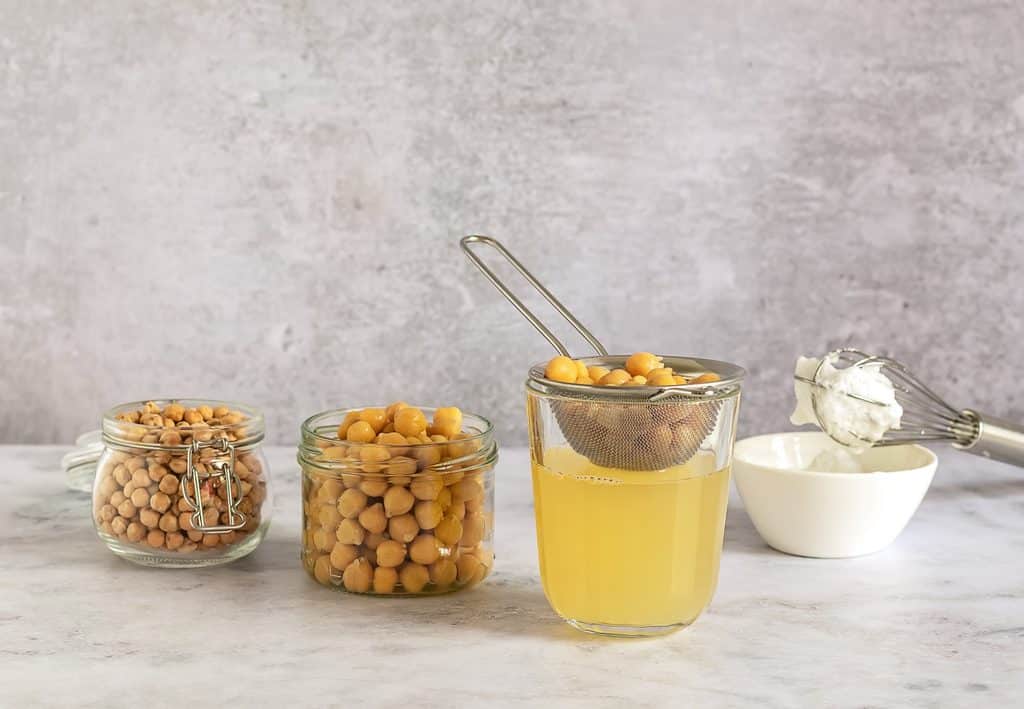
Aquafaba
05
One Egg Is Easier to Replace Than Four
As a general rule, the fewer eggs a recipe contains, the easier it is to adapt.
A muffin recipe with one egg may already get most of its structure from flour and its lift from baking powder or baking soda. In that case, flaxseed, applesauce, or a commercial replacer may work beautifully.
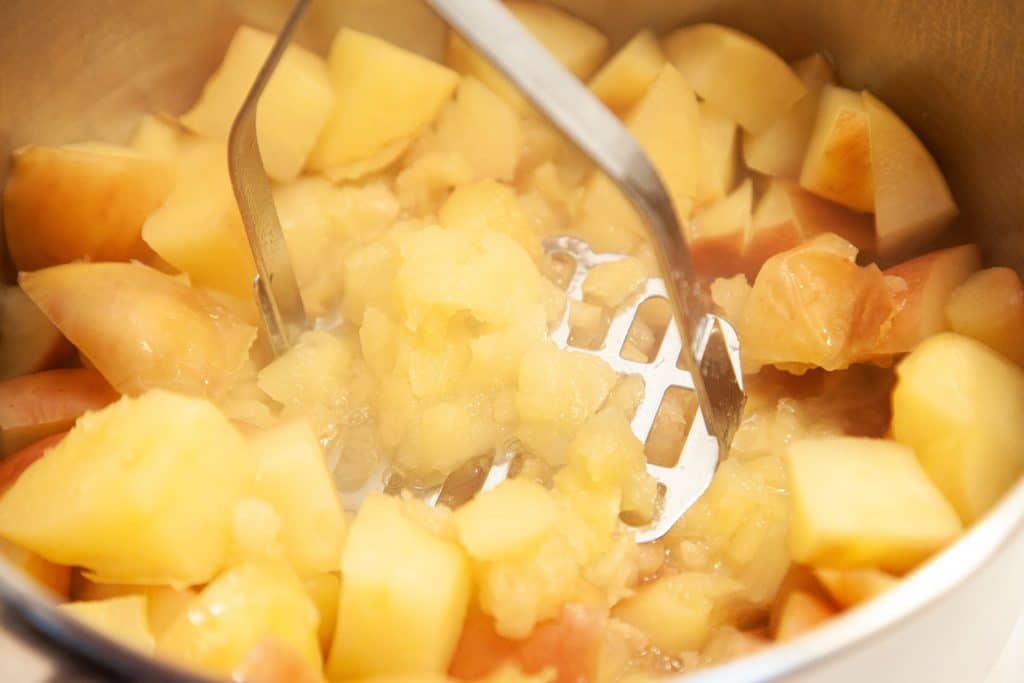
applesauce
When a recipe uses three, four, or six eggs, those eggs are probably contributing substantial structure, aeration, richness, or emulsification. Replacing all of them with a moisture-heavy ingredient can leave you with something damp, dense, and surprisingly committed to the bottom of the pan.
Gluten-free baking can be especially sensitive because eggs may be compensating for the structure normally supplied by gluten. Use an established egg-free recipe whenever possible instead of making several major substitutions at once.
Ingredient substitutions can change flavor, texture, moisture, volume, and appearance. That does not mean substitutions are bad. It means recipes are chemistry wearing an apron.
06
Use Fewer Eggs in Savory Cooking
Eggs also appear in savory recipes as binders, coatings, garnishes, and convenient sources of protein. Some are easy to replace.
For meatballs, meatloaf, veggie burgers, and patties, a panade, mashed beans, ground flaxseed, breadcrumbs, or starch may help bind the mixture. The correct choice depends on how wet and delicate the recipe is, so make substitutions thoughtfully.
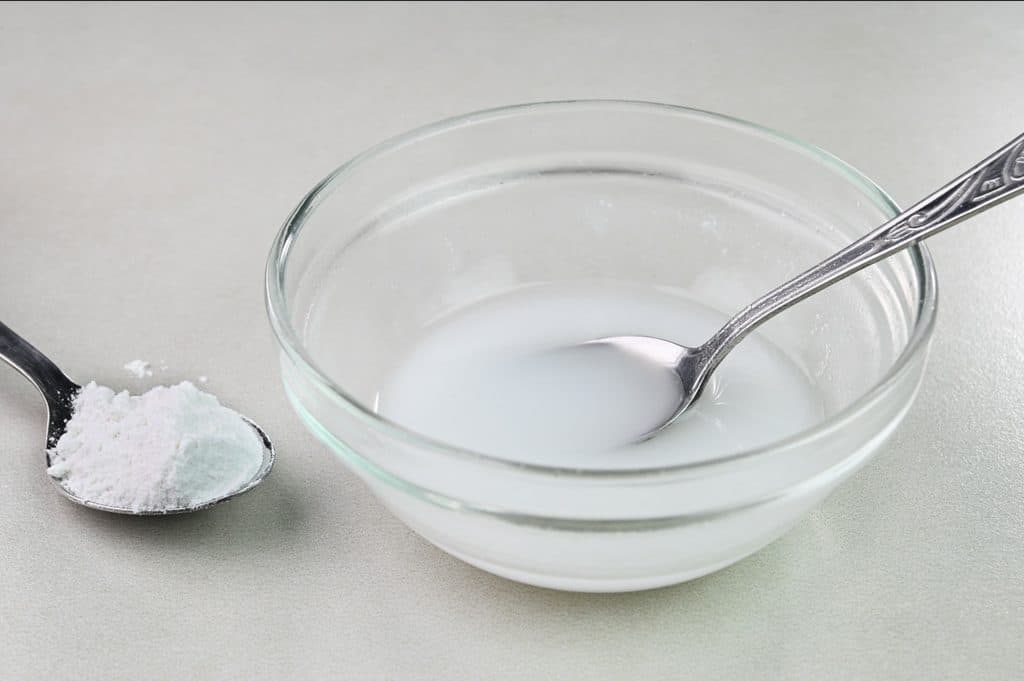
Cornstarch and water
For breading, try a flour-and-water slurry, plant-based milk, aquafaba, or another coating appropriate for the recipe. It may not produce exactly the same finish as beaten egg, but it can still create a crisp, satisfying crust.
For glazing baked goods, milk or unsweetened plant-based milk can encourage browning, although it will not provide precisely the same gloss as egg wash.
In fried rice, noodle bowls, salads, and grain bowls, eggs can simply be optional. Tofu, beans, lentils, edamame, fish, meat, nuts, or seeds can provide substance, depending on how you eat.
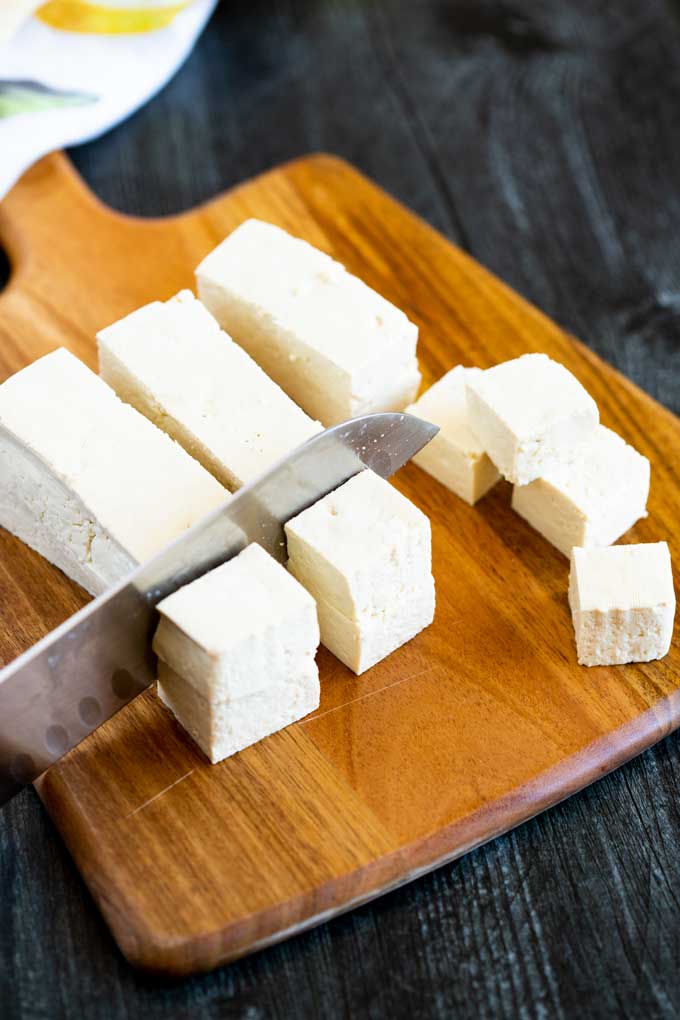
Tofu
This is not about finding one ingredient that impersonates an egg in every possible situation. It is about asking whether the egg is necessary in that particular dish.
07
Make an “Egg Budget”
An egg budget is partly about money, but it is also about deciding where eggs earn their place.
Perhaps you love a beautifully fried pasture-raised egg but do not care whether your weekday pancakes contain eggs. Maybe Sunday frittata stays, while muffins get a flax egg. Perhaps you buy one carton of better eggs and reserve them for meals where you will actually notice them.
Using fewer eggs can make higher-welfare eggs easier to afford. A carton that previously lasted one week may last two or three. The price per carton has not changed, but the cost across your meals has.
The same carton, stretched
One dozen better eggs, across one, two and three weeks
Eggs every morning · the carton lasts one week
Eggs where they matter · two weeks
half the weekly cost, same carton
Plus a substitute in the forgiving recipes · three weeks
and still within the 3–5 week refrigerator window
Choose the eggs that matter to you. Reduce the rest.
Bars show weekly egg spend from the same carton price · Storage window: USDA FSIS, 3–5 weeks refrigerated
This is not dietary failure or ethical cheating. It is a practical kitchen strategy, and practical strategies have an advantage over grand declarations: people can actually live with them.
08
Do Not Replace Nutrition With a Binding Agent
Eggs provide protein and other nutrients. Some egg substitutes perform a culinary job without providing the same nutrition.
A flax egg can hold a muffin together. It cannot carry your entire breakfast.
If eggs are a regular source of protein in your diet, replace that role with substantial foods such as beans, lentils, tofu, tempeh, yogurt, fish, meat, nuts, or seeds, according to your dietary needs and preferences.
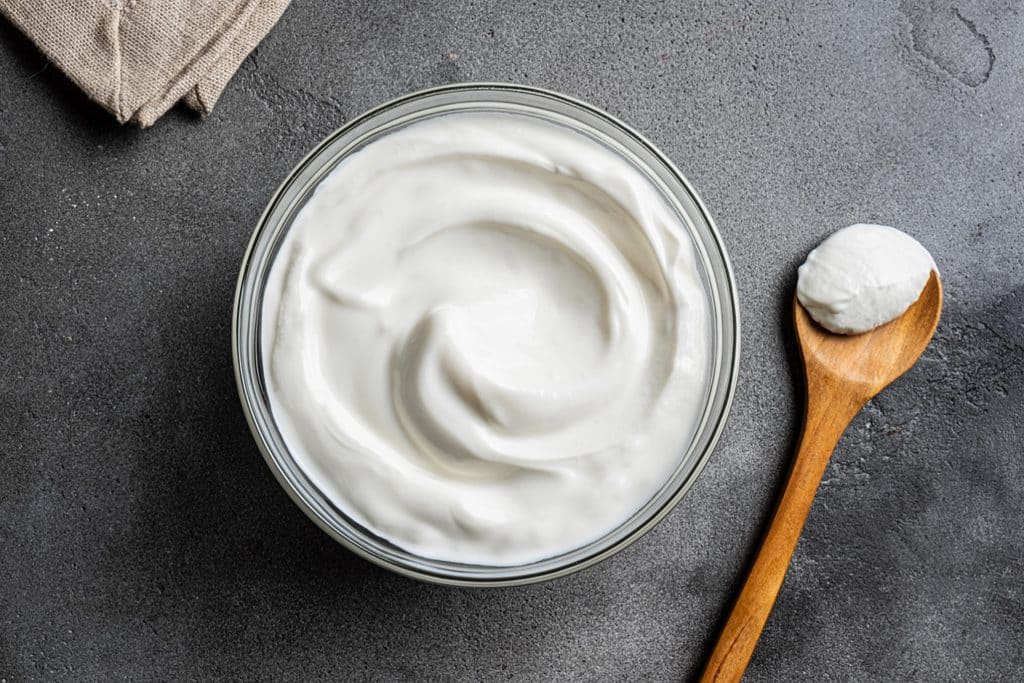
Yogurt
The goal is not to remove an ingredient and replace it with good intentions. Good intentions are lovely, but they are not lunch.
09
Try One Change at a Time
Choose one forgiving recipe and make one substitution.
Try a flax egg in pancakes. Use applesauce in a batch of muffins. Make fried rice without the automatic scrambled egg. Try tofu scramble one morning. Bake an egg-free cake from a recipe created to be egg-free.
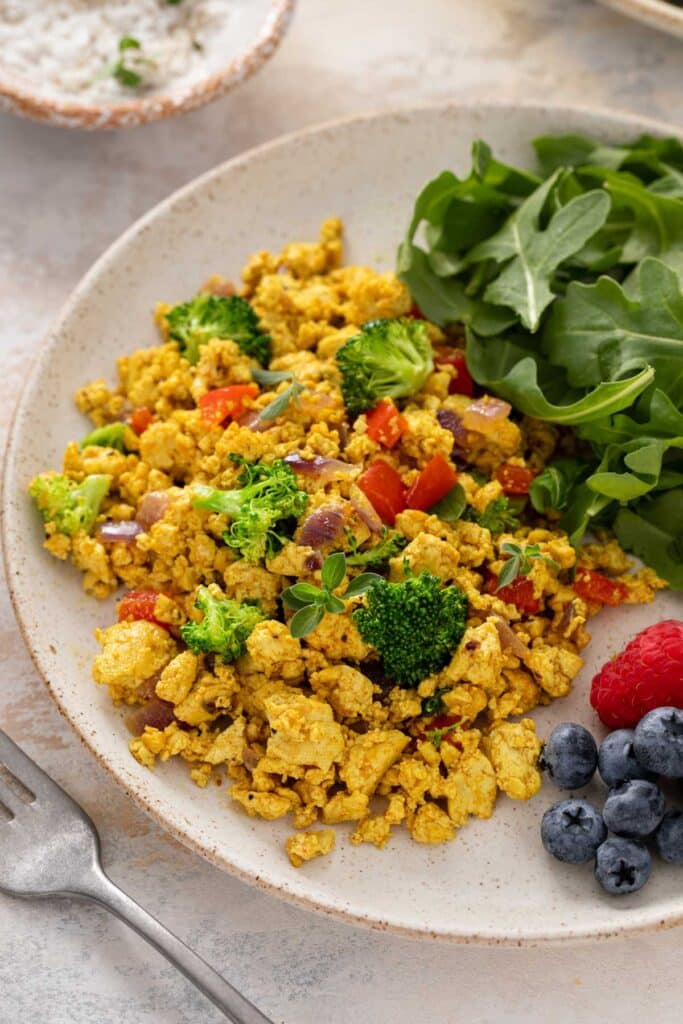
Tofu scramble
Keep notes about what changed. Was the result denser? Softer? More fragile? Did it need another few minutes in the oven? Would you make it again?
Keep what works and discard what does not.
Do not replace the eggs, milk, butter, and flour in one attempt and then blame the flaxseed for the crime scene. When you change everything at once, you cannot tell which substitution caused the problem.
10
Using Fewer Eggs Does Not Mean Losing Pleasure

Palette of eggs
Food still needs to be delicious.
Reducing your egg use does not mean abandoning birthday cakes, brunch, family traditions, or every recipe that makes you happy. It means recognizing that not every egg provides the same amount of pleasure or serves the same culinary purpose.
A kitchen that uses fewer eggs can still have tender muffins, crisp waffles, rich brownies, hearty breakfasts, creamy sauces, beautiful cakes, and comforting meals.
Nobody wants cake that tastes like an ethics worksheet.
Keep the dishes where eggs truly matter. Experiment where they do not. Buy better eggs when you can, and use them with appreciation rather than automatically.
This Is Intentional Cooking
The point is not to cook with guilt. The point is to cook with attention.
After learning about industrial egg production, male chicks, and the difference between cage-free, free-range, organic, and pasture-raised eggs, it is easy to feel as though every carton comes with a final exam.
It does not.
You do not have to become perfect. You only have to become more aware.
Four questions, before the next recipe
Is the egg essential here?
Would a tested substitute work?
Could I use one egg instead of two?
Would buying eggs less often let me choose a higher-welfare carton?
Sometimes the real egg will be worth it. Sometimes it will be unnecessary. Sometimes the flax egg will perform admirably, and sometimes it will produce a baked object best discussed only among close friends.
Small shifts count. Repeated choices count. Pleasure still counts.
Cook like it matters.

Let’s talk about cooking with purpose.
Intentional Cooking is not fancy. It is honest. Every ingredient matters. Make it yours.
Frequently Asked Questions
Can eggs be replaced in every baking recipe?
No. Eggs are easiest to replace when a recipe uses only one or two and receives most of its structure from flour. Egg-heavy recipes such as souffles, custards, meringues, brioche, and sponge cakes require specialized, tested egg-free recipes.
What is the best all-purpose egg substitute?
There is no universal substitute because eggs perform different jobs. Flaxseed is useful for binding, fruit purees add moisture, aquafaba can provide aeration, and commercial replacers are designed for general baking.
How many flax eggs can I use in one recipe?
One or two flax eggs often work in forgiving recipes such as muffins, pancakes, quick breads, cookies, and bars. Recipes containing several eggs are usually better made from a tested egg-free formula.
Can I make a cake without eggs?
Yes. Many excellent cakes are naturally egg-free or specifically developed that way. For the best texture, start with an egg-free cake recipe instead of removing several eggs from a conventional one.
Does aquafaba taste like chickpeas?
It may have a mild bean aroma in the bowl, but the flavor is usually difficult to detect after baking, particularly in recipes containing chocolate, vanilla, spices, or other strong flavors.
Are egg substitutes nutritionally equal to eggs?
Not necessarily. A substitute may replace an egg’s binding or moisturizing function without providing comparable protein or nutrients. Consider the entire meal rather than assuming a culinary substitute is a nutritional match.
Does using fewer eggs really help?
Using fewer eggs reduces the number you purchase and can make higher-welfare options more manageable within your grocery budget. It is not an all-or-nothing solution, but repeated choices matter.
Hatchery to carton
The chain ends in your kitchen — the only node where you decide what the egg is for.
Hatchery
sexing, culling
→
Pullet rearing
beak treatment
→
Housing system
cage · cage-free · range · pasture
→
Laying period
lighting, molt
→
End of lay
removal
→
Grading & labeling
the claim is set here
→
Carton
the shelf
→
Kitchen
your recipe
■ The node this article follows
▢ Covered by the four companion pieces below
The Intentional Cooking Series: Eggs
5 Articles

Part 1 · The System

Part 2 · Labels
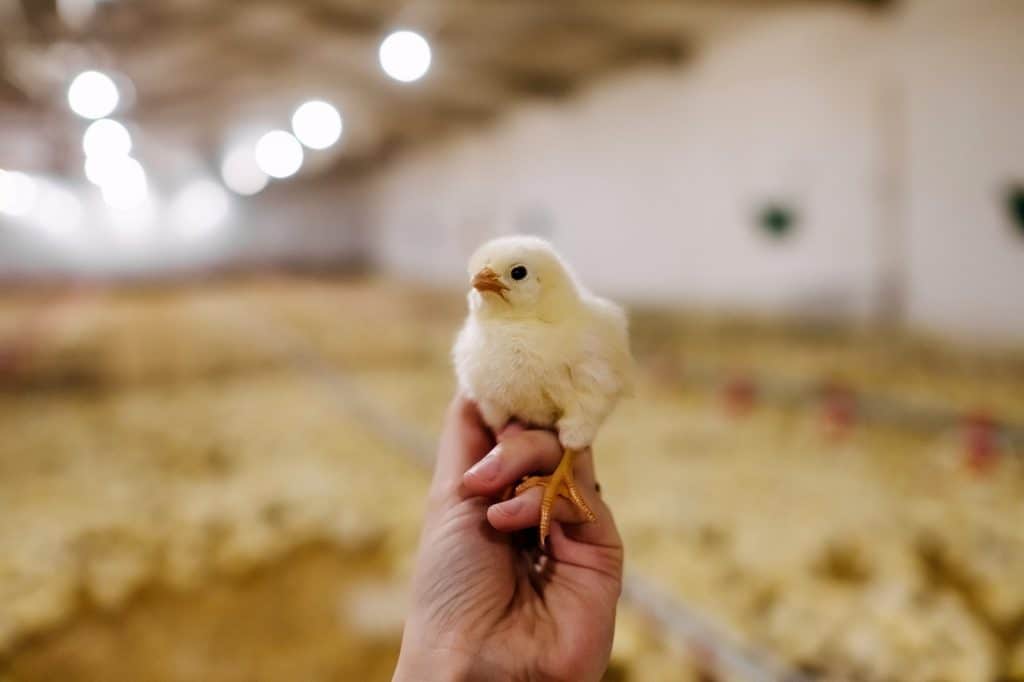
Part 3 · Males
Part 4 · Buying Guide
Part 5 · You Are Here
How to Use Fewer Eggs by Reducing and Substituting
Leave a Reply