

Cage-free. Free-range. Pasture-raised. Organic. Farm fresh. Natural. Vegetarian-fed. Humane.
A few of them sound much more impressive than they actually are, which is not an accident.
After looking at the realities of industrial egg farming, the next question is practical: Which eggs should we buy?
Let’s decode the carton.

Egg Labels at a Glance
Conventional
Hens may be housed in cages.
Outdoor access
No
Cage-Free
Hens can move inside a barn instead of living in individual cages.
Outdoor access
Not required
Free-Range
Cage-free hens have access to an outdoor area.
Outdoor access
Yes
Pasture-Raised
Hens have substantially more outdoor space under a credible certification program.
Outdoor access
Yes
Organic
Hens are uncaged, receive organic feed and must have outdoor access.
Outdoor access
Yes
Certified Humane or another welfare seal
The farm follows additional standards audited by an independent organization.
Outdoor access
Depends on the specific label
The important phrase here is outdoor access. Access does not tell us how large, green or useful that outdoor area is — or how many hens actually use it.
The carton may show six chickens strolling through a meadow. The farm may have 20,000 hens and several small doors. Marketing has always enjoyed a spacious pasture.
Watch
What Egg Carton Labels Really Mean
In this video, I explain the differences between common egg labels and what to look for when you are standing in front of the egg case wondering why breakfast has become a research project.
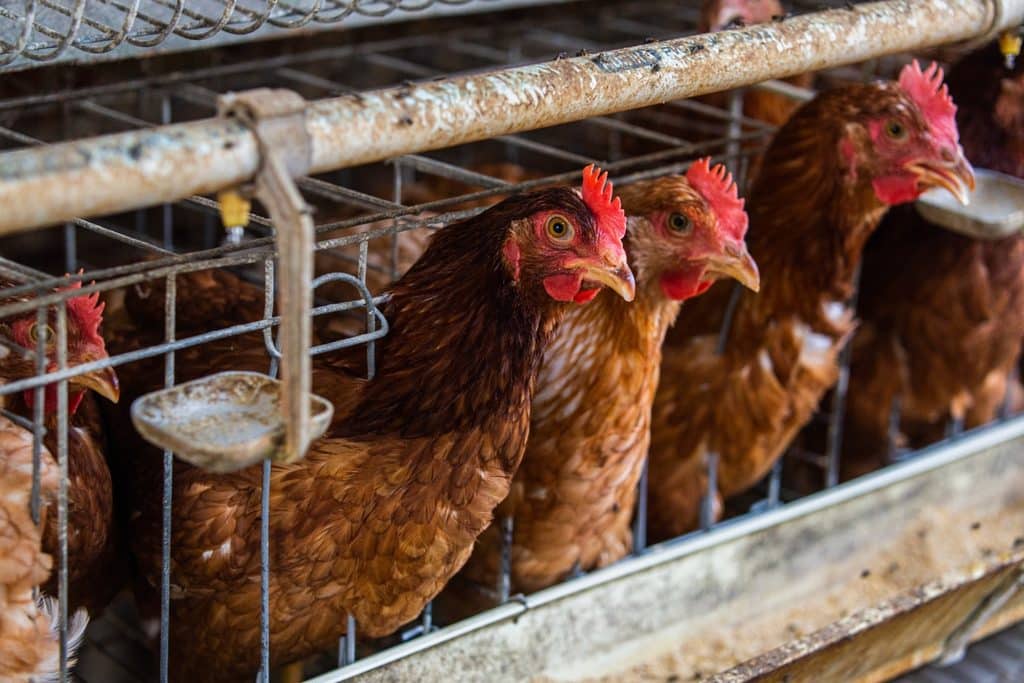
Standard caged hen
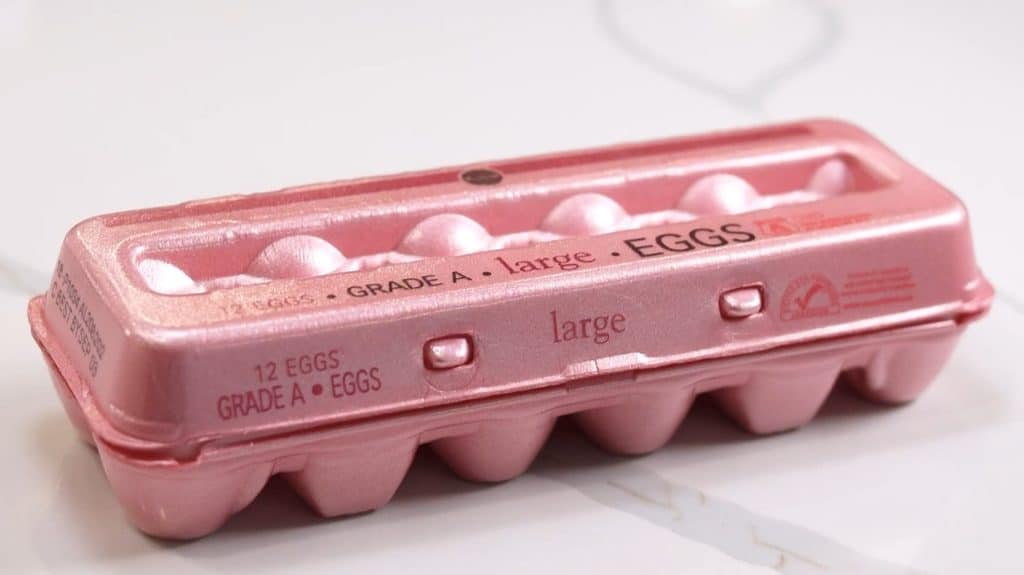
Standard egg packaging
01
What Does Cage-Free Mean?
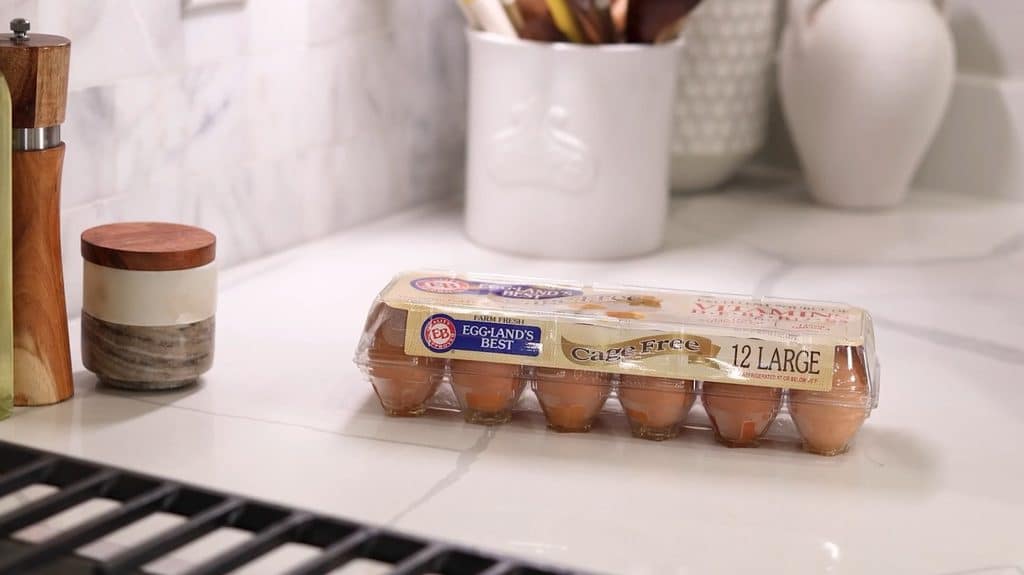
Cage-free eggs come from hens that are not confined to conventional cages.
On USDA-graded cartons, cage-free hens must be able to move vertically and horizontally inside the poultry house. The barn must also provide litter and enrichments such as scratch areas, perches and nests.
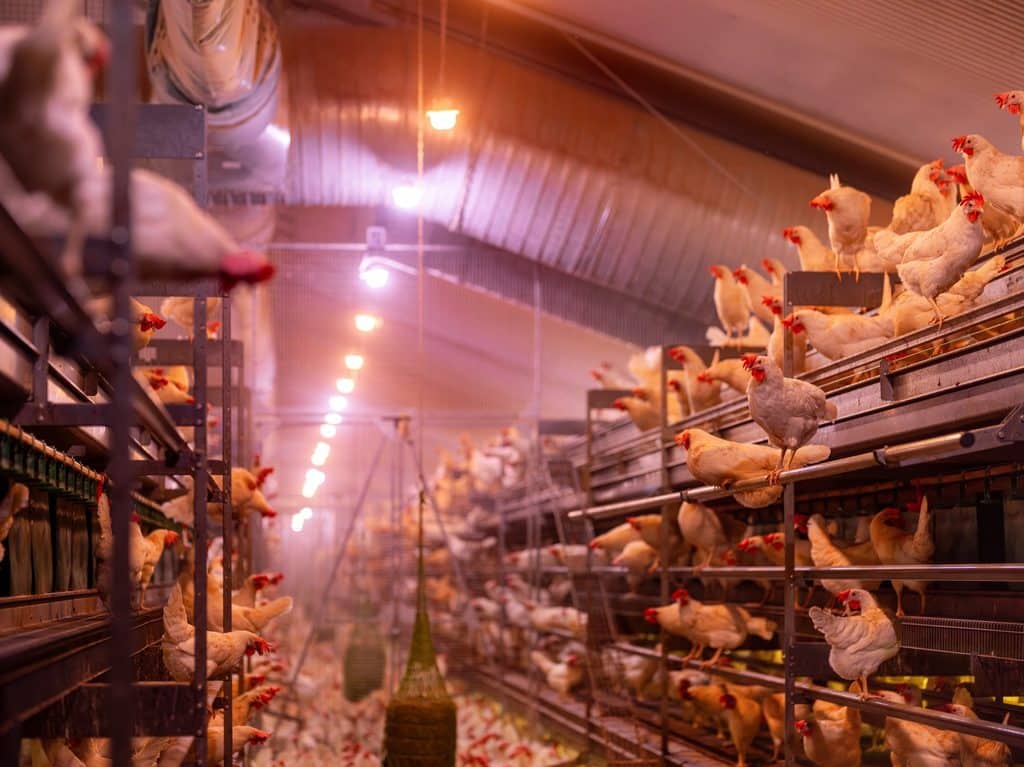
Cage-free hens in tiered housing
Cafe-free packaging
This is a meaningful improvement over cages. Hens can walk, stretch their wings, lay eggs in nests and perform more of their natural behaviors.
However, cage-free does not mean outdoors. The hens may spend their entire lives inside a large barn, sometimes with thousands or tens of thousands of other birds.
Cage-free systems can still have problems with crowding, feather pecking, injuries, air quality and access to resources. Management matters enormously.
Cage-free is better than a conventional cage. It is not the same as a hen wandering through the grass while contemplating her retirement plans.
02
What Does Free-Range Mean?
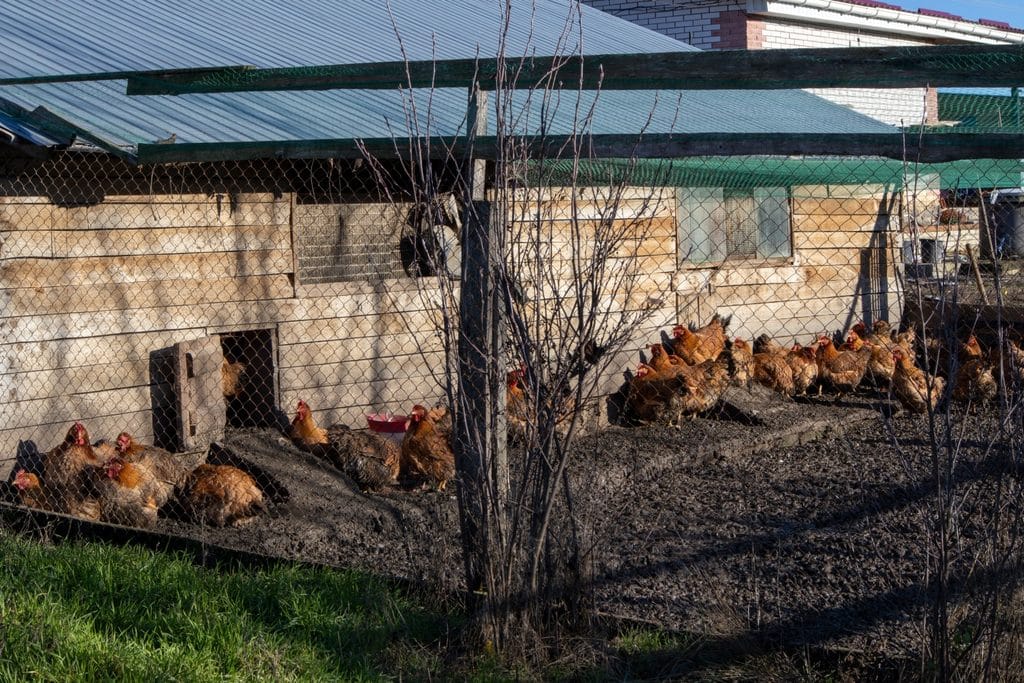
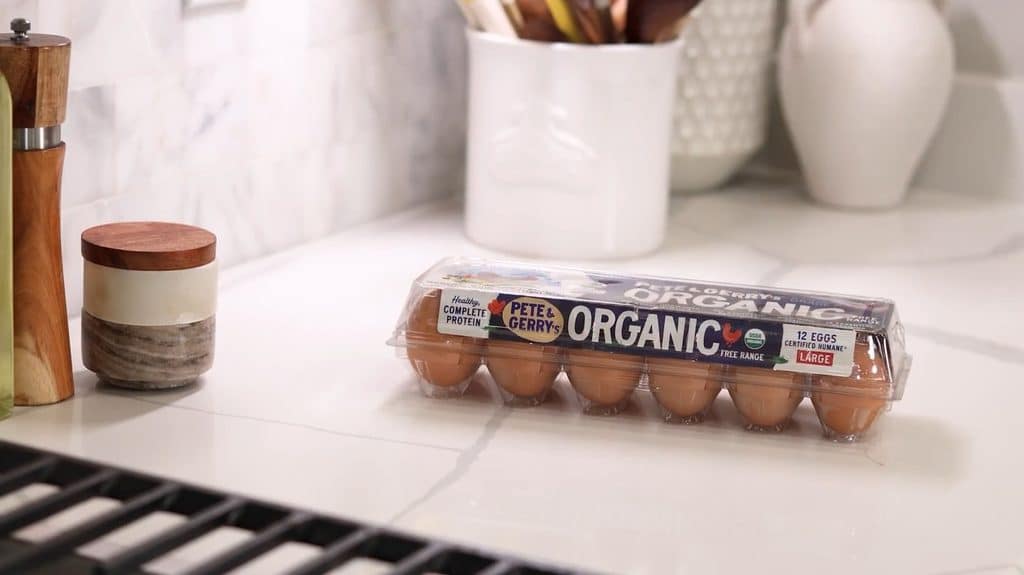
USDA-graded eggs labeled free-range must come from cage-free hens that have continuous access to an outdoor area during their laying cycle.
The hens can still live primarily inside a large barn. “Access” means there is a way for them to go outdoors. It does not necessarily tell you:
- How large the outdoor area is
- Whether it is covered in grass or mostly bare ground
- How many exits the barn has
- How often individual hens go outside
- How many hens share the space
Outdoor access may also be temporarily restricted because of severe weather, predators or disease outbreaks such as avian influenza.
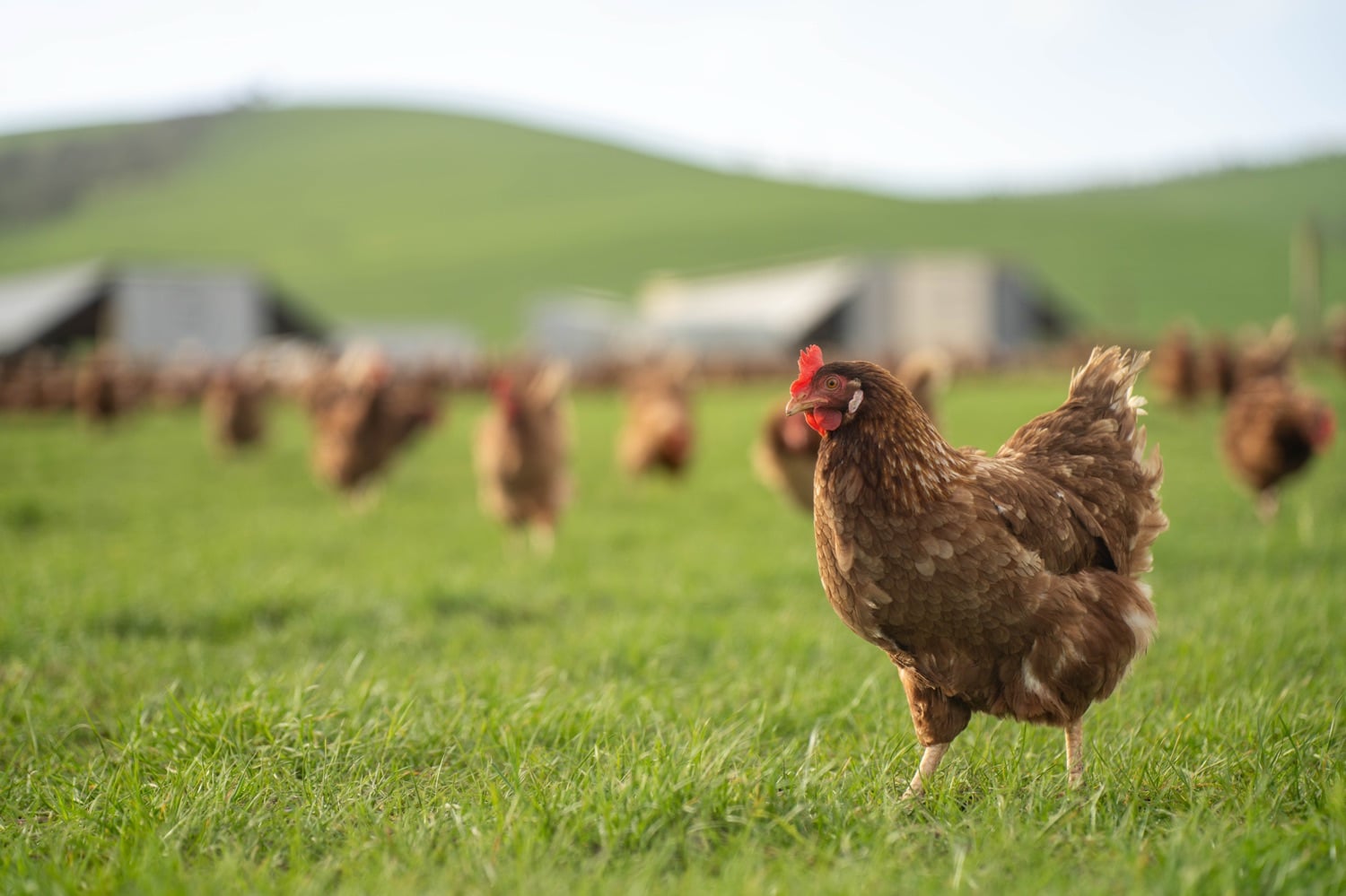
free-range hens
Free-range packaging
Free-range is generally a step above cage-free because the hens have the opportunity to go outside. But the quality of that outdoor access can vary widely.
A tiny door technically leading outdoors and a well-managed range with vegetation, shade and room to forage are not the same experience, even when both cartons say “free-range.”
03
What Does Pasture-Raised Mean?
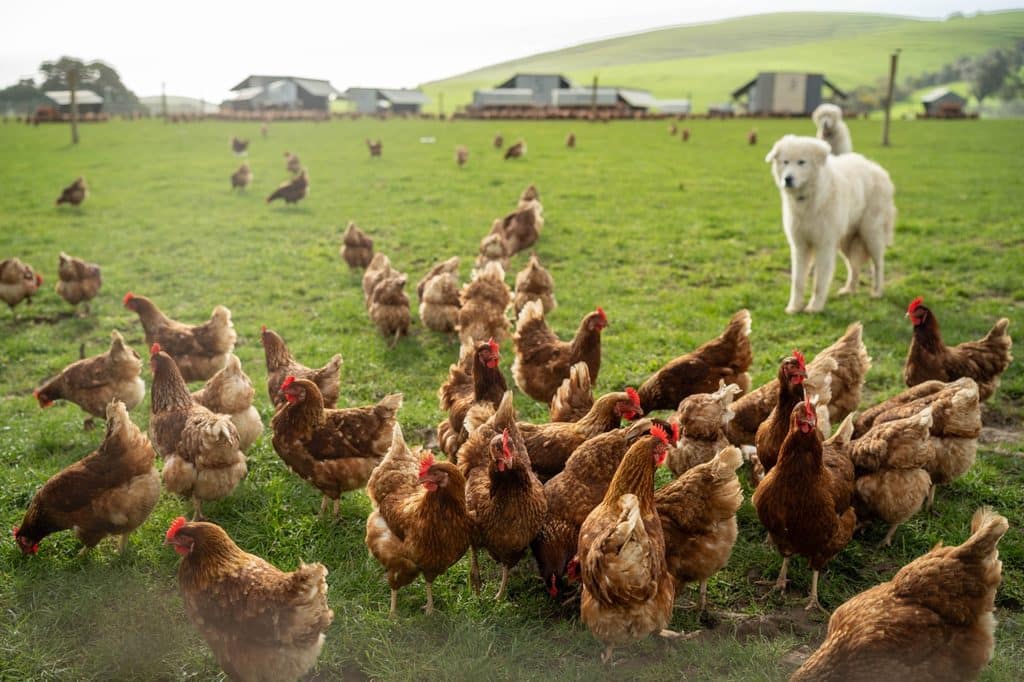
Pasture-raised usually represents the highest level of outdoor access among common egg labels — but the words alone are not enough.
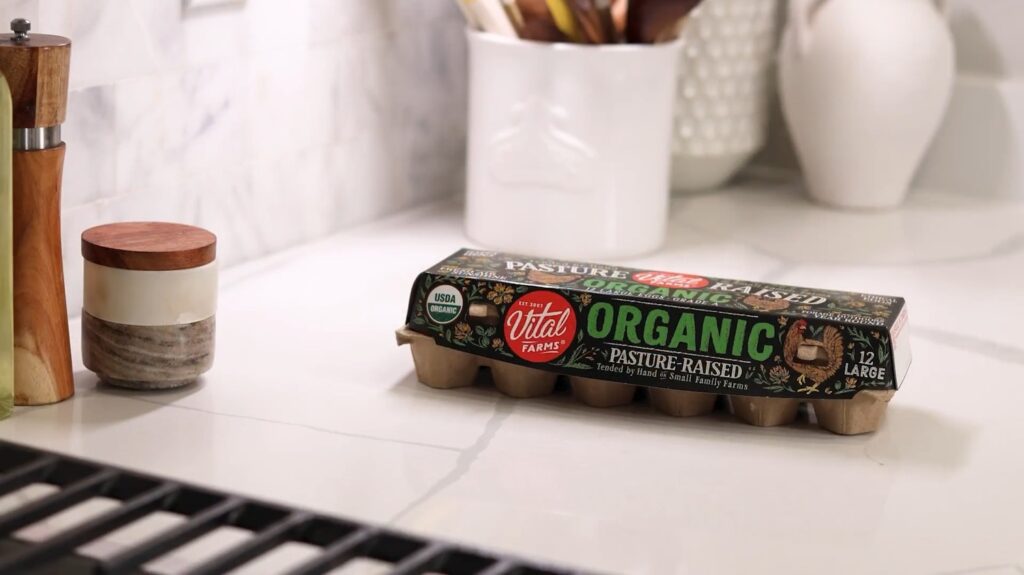
The USDA does not use one universal pasture-raised standard for all shell eggs. For eggs bearing the USDA grade shield, a pasture-raised claim must be backed by a nationally recognized third-party certification, such as Certified Humane or American Humane Certified.
Pasture-raised hens
Pasture-raised packaging
Standards vary by certifier. Under Certified Humane standards, pasture-raised hens must have at least 2.5 acres of range for every 1,000 birds, which works out to approximately 108 square feet per hen.
The Recurring Ruler
How much room one hen gets
Every square below is the space allowed to one hen — not a barn, not a flock. All of them are drawn to the same scale. Pasture-raised is 232 times the cage minimum, which is why the small end needs its own enlargement.
The Whole Range
Pasture-raised
108 sq ft for one hen
↙ All three other standards fit in this corner
One square, one hen. The biggest standard sets the frame; everything else is drawn inside it.
The corner, enlarged
■ Conventional cage — 67 in²
The UEP minimum for one white hen. 76 in² for a brown hen.
▢ A sheet of printer paper — 93.5 in²
Bigger than the cage. The graphic Part 1 ran on black.
■ Cage-free indoor — about 1 sq ft
No federal minimum exists. Placeholder figure — needs a certifier source before publish.
■ Free-range outdoor — 2 sq ft
Certified Humane. Pasture-raised is 108 sq ft, or 2.5 acres per 1,000 hens.
Sources: Certified Humane range requirements; United Egg Producers cage housing guidelines.
Well-managed pasture gives chickens room to walk, scratch, dust bathe, forage for plants and insects and move away from other birds. Shade, shelter, vegetation, predator protection and pasture management are still important. A large field is not helpful if the hens are afraid to leave the barn or the land has been picked down to dirt.
When buying pasture-raised eggs, look for the words pasture-raised plus an independent certification seal. The seal is what gives the claim measurable standards and an audit behind it.
Without certification, “pasture-raised” may sound lovely while leaving you with very few details.

Pasture-raised, Foraging hens may produce darker yolks
04
What Does Organic Mean?
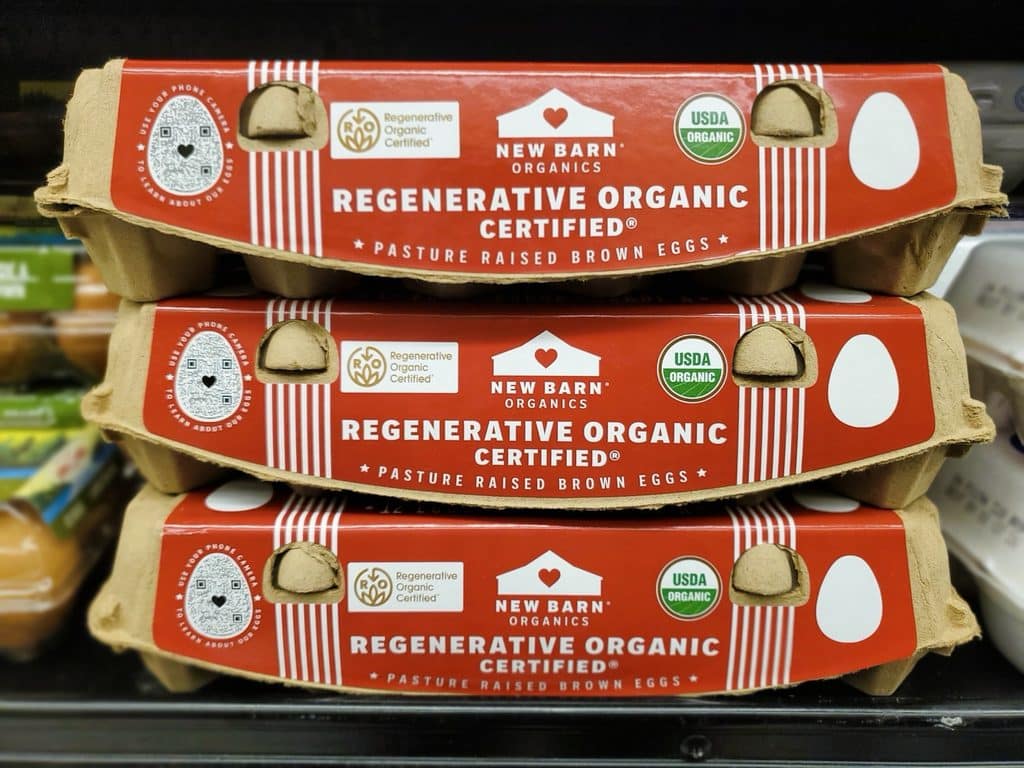
USDA Certified Organic eggs come from uncaged hens raised under federal organic standards. The hens must receive certified organic feed and have access to the outdoors. Organic standards also address animal health, living conditions and certain medications and farming practices.
USDA organic certified eggs
Organic is meaningful, but it answers several questions at once. It tells you about feed and production methods as well as housing.
It does not automatically mean the hens spent their days roaming over a generous pasture. An organic operation can still be large, and the amount and quality of outdoor space may not equal the standards required by a pasture-raised certification.
If animal welfare is your primary concern, organic pasture-raised eggs with a credible welfare certification provide more information than the word organic by itself.
They may also be the most expensive eggs in the case because apparently clarity comes with a surcharge.
Housing Systems
Four systems, four very different definitions of “enough room”
Only one of these systems has a number attached to it. That is worth noticing: the cage is the most criticized system and also the only one with an enforced floor.
Conventional cage
Cage-free barn
Free-range
Pasture-raised
Space per hen
67 in² white hens
76 in² brown hens
No federal minimum — set by the certifier or the buyer
No federal minimum indoors or out
Set only by the certifying program
Outdoor access
None
Not required, and usually none
Required — but size, surface and duration are not defined
Central to the claim, verified by the certifier
Perches, nests
& litter
Not in a conventional cage
Generally yes — nest boxes, perches, scratching litter
Generally yes
Yes, plus forage
Typical flock
Tens of thousands, stacked in tiers
Still tens of thousands in one building
Varies widely
Usually the smallest flocks
What remains
A concern
Confinement itself: no walking, wing-flapping, dust bathing or private nesting
Crowding, feather pecking, cannibalism, air quality, disease exposure
The door may exist without the hens ever meaningfully using it
Price and availability — and the label still depends on who audits it
Cage minimums: United Egg Producers cage housing guidelines, 2025. Housing definitions: USDA animal husbandry verification procedures for shell eggs, April 2025.
05
Which Certification Seals Matter?
A third-party animal-welfare seal generally tells you more than an attractive claim written by the egg company itself.
Programs to look for include:
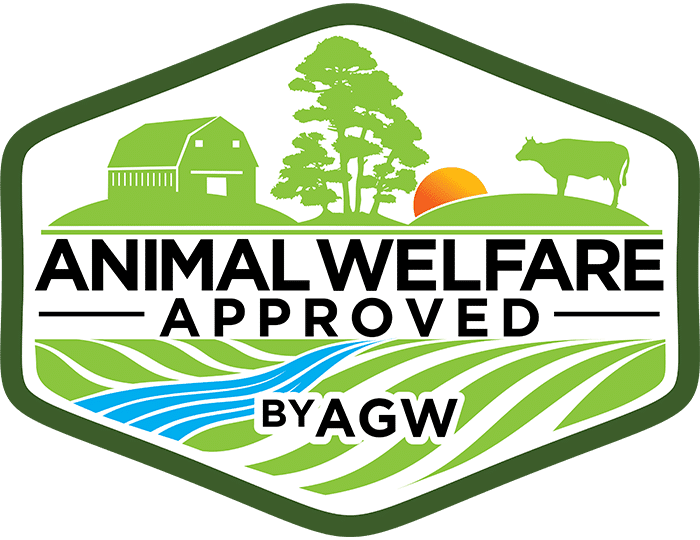
- Certified Animal Welfare Approved by A Greener World
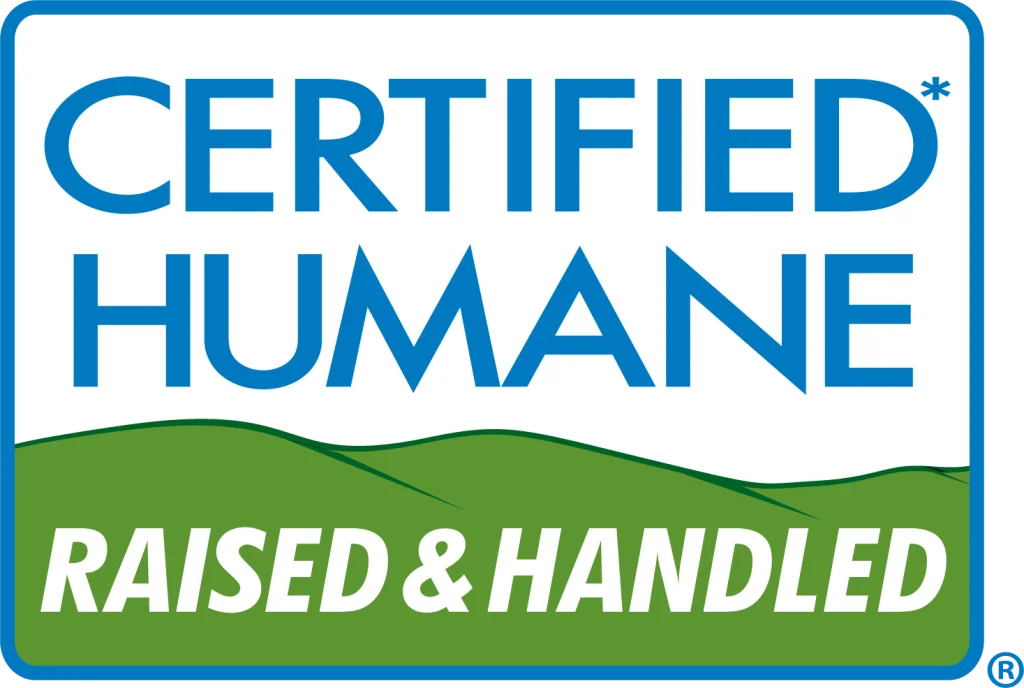
- Certified Humane
- American Humane Certified
What to look for, at shelf size
These three seals, printed this small, on the front of the carton
Shown at roughly the size they appear on a dozen-egg carton — about an inch across. That is how much of the carton carries the audited information.
Certified Animal Welfare Approved by A Greener World
Certified Humane
American Humane Certified
Look for the seal, then look for the housing system.
These programs use written standards and farm audits, but their requirements are not identical. Some certify cage-free, free-range and pasture-raised systems separately, so read the housing description alongside the seal.
A certification does not promise a perfect farm or a life without injury, disease or difficult management decisions. It does give the claim standards that can be checked.
06
Labels That Do Not Tell You Much About Welfare
Some egg labels describe nutrition, feed or appearance but say little — or nothing — about how the hen lived.
Where the claims actually land
Six labels that aren’t about the hen
Six claims, four possible subjects. Not one of them describes how the hen lived — and three of them could be printed on essentially every carton sold in America.
The hen’s life
Nothing
0 of 6 claims
Cage, movement, outdoor space and audits are the only claims that describe this — and none of the six mention them.
The feed · 2 claims
Vegetarian-Fed
This describes the hens’ feed, not their housing. Chickens are natural omnivores and may eat insects, worms and other small creatures when allowed to forage.
Vegetarian-fed hens may still live in cages.
Omega-3 Enriched
These eggs come from hens fed a diet designed to increase the omega-3 content of their eggs.
A nutritional claim, not a housing or welfare claim.
The breed · 1 claim
Brown Eggs
Brown eggs come from breeds that lay brown shells. White eggs come from breeds that lay white shells. Shell color does not tell you whether a hen was cage-free, free-range or pasture-raised.
Brown eggs have benefited from excellent public relations.
Nothing at all · 3 claims
Farm Fresh
Marketing language. It does not guarantee that the eggs came from a small farm, were laid recently or came from hens with outdoor access.
Natural
The USDA has explained that “natural” on an egg simply means nothing was added to the egg. Essentially, all shell eggs qualify.
No Hormones Added
Hormones are not approved for use in U.S. poultry production. This label does not distinguish one carton of eggs from another.
All eggs came from a farm at some point. Congratulations to the carton for clearing a very low bar.
Source: USDA consumer guidance on egg-carton claims
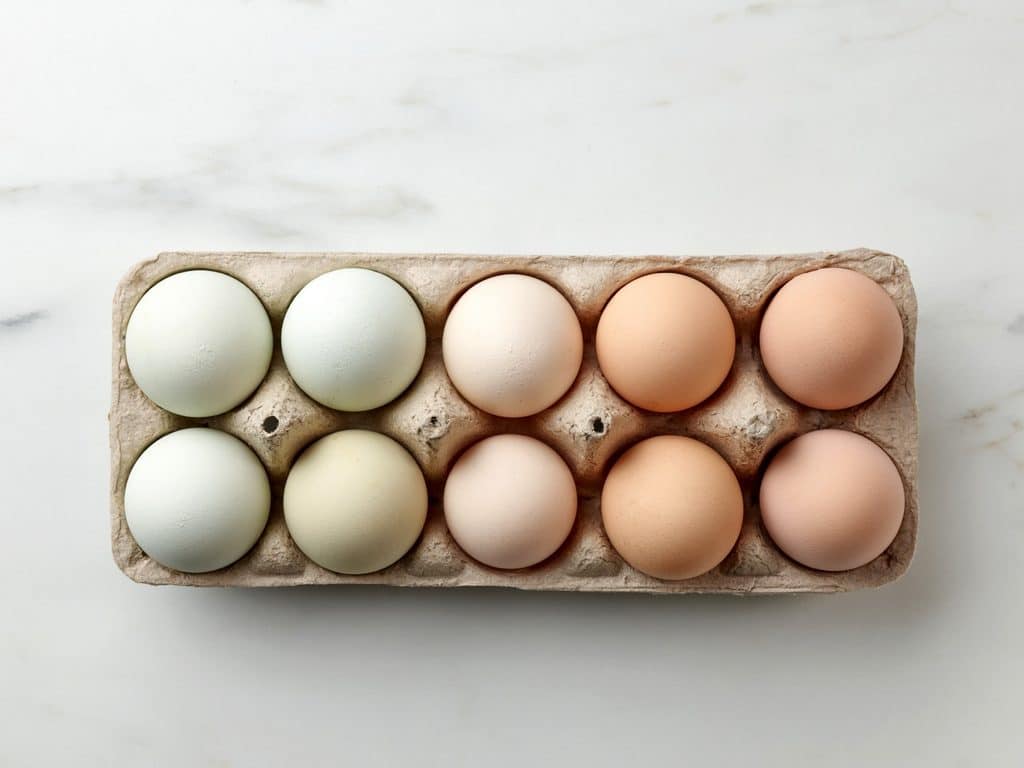
shell color is about hen breed only
07
Which Eggs Should You Buy?
If animal welfare is your priority and the eggs are available and affordable, this is a practical order of preference:
What each tier actually guarantees
The order of preference is just a count of guarantees
Four things a carton can promise. The top tier promises all four; the bottom promises none. A half square means partly — verified, but against a standard written for something else.
No cage
Outdoor access
Substantially more space
Independent audit
Of 4
1
Pasture-raised with a credible third-party certification
4
2
Free-range with a credible third-party certification
3
3
Certified organic, especially when paired with a welfare or pasture-raised seal
2 ½
4
Certified cage-free
2
5
Conventional eggs
0
This is a guide, not a purity test.
Half square: organic is audited against feed and production standards, not a welfare or pasture standard, unless a second seal is present.
Local eggs can also be an excellent choice when you can speak directly with the farmer. Ask whether the hens go outdoors, how much space they have, whether the pasture is rotated and what happens to hens when their laying declines.
Do not assume “local” automatically means humane. A farm can be small and still use practices you would not choose to support.
Small is a measurement, not a moral credential.
08
Buy the Best Eggs That Work for Your Life
Pasture-raised and independently certified eggs are often more expensive. For some families, that additional cost is manageable. For others, eggs are one of the few affordable proteins left in the grocery store.
You do not need to choose between caring about hens and acknowledging your budget.
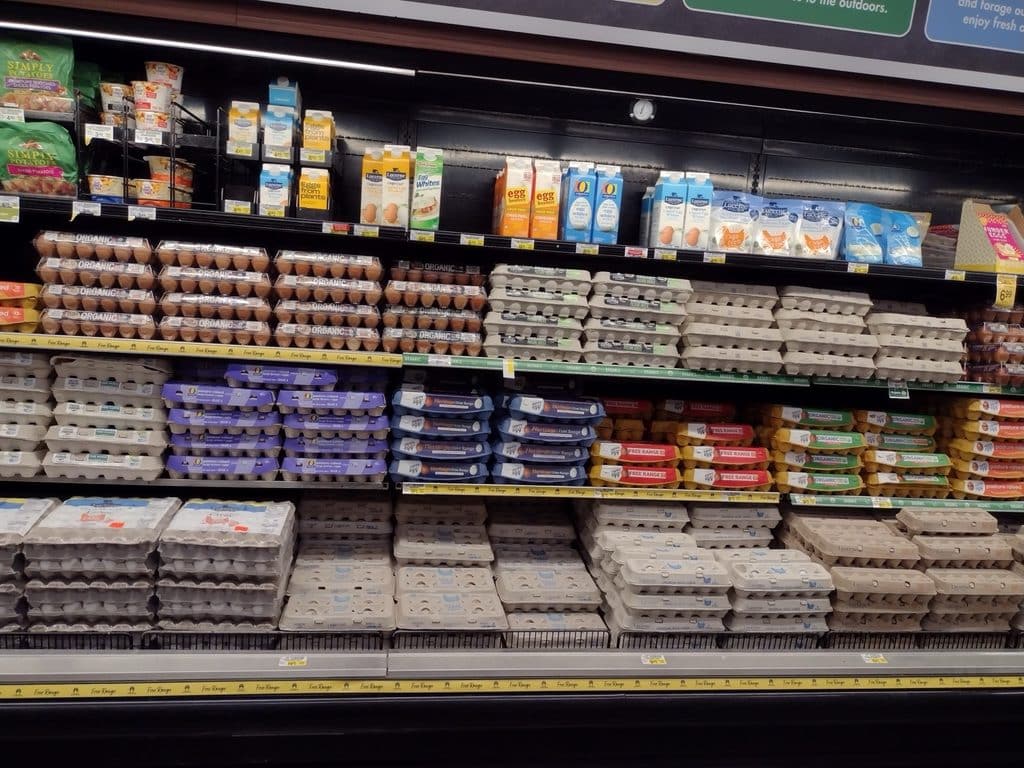
Wide selection of eggs & certifications
You might buy better eggs when eggs are the center of the meal but use less expensive eggs for large-batch baking. You might eat eggs slightly less often so you can spend more on the ones you buy. You might purchase directly from a local farmer during part of the year. You might simply move from conventional to cage-free because that is the option available to you.
Better is still better. Progress does not become meaningless because it is incomplete.
This Is Intentional Cooking
Understanding egg labels does not give us a perfect carton. It gives us better questions.
The goal is not to stand in the grocery store paralyzed by six cartons and a crisis of conscience. The goal is to understand what you are paying for.
Six questions the carton should answer
Was the hen kept in a cage?
Could she move freely?
Did she have meaningful outdoor space?
Is the claim independently verified?
Can I afford this option?
If not, is there another change that works for my family?
Choose the best option that fits your values, your access and your budget. Use the eggs you buy. Do not waste them. And do not let a watercolor chicken standing in a fictional meadow make the decision for you.
Labels are useful when we know how to read them.
Cook like it matters.
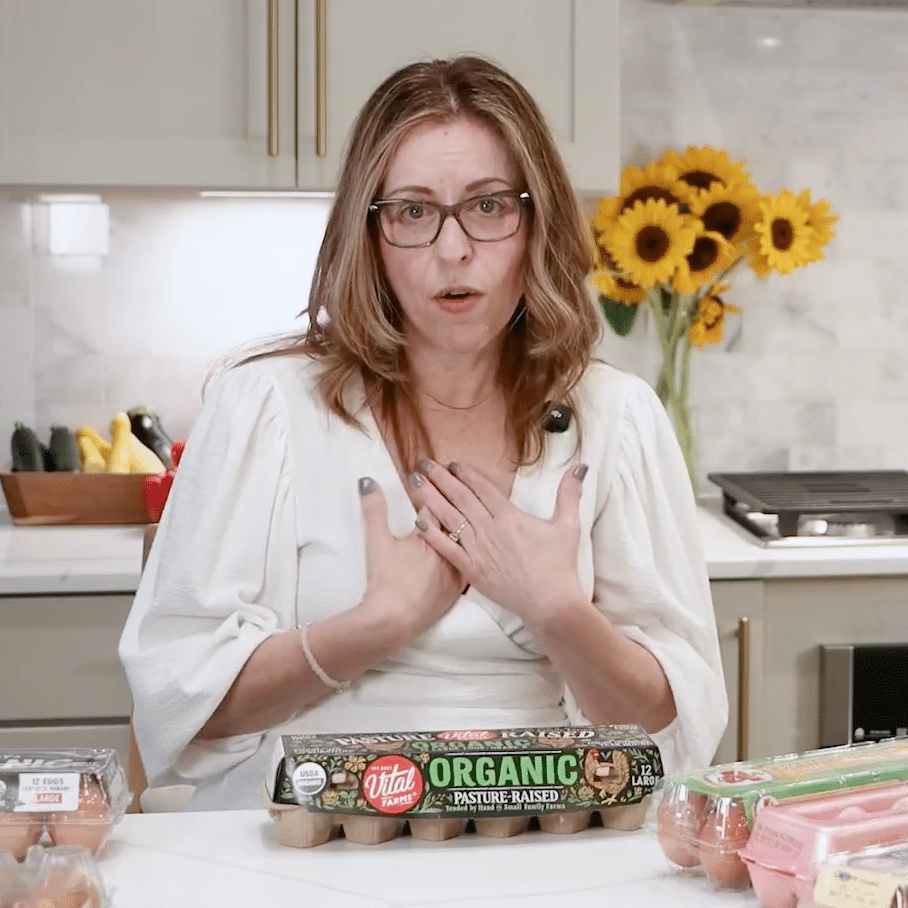
Let’s talk about cooking with purpose.
Intentional Cooking is not fancy. It is honest. Every ingredient matters. Make it yours.
Frequently Asked Questions
Is cage-free the same as free-range?
No. Cage-free hens can move inside a barn but do not have to be given outdoor access. Free-range hens must have access to an outdoor area, although the size, surface and quality of that area are not defined by the label alone.
Is pasture-raised better than free-range?
Generally yes, when the claim carries a credible third-party certification. Under Certified Humane standards, pasture-raised hens must have at least 2.5 acres of range per 1,000 birds, or roughly 108 square feet per hen. Free-range has no federal space minimum indoors or out.
Are organic eggs pasture-raised?
Not necessarily. USDA Certified Organic hens are uncaged, receive organic feed and must have outdoor access, but the amount and quality of that outdoor space may not match a pasture-raised certification. Organic operations can also be very large.
Are brown eggs healthier or more humane?
No. Shell color comes from the breed of hen. A brown egg tells you nothing about housing, outdoor access or welfare. Brown eggs have simply benefited from excellent public relations.
Is cage-free worth buying?
Yes, when it is the better option available to you. Cage-free housing lets hens walk, stretch their wings, perch and nest, which a conventional cage does not. It does not guarantee outdoor access or low stocking density, so a welfare certification still adds information.
Hatchery to carton
This article covers two nodes: the housing system the hen lives in, and the moment the claim is printed.
Hatchery
sexing, culling
→
Pullet rearing
beak treatment
→
Housing system
cage · cage-free · range · pasture
→
Laying period
lighting, molt
→
End of lay
removal
→
Grading & labeling
the claim is set here
→
Carton
the shelf
→
Kitchen
your recipe
■ The span this article follows
▢ Covered by the four companion pieces below
The Intentional Cooking Series: Eggs
5 Articles
Part 1 · The System
Part 2 · You Are Here
“Cage-Free,” “Free-Range” & “Pasture-Raised”
Part 3 · Males
Part 4 · Buying Guide

Part 5 · Alternatives
Leave a Reply