

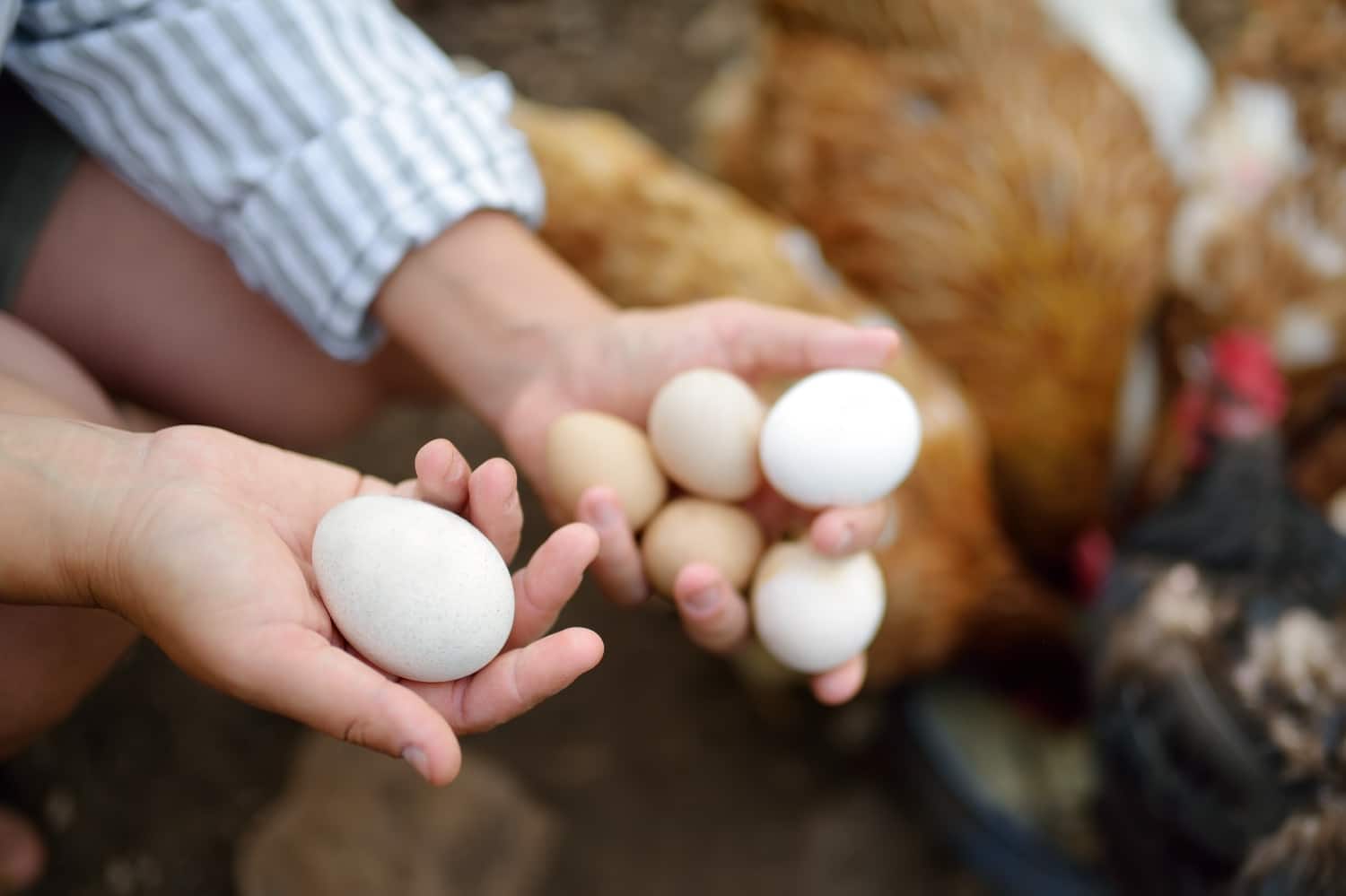
One carton says cage-free. Another says pasture-raised. A third has five certification seals, a watercolor barn and a paragraph about a farmer named Pete. Then you see the price and briefly consider whether your family really needs breakfast.
Intentional Cooking is not about proving how much you care through your grocery receipt. It is about understanding your choices and making the best decision that reasonably fits your values, access and budget.

First, decide what “better” means to you
Animal welfare
Prioritize meaningful space, outdoor access and independent certification.
Organic farming
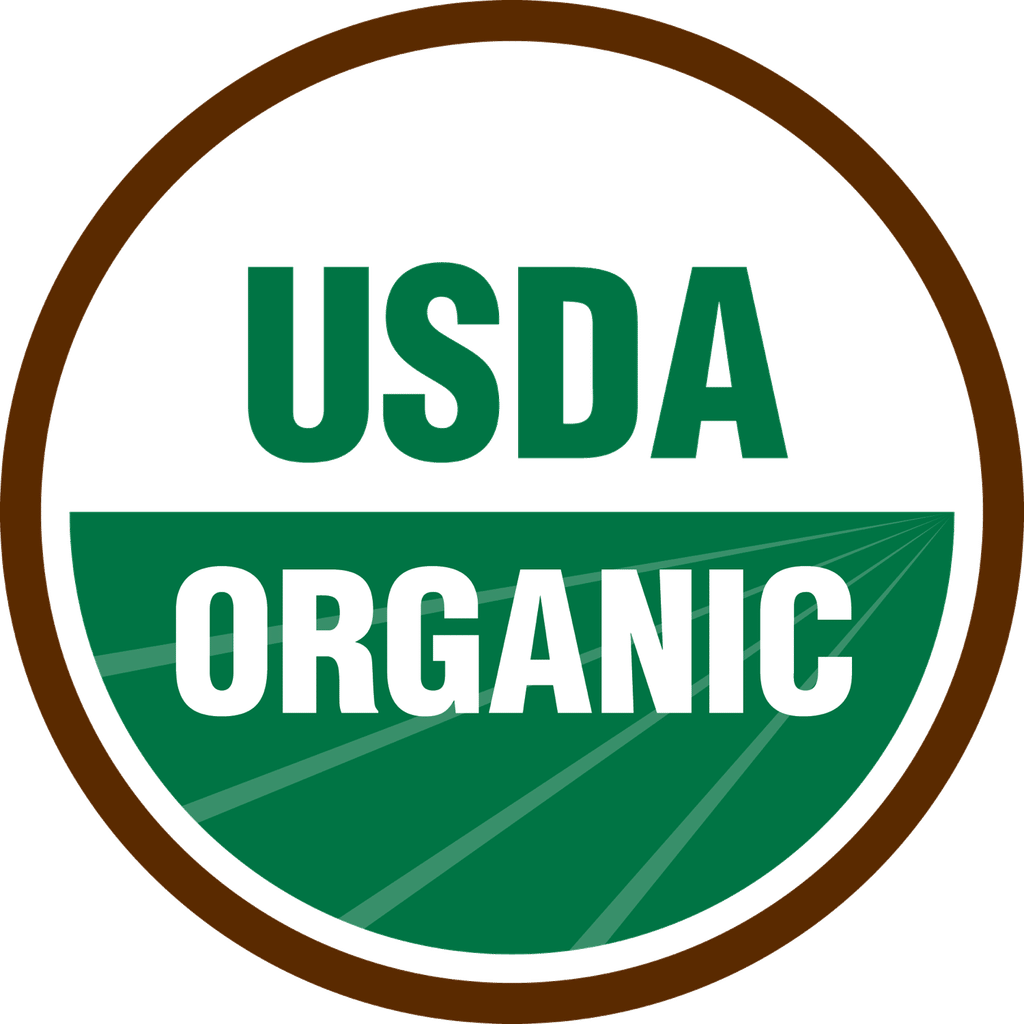
Look for the USDA Organic seal.
Male chick welfare
Look for a verified humanely hatched, better-hatched or Hatch Check claim.
Supporting local farms
Buy directly from a farmer whose practices you can ask about.
Nutrition
Compare the Nutrition Facts panel for claims such as added omega-3s.
Budget
Choose the best housing standard you can consistently afford.
There is no single egg label that answers every ethical, environmental and nutritional question.
You may care about all these things but most cartons will not satisfy all of your preferences – and the one that does may cost you a small fortune… up to 10x more than the cheapest eggs on the market.
01
Learn the Egg-Buying Hierarchy
If animal welfare is your main priority, this hierarchy provides a practical starting point. It is based primarily on freedom of movement, meaningful outdoor access and independent oversight.
The hierarchy, priced
Five tiers. Each step up buys a specific thing — and costs more for it.
The bars show relative price, not a quote: the most certified carton can run up to 10× the cheapest eggs on the shelf. Every tier carries a “still progress” marker, because landing on tier four is not failure.
Tier · what you are buying
Space, recalled
Relative price
1 Pasture-raised with a credible third-party certification
Barn for nesting and shelter, regular access to substantial outdoor range. Does not automatically mean organic or hatchery-verified.
108 sq ft
Up to 10×
2 Free-range with a credible third-party certification
Not caged, must have outdoor access. Certification is what turns “access” into a measurable standard — 2 sq ft of range per bird under Certified Humane.
2 sq ft
~4.4x
3 USDA Organic
Uncaged, organic feed, outdoor access, plus rules on pesticides, medications and animal care. Independently verified, but not automatically the highest welfare standard.
Not set
~3.7x
4 Certified cage-free
Movement inside the barn, nest boxes, perches, litter. No outdoor access required, and the barn may hold tens of thousands of hens.
~1 sq ft
~2.5x
5 Conventional eggs
May be produced by hens in wire cages — as little as 67 square inches for a white hen under UEP Certified standards, less than a sheet of printer paper.
67 in²
The baseline
Space markers recall the scale drawn to size in Part 2 and are not to scale here. Price bars are relative, not retail quotes: USDA ERS finds specialty welfare claims carry premiums that help cover higher production costs (analysis covers 2008–2018). Cage minimum: UEP Certified.
1. Pasture-Raised With a Credible Third-Party Certification
Pasture-raised hens live in a barn for nesting, nighttime protection and shelter but have regular access to a substantial outdoor range. On well-managed pasture, hens can walk, forage, scratch, dust bathe and eat plants and insects while having access to vegetation, shade, water and protection from predators.
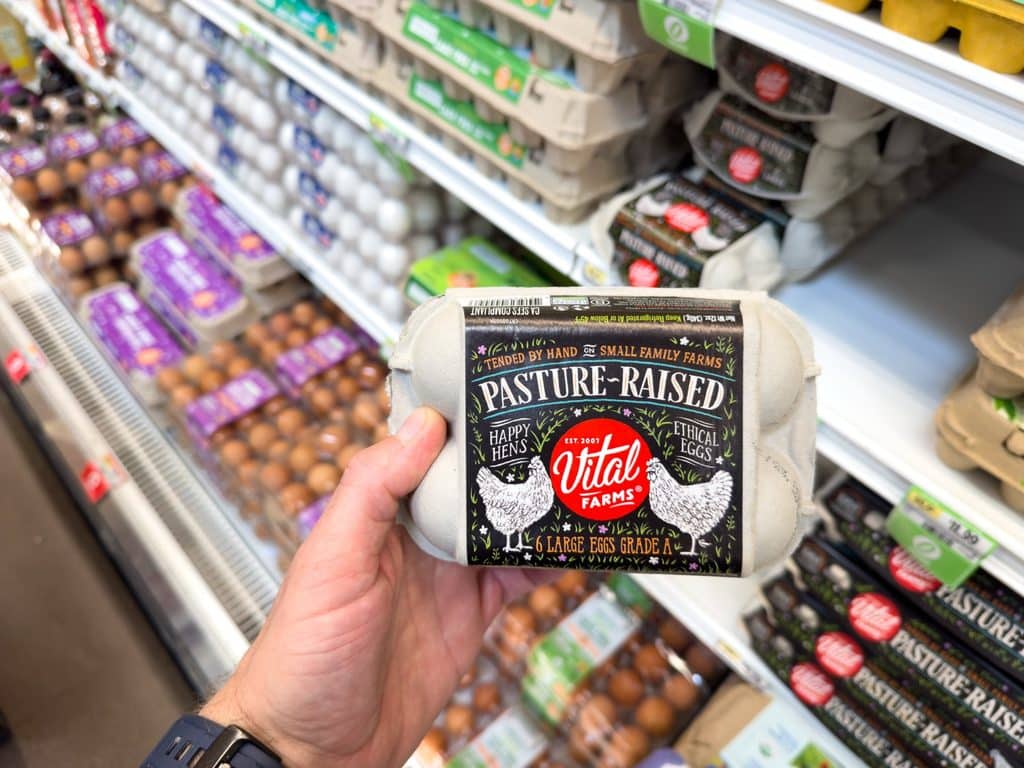
Pasture-raised packaging
The words pasture-raised are most meaningful when supported by a credible certification. Under Certified Humane and American Humane Certified pasture-raised standards, hens receive approximately 108 square feet of outdoor space each, equivalent to 2.5 acres for every 1,000 birds.
Pasture-raised is generally the strongest common housing claim, but it does not automatically mean organic or guarantee that male chicks were protected at the hatchery.
2. Free-Range With a Credible Third-Party Certification
Free-range hens are not kept in cages and must have access to an outdoor area. They generally live inside a barn but can go outdoors through openings provided by the farm.
The weakness in the basic free-range claim is that outdoor access can vary dramatically. It does not necessarily tell you how much space is available, whether the land has vegetation, how many hens share it or how easily the birds can reach it.
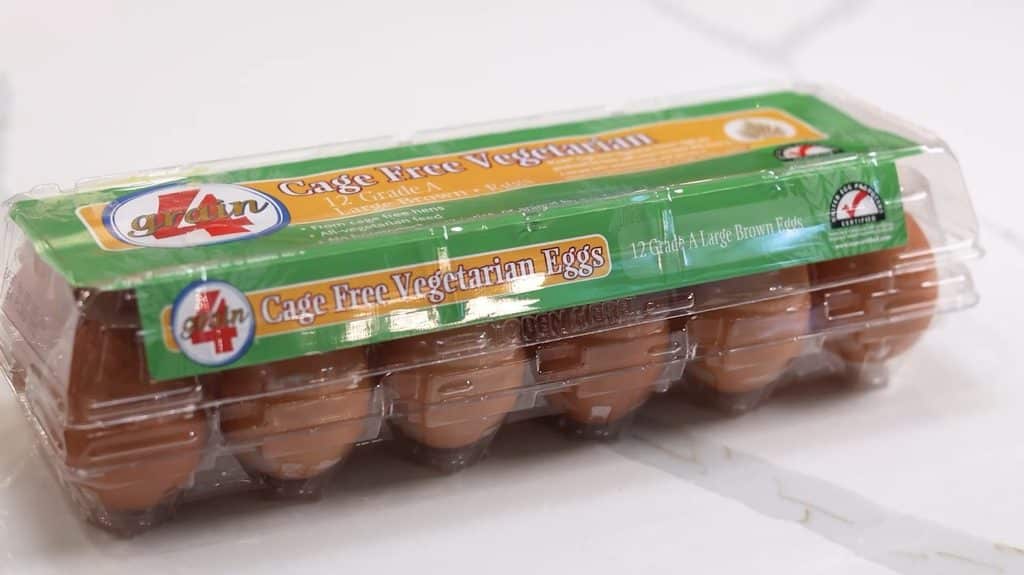
Free-range packaging
A third-party certification makes the claim more useful by establishing measurable standards. For example, Certified Humane free-range hens must have access to at least two square feet of outdoor range per bird. That is significantly less space than its pasture-raised standard but still offers meaningful outdoor access when the range is properly managed.
3. USDA Organic
USDA Organic eggs come from uncaged hens that receive certified organic feed and have access to the outdoors. Organic standards also regulate pesticides, fertilizers, medications, animal-care practices and other parts of production.
Organic is a meaningful and independently verified label, but it is not automatically the highest animal-welfare standard. An organic hen may have outdoor access without receiving the extensive range required by a strong pasture-raised certification.
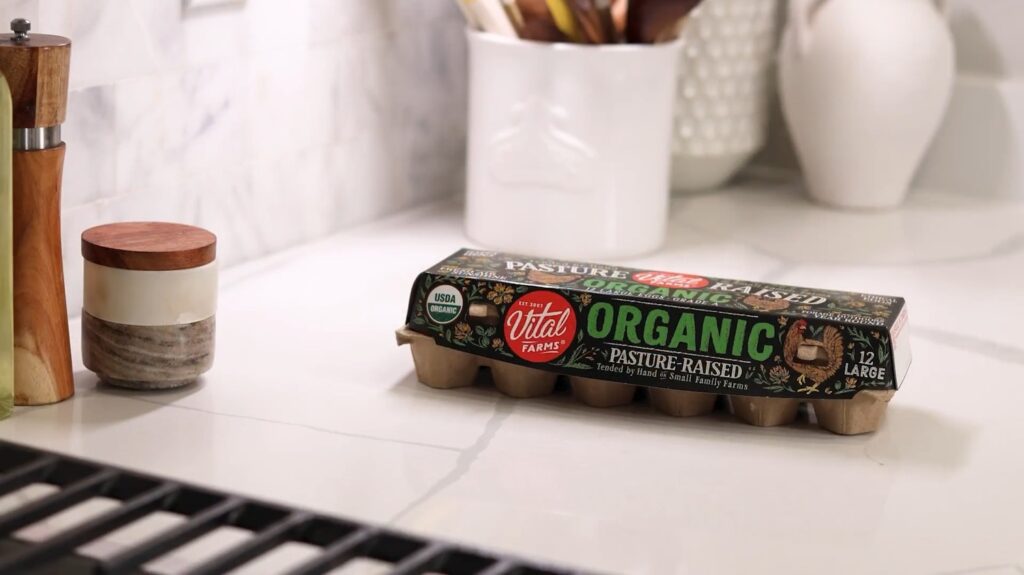
Organic packaging
If animal welfare and organic farming are both important to you, look for eggs labeled USDA Organic and certified pasture-raised. You will also need to look for your wallet because it may have quietly left the building.
4. Certified Cage-Free
Cage-free hens do not live in conventional wire cages. They can move vertically and horizontally inside a barn and should have access to nest boxes, perches, litter and areas for scratching and dust bathing.
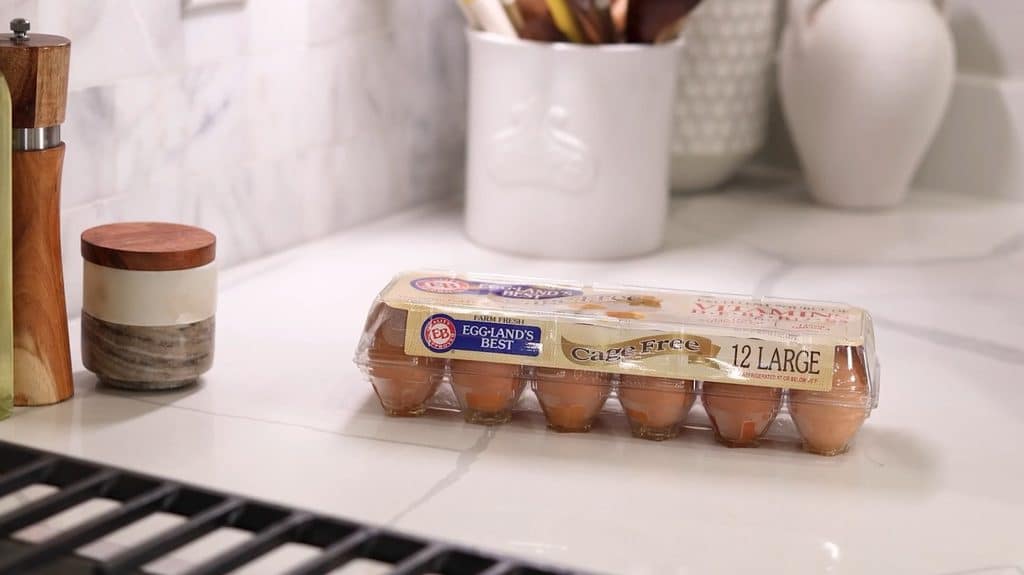
Cafe-free packaging
Cage-free housing provides considerably more freedom of movement than conventional cages, but outdoor access is not required. The barn may also house thousands or tens of thousands of hens, so air quality, crowding, injuries and access to resources depend heavily on farm design and management.

Cage-free is not the same as pasture-raised, but it is still a meaningful improvement over conventional cages – especially when independently certified.
5. Conventional Eggs
Conventional eggs generally come from large-scale production systems and may be produced by hens housed in wire cages. Under UEP Certified cage standards, a white laying hen may receive as little as 67 square inches of space, which is less than a standard sheet of printer paper.
These systems make egg production highly efficient and help keep prices lower, but hens may be unable to walk freely, spread their wings fully, nest privately, perch, forage or dust bathe.
If a carton does not include a housing claim, you should not assume that the hens were cage-free simply because the package shows a barn, green grass or a chicken who appears to have an excellent publicist.
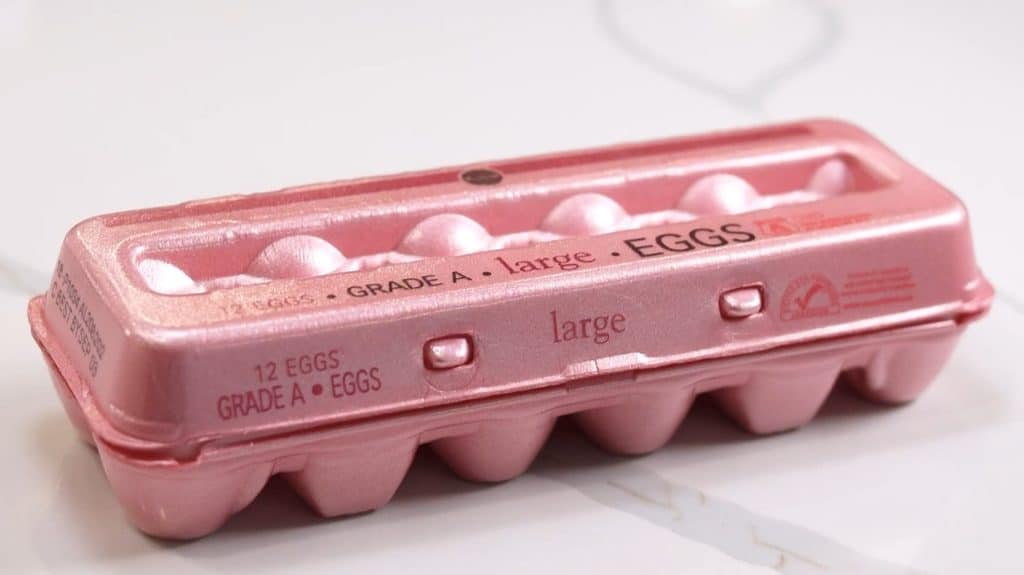
Standard egg packaging
02
The Hierarchy Is a Guide, Not a Guarantee
Housing labels tell us something important, but they do not tell us everything. Farm management, air quality, flock size, worker training, hatchery practices and what happens to hens when their laying declines also affect animal welfare.
A pasture-raised farm can be poorly managed. A well-run cage-free farm may provide better care than a badly managed free-range operation. Certification gives us stronger standards and oversight, but no label can promise a perfect life.
When possible, choose the highest independently certified option that fits your values and budget.
If pasture-raised eggs are not realistic, moving from conventional to certified cage-free is still progress.
For a deeper explanation of the standards, certifications and misleading carton claims, see Cage-Free, Free-Range and Pasture-Raised Eggs: What the Labels Actually Mean.
03
Look for the Seal, Not the Scenery
Egg cartons have mastered the art of emotional landscaping.
A green field, wooden fence and several chickens standing under a sunrise do not constitute an animal-welfare program. They constitute graphic design.
Look for independent certifications such as:
- Certified Animal Welfare Approved by A Greener World
- Certified Humane
- American Humane Certified
- UEP Certified, while noting which specific housing system is listed
Then read the housing claim beside the seal. Some certification programs approve more than one system, including cage-free, free-range and pasture-raised.
A welfare seal tells you that written standards and audits exist. The additional wording tells you which housing standard the farm follows.
For male chick welfare, look for a separate Hatch Check, Humanely Hatched, Better-Hatched or approved hatchery claim. A basic pasture-raised or humane certification does not automatically mean male chicks were protected.

No single logo gets to solve every problem. That would be far too convenient for the egg carton.
04
Compare the Cost Per Egg
A higher carton price can feel dramatic, but dividing the price by twelve gives you a more useful comparison.
The number that actually matters
An $8 carton is a $1.34 breakfast
Same three prices, divided three ways. The carton price is the number that alarms you; the two-egg number is the one you actually eat.
Per dozen
$4.00
Per egg
$0.33
Per dozen
$6.00
Per egg
$0.50
Per dozen
$8.00
Per egg
$0.67
An $8 carton is undeniably expensive compared with a $4 carton. But two of those eggs still cost about $1.34 before adding toast, beans, vegetables, potatoes or another inexpensive side.
That does not make expensive eggs affordable for everyone. It simply helps you compare the actual cost of a meal rather than reacting only to the carton price.
Sometimes paying an extra $2 or $3 per dozen is manageable when eggs replace a more expensive protein. Sometimes it is not. Both things can be true.
05
Create an Egg Budget
An egg budget means deciding how much space eggs should occupy in your grocery spending and cooking.
Maybe your family eats eggs several mornings a week, making a more expensive carton difficult to sustain. Maybe you buy one carton every two weeks, so moving to a better option adds only a few dollars to the monthly budget.

Budgeting eggs can allow you to buy better quality
You could decide to:
- Buy fewer cartons but choose a higher-welfare option
- Serve eggs with inexpensive foods such as beans, potatoes, toast or seasonal vegetables
- Use egg alternatives in recipes where eggs are not essential
- Compare store brands that carry legitimate welfare certifications
- Buy larger packages only when the price is better and you will use every egg
- Alternate between pasture-raised and certified cage-free when necessary
The goal is not to buy one heroic carton and then resent every egg in it.
Choose an approach you can actually maintain.
06
Do Not Pay Extra for Meaningless Claims
If animal welfare is your goal, do not let unrelated marketing language consume the money you intended to spend on better housing.
These claims do not tell you how a hen lived:
Eight claims your money should not go to
Farm fresh
Natural
Vegetarian-fed
Brown eggs
Omega-3 enriched
No hormones added
Premium
All-natural
Some may describe a feature you want. Omega-3 enrichment, for example, is a legitimate nutritional distinction. It simply is not an animal-welfare distinction.
Pay for the qualities that matter to you, not every adjective the marketing department managed to fit on the carton.
07
Consider the Store Brand
Better eggs do not always come from the carton with the most elegant branding.
Many grocery stores, warehouse clubs and regional chains carry private-label cage-free, organic or pasture-raised eggs. Some use the same independent certification programs as more expensive national brands.
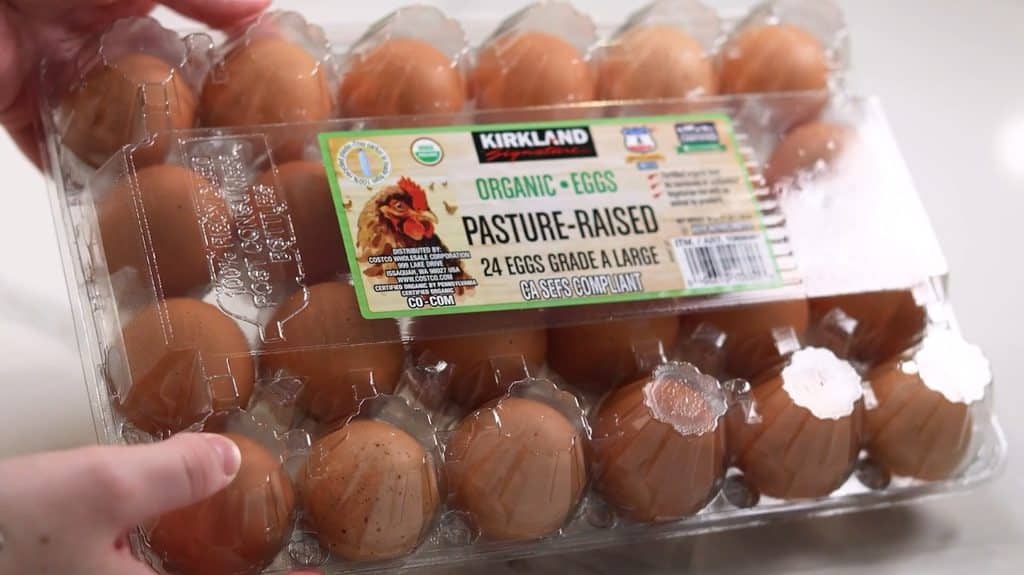
Store brand packaging
Compare:
- Housing claim
- Certification seal
- Price per dozen
- Price per egg
- Package size
- Whether your family will use them before they spoil
A poetic brand story is lovely, but it is not necessary for the hen. The hen would probably choose space, fresh air and competent care over an expensive font.
08
Buying Local Eggs: Ask Questions
Buying directly from a local farm can create transparency that no carton can provide. It can also keep more of your food dollars within your community.
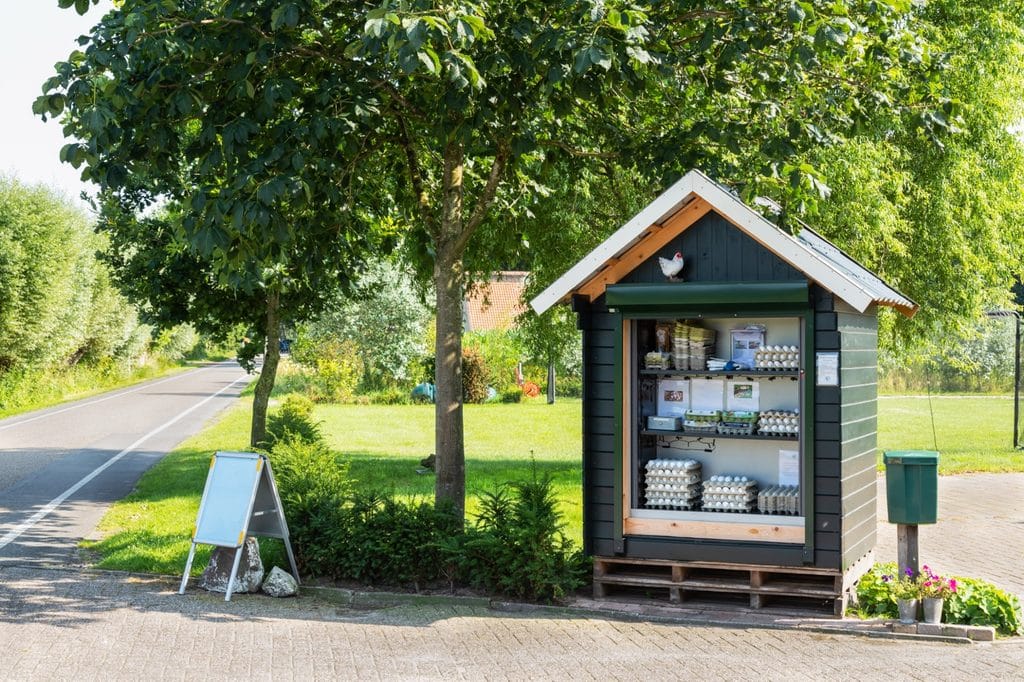
Local egg stand
But local does not automatically mean humane. A small farm can provide excellent care, mediocre care or terrible care. Geography is not an animal-welfare standard.
Screenshot this
Pocket card
Ten questions for the farmers market
01
Are the hens kept in cages?
02
Do they go outdoors?
03
How much outdoor space do they have?
04
Is the land covered with vegetation?
05
Is the pasture rotated?
06
Do the hens have shade and protection from predators?
07
Where do the chicks or pullets come from?
08
What happens to the male chicks at the hatchery?
09
What happens to the hens when their egg production declines?
10
Are the farm’s practices independently certified?
A responsible farmer should be able to answer reasonable questions without becoming defensive or disappearing mysteriously behind a bale of hay.
Farmers’ market eggs are not always cheaper, but asking questions may help you understand exactly what the additional money supports.

ask about the farm conditions
09
Use Every Egg You Buy
The most expensive egg is the one you throw away.
USDA guidance says raw shell eggs generally keep for three to five weeks in the refrigerator. Store them in their original carton on an interior shelf rather than in the refrigerator door, where the temperature changes more frequently.

Don’t store eggs in the door
Keep track of what you have and plan meals around eggs approaching the end of their storage window.
Storage, in three rules
3–5 wks
in the refrigerator, per USDA FSIS
Original carton
not a decorative bowl on the counter
Interior shelf
the door swings through too many temperatures
Where to use the ones approaching the end of the window
Scrambled eggs or omelets
Frittatas
Fried rice
Breakfast tacos
Grain bowls
Salads
Sandwiches
Baking
Hard-boiled snacks
Older eggs are often easier to peel after hard-boiling, so that neglected carton may still have a useful future. We are preventing food waste, not conducting an archaeological excavation.
10
If You Cannot Afford Better Eggs
Buy the eggs your family needs.
A household relying on conventional eggs as an accessible protein source should not be treated as the main villain in an industrial system shaped by corporations, retailers, agricultural policy and decades of production incentives.
If you want to make a change but cannot afford pasture-raised eggs, consider moving one step instead of five. Choose certified cage-free. Buy better eggs occasionally. Use fewer eggs in baking when a reliable substitute works. Contact your grocery store and ask for more affordable certified options.
You can also advocate for better laws and industry standards. Animal welfare should not be a luxury upgrade available only to families with flexible grocery budgets.
The system will not become humane by demanding that every individual shopper quietly absorb its full cost.
This Is Intentional Cooking
Buying better eggs does not require finding the perfect carton.
It requires knowing which claims matter, ignoring the ones that do not and choosing the best option that works within your real life.
Sometimes that will be certified pasture-raised eggs. Sometimes it will be cage-free. Sometimes the budget will make the decision before you reach the store.
Awareness still matters.
Five things to do with this
Choose thoughtfully when you can.
Ask questions.
Support better practices.
Use every egg you buy.
Let the pleasure and usefulness of the ingredient earn the resources and life behind it.
The goal is not to win at grocery shopping. The goal is to pay attention.
Cook like it matters.

Let’s talk about cooking with purpose.
Intentional Cooking is not fancy. It is honest. Every ingredient matters. Make it yours.
Frequently Asked Questions
What are the best eggs to buy for animal welfare?
Pasture-raised eggs backed by a credible third-party welfare certification generally provide the strongest combination of outdoor space, natural behaviors and independent oversight.
Are expensive eggs always more humane?
No. Some eggs cost more because they are organic, nutritionally enriched, locally produced or heavily marketed. Check the housing claim and certification rather than relying on price alone.
Are store-brand pasture-raised eggs good?
They can be. Look for the same independent certifications you would expect from a national brand. The certification and housing standards matter more than the size of the brand.
Are local farm eggs more humane?
Not automatically. Ask the farmer how the hens are housed, whether they have outdoor access, where the chicks come from and what happens to hens when their laying declines.
Is cage-free worth the extra cost?
Cage-free housing allows hens to move inside the barn and perform more natural behaviors than conventional cages. It does not provide outdoor access, but it is still a meaningful improvement.
How long do eggs last in the refrigerator?
Raw shell eggs generally keep for three to five weeks when properly refrigerated. Keep them in their original carton on an interior refrigerator shelf.
Hatchery to carton
This article lives at the carton — the one node in the chain you actually stand in front of.
Hatchery
sexing, culling
→
Pullet rearing
beak treatment
→
Housing system
cage · cage-free · range · pasture
→
Laying period
lighting, molt
→
End of lay
removal
→
Grading & labeling
the claim is set here
→
Carton
the shelf
→
Kitchen
your recipe
■ The nodes this article follows
▢ Covered by the four companion pieces below
The Intentional Cooking Series: Eggs
5 Articles
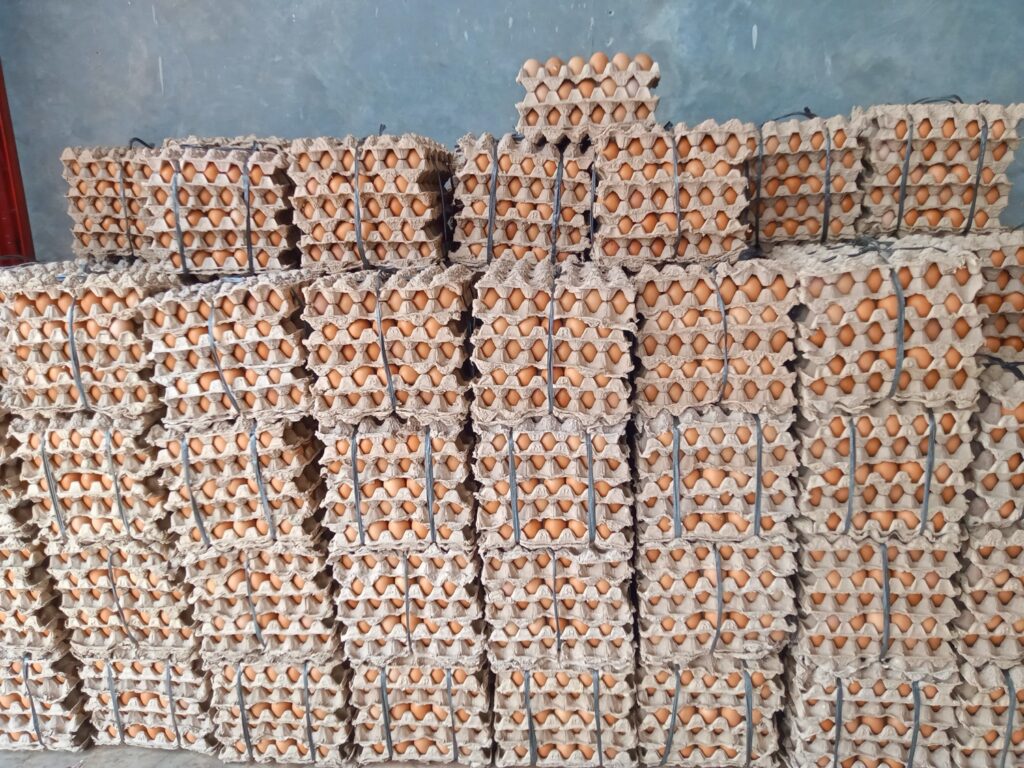
Part 1 · The System
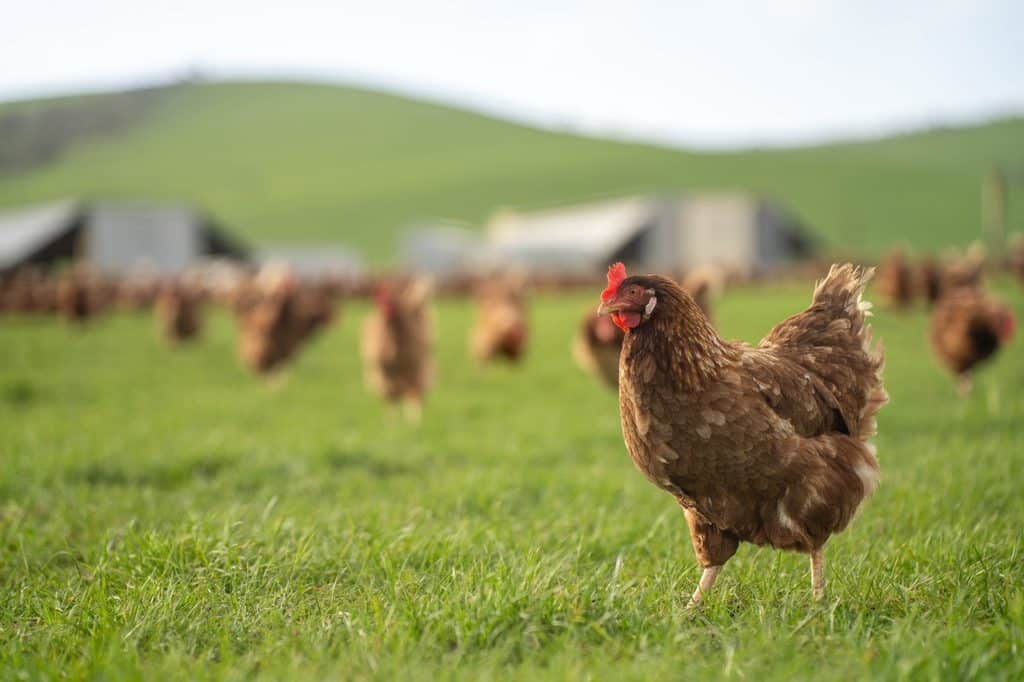
Part 2 · Labels
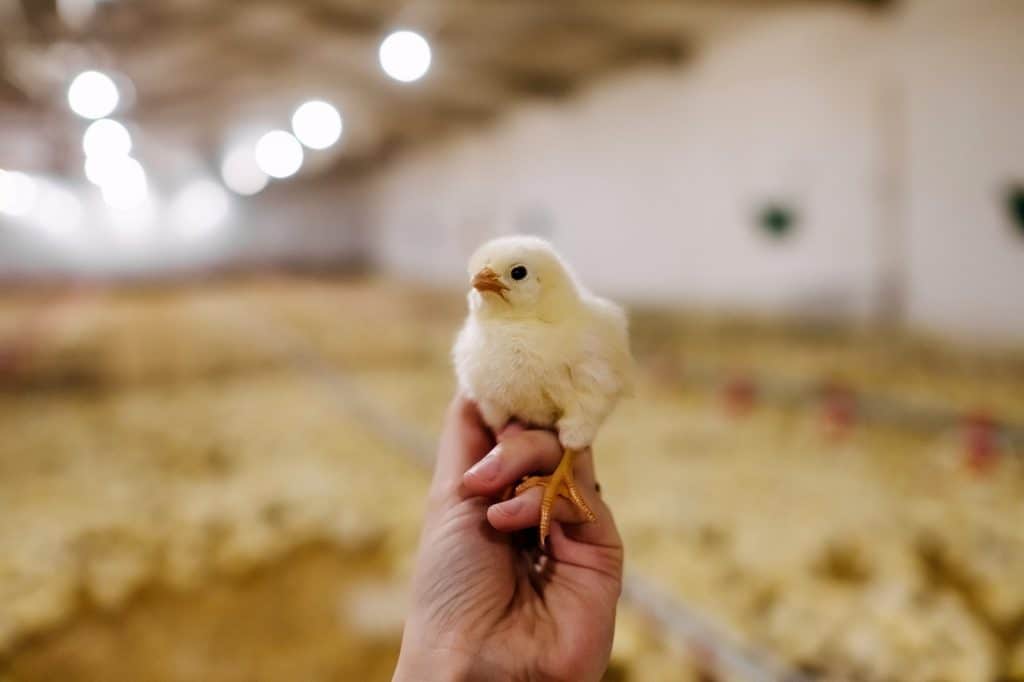
Part 3 · Males
Part 4 · You Are Here
Find Eggs from Humanely-Raised Chickens

Part 5 · Alternatives
Leave a Reply