
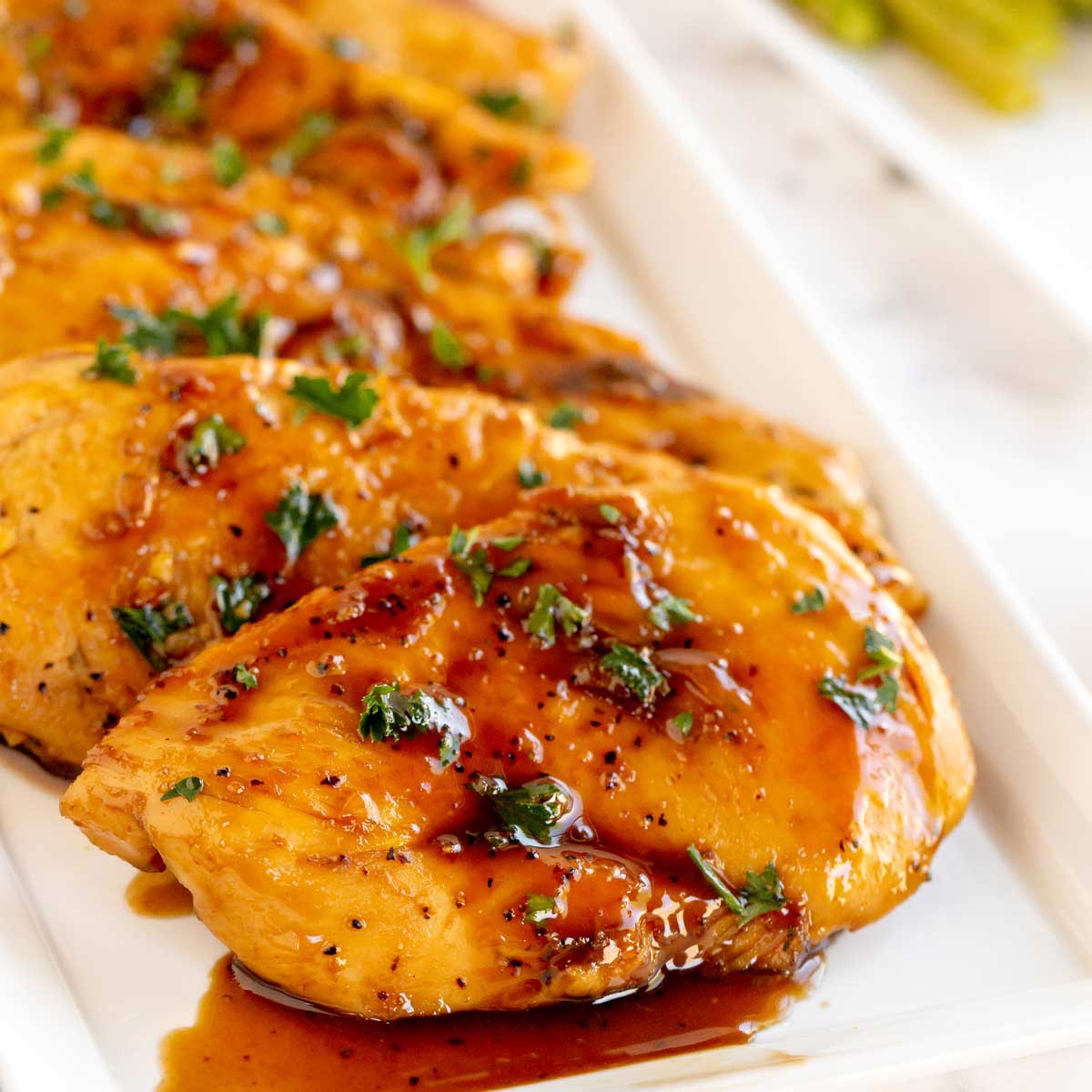

Chicken and balsamic vinegar are a natural match! Tthe vinegar adds tang and depth while maple syrup softens its sharp edges. The result is an easy balsamic glazed chicken breast recipe that tastes balanced, not overly sweet, and is simple enough for a busy weeknight.
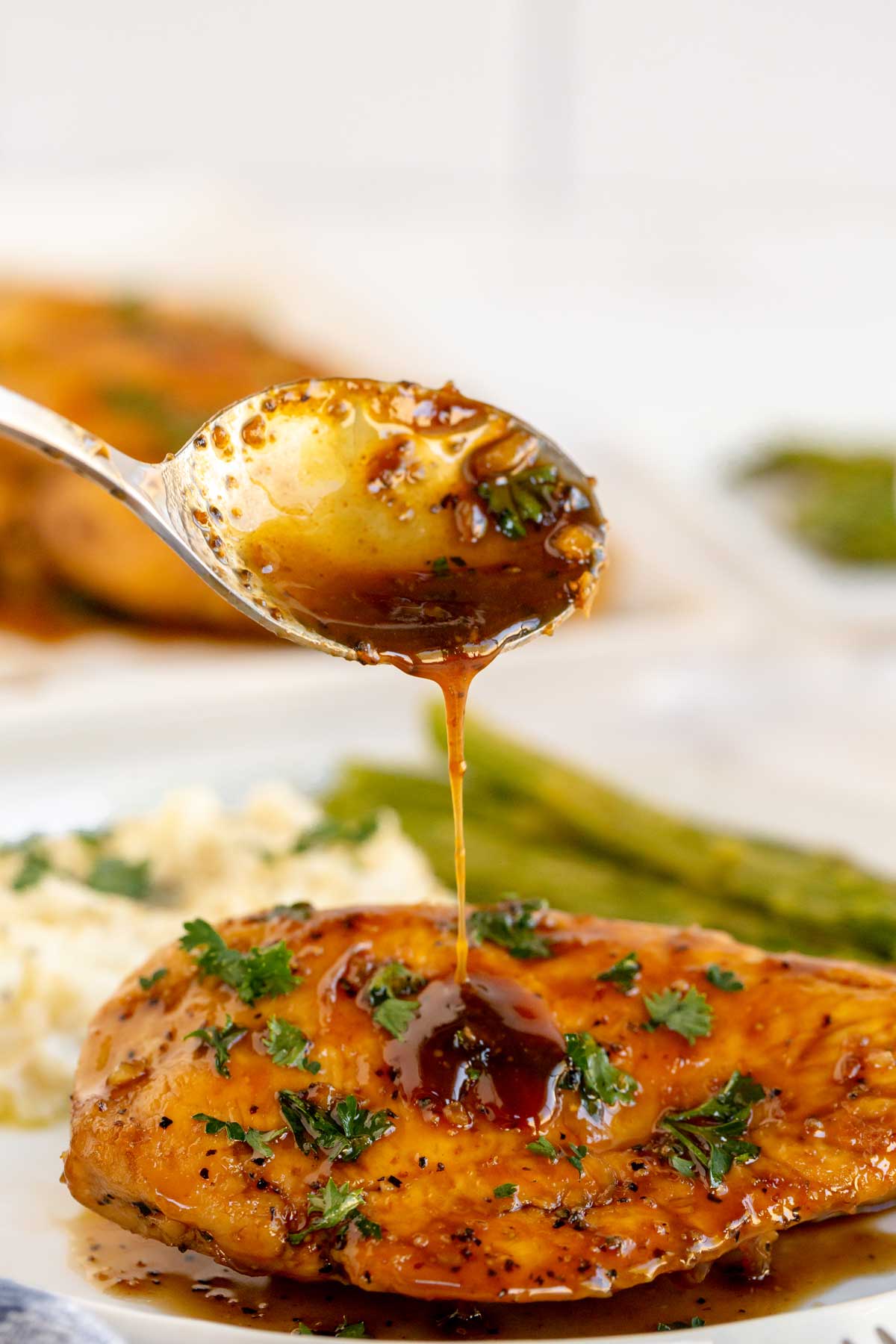
⭐️ Maple Balsamic Glaze Chicken Recipe: at a glance
- Quick and Easy: Ready in about 25 minutes!
- One Pan = Less Cleaning: The chicken and balsamic glaze are made in the same skillet.
- Flavor: Tangy, savory, gently sweet, and garlicky with optional warmth from cayenne.
- Family-Friendly: A balanced maple glaze and familiar ingredients make this an approachable dinner for adults and kids.
- Simple Ingredients: This dish is made 8 simple ingredients!
- Dietary: Poultry. Lean protein. Naturally dairy-free, gluten-free, nut-free, grain-free/
🍗 Ingredients, Substitutions and Swaps

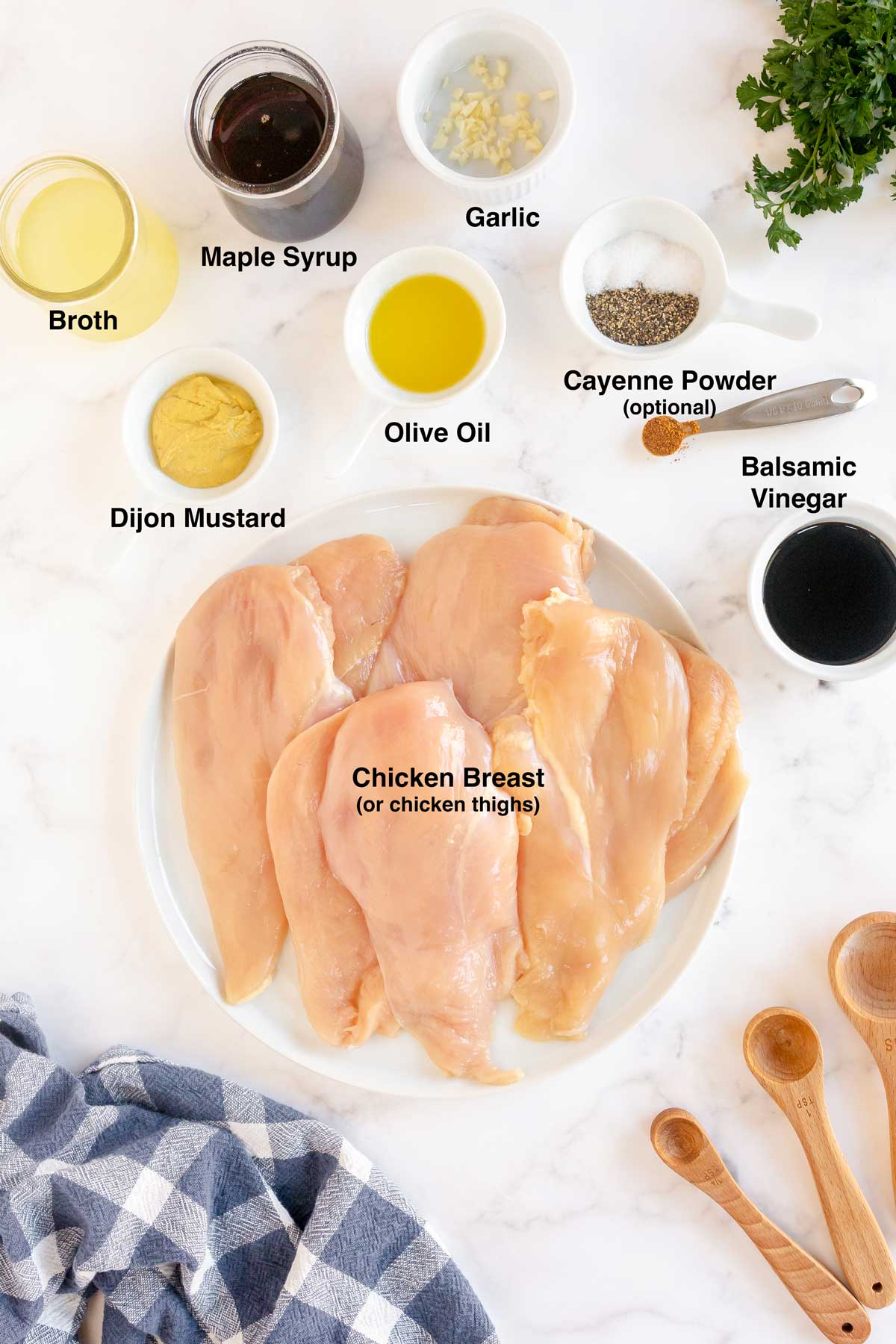
For the complete list of ingredients and exact quantities, check the printable recipe card below.
- Chicken: I use boneless, skinless chicken breast. Boneless chicken thighs can also be used.Slice each breast horizontally into two thinner cutlets. Even pieces cook faster and are less likely to dry out.
- Olive oil: Used for searing. Avocado oil is a good substitute.
- Garlic: Fresh garlic adds savory flavor to the balsamic pan sauce. Garlic paste can be used in a pinch.
- Chicken broth: Deglazes the skillet and incorporates the flavorful browned bits. Use low-salt if you are sensitive to sodium.
- Pure maple syrup: Use real maple syrup rather than pancake syrup. Amber syrup has a rich all-purpose flavor; dark syrup brings a more pronounced maple note.
- Balsamic vinegar: The acidity balances the maple and becomes mellower as the glaze reduces. This recipe needs vinegar, not balsamic glaze.
- Dijon mustard: Adds sharpness and helps the glaze coat the chicken. Stone-ground mustard is the closest substitute.
- Optional – Cayenne pepper: The small amount rounds out the maple without making the chicken spicy.
🔎 How to Make Balsamic Glazed Chicken
For specific instructions and cooking times, check the printable recipe card below.
- Prep the chicken: Pat the chicken dry, slice each breast horizontally into two cutlets, and season with salt and pepper.
- Mix the maple balsamic glaze: Whisk the maple syrup, balsamic vinegar, Dijon mustard, and cayenne in a small bowl.
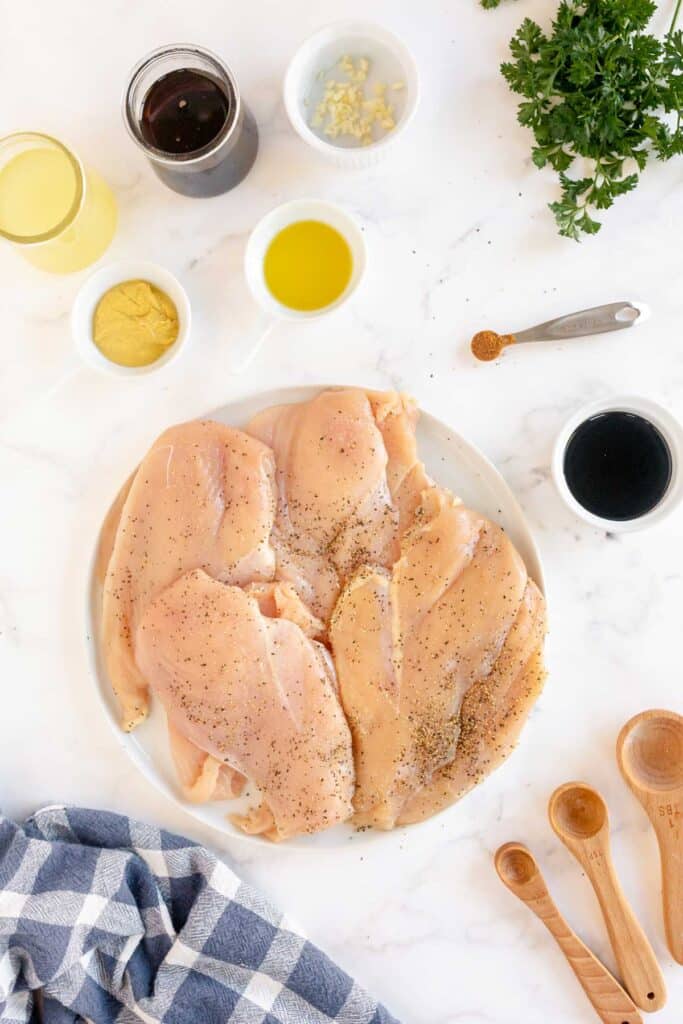
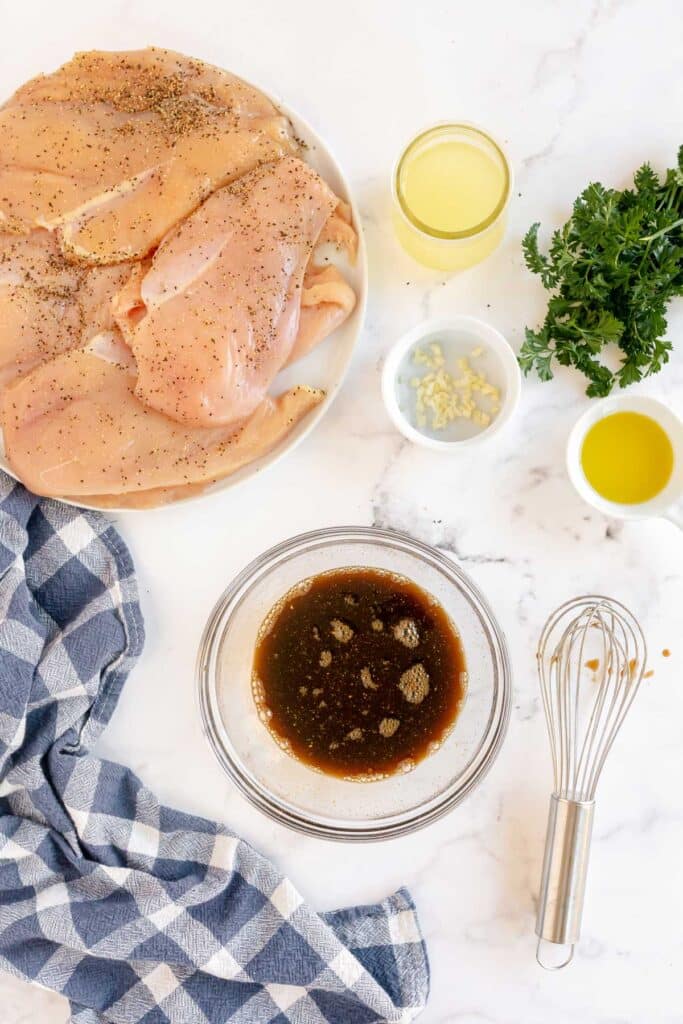
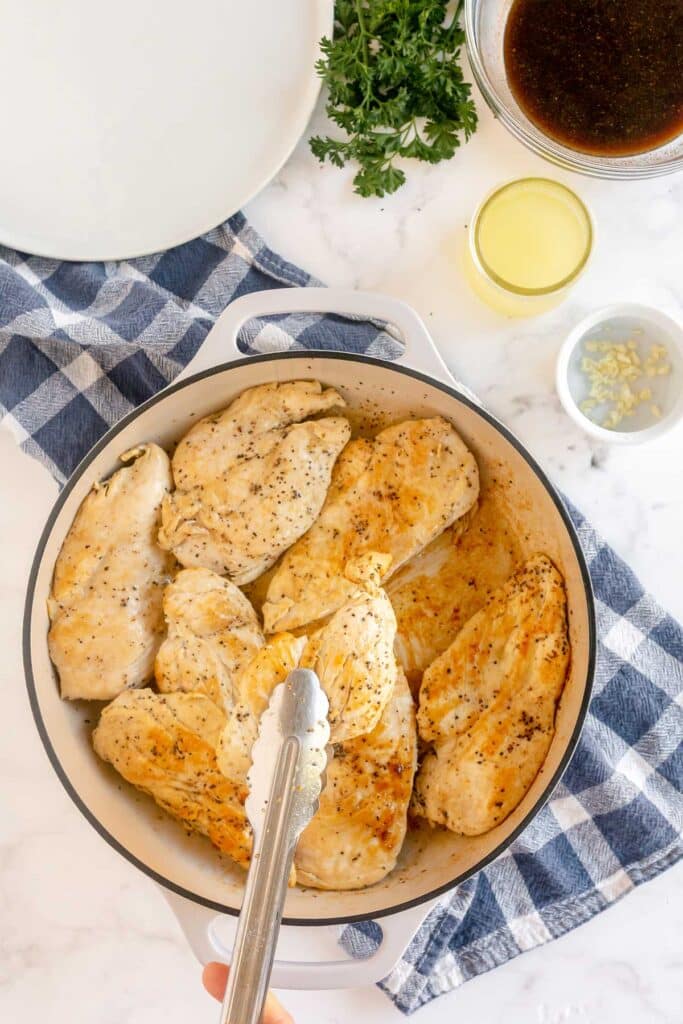
- Sear the chicken: Heat the olive oil in a large skillet over medium-high heat. Add the chicken in a single layer and cook, undisturbed, for about 5 to 6 minutes per side. Transfer the cutlets to a plate when they are nearly cooked through.
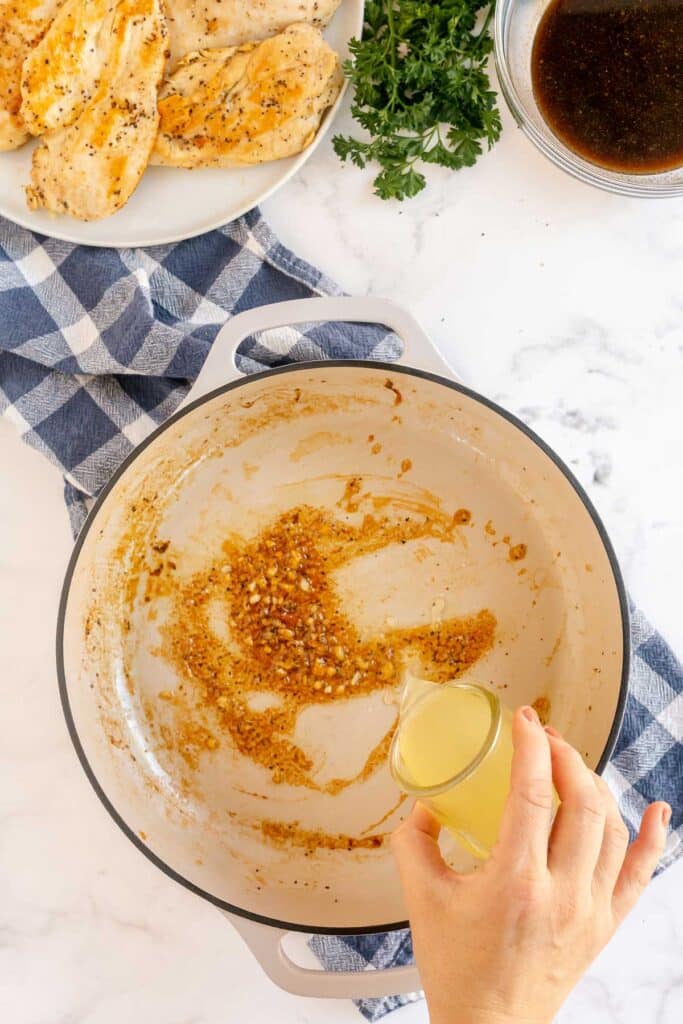
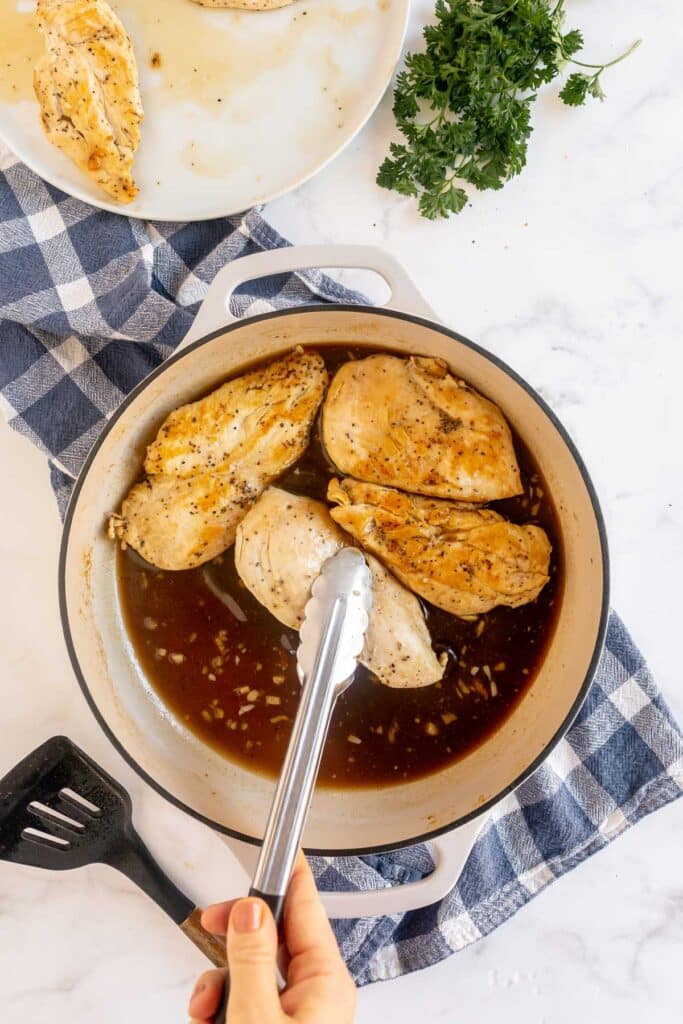
- Make the pan sauce: Reduce the heat to medium-low. Add the garlic and cook for about 1 minute, stirring constantly. Pour in the chicken broth and scrape up the browned bits. Bring to a boil and cook until reduced by half, about 2 minutes.
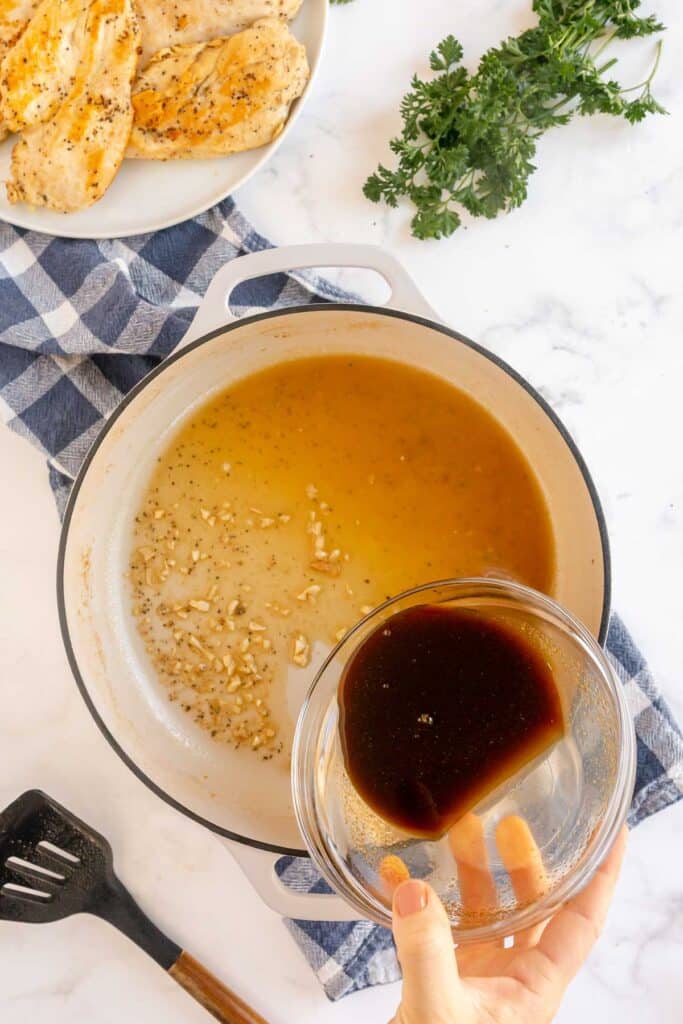
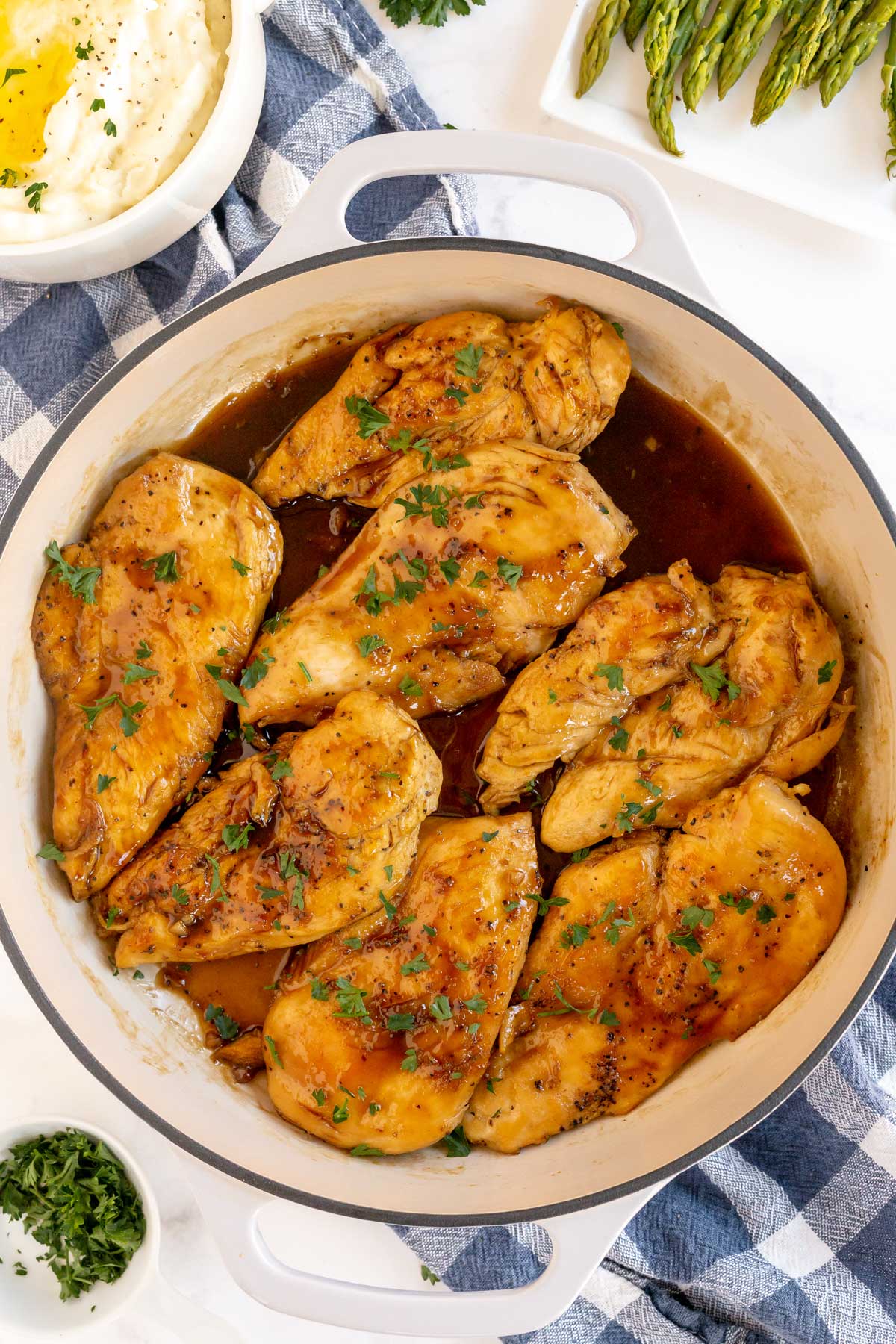
- Glaze and finish: Stir in the maple-balsamic mixture. Return the chicken to the skillet and turn to coat. Cook for 2 to 3 minutes, until the glaze is syrupy and the thickest part of the chicken reaches 165°F. when checked with a meat thermometer. Remove from the heat and garnish with fresh parsley, sage or basil if using.
👩🏼🍳 Chef’s Recipe Tips: Prep & Adjustments
- Cut the breasts into cutlets: Thinner, evenly sized pieces cook quickly and more predictably than full chicken breasts.
- Dry the surface: Moisture must evaporate before browning begins. Patting the chicken dry helps it sear instead of steam.
- Do not force the flip: When properly browned, chicken releases from the skillet more easily. If it is firmly stuck, give it another moment.
- Reduce the broth first: Maple syrup contains sugars that can scorch. Reducing the broth before adding the maple mixture protects the glaze from excessive high heat.
- Finish the chicken in the sauce: The cutlets cook for another 2 to 3 minutes after returning to the skillet, so remove them from the initial sear when nearly done. This prevents cooking the lean breast meat twice.
- Watch the final reduction: Stop when the sauce coats the chicken. The glaze continues to thicken slightly as it cools.
🔎 What to Serve with Balsamic Glazed Chicken
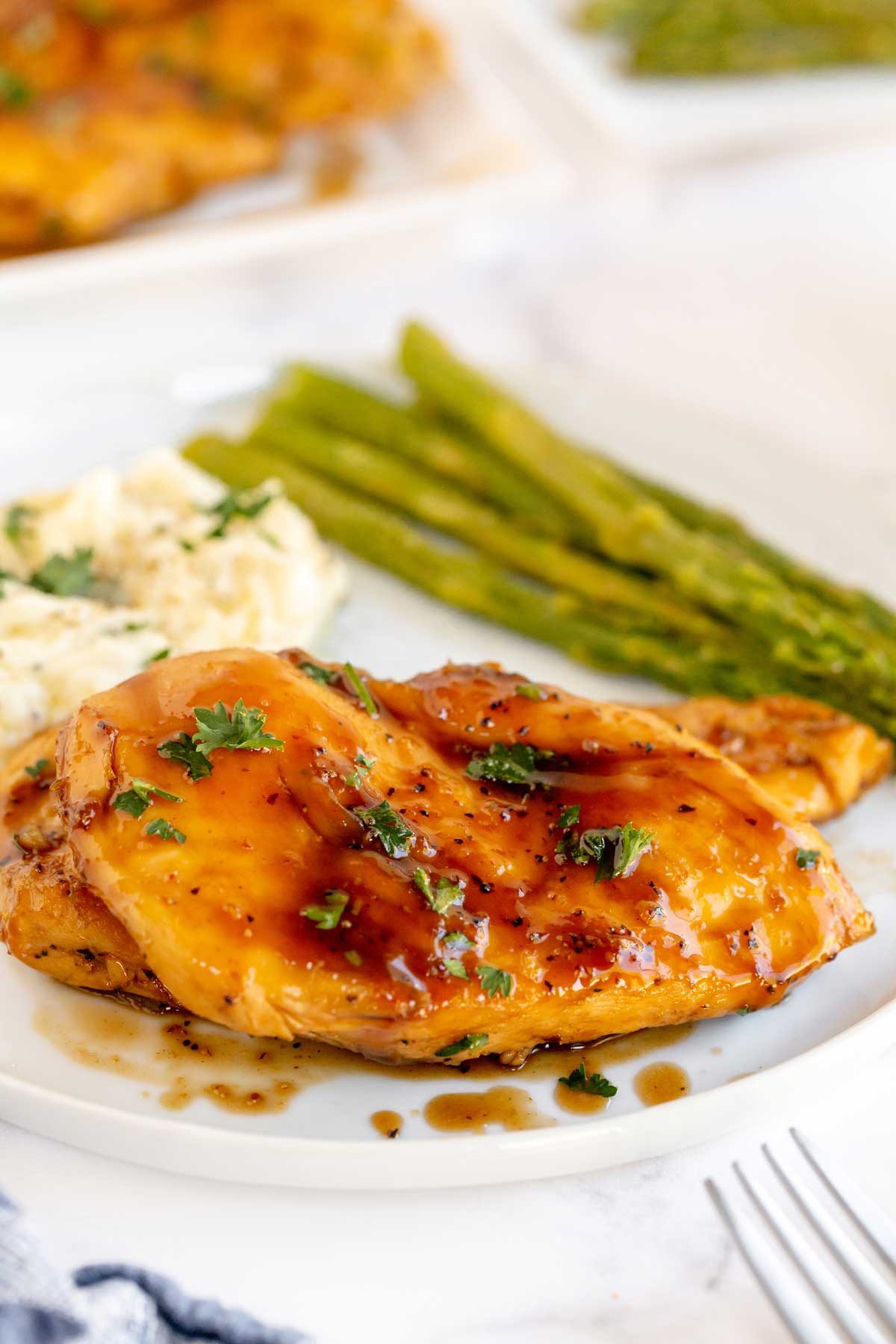
Serve this maple glazed chicken with roasted fingerling potatoes, Instant Pot mashed potatoes, roasted green beans, or asparagus. Creamy polenta, and roasted fall vegetables are also excellent with the maple balsamic sauce.
✔️ Make-Ahead, Storage, Reheating and Freezing
- Making ahead: Prep and season the chicken and store it in the refrigerator overnight. Whisk the maple-balsamic mixture up to one day ahead and refrigerate it. For the best texture, sear and glaze the chicken shortly before serving.
- Storing: Store leftover balsamic glazed chicken in an airtight container in the refrigerator for up to 3 days.
- Reheating: Reheat gently in a covered skillet over low heat with a small splash of chicken broth or in the microwave in small intervals. Heat only until warmed through so the chicken does not dry out.
- Freezing: This recipe can be frozen up to 2 months, but it is best when made fresh. Lean chicken breast may lose moisture after freezing, and the glaze can separate slightly when thawed.
💛 Conscious Bites
Your priorities, your recipe. Learn about Intentional Cooking.

Animal Welfare: Consider choosing independently certified chicken when it is available and fits your budget. You can also support smaller local farms that raise their chickens humanely and are transparent about their practices. Buying directly allows you to ask how the chickens are raised while supporting farmers committed to responsible animal care.

Environment: When it fits your budget, choose pure maple syrup from a regional producer. Maple sugaring gives landowners an economic reason to maintain working forests, and a darker, robust syrup delivers plenty of maple flavor in savory glazes.

Community: Sharing a beautiful meal doesn’t have to mean spending hours in the kitchen. Although this maple balsamic chicken is quick and easy to prepare, its beautiful glaze and sophisticated flavor make it special enough for entertaining-leaving you more time to enjoy the people around your table.
🤔 Frequently Asked Questions
Is balsamic glazed chicken very sweet?
No. Maple syrup adds sweetness, but balsamic vinegar, Dijon mustard, garlic, and broth keep the glaze tangy and savory.
Can I use chicken thighs?
Yes. Boneless, skinless thighs work, but they may take longer to cook than thin breast cutlets. The chicken is done when it reaches an internal temp of 165ºF.
Can I use bottled balsamic glaze?
No, I don’t recommend using bottled balsamic glaze. Use regular balsamic vinegar which is not as sweet or as thick and can mix well with the other glaze ingredients..
How do I keep chicken breast juicy?
Cut the breasts into evenly sized cutlets, avoid crowding the skillet, and finish the cooking in the glaze only until they reach 165°F. when checked with an instant-read thermometer on the thickest part.
👀 Take a look at these other chicken recipes:

🛒 Essentials you’ll adore for this recipe
-
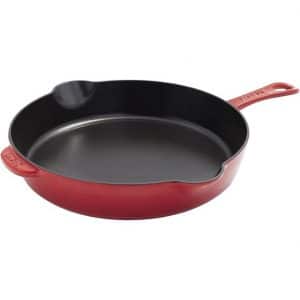
Staub Cast Iron 11-inch Skillet
Made in France, this enameled cast iron skillet provides excellent heat retention and even cooking for perfect searing and browning. The durable enamel requires no seasoning and makes cleanup easy – a beautiful, versatile pan built to last. Definitely an investment piece worth having.
-
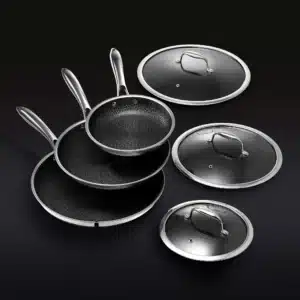
HexClad Non-Stick Skillet set with Lids
The absolute best “indestructible” scratch-resistant non-stick skillet set on planet earth. My most used pans by far! The Hybrid 8-inch, 10-inch and 12-inch pans offer the ultimate in versatility when it comes to frying, sautéing, and simmering. 100% worth the investment. Whether you are an expert cook or someone who hardly sets foot in a…
-
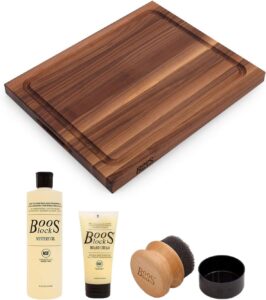
John Boos Rectangular Cutting Board
This 17×21 Walnut 1.5 inch thick cutting board beauty is definitely an investment worth making. With proper care this board will last a lifetime!
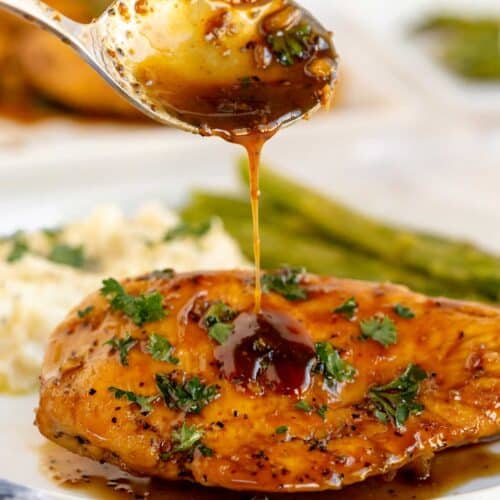
Maple Balsamic Glazed Chicken

Ingredients
- 2 pounds boneless skinless chicken breasts, sliced horizontally into cutlets
- Salt and ground black pepper, to taste
- 1 tablespoon olive oil
- 2 garlic cloves, finely chopped
- 1/2 cup chicken broth
- 1/2 cup pure maple syrup
- 2 tablespoons balsamic vinegar
- 1 tablespoon Dijon mustard
Optional
- 1/8 teaspoon ground cayenne pepper
- Chopped parsley, sage or basil, for garnish,
Instructions
- Pat the chicken dry and season with salt and pepper.
- Whisk the maple syrup, balsamic vinegar, Dijon mustard, and cayenne in a small bowl. Set aside.
- Heat the olive oil in a large heavy skillet over medium-high heat. Add the chicken and cook for about 5 to 6 minutes per side, or until nearly cooked through. Transfer to a plate.
- Lower the heat to medium-low. Add the garlic and cook for about 1 minute, stirring constantly. Add the broth and scrape up the browned bits. Bring to a boil and cook for about 2 minutes, or until reduced by half.
- Stir in the maple syrup mixture. Return the chicken to the skillet and turn to coat. Cook for 2 to 3 minutes, until the glaze is syrupy and the chicken reaches 165°F. when checked with an instant read thermometer on the thickest part. Remove from the heat and garnish with parsley, sage or basil if using.
Notes
- Chicken: Use boneless skinless chicken breast or thighs. Chicken thighs may take a bit longer to cook.
- Cut the breasts into cutlets: Thinner, evenly sized pieces cook quickly and more predictably than full chicken breasts.
- Dry the surface: Moisture must evaporate before browning begins. Patting the chicken dry helps it sear instead of steam.
- Do not force the flip: When properly browned, chicken releases from the skillet more easily. If it is firmly stuck, give it another moment.
- Reduce the broth first: Maple syrup contains sugars that can scorch. Reducing the broth before adding the maple mixture protects the glaze from excessive high heat.
- Finish the chicken in the sauce: The cutlets cook for another 2 to 3 minutes after returning to the skillet, so remove them from the initial sear when nearly done. This prevents cooking the lean breast meat twice.
- Storing: Store leftover balsamic glazed chicken in an airtight container in the refrigerator for up to 3 days.
- Watch the final reduction: Stop when the sauce coats the chicken. The glaze continues to thicken slightly as it cools.
Nutrition
This post was first published in 2020. We have added new step by step photography and helpful content and tips for the reader. The recipe remains the same.




Leave a Reply