
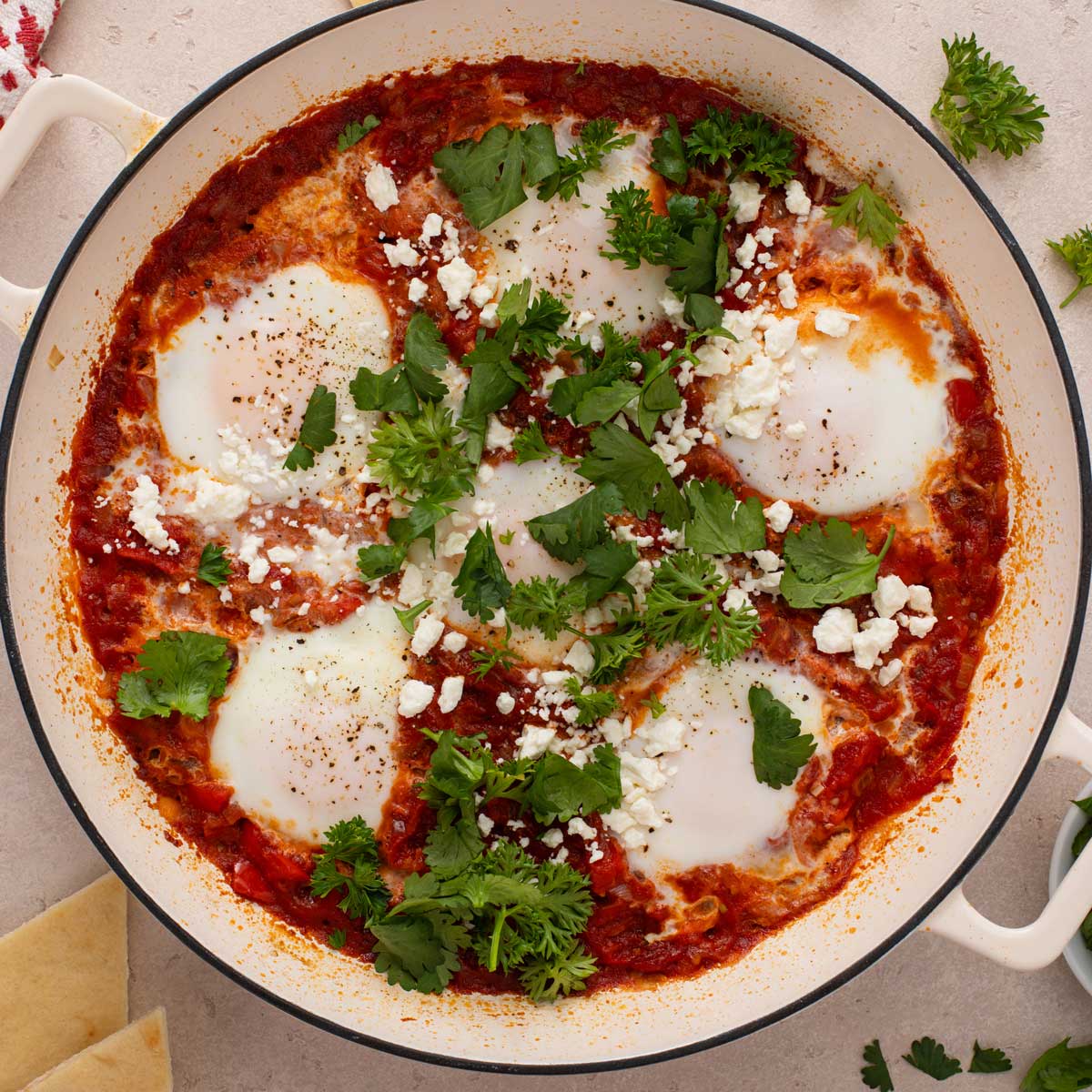

Widely enjoyed across North Africa and the Middle East, shakshuka is often served for breakfast or brunch but works just as beautifully for lunch or dinner. Its combination of savory tomato sauce and perfectly cooked eggs makes it both hearty and approachable, while the spices add depth without overpowering the dish.
If you’re searching for an authentic, easy shakshuka recipe that delivers big flavor with minimal effort, this version stays true to tradition while remaining flexible enough for everyday cooking. Serve it straight from the pan with crusty bread for a meal that feels timeless and deeply comforting.
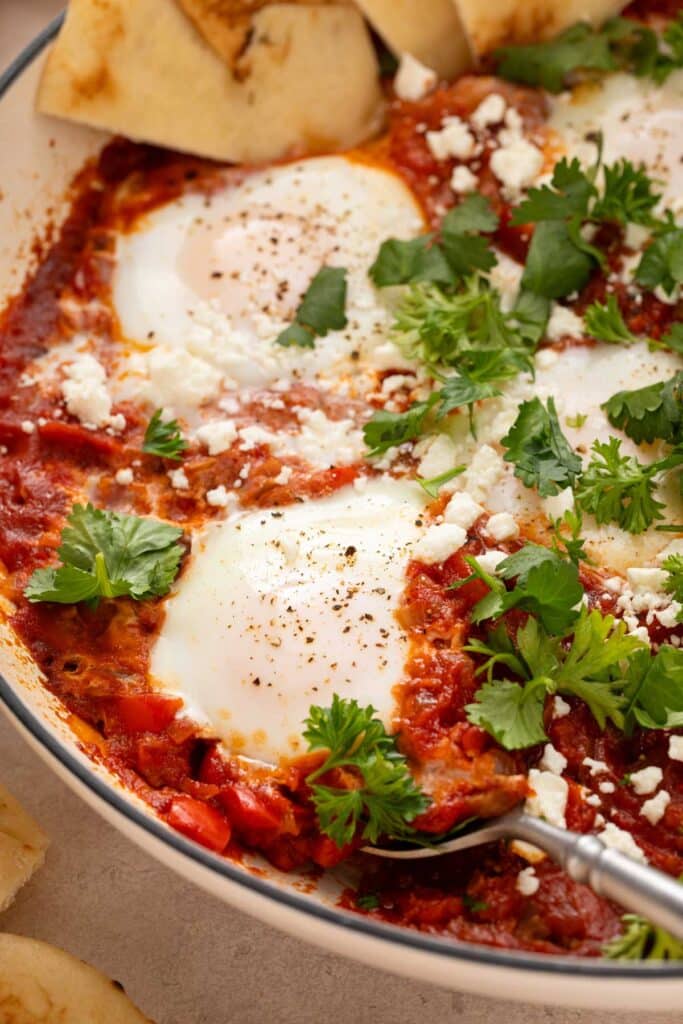
⭐️ Traditional Shakshuka: recipe at a glance
- What it is: Shakshuka (pronounced shak-SHOO-kah) is a classic North African egg dish, likely originating in Tunisia, made with eggs gently simmered in a spiced tomato sauce. Popular throughout the Middle East and the Mediterranean, it’s similar to the Italian dish Eggs in Purgatory. Shakshuka literally means ” a mixture of all” or “all shaken” in Arabic.
- One-skillet: This quick and easy meal is made in a single skillet which means, less clean up!
- Versatile: Like many beloved dishes, shakshuka comes in many variations. While this version stays close to tradition, it’s an adaptable recipe that can easily be customized to suit your taste.
- Dietary: Contain eggs. Vegetarian, gluten-free, grain-free, nut-free, dairy-free and low-carb.
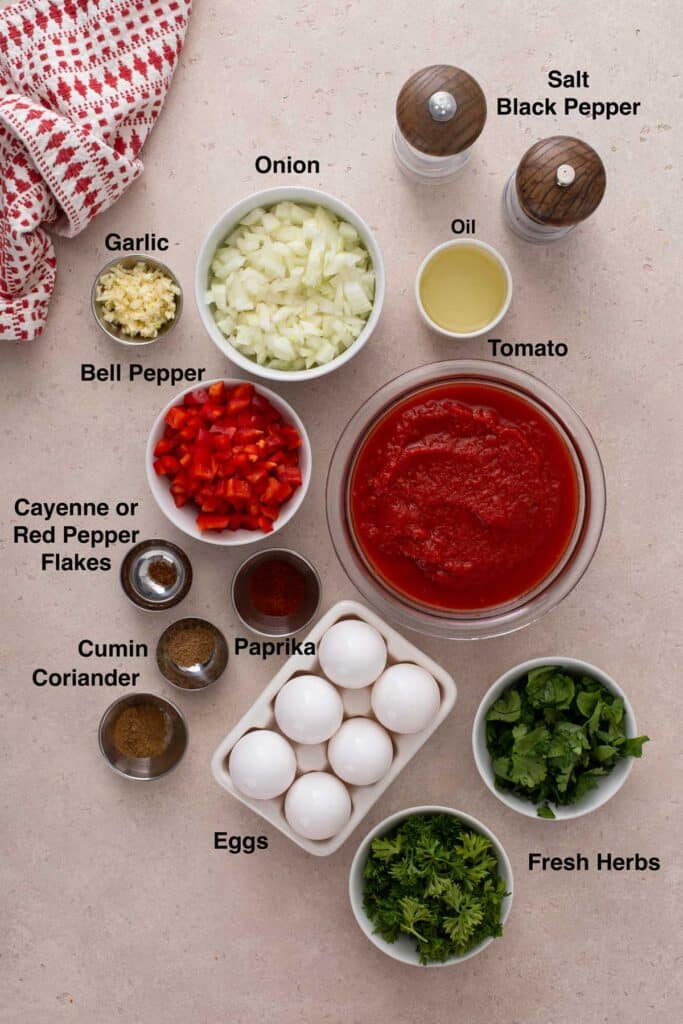
✔️ Ingredients, Substitutions and Swaps
- Oil: I use good-quality extra virgin olive oil. Other options are avocado oil or any neutral oil.
- Onion and bell pepper: The aromatic base of traditional shakshuka. Red bell peppers are the most common but you can use orange and yellow bell peppers as well. If you like a dish that is a bit spiy, feel free to add a serrano or jalapeños pepper.
- Garlic: Fresh garlic is essential here. In a pinch, use garlic paste.
- Spices: Paprika and cumin form the backbone of this North African egg dish, while coriander adds warmth and citrusy notes. Smoked paprika can be used as well. Some versions use spices like turmeric, caraway seeds and/or saffron. For spiciness, cayenne pepper or red pepper flakes can be added.
- Eggs: The star of the dish! Although, I prefer cooking the eggs until the whites are just set – but still soft – with a luxuriously runny yolk, feel free to cook them to your like.
- Tomatoes: Canned whole peeled tomatoes, crushed by hand, are the most traditional choice for shakshuka. For convenience, I often use crushed tomatoes, which still deliver the rustic texture we’re after. I don’t recommend canned diced tomatoes, as they don’t break down well. Fresh tomatoes can be used when in season – fully ripe Roma tomatoes work best – but keep in mind that they take longer to cook down into a thick, rich sauce.
- Fresh herbs: Cilantro and parsley add brightness and freshness. Skip the cilantro if you don’t like it.
- Optional Additions/Toppings: Mix in baby spinach, artichoke hearts or chickpeas before adding the eggs. Crumbled feta cheese or goat cheese are excellent toppings.
🍳 How to Make Traditional Shakshuka?
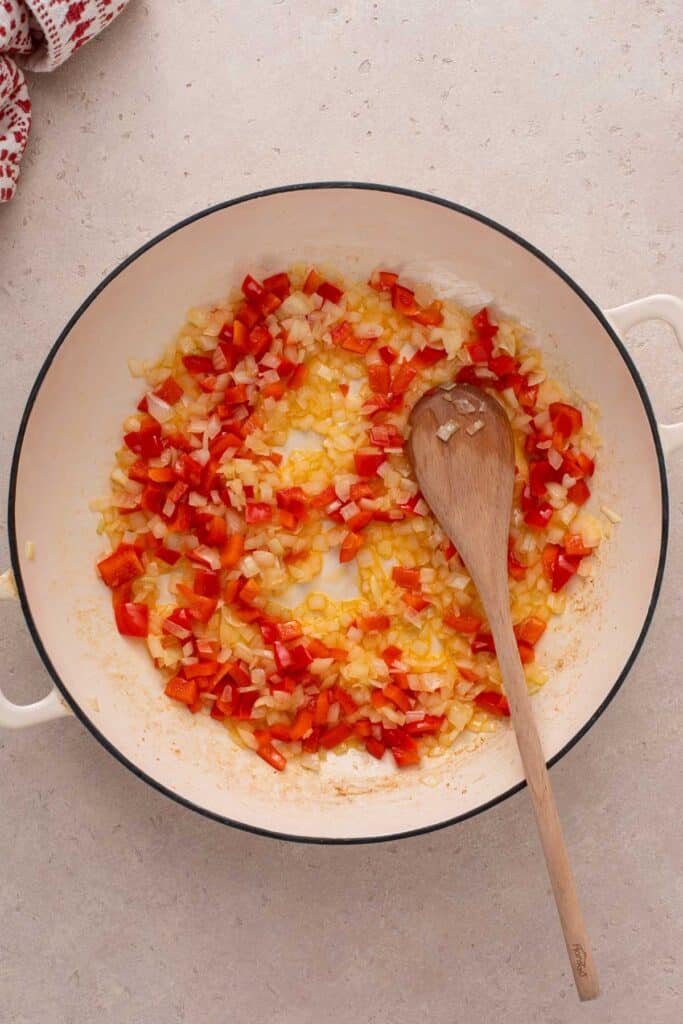
- Sauté aromatics: Heat the olive oil in a large skillet. Add the onion and bell pepper and cook until softened, about 4-5 minutes.
- Add Seasonings: Stir in the garlic, paprika, cumin, and coriander. Cook until fragrant, about 1 minute.
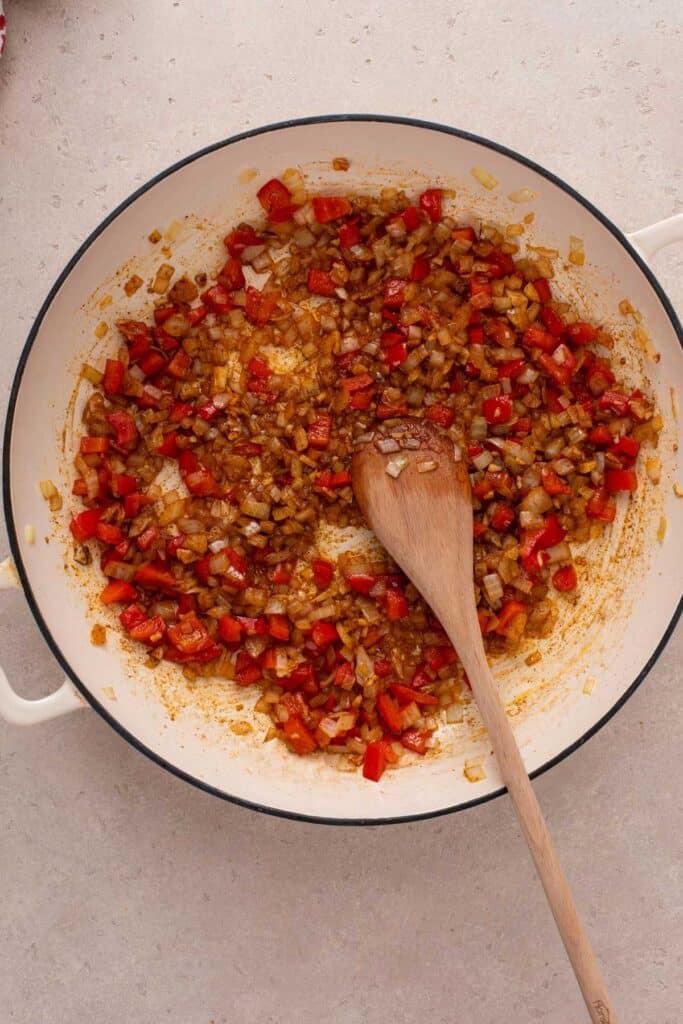
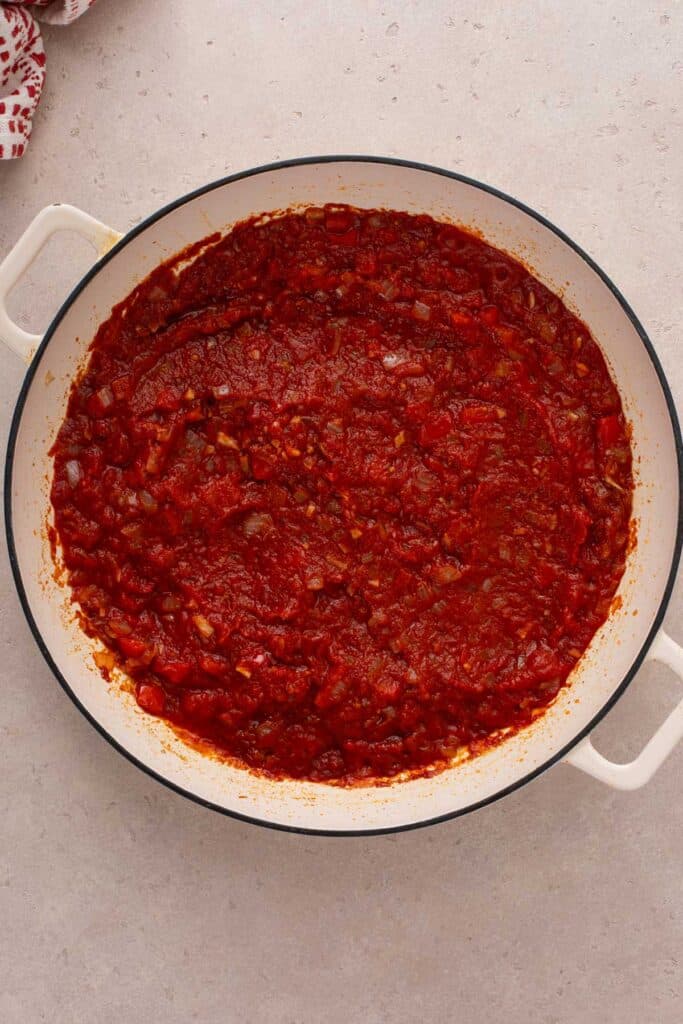
- Add tomatoes: Add the tomatoes with their juices, stirring to combine. If using whole tomatoes, crushed them with your hands before adding them into the pan. Season with salt, black pepper, and a pinch of cayenne or red pepper flakes, if using.
- Simmer: Bring the sauce to a simmer, then lower the heat and cook until slightly thickened, about 10 minutes.
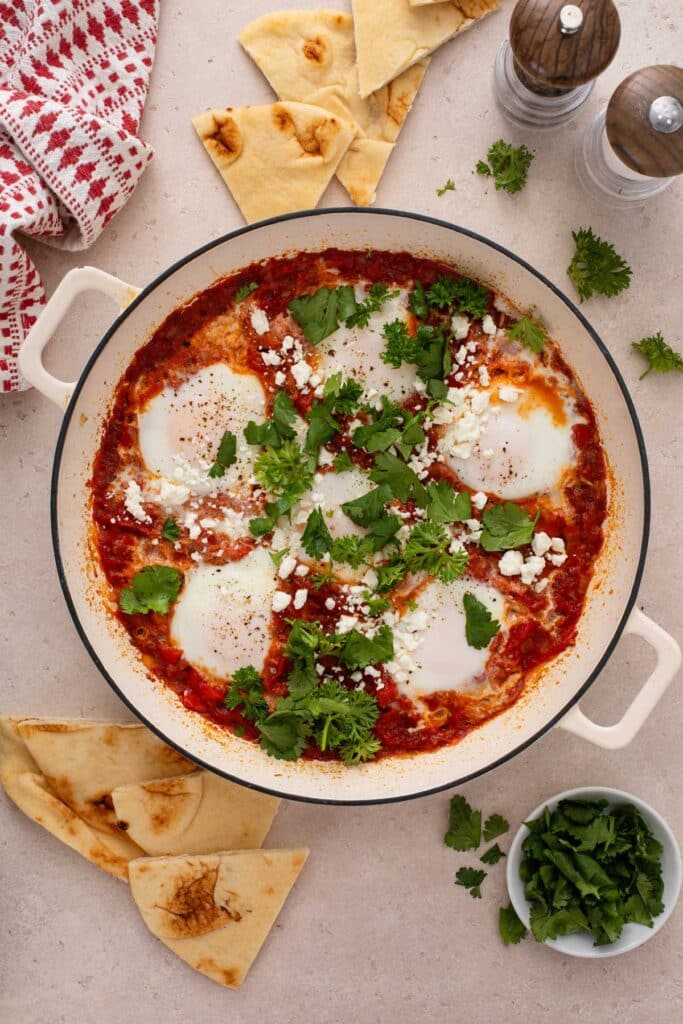
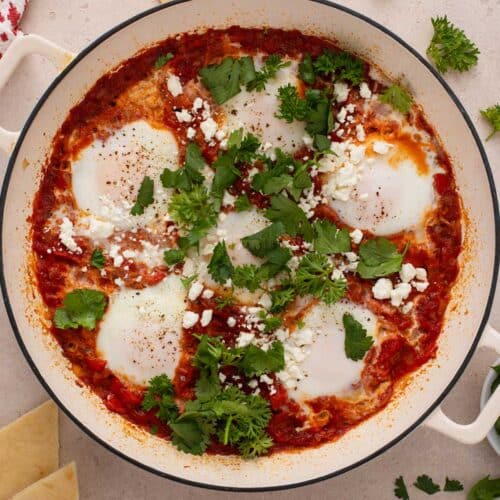
- Add eggs: Use a spoon to make small wells in the sauce. Crack one egg into each well, spacing them evenly.
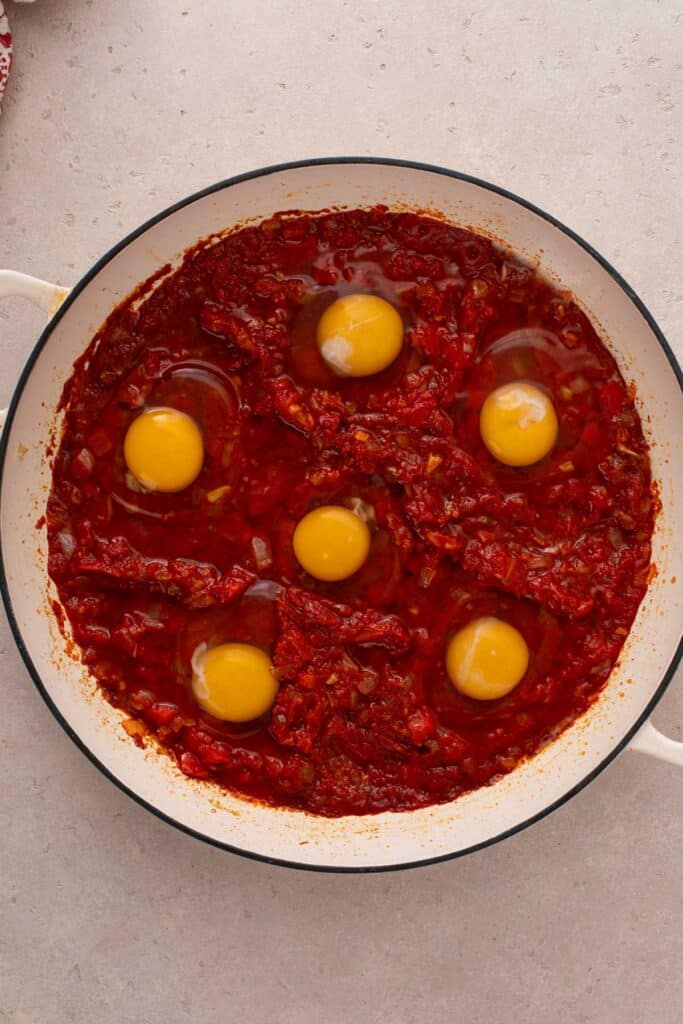
- Spoon a little sauce over the egg whites, leaving the yolks exposed. Season the eggs lightly with salt and pepper.
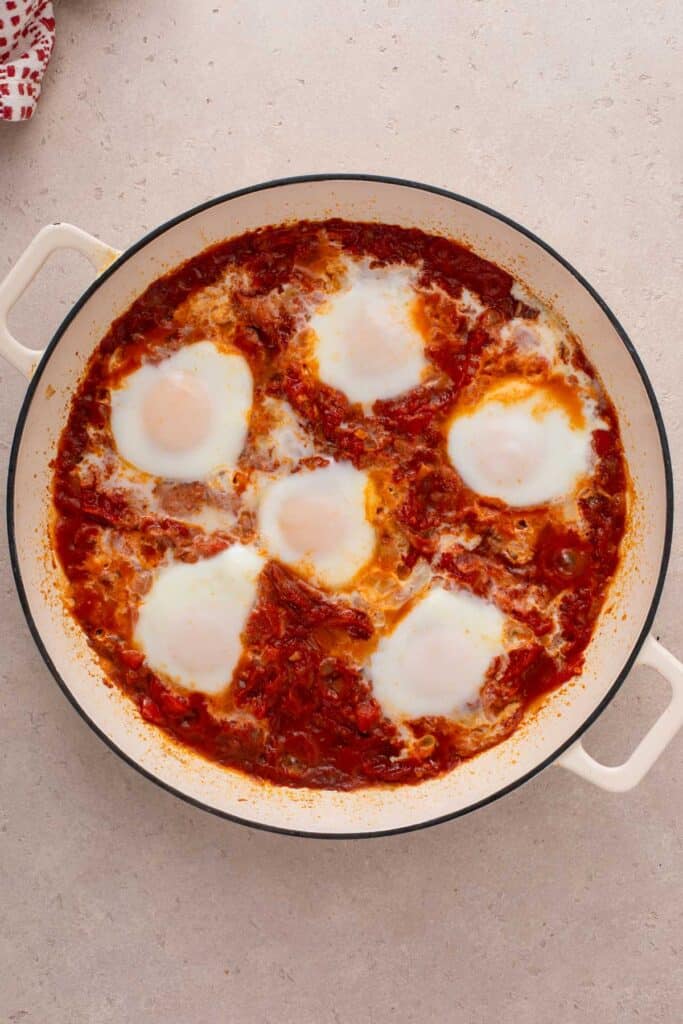
- Cover the skillet and cook until the egg whites are just set, about 5 minutes (or to your liking).
- Remove from heat, sprinkle with cilantro and parsley, add any optional toppings, and serve immediately with pita bread (traditional), crusty bread or toasts.
🔪 Recipe Tips: Prep & Adjustments
- Simmering the sauce before adding the eggs concentrates flavor and creates a luscious sauce.
- Covering the skillet gently steams the eggs so the whites set without overcooking the yolks. If you prefer bright, yellow yolks, skip covering the skillet, however, this could result in uneven cooking, meaning the whites on top may not set fully.
- Using crushed tomatoes saves a bit of time and creates a rustic, smoother sauce while hand-crushed whole tomatoes give a more rustic texture.
- Choosing canned tomatoes over fresh tomatoes cuts the simmering time. Fresh tomatoes have more liquid, which must evaporate if you want to create a flavorful, rich, luxury sauce (just like when making marinara with garden fresh tomatoes).
🤔 Frequently Asked Questions
Is shakshuka spicy?
Traditionally, it’s mildly spiced rather than hot. You can adjust heat with cayenne pepper, red pepper flakes, or harissa.
Can I make shakshuka ahead of time?
You can make the tomato sauce ahead, but add the eggs just before serving for best texture
Can I make shakshuka with fresh tomatoes?
Yes, you can but I would suggest you peel the tomatoes first. Also keep in mind that because of its high moisture content, you will need to cook the sauce longer. Depending on size, you will need about 8-10 tomatoes. Roma tomatoes are a good option.
How do I prevent runny whites?
By cooking the eggs covered, with a lid, you prevent runny egg whites.
Can I use a cast iron skillet to make shakshuka?
I don’t recommend it. Tomatoes are acidic and can erode the seasoning of your skillet while adding a bit of a metallic taste to the dish. You can use an enameled cast iron skillet without a problem.
🔎 What to serve with Shakshuka?
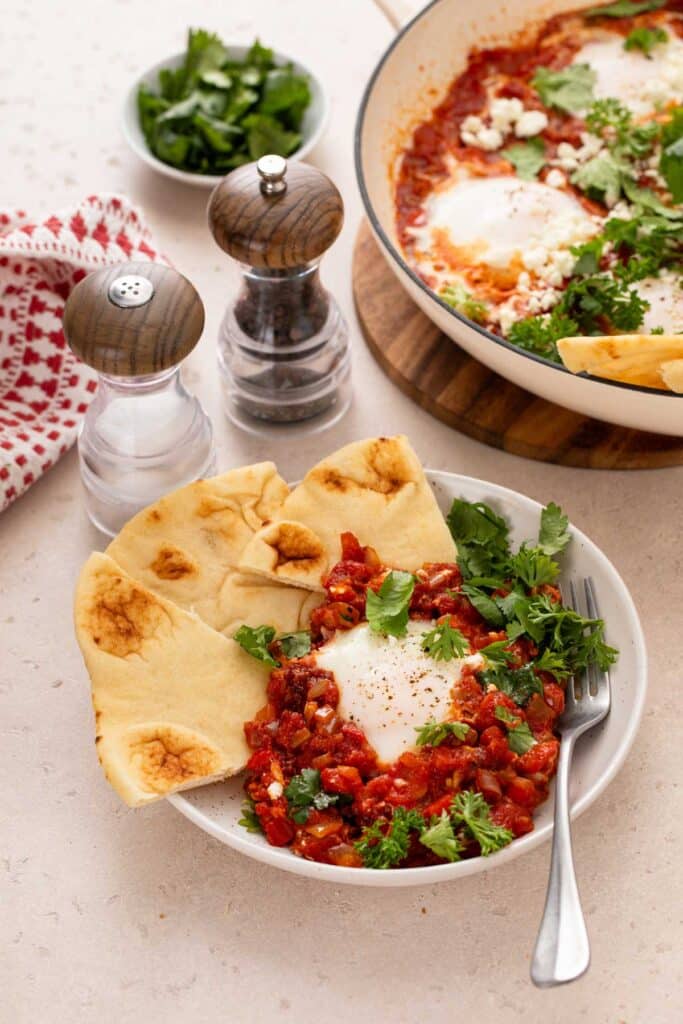
Traditionally, this egg dish is served with pita bread. Crusty bread, flatbread, challah, naan, or even these breakfast potatoes work beautifully. For lunch or dinner, serve it with a lentil salad. For a Mediterranean feast, serve it with falafel, hummus and babaganush.
✔️ Make Ahead, Storage, Freezing and Reheating
- Make-ahead: Prepare the sauce up to 2 days in advance and refrigerate in an airtight container.
- Storage: Store leftovers in an airtight container for up to 2 days.
- Freezing: Freeze the sauce only (without eggs) for up to 2 months.
- Reheating: Warm gently on the stovetop, adding a bit of water to the sauce if needed.
💛 Conscious Bites
Your priorities, your recipe. Learn about Intentional Cooking.

When possible, choose organic, free-range eggs for shakshuka. Eggs from hens raised with access to the outdoors and better living conditions often have richer yolks and reflect a more humane approach to food production – a small choice that supports animal welfare and quality.

Shakshuka is a beautiful reminder that nourishing meals don’t have to be expensive. Made with pantry staples like tomatoes, onions, eggs, and spices, it’s an affordable dish that delivers big flavor while being gentle on your grocery budget.

Rooted in North African and Middle Eastern kitchens, shakshuka reflects a tradition of cooking simple ingredients slowly and with care. Dishes like this are meant to be shared, eaten straight from the pan, and enjoyed as part of everyday life – honoring food as both nourishment and connection.
🤔 Take a look at these other breakfast recipes:




🛒 Essentials you’ll adore for this recipe
-

All-Clad 12-inch Skillet with Lid
This frying pan combines the convenience of three-layers of nonstick coating (which won’t peel off), with the durability of hard anodized aluminum. Easy to clean, oven-safe, dishwasher-safe and lids that don’t get hot!
-

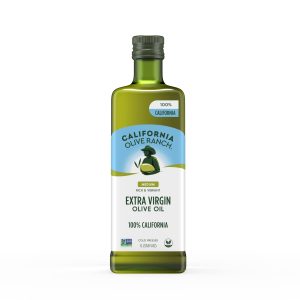
Extra Virgin Olive Oil
I may be a little biased since I’ve spent most of my life in sunny California – but this extra virgin olive oil from California Olive Ranch truly stands out. Made from 100% California-grown olives, it offers fresh, balanced flavor and is cold-pressed, certified extra virgin, and produced with a commitment to regenerative farming practices.…

Traditional Shakshuka

Equipment
Ingredients
- 2-3 tablespoons extra-virgin olive oil
- 1 medium onion, diced
- 1 medium red bell pepper, seeded and diced
- 4 garlic cloves, finely chopped
- 1 teaspoon paprika
- 1 teaspoon ground cumin
- ½ teaspoon ground coriander
- 1 (28-ounce) can crushed tomatoes, or whole peeled tomatoes (see notes)
- Salt and ground black pepper to taste
- Pinch of cayenne pepper or red pepper flakes, or to taste (optional, see notes)
- 6 large eggs
- large handful chopped cilantro
- large handful chopped parsley
- Toppings, optional:
Optional Toppings
- Crumbled feta cheese, goat cheese, sliced avocado, pitted olives
For Serving (optional)
- Pita bread, flatbread, crusty bread, challah, breakfast potatoes
Instructions
- In a large lidded skillet or sauté pan (12-inch or larger), heat the oil over medium heat. Add the onion and bell pepper and cook until the onions become translucent, about 4 to 5 minutes. Stir in the garlic, paprika, ground cumin, ground coriander, and cook until aromatic, about a minute.
- Add the crushed tomatoes with their juices and stir to combine or, if using canned, whole peeled tomatoes, crush them with your hands into a bowl, before adding them to the skillet. You could add the tomatoes whole directly into the skillet and then crush them with a wooden spoon but this may take some elbow grease.
- Season with salt and pepper and a pinch of cayenne or red pepper flakes (optional), and bring to a simmer. Lower the heat and cook until the sauce reduces and thickens, about 10 minutes.
- Using a large spoon, make small indentations or wells in the sauce and crack and egg into each indentation or well. Make sure the wells are a bit spaced out to accommodate each egg. Pour a bit of the sauce over the egg whites, leaving the yolks exposed. Season with salt and pepper to taste. Cover the skillet with a lid and cook until the egg whites are just set, about 5 minutes or to your liking.
- Uncover the skillet and add the chopped cilantro and parsley as well as any other optional toppings. Serve with toasted bread
Notes
- Tomatoes: Traditional shakshuka is usually made with whole peeled canned tomatoes. For convenience, I often use crushed tomatoes. Crushed tomatoes minimize the time I spend trying to break down (crush) the tomatoes with my hands or with a wooden spoon. However, the texture of crushed tomatoes is less rustic. Since the tomatoes cook down anyway, I find that using already crushed tomatoes is easier. Fresh tomatoes can be used but because of their high moisture content, you will need to simmer the sauce a bit longer.Use 8-10 fresh tomatoes. Roma tomatoes work best.
- Spices:The spices on traditional shakshuka vary greatly depending on regions and the fact that everyone will tell you their family’s recipe is the only “authentic recipe” you will ever need. Most recipes start with two basic spices: sweet paprika and ground cumin and build from there. This recipe includes ground coriander which is a typical addition.
- Skillet: I suggest a 12-inch skillet with a lid. Enameled cast iron is a great option however, I don’t recommend using regular cast iron skillets as the acidity of the tomatoes tend to corrode the cast iron seasoning and may also add a metal taste to the dish.
- Building Flavor: Simmering the sauce before adding the eggs concentrates flavor and creates a luscious sauce






Leave a Reply