
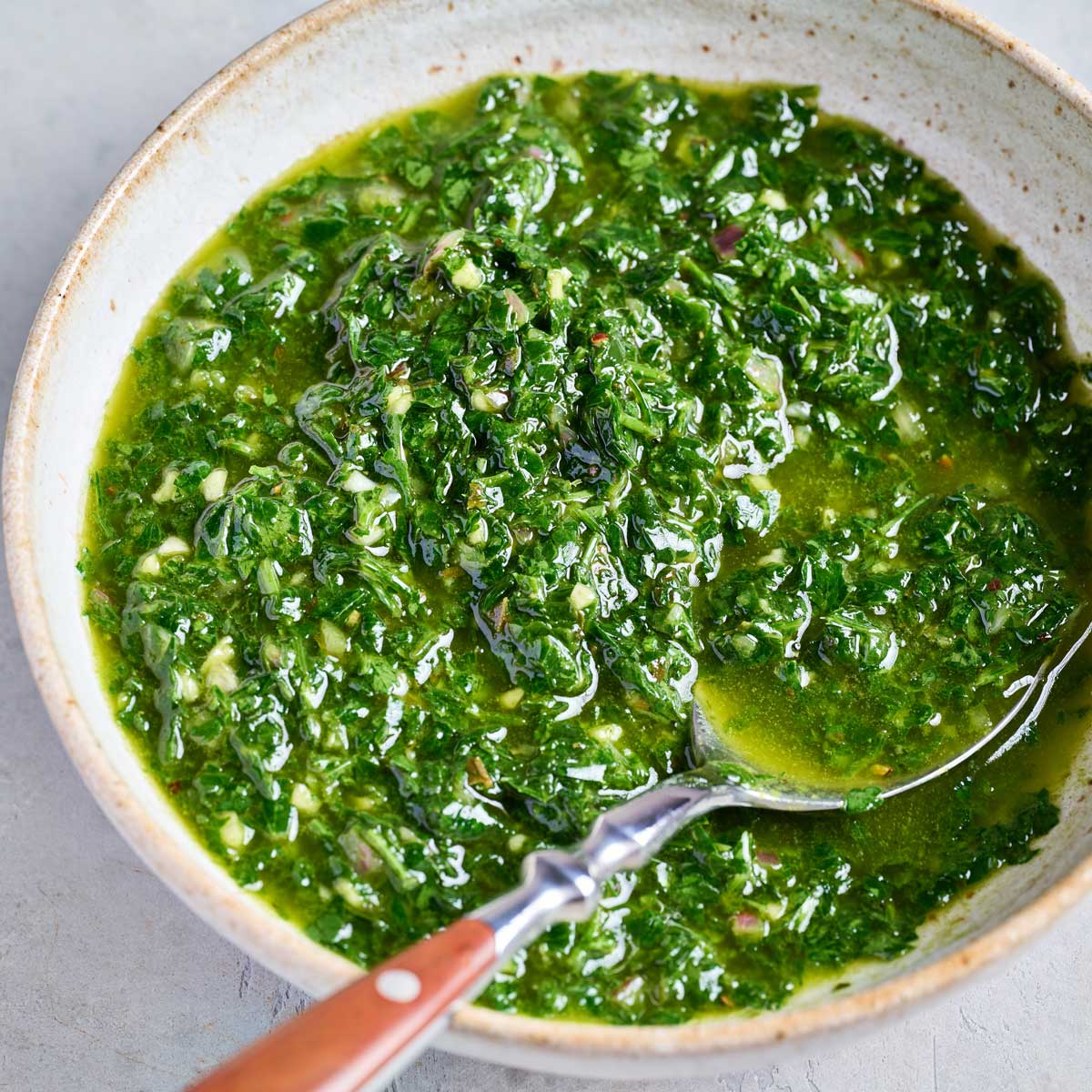
Traditionally served with grilled meats across Argentina and Uruguay, chimichurri has become a global favorite and for good reason. It’s incredibly easy to make, uses simple ingredients, and adds freshness and balance to rich foods.
In this recipe, I’ll show you how to make authentic chimichurri using a food processor for speed (with a hand-chopped option too), so you get vibrant flavor every time.
⭐️ Chimichurri: recipe at a glance
- Big, bold flavor: Fresh herbs, garlic, acid, and olive oil create a balanced, punchy sauce
- No cooking required: Just prep, mix and allow it to rest for about 20 minutes for flavors to meld.
- Versatile: Chimichurri is a tasty condiment perfect for steak, chicken, seafood, vegetables, and grains.
- Budget-friendly: Made with simple, affordable ingredients.
- Make-ahead friendly: Flavor improves as it rests.
- Dietary Info: Vegetarian and vegan, gluten-free, dairy-free, grain-free, nut-free. Oil-based (heart-healthy fats from olive oil)
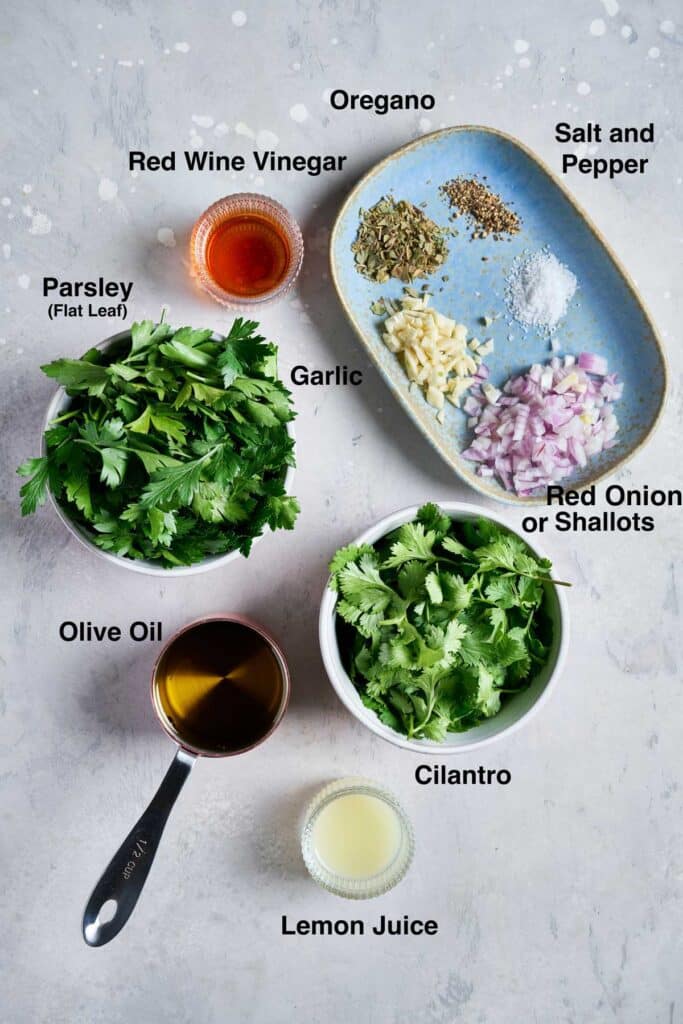
✔️ Ingredients, Substitutions and Swaps

For the complete list of ingredients and exact quantities, check the printable recipe card below.
- Parsley (flat-leaf only): The backbone of chimichurri. Flat-leaf parsley aka Italian parsley has a stronger, cleaner flavor than curly parsley, which is mostly decorative.
- Cilantro: Not always traditional, but adds brightness and depth. You can omit it and replace it with more parsley.
- Garlic: Fresh garlic is essential. It provides sharpness and complexity. This is not the place for garlic powder or even garlic paste.
- Red onion or shallots: Adds subtle sweetness and bite. Although I prefer the color red onion gives to the sauce, shallots can be used as well.
- Oregano: Fresh oregano gives a more vibrant, slightly floral note, but dried works beautifully and is commonly used.
- Red wine vinegar + citrus juice: The acidity is what makes chimichurri pop. The combination adds depth and brightness. I don’t recommend using balsamic vinegar, rice vinegar or apple cider vinegar.
- Olive oil: Like Ina Garten would say, use good-quality extra virgin olive oil. It’s a major flavor component, not just a filler.
- Optional: For gentle heat, add a red chile pepper, desee and finely chopped or red chili pepper flakes.
🔎 How to Make Chimichurri? (Food Processor Method)
Scroll down to the printable recipe card below for complete step by step instructions.
I’m going to be honest, I used to make chimichurri only by hand. Then, when I started catering, I started using a food processor with great results. The key for success is to pulse the fresh herbs on/off without over doing it. You want to keep some texture not to make purée!
- Add herbs and aromatics: Place parsley, cilantro, garlic, red onion, and oregano into a food processor.
- Pulse until finely chopped: Pulse a few times until everything is finely chopped-but not pureed. You want texture.
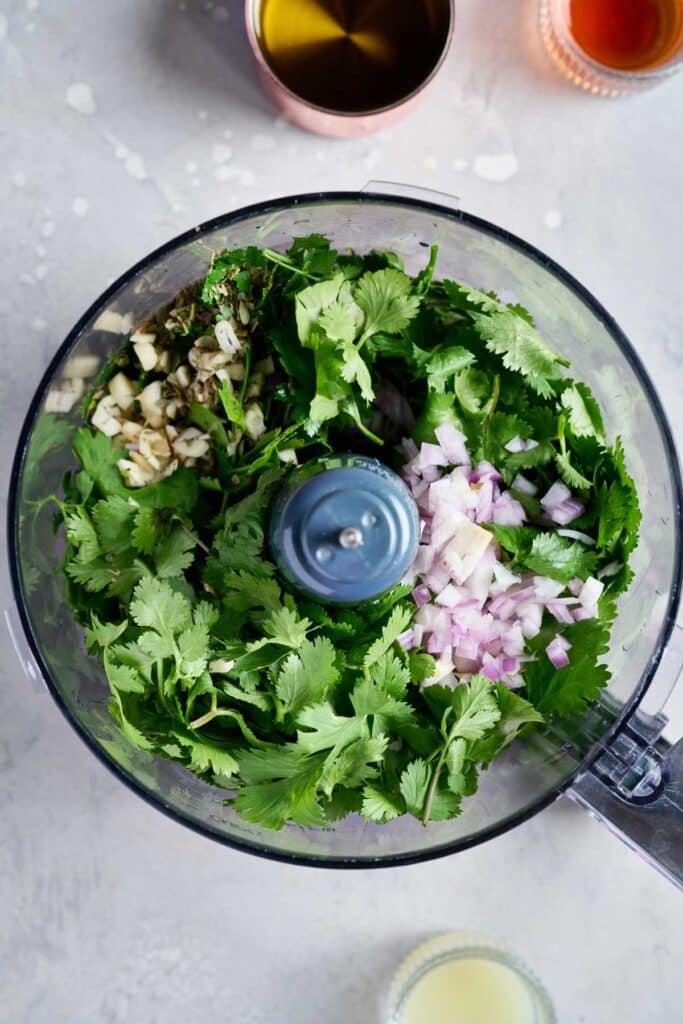
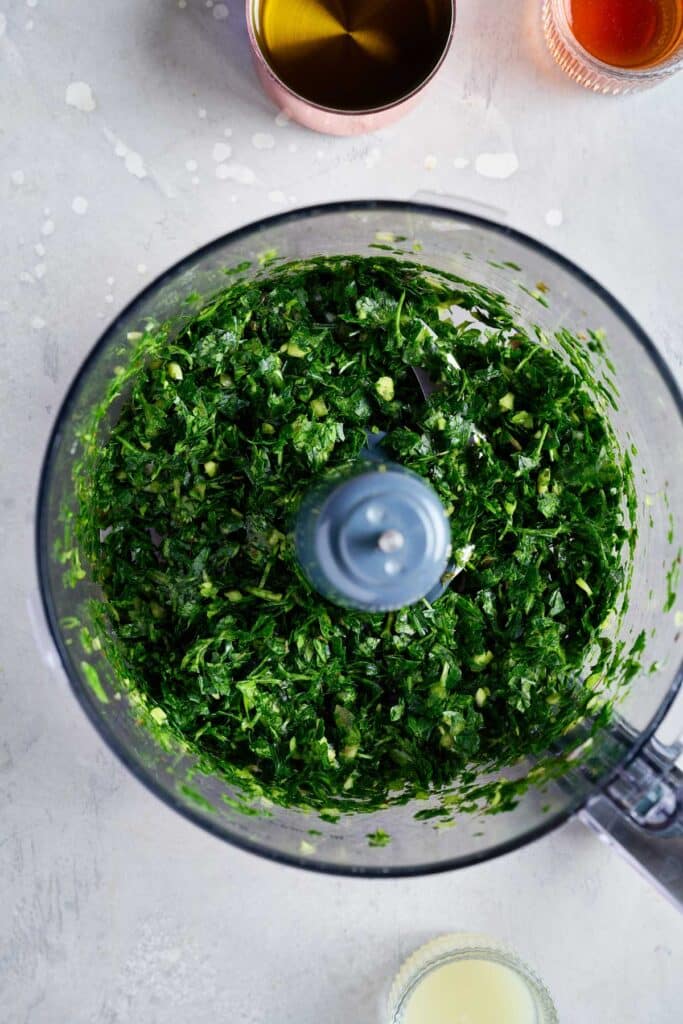
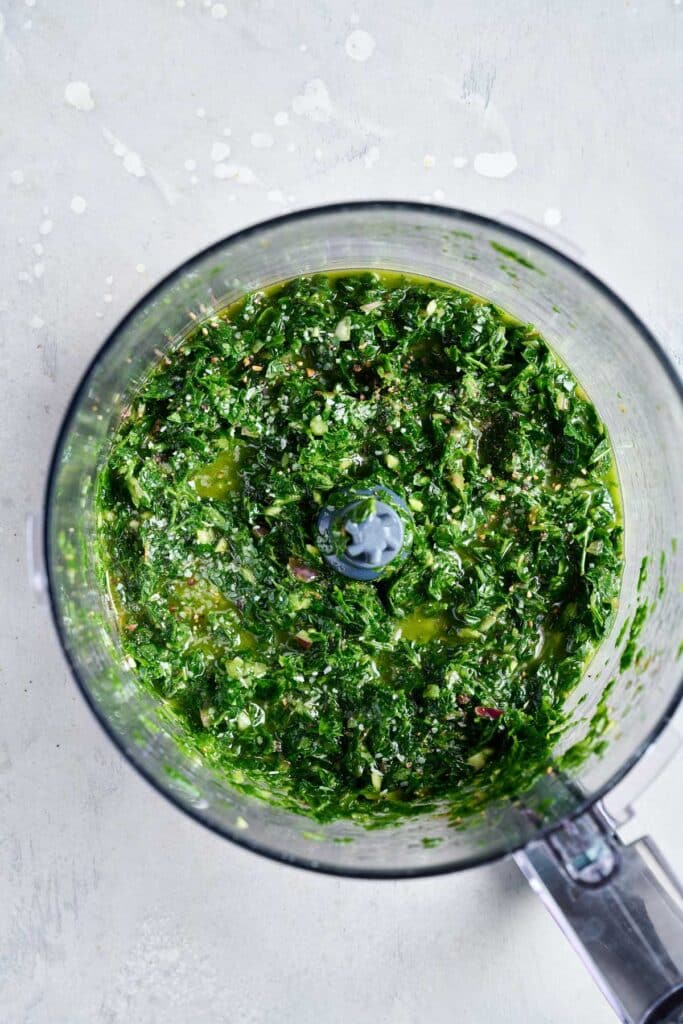
- Add liquids Pour in the red wine vinegar, citrus juice, and olive oil and pulse briefly until everything is just combined.
- Pulse to combine: Pulse briefly until everything is just combined. Scrape down the sides as needed.
- Season to taste: Add salt, pepper, and red pepper flakes (if using).
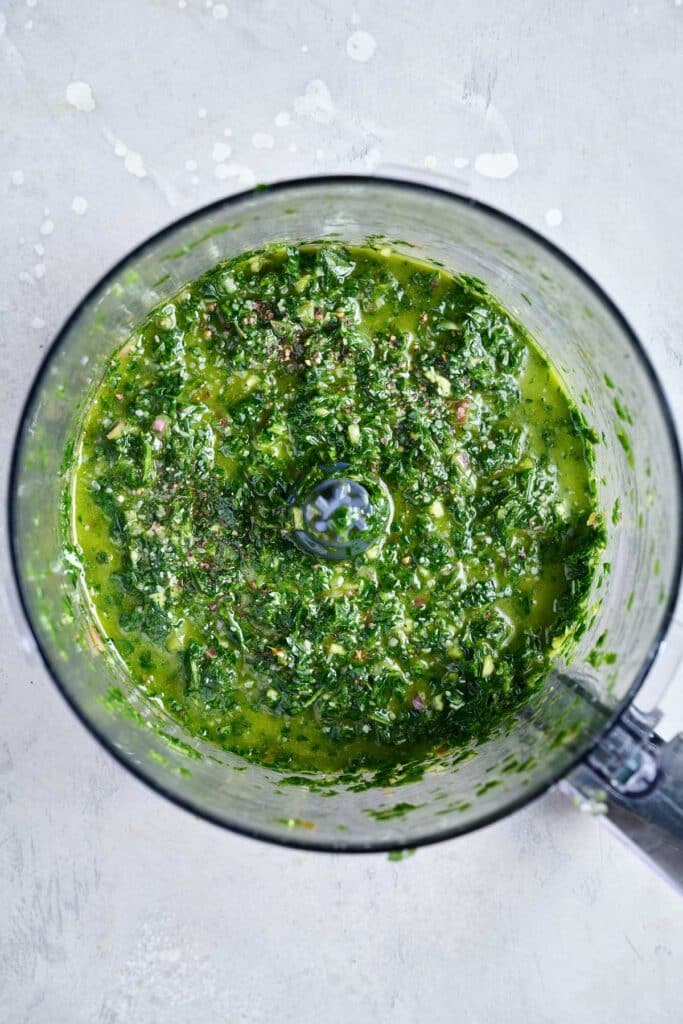
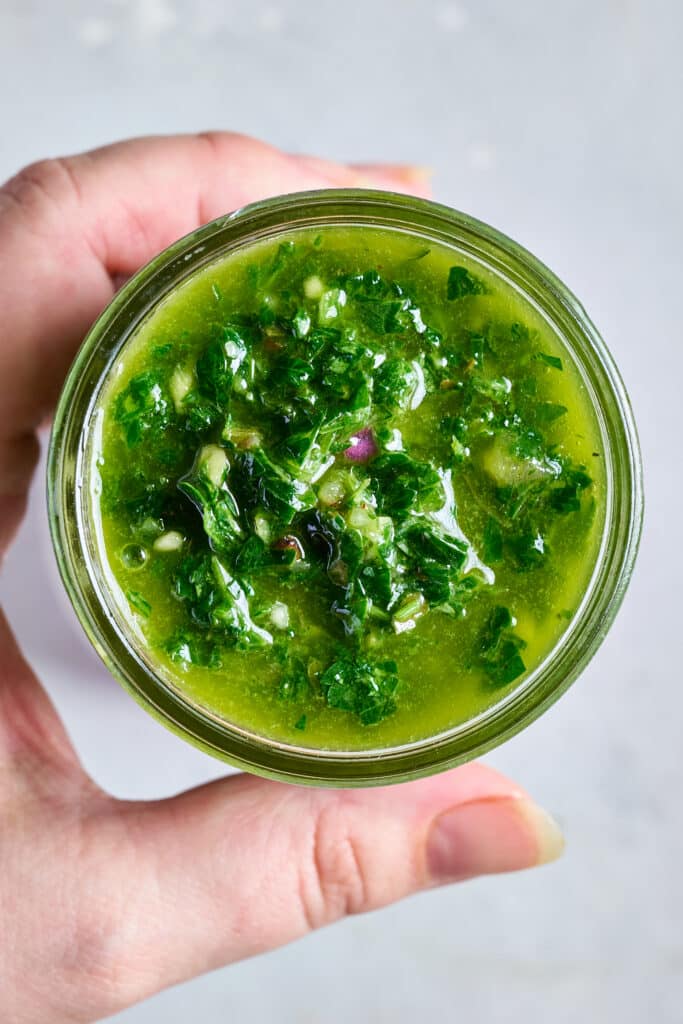
- Let it rest: Although the chimichurri is ready at this point, for best flavor, transfer to a jar and let it sit for at least 20 minutes before serving. This step is key for flavor development.
🔎 Alternate Method (By Hand)
Finely chop all ingredients, then stir together with liquids and season. This method gives slightly more texture and a more traditional feel.
💡 Recipe Tips: Prep & Adjustments
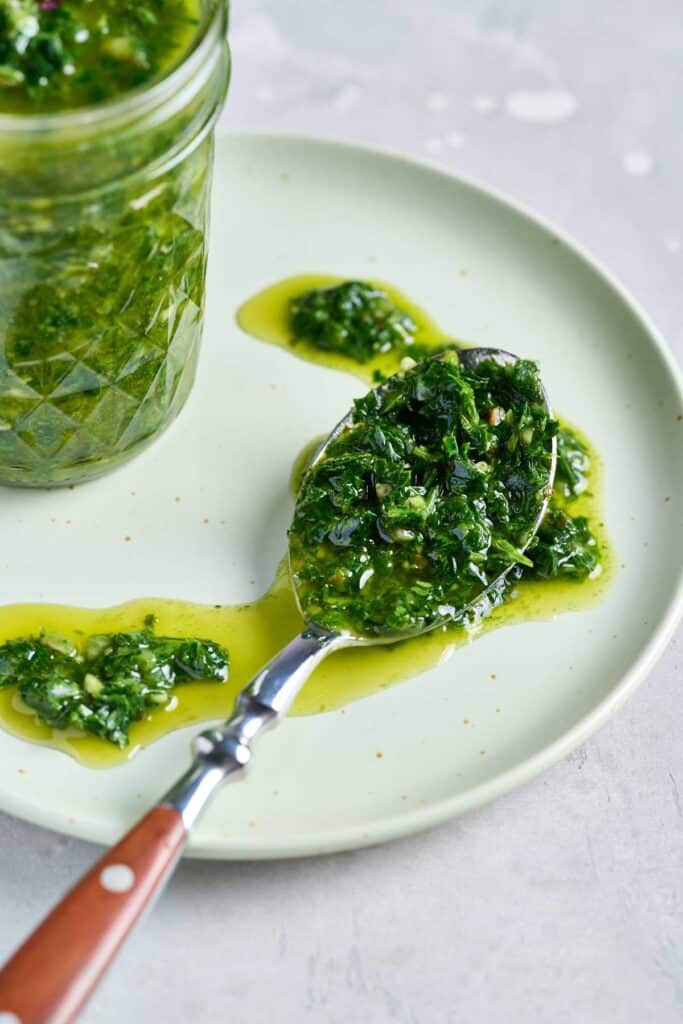
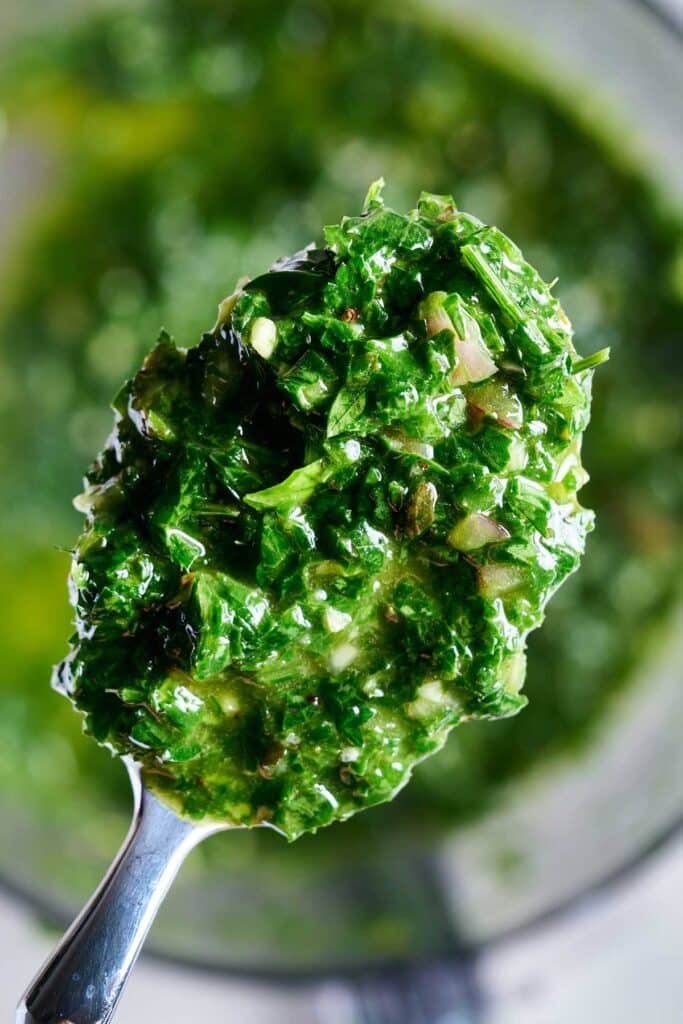
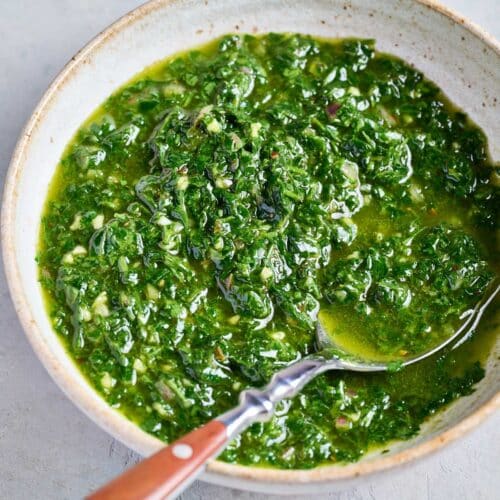
- Texture: Don’t over-process the chimichurri. You want a loose, spoonable texture, not a pure. We have a close up photo below to help you see how authentix chimichurri looks like.
- Resting time matters: Let it rest at least 20 minutes before serving. Letting chimichurri sit allows the garlic and onion to mellow and the flavors to meld into a cohesive sauce.
- Taste and adjust: This sauce should be bright and lively, add additional vinegar and salt if needed. If its too thick, add additional olive oil.
🤔 Frequently Asked Questions
What is Chimichurri?
Chimichurri is an uncooked herb sauce from Argentina and Uruguay made with parsley, garlic, vinegar, and olive oil. This condiment is commonly spooned over grilled meats. Oftentimes it is also used to brush and baste meats while they cook and even as a marinade.
Is traditional chimichurri spicy?
Not traditionally. It can include red pepper flakes for mild heat, but it’s usually more tangy and herb-forward than spicy.
Can I make chimichurri without cilantro?
Yes. Some versions are made only with parsley.
How long does chimichurri last?
3-4 days, stored in a resealable container or jar in the refrigerator. The flavor gets better over time.
🔎 Chimichurri vs Pesto vs Salsa Verde
Chimichurri is often compared to pesto and salsa verde because all three are herb-based sauces—but they have very different flavors, ingredients, and uses. Here’s a quick breakdown to help you choose the right one.
- Chimichurri: Parsley-based, garlicky, tangy (Argentina/Uruguay), no nuts or cheese.
- Pesto: Basil-based, rich and creamy with nuts and cheese (Italy).
- Salsa Verde: Herb sauce (varies by region), often includes capers, anchovies, or tomatillos depending on the cuisine.
If you’re looking for something fresh, bold, and dairy-free, chimichurri is the best choice-especially for grilled meats and vegetables.
🔎 What to Serve with Chimichurri?
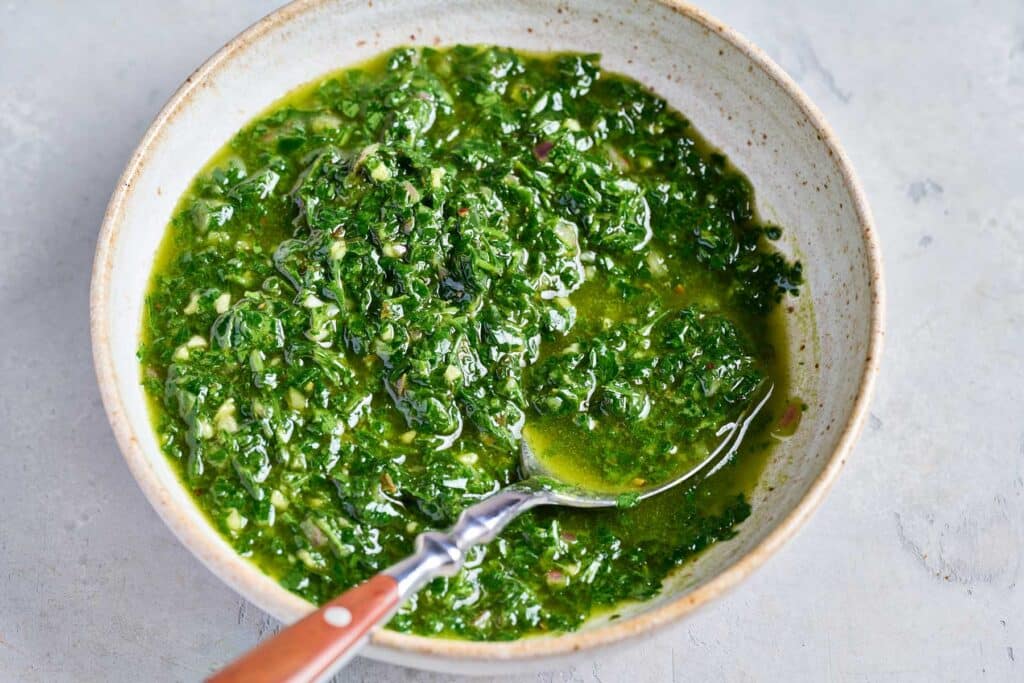
- As a condiment: Chimichurri is usually served drizzled over grilled meats (most famously over churrasco steak like in this Grilled Steak with Chimichurri Sauce, and is also delicious over grilleed pork chops or grilled chicken, grilled veggies, sausages, and even over crispy tofu.
- As a marinade: It adds such bold and herbaceous flavor to shrimp, fish, chicken, pork and beef.
- As a spread, sauce or dressing: Add it to sandwiches (like in the famous Argentinian Choripan), use it as a marinade and sauce for cooked shrimp or chicken and add a bit to your salads and protein or veggie bowls.
✔️ Make Ahead, Storing and Serving
- Make ahead: Best after resting at least 20 minutes or up to 4 hours.
- Storage: Refrigerate in an airtight container for up to 3-4 days.
- Before serving: Let it come to room temperature and stir.
💛 Conscious Bites
Your priorities, your recipe. Learn about Intentional Cooking.

Community, Tradition and Culture: Chimichurri is deeply rooted in Argentinian and Uruguayan grilling culture, where food is meant to be shared. Perfect for gathering around the table and connecting over a meal.

Finances: This simple, vibrant sauce turns inexpensive, everyday ingredients into something truly special and memorable.

Time: I love a versatile, no-cook recipe that adds flavor and a restaurant-style vibe to easy meals. This popular condiment pairs well with so many dishes. From humble roasted veggies to a steakhouse-style steak.
👀 Take a look at these other easy recipes?





🛒 Essentials you’ll adore for this recipe
-

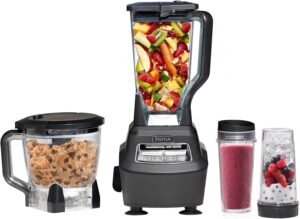
Ninja Blender with Food Processor and To-Go Cups
This is the high-power blender I’ve used at home for years. It crushes ice and frozen fruits effortlessly, blends smoothies silky-smooth, and cleans up easily. The food processor cup and two to-go cups make it practical for everyday life. Excellent performance, solid quality, and a price that won’t scare you off.
-

Shun Classic Chef’s Knife 10-inch
Investing in a good chef’s knife is one of the smartest upgrades you can make in the kitchen. It makes prep quicker, safer, and a whole lot less frustrating. Once you cook with a sharp, well-balanced knife, you’ll wonder how you ever managed without it.
-

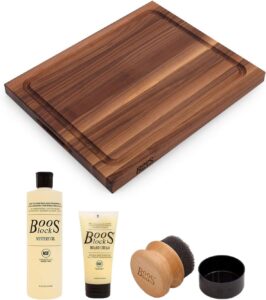
John Boos Rectangular Cutting Board
This 17×21 Walnut 1.5 inch thick cutting board beauty is definitely an investment worth making. With proper care this board will last a lifetime!

Chimichurri Sauce

Equipment
Ingredients
- 1 bunch Italian flat leaf parsley or 1 cup tightly packed, see notes
- ½ bunch cilantro or ½ cup tightly packed, see notes
- 3 garlic cloves, peeled, roughly chopped or minced if making chimichurri by hand (Method 1)
- 2 tablespoons red onion, diced or minced if making chimichurri by hand (Method 1)
- 1 tablespoon fresh oregano, see notes or 1 teaspoon dried oregano
- 2 tablespoons red wine vinegar
- 1/2 lemon or lime, juiced
- 1/2 cup olive oil, plus more if needed
- Salt and black pepper to taste
Optional
- 1-2 red chiles, seeded and finely chopped or dried red chili flakes
Instructions
Method 1: By hand
- Finely chop the flat leaf parsley and the cilantro and place them in a bowl.
- Mince the garlic and the red onion and add them to the finely chopped parsley and cilantro. Add the dried oregano (if using fresh oregano, finely chop before adding it to the parsley-cilantro mixture. Stir in the vinegar, lemon juice, olive oil and red pepper flakes if using). Season to taste with salt and pepper and add red pepper flakes if using. Place in a jar or in a sealed container, and allow it to rest for 20 minutes before serving so the flavors meld together. Refrigerate for up to 3 days.
Method 2: Food Processor
- Place the parsley, cilantro, garlic, red onion and oregano in a food processor and pulse until the ingredients are finely chopped (just a few times will do). Add the vinegar, lemon juice and the olive oil and pulse until combined, scraping down the sides with a spatula as needed. Season to taste with salt and pepper and add red pepper flakes if using. Place in a jar or in a sealed container, and allow it to rest for 20 minutes before serving so the flavors meld together. Refrigerate for up to 3 days.
Notes
- Food processor method vs by hand method 2: For both methods, you must finely chop (for food processor method) or mince (by hand method) the onion and garlic.
- Parsley: Use flat-leaf parsley aka Italian parsley. The curly variety doesn’t have a lot of flavor and is best used as a garnish. A lot of traditional recipes only use parsley (and not cilantro). I personally love the combination of both especially when the main ingredient is parsley. You can swap the cilantro for additional parsley.
- For best flavor: Allow the sauce to rest for 20 minutes before serving.
- Serving and storing: Although chimichurri taste best when eaten the same day as made, it will last in the fridge, in a resealable container for 3-4 days. Serve at room temp.








Leave a Reply