


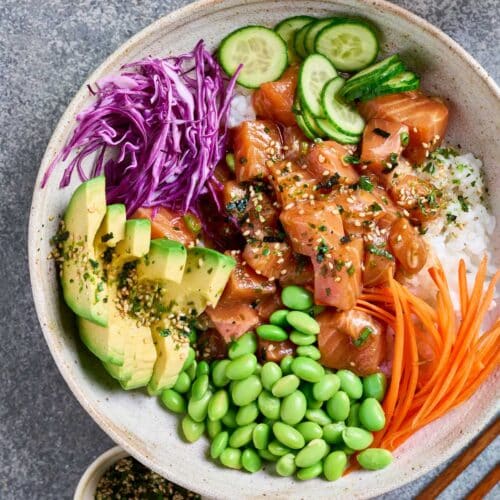
Salmon Poke Bowls bring together everything you’d ever want in a single meal. You get tender cubes of raw salmon marinated in a savory-sweet sauce, warm rice, and fresh, crunchy vegetables all layered into a colorful bowl. Inspired by Hawaiian poke influenced by Japanese flavors, this dish is all about balance. The rich, sushi-grade salmon pairs well with the bright tang of rice vinegar, the heat of sriracha, and the creaminess of avocado to give you a meal that’s light, satisfying, and full of flavor.

Easy Poke Bowl
The best thing about making Salmon Poke is the simplicity of the process. You only need to marinade the salmon for a short time to absorb the flavors of the marinade – and from there, it’s all about how you assemble your bowl. The toppings can be tailored to your taste (or what’s available in your pantry) – edamame, cucumbers, shredded cabbage, jalapeños, or even a drizzle of spicy sriracha mayo.


Salmon Poke Bowls: Recipe at a Glance
- Quick: Poke bowls come together in about 30 minutes!
- Easy: Poke bowls are the perfect meal for when you’re craving something fresh, satisfying and nourishing, or when you’re throwing together a last minute dinner get-together and you’re left with no time to prep!
- Why you’ll love it: restaurant-style flavors, customizable toppings, and easy prep with minimal cooking. As an added bonus, it’s cheaper than going out for sushi!

Ingredients, Substitutions and Swaps

Be sure to check the printable recipe card below for the complete ingredient list and their exact quantities.
- Salmon: Ask your fishmonger for sashimi-grade or sushi-grade salmon as you will be eating the fish raw. If fresh is not available, previously frozen sushi-grade salmon works well. Wild Alaskan salmon is my go-to as it has nice flavor and is tender in texture. You can also make Ahi Tuna Poke Bowls if preferred!
- Soy sauce or Tamari: I use regular soy sauce. Tamari keeps Salmon Poke Bowls gluten-free while adding a smooth salty note. Coconut aminos can also be used.
- Toasted Sesame Oil: This adds a nutty flavor that gives the marinade the characteristic smell of a poke bar right when you whisk it in.
- Rice Wine Vinegar: This adds a bright lift that prevents the sauce from feeling flat. It’s what gives homemade poke its lively taste. If you like tang, this is the ingredient to leverage! If you don’t have rice vinegar, mirin or white wine vinegar can be used.

- Sriracha: Adds heat plus a little tang. Start with a small amount; you can always add more at the table or mix it with mayo for a creamy, spicy touch.
- Rice: Sushi rice provides that classic, slightly sticky base. However, you can also use short-grain white, Japanese rice, or brown rice.
- Fresh Veggies: Edamame (for protein), Seedless English cucumbers (crisp and fresh), ripe avocado (for creaminess), shredded cabbage or carrots (for color and crunch), and jalapeños (for bright heat). Other types of cucumber can be used also.
- Toppings: Furikake or toasted sesame seeds. Sriracha mayo is optional but adds a delicious taste for those who like a creamy finish.


How to Make a Salmon Poke Bowl?
Be sure to check the printable recipe card below for exact cooking directions and timings.
Making Salmon Poke Bowls at home is easier than it looks, and most of the work is just assembling your ingredients.
- Make the sauce: In a small bowl, stir together soy sauce (or tamari), rice vinegar, sesame oil, sriracha, ginger, and a little honey or maple syrup if you like. This becomes your flavor-packed marinade.
- Marinate the salmon: Toss the sushi-grade salmon cubes and green onions with most of the sauce. Let it sit for about 10 minutes so the flavors soak in while you prepare the rest of your bowl.


- Prepare the base and toppings: Scoop warm rice into bowls, then set out your vegetables and garnishes. This is where you can play with flavors by using the toppings that you like – edamame, cucumbers, avocado, shredded carrots, jalapeños, you name it.
- Assemble the bowls and serve: Add the marinated salmon on top of the rice and vegetables, drizzle with the reserved sauce, and finish with sriracha mayo and furikake or sesame seeds.


Recipe Tips
- Choosing the fish: Use sushi-grade or sashimi-grade salmon to ensure the fish is safe to eat raw and has that delicate texture. If in doubt, buy previously frozen sushi-grade salmon, as it’s often safer and just as tasty. If your salmon has skin on, remove it and discard it. Check the salmon for pin bones and remove them with fishbone tweezers.
- Don’t over-marinate: Raw salmon doesn’t need hours to soak. Ten minutes is enough to bring in flavor without breaking down the delicate texture of the fish. Letting it sit too long can make the salmon soft or mushy.
- Rice matters: Sushi rice gives the bowls an authentic feel with its sticky and slightly sweet flavor. But don’t hesitate to use whatever rice you have. Brown rice adds nuttiness, regular long-grain rice (calrose) is what I always have in my pantry, while jasmine rice gives the bowl a fragrant note.
- Balance the toppings: Think about color and texture when picking your toppings. Crunchy cucumbers, creamy avocado, and tender edamame each offer something unique to the bowl.
- Optional heat: If you love spice, add thinly sliced jalapeños or a drizzle of sriracha mayo for some extra heat.
Frequently Asked Questions
Is it safe to eat raw salmon?
Yes, when you use sushi-grade or sashimi-grade salmon. These terms mean the fish has been handled and frozen in ways that minimize the risk of parasites, making it safe for raw consumption. Always buy from a trusted fishmonger or grocery store. Pregnant women and younger children should avoid eating raw fish.
Can I make poke bowls without raw fish?
Definitely. If raw fish isn’t your thing, quickly sear cubed salmon in a hot skillet, or bake it until just cooked. You can also use cooked shrimp, tofu, fresh crab, or even seared tuna. The sauce and toppings work well with these other proteins as well.
How do I know if salmon is sushi-grade?
The safest way is to ask your fishmonger directly. Sushi-grade salmon should have a label and the price should be a bit higher than regular salmon (wild or farm-raised). Another option, is to ask your local sushi restaurant if they can sell some fish to you. Oftentimes they do if you pre-order it.
What other toppings can I use for my salmon poke bowl?
Part of the fun of making poke bowls at home is the fact that they are super customizable. Ingredients like pickled ginger, seaweed salad, chopped mango, nori, sliced radishes, sliced bell peppers, fish roe, baby spinach or other mixed greens are great additions to any poke bowl.
Are poke bowls healthy?
Salmon is a great source of lean protein packed with omega-3 fatty acids and B vitamins. The veggies are healthy and if you are worry about carbs, then limit the amount of rice you add to the bowl.


Make-Ahead, Storage, and Freezing
Make Ahead: You can prepare the marinade a day in advance. You can prep your veggies a day ahead too! Keep them in separate containers, in the fridge until you’re ready to make the poke bowls.
Storage: Marinated raw salmon should be eaten the same day it’s prepared. If needed, store leftovers in an airtight container in the refrigerator for up to a day. Although safe to eat, the texture of the fish will change the longer the fish sits in the marinade/sauce.
Freezing: It’s not recommended since marinated raw salmon loses its texture once thawed.
Take a look at these other fish recipes:




Things you may need
-

Shun Classic Chef’s Knife 10-inch
-

Maple Wood Cutting Board
-

Zojirushi Rice Maker


Salmon Poke Bowl

Ingredients
For the Salmon Poke:
- ⅓ cup soy sauce, or tamari
- 1 tablespoon rice wine vinegar
- 2 teaspoons toasted sesame oil
- 2 teaspoons sriracha
- ½ teaspoon grated ginger
- 2 teaspoons honey or maple syrup, optional
- 8 ounces ½ pound sushi-grade salmon, cut into ½-inch cubes
- 1 green onion, thinly sliced
For the Bowls:
- 2 cups cooked rice, sushi rice preferred – see notes
- 1 cup steamed edamame
- 1 avocado, sliced
- 1 cucumber, sliced into half moons (or use Asian-style pickled cucumbers)
- Shredded purple cabbage, optional
- Shredded carrots, optional
- Sliced jalapenos, optional
- Furikake or sesame seeds, optional, for garnish
- Sriracha mayo, optional, for drizzling
Instructions
- Place the raw salmon cubes and sliced green onions in a medium sized bowl.
- In a small bowl, whisk together soy sauce (or tamari), rice vinegar, sesame oil, sriracha, ginger, and honey/maple syrup (if using).
- Pour about ¾ of the sauce over the salmon and gently toss to coat. Keep the remaining sauce aside for serving. Let the salmon marinate for 10 minutes at room temperature or up to 1 hour in the fridge.
- To assemble, divide the rice among the bowls. Top with the marinated salmon and your choice of vegetables. Drizzle with the reserved sauce and sriracha mayo (if using). Sprinkle with furikake or sesame seeds. And serve immediately.
Notes
- Salmon: Use sushi-grade or sashimi-grade salmon to ensure food safety. Frozen sushi-grade salmon can be used. If your fish has skin, remove it and check the salmon for pin bones – remove them with tweezers before cubing.
- Rice: Traditionally, sushi rice, a short-grain white rice known for its sticky sweet flavor, is used to make poke bowls; however any rice such as long-grain, medium or short-grain rice, Japanese rice, or brown rice can be used.
- Cucumbers: I prefer using English cucumbers as they are seedless and super crisp.
- Edamame: Aka soy beans. I usually buy them shelled and frozen. To thaw out quickly, place them in a small bowl and pour over hot boiling water. Drain and done!
- Make Ahead: You can prepare the marinade a day in advance, and the vegetables can be prepped ahead too. Keep them separate until you’re ready to assemble.
- Storage: Raw salmon poke should be eaten the same day it’s prepared. If needed, store leftovers in an airtight container in the refrigerator for up to 1 day. Freezing is not recommended.





Leave a Reply