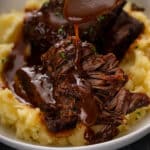

Red Wine Braised Short Ribs Recipe
Equipment
Ingredients
- 4½ to 5 pounds meaty English-cut bone-in beef short ribs, preferably 6 to 8 ribs
- 2½ teaspoons sea salt or Kosher salt, plus more as needed (see salt note)
- 1 teaspoon ground black pepper
- ¼ cup all-purpose flour, for dusting
- 2 to 3 tablespoons oil (olive oil, vegetable oil or avocado oil), divided
- 1 large onion, chopped
- 2 medium carrots, peeled and chopped
- 2 celery ribs, chopped
- 2 tablespoons tomato paste
- 4 garlic cloves, minced
- 2 cups dry red wine, such as Cabernet Sauvignon, Merlot, or a red blend
- 2½ cups beef stock, plus more if needed
- 5 sprigs fresh thyme
- 2 bay leaves
- 1 to 2 teaspoons red wine vinegar or sherry vinegar, optional
- Chopped fresh parsley, for serving, optional
Instructions
- Season the short ribs: Pat the short ribs thoroughly dry with paper towels. Season them on all sides with salt and black pepper. For deeper seasoning, refrigerate them uncovered for several hours or overnight. Let them sit at room temperature for about 30 minutes before browning.
- Preheat the oven: Arrange a rack in the lower third of the oven and preheat to 325°F (163°C).
- Dust the ribs with flour: Place the flour in a shallow dish. Lightly coat the short ribs on all sides, shaking off as much excess flour as possible. The coating should be thin and barely visible.
- Brown the short ribs: Heat 2 tablespoons of oil in a large Dutch oven over medium-high heat. Working in batches to avoid crowding the pot, brown the ribs deeply on the two broadest meaty sides, about 3 to 4 minutes per side. Brown the edges briefly if needed. Transfer the ribs to a plate and repeat with the remaining ribs, adding more oil as necessary.
- Remove excess fat: Pour off all but approximately 2 tablespoons of fat from the pot. Leave the browned bits on the bottom; they will add flavor to the sauce.
- Cook the vegetables: Reduce the heat to medium. Add the onion, carrots, and celery. Cook, stirring occasionally and scraping the bottom of the pot, until the vegetables soften and begin to brown, about 8 to 10 minutes.
- Cook the tomato paste and garlic: Add the tomato paste and cook, stirring frequently, until it darkens to a brick-red color, about 2 minutes. Add the garlic and cook until fragrant, about 30 seconds. Adding the garlic after the tomato paste helps prevent it from scorching.
- Deglaze and reduce the wine: Pour in the red wine. Bring to a boil, scraping the bottom of the pot to release all the browned bits. Cook at a lively simmer until the wine is reduced by approximately half, 12 to 18 minutes. You should have roughly 1 cup remaining.
- Build the braise: Add the beef stock, thyme, and bay leaves. Return the short ribs and any accumulated juices to the pot. Arrange the ribs in a single layer with the meaty sides facing down or partially submerged. The liquid should reach approximately halfway to two-thirds up the ribs. Add a little more stock only if necessary.
- Braise: Bring the liquid to a gentle simmer. Cover the pot and transfer it to the oven. Braise for 2½ to 3½ hours, turning the ribs once about halfway through, until the meat is very tender. A fork or thin skewer should slide into the thickest portion with little resistance. Cook according to tenderness rather than relying strictly on time.
- Rest the ribs: Carefully transfer the short ribs to a platter. Tent loosely with foil to keep warm. Remove and discard the thyme stems and bay leaves.
- Finish the sauce: Strain the braising liquid through a fine-mesh sieve into a saucepan, pressing gently on the vegetables to extract their liquid. Discard the vegetables. Allow the sauce to settle, then skim off as much fat as possible.
- Reduce as needed: Bring the sauce to a gentle simmer and cook until it reaches a rich, lightly thickened consistency, about 5 to 15 minutes. Remember that it will continue to thicken slightly as it cools.
- Season and serve: Taste and adjust the seasoning with salt and pepper. If the sauce tastes rich but slightly flat, stir in 1 teaspoon of red wine or sherry vinegar. Add the second teaspoon only if needed. Return the ribs to the sauce and warm gently before serving. Garnish with chopped parsley if desired.
Notes
- Choose meaty ribs: Look for thick English-cut ribs with plenty of meat above the bone. Avoid packages composed mostly of bone and exterior fat.
- Flour: A light dusting is all you need. Shake off the excess to prevent burning or a pasty sauce.
- Wine: Two cups of dry red wine provide plenty of flavor once reduced. You don't need an expensive bottle.
- Stock: Beef stock creates a rich, beef-forward sauce. Chicken stock can be substituted for a slightly lighter flavor. Adjust salt to taste since brands vary in seasoning.
- Sauce consistency: The small amount of flour, natural gelatin released by the ribs, and final reduction should provide enough body without additional flour or cornstarch.
- Doneness: The beef may be fully cooked before it becomes tender. Continue braising until a thin skewer slides into the meat with little resistance.
- Falling off the bone: The ribs should be exceptionally tender but ideally remain intact enough to lift from the pot and serve attractively. If the bones fall away, they're still delicious!
- Make ahead: Braise the ribs one day ahead. Refrigerate promptly in their cooking liquid, then remove the solidified fat, strain and reduce the sauce, and reheat before serving.
- Storage: Refrigerate leftovers in their sauce for 3 to 4 days or freeze for up to 3 months.
Nutrition
Calories: 263 kcal, Carbohydrates: 14 g, Protein: 14 g, Fat: 11 g, Saturated Fat: 3 g, Polyunsaturated Fat: 1 g, Monounsaturated Fat: 6 g, Cholesterol: 33 mg, Sodium: 1262 mg, Potassium: 565 mg, Fiber: 2 g, Sugar: 3 g, Vitamin A: 3528 IU, Vitamin C: 6 mg, Calcium: 38 mg, Iron: 2 mg
