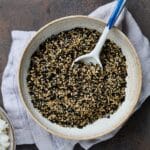

Furikake (Japanese Seasoning)
Ingredients
For the Base:
Additions: These ingredients, although optional, add a ton of flavor to furikake. Pick one or more from the list below. The quantities of each ingredient are basic guidelines and can be adjusted to taste.
Seasonings:
- ½ -1 teaspoon toasted sesame oil
- 1-2 teaspoons soy sauce
- 1-2 teaspoons mirin
Add-Ons:
- 1-2 tablespoons dried bonito flakes, see notes
- 2 teaspoons dried shrimp
- 1-2 teaspoons shiitake powder
- ½ teaspoon kelp powder, see notes
- ½ teaspoon wasabi powder
- ¾ - 1 teaspoon miso powder, to add spiciness
- ½-1 teaspoon Ichimi togarashi, Japanese chili pepper or dried pepper flakes (to add spiciness).
- 2 teaspoons dried shiso leaves
Instructions
Optional step
- Partially grinding some of the sesame seeds on a spice grinder or food processor, helps release some of the aromatic oil from the seeds. You can also place them in a resealable bag and smash them with a heavy skillet or rolling pin. The goal is not to pulverize them. As a matter of fact, you want to keep most of the seeds intact. You can skip this step and go directly to toasting the ingredients and seasonings/
- Cut each nori sheet in half with a knife or kitchen scissors. Stack the sheets and cut them into small strips, then into small pieces. You can also crumble them with your fingers, although this results in uneven pieces of nori. Set aside.
Toasting the seeds and seasonings is a must
- Toasting the ingredients and seasonings together, helps blending the flavors and prevents the salt and sugar from sinking to the bottom of the jar. Don’t skip this step.
- In a dry skillet or saute pan over low heat, toast the white sesame seeds, shaking the skillet often, until they become fragrant and lightly toasted, about 4 minutes. Add the black sesame seeds, salt, sugar and any other optional ingredient from the list above (except the nori pieces). Cook, stirring frequently for about 2-3 minutes or until aromatic.
- Transfer to a baking sheet lined with parchment, spread the mixture and allow to cool completely. Once cooled, add the nori pieces and stir to combine.
- The base recipe (nori, white and black sesame seeds, salt and sugar) can be stored in an airtight container for up to 6 months.
- When adding other ingredients, store in an airtight container in the fridge for 2 weeks or store in an airtight container with a food safe silica gel desiccant at room temperature for 1-2 months.
- Serve over rice, ramen, noodles, poke bowls, sushi bakes, avocado toasts and to season tofu, miso soup, popcorn, etc
Notes
- Furikake Base: The most popular version of this Japanese condiment is known as Nori Komi Furikake. This basic mixture includes toasted white and black sesame seeds, nori seaweed, salt and sugar. Any other ingredients are additions.
- Sesame Seeds: If you purchased already toasted sesame seeds, skip the toasting process.
- Nori Sheets: These are dark green, thin and dried sheets of edible seaweed mostly used for wrapping sushi. If you can’t find them, substitute this ingredient with about 4 sheets of roasted seaweed snacks, plain or sea salt. Other flavors such as wasabi or sesame oil can also be used. I don’t recommend teriyaki flavored nori for this recipe.
- Sugar: A very small amount is used to balance the flavors. You can skip it, although I highly recommend it for flavor.
- Optional Step: Grinding the sesame seeds help release some of the oil of the seeds. This helps the salt and sugar adhere better to the mixture. Make sure you only partially grind the seeds. You want most of them whole.
- Important Step: Toasting the ingredients and seasonings together, is a must! Heating up the ingredients guarantees the seasonings sticking to the rest of the ingredients and prevents the salt and sugar from sinking to the bottom of the jar.
- Other Additions:
- Dried Bonito Flakes: Aka Katsuobushi flakes, are paper thin shavings of bonito fish or skipjack tuna. This lightly smoky and not overly fishy ingredient is packed with umami flavor. This is the main ingredient of dashi, the clear Japanese stock used for soups.
- Kelp Powder: This edible dried seaweed superfood is also known as kombu, ma-kombu (the highest quality kelp), dashima and limu among others. This umami-packed ingredient is mostly used to make Japanese dashi.
- Aonori: Vibrantly green and aromatic, this edible seaweed is highly nutritious and has a flavorful salty ocean-like taste. It comes finely chopped into flakes.
- Dulse Flakes: This edible dried green laver seaweed is packed with protein and fiber as well as vitamins and antioxidants.
