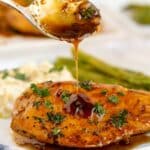

Maple Balsamic Glazed Chicken
Ingredients
- 2 pounds boneless skinless chicken breasts, sliced horizontally into cutlets
- Salt and ground black pepper, to taste
- 1 tablespoon olive oil
- 2 garlic cloves, finely chopped
- 1/2 cup chicken broth
- 1/2 cup pure maple syrup
- 2 tablespoons balsamic vinegar
- 1 tablespoon Dijon mustard
Optional
- 1/8 teaspoon ground cayenne pepper
- Chopped parsley, sage or basil, for garnish,
Instructions
- Pat the chicken dry and season with salt and pepper.
- Whisk the maple syrup, balsamic vinegar, Dijon mustard, and cayenne in a small bowl. Set aside.
- Heat the olive oil in a large heavy skillet over medium-high heat. Add the chicken and cook for about 5 to 6 minutes per side, or until nearly cooked through. Transfer to a plate.
- Lower the heat to medium-low. Add the garlic and cook for about 1 minute, stirring constantly. Add the broth and scrape up the browned bits. Bring to a boil and cook for about 2 minutes, or until reduced by half.
- Stir in the maple syrup mixture. Return the chicken to the skillet and turn to coat. Cook for 2 to 3 minutes, until the glaze is syrupy and the chicken reaches 165°F. when checked with an instant read thermometer on the thickest part. Remove from the heat and garnish with parsley, sage or basil if using.
Notes
- Chicken: Use boneless skinless chicken breast or thighs. Chicken thighs may take a bit longer to cook.
- Cut the breasts into cutlets: Thinner, evenly sized pieces cook quickly and more predictably than full chicken breasts.
- Dry the surface: Moisture must evaporate before browning begins. Patting the chicken dry helps it sear instead of steam.
- Do not force the flip: When properly browned, chicken releases from the skillet more easily. If it is firmly stuck, give it another moment.
- Reduce the broth first: Maple syrup contains sugars that can scorch. Reducing the broth before adding the maple mixture protects the glaze from excessive high heat.
- Finish the chicken in the sauce: The cutlets cook for another 2 to 3 minutes after returning to the skillet, so remove them from the initial sear when nearly done. This prevents cooking the lean breast meat twice.
- Storing: Store leftover balsamic glazed chicken in an airtight container in the refrigerator for up to 3 days.
- Watch the final reduction: Stop when the sauce coats the chicken. The glaze continues to thicken slightly as it cools.
Nutrition
Calories: 206 kcal, Carbohydrates: 15 g, Protein: 24 g, Fat: 5 g, Saturated Fat: 1 g, Cholesterol: 73 mg, Sodium: 209 mg, Potassium: 481 mg, Fiber: 1 g, Sugar: 13 g, Vitamin A: 47 IU, Vitamin C: 3 mg, Calcium: 29 mg, Iron: 1 mg
